

How Fast Does Hair Grow? Normal Rates and What Can Slow It Down

Most scalp hair grows about 1 to 1.25 cm per month on average. Hair growth follows a cycle of growing, resting, shedding, and regrowing.
Key Takeaways
- Most scalp hair grows about 1 to 1.25 cm per month on average.
- Hair growth follows a cycle of growing, resting, shedding, and regrowing.
- Slow hair growth may be linked to nutrition, hormones, illness, medications, stress, or scalp inflammation.
- Healthy scalp care and treating underlying medical issues can support better hair growth.
- Sudden shedding, bald patches, or scalp symptoms should be assessed by a doctor or dermatologist.
Scalp hair usually grows around 1 to 1.25 centimeters per month, although the exact rate varies from person to person. Growth can slow because of genetics, age, hormones, nutrition, stress, scalp conditions, or hair damage.
Overview: how fast hair grows
When people ask, “how fast does hair grow,” the short answer is that scalp hair typically grows about 1 to 1.25 centimeters per month, or roughly 12 to 15 centimeters per year. This is an average, not a rule. Some people notice slightly faster growth, while others grow hair more slowly even when they are healthy.
Hair growth is influenced by biology more than by quick fixes. Genetics play a major role, but age, hormones, overall health, nutrition, and scalp condition also matter. Hair may seem to stop growing when it is actually growing slowly, breaking at the ends, or shedding more than usual.
It is also helpful to remember that hair does not grow continuously forever. Each hair follicle follows a repeating growth cycle with active growth, transition, rest, and shedding phases. Understanding this cycle explains why growth rate can vary over time and why periods of increased shedding do not always mean permanent hair loss.
Understanding the hair growth cycle
Each strand of hair grows from a follicle in the skin. Hair follicles cycle through several phases. The anagen phase is the active growth stage, and it can last for years on the scalp. The longer a hair stays in anagen, the longer it can become. The catagen phase is a short transition stage, followed by the telogen phase, when the hair rests. After that comes exogen, when the hair sheds and a new one begins to grow.
Because individual hairs are in different phases at different times, shedding some hair each day is normal. Most people lose a modest number of strands daily without noticing thinning. Visible thinning usually happens when shedding increases, growth slows, or both occur together.
The growth cycle can be disrupted by illness, stress, hormonal changes, inflammation, and certain medications. In these situations, more hairs may shift from active growth into resting and shedding. This is one reason why hair changes sometimes appear several weeks or months after a trigger rather than immediately.
What affects hair growth rate

Hair growth rate varies naturally. Genetics strongly influence how quickly hair grows, how thick it is, and how long the growth phase lasts. Age is another factor. Hair often becomes finer and may grow more slowly over time because follicles become less active with aging.
Hormones also affect growth. Thyroid hormones, androgens, estrogen changes, and shifts related to pregnancy or menopause can all influence the growth cycle. Nutritional status matters too. Hair follicles are active tissues, so they depend on adequate protein, iron, zinc, vitamin D, and other nutrients to function normally.
Daily habits can affect how healthy hair appears. Tight hairstyles, frequent heat styling, harsh chemical treatments, and overprocessing do not usually slow the follicle itself, but they can cause breakage. In that case, hair may seem not to grow because the ends break off as quickly as new length is added.
Scalp health is equally important. Inflammation, dandruff, infection, or chronic skin conditions can interfere with the follicle environment. Conditions such as seborrheic dermatitis or psoriasis may contribute to irritation and shedding if they are not managed appropriately.
Common reasons hair growth may slow down
Slow hair growth can happen for many reasons, and often more than one factor is involved. One common cause is telogen effluvium, a temporary increase in shedding that may follow physical or emotional stress, high fever, surgery, childbirth, rapid weight loss, or significant illness. Hair often resumes its usual cycle once the trigger is addressed, but recovery can take several months.
Nutritional deficiencies can also reduce healthy growth. Low iron, inadequate protein intake, low zinc, and low vitamin D are often considered when hair becomes thinner or slower growing. Restrictive diets or digestive conditions that affect nutrient absorption may contribute. A doctor may recommend blood tests when symptoms suggest a deficiency.
Hormonal and autoimmune conditions are another possibility. Thyroid disease can change hair texture and growth. Pattern hair loss related to androgens can gradually shorten the growth phase. Autoimmune causes such as alopecia areata can lead to patchy hair loss rather than just slower growth.
Certain medications may affect the hair cycle as well. Depending on the medicine, hair changes may include increased shedding, thinning, or brittleness. When a person notices a change after starting a new medicine, it is wise to ask a doctor before stopping treatment, since the benefits of the medicine may be important and alternatives may exist.
Symptoms that may suggest a problem
Hair that seems to grow slowly is not always a sign of disease. Sometimes the main issue is breakage, split ends, or naturally fine hair. However, certain patterns deserve attention. These include sudden heavy shedding, widening of the part, visible thinning at the crown, receding hairline, patchy bald spots, or loss of eyebrows or body hair.
Scalp symptoms can also provide clues. Itching, redness, flaking, pain, pimples, scaling, or crusting may point to inflammation or infection. Conditions such as contact dermatitis from hair products can irritate the scalp and worsen shedding if not identified.
Other symptoms outside the scalp may be relevant too. Fatigue, weight change, menstrual irregularities, acne, excess facial hair, brittle nails, or feeling unusually cold or hot may suggest an underlying hormonal or nutritional issue. In these cases, hair changes are best evaluated as part of overall health rather than as an isolated cosmetic concern.
How doctors diagnose slow hair growth or hair loss
Diagnosis starts with a careful history. A doctor or dermatologist may ask when the change began, whether shedding or breakage is present, what hair products or styling methods are used, whether there has been recent illness or stress, and whether there is a family history of hair loss. This conversation often gives important clues.
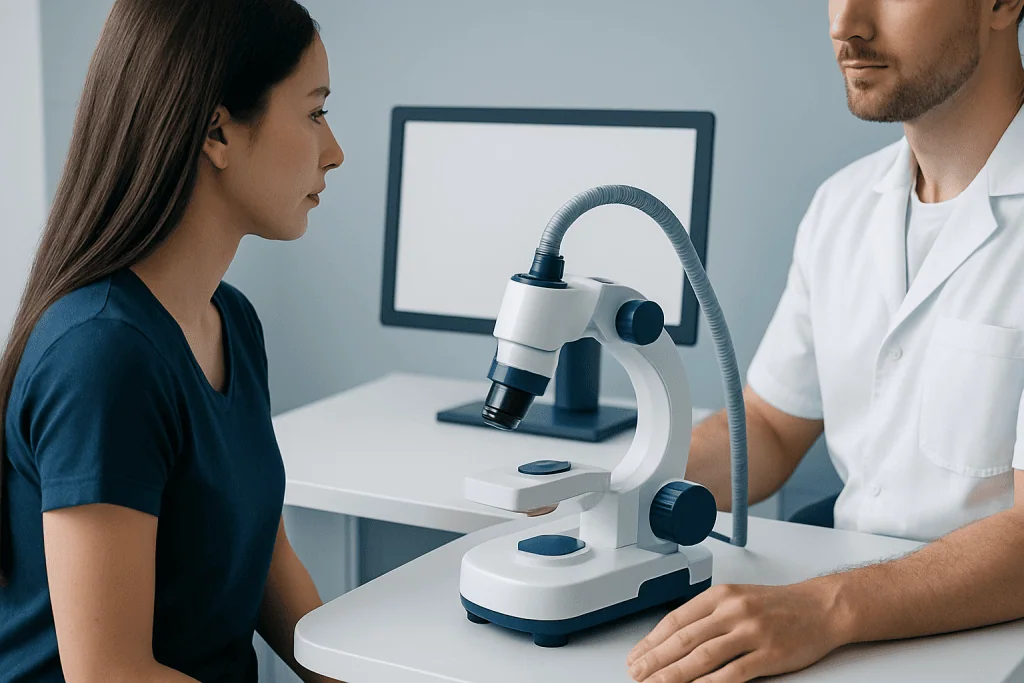
The scalp and hair are then examined closely. The clinician may look for miniaturized hairs, inflammation, scaling, bald patches, or broken hairs. In some cases, a gentle hair-pull test or dermoscopic examination helps assess the pattern of loss and scalp condition. These noninvasive steps are often enough to guide the next stage.
Blood tests may be recommended if an underlying medical problem is suspected. These can include tests related to iron stores, thyroid function, vitamin levels, or hormone balance. Less commonly, a scalp biopsy is needed when the diagnosis remains unclear or when scarring hair loss is a concern. Early evaluation can be especially important if symptoms suggest inflammation that could damage follicles over time.
Treatment options and ways to support healthy growth
Treatment depends on the cause. If the issue is breakage, the focus is on gentle hair care rather than the follicle itself. If the cause is a deficiency, thyroid problem, scalp inflammation, or medication effect, correcting that issue is the main step. Pattern hair loss, temporary shedding disorders, and autoimmune hair loss each require different approaches, so a personalized plan is important.
Doctors may recommend medical treatments to help reduce shedding or support regrowth in selected cases. These can include topical or oral therapies, treatment for scalp disease, or targeted management of hormonal imbalance. People should be cautious with supplements and over-the-counter products that promise dramatic results, since not all are evidence-based and some may be unnecessary or even harmful in excess.
For some people with established hair thinning or areas that do not recover adequately, restorative options may be discussed after medical evaluation. Depending on the situation, a specialist may consider non-surgical hair restoration, laser hair therapy, or procedures such as FUE hair transplant when appropriate. These are not first-line solutions for every cause, but they can be useful in selected patients.
Near the end of the care journey, some people benefit from review in a center that combines dermatology and hair restoration expertise. Acibadem International’s multidisciplinary specialists and JCI-accredited hospitals diagnose and treat hair and scalp conditions for international patients, including assessment of whether options such as hair operations are suitable.
Prevention, self-care, and when to see a doctor
Healthy habits can support normal hair growth, even though they cannot change genetics. A balanced diet with enough protein, iron-rich foods, and overall variety helps nourish active hair follicles. Managing stress, sleeping well, and avoiding smoking may also support general hair and scalp health. Gentle washing based on hair type, avoiding very hot tools, and limiting harsh chemical processing can reduce breakage.
Protective styling should not be painful or tight. Hairstyles that pull on the roots over time can lead to traction-related hair loss. It is also wise to treat dandruff, itching, or scalp irritation early rather than ignoring symptoms. Good scalp care creates a healthier environment for hair to grow.
A doctor should be consulted if hair loss is sudden, patchy, painful, associated with scalp rash or scaling, or accompanied by other health changes. Medical advice is also important if hair thinning continues for several months, if there is a strong family history of early hair loss, or if home measures are not helping. Early assessment can identify treatable causes and offer reassurance when the change is temporary.
Frequently asked questions
How fast does hair grow in a month?
On average, scalp hair grows about 1 to 1.25 centimeters per month. Individual growth may be a little faster or slower depending on genetics, age, health, hormones, and scalp condition.
Can hair grow faster with special shampoos or oils?
Most shampoos and oils do not make hair follicles grow dramatically faster. Some products may improve scalp health, reduce breakage, or make hair look fuller, which can help hair appear healthier. If there is an underlying medical cause, treating that cause is usually more important than cosmetic products.
Why does my hair seem to stop growing at a certain length?
Hair often seems to stop growing when it is actually breaking at the ends or when the growth phase is naturally shorter. Heat styling, bleaching, and friction can increase breakage. In some people, genetics determine a shorter growth cycle, which limits maximum length.
Does stress slow hair growth?
Stress can disrupt the hair growth cycle and increase shedding, often a few months after the stressful event. This does not always mean permanent loss. Once the trigger settles and overall health improves, hair frequently begins to recover, although regrowth takes time.
What vitamin deficiency can cause slow hair growth?
Low iron, vitamin D, zinc, or inadequate protein intake may contribute to hair thinning or slower healthy growth. However, not every hair problem is caused by a deficiency. It is best to speak with a doctor before starting supplements, because testing may be needed and too much of some supplements can be harmful.
When should someone worry about slow hair growth?
A person should seek medical advice if hair change is sudden, patchy, painful, or linked with scalp redness, heavy flaking, or other body symptoms. Ongoing thinning over several months, especially with a widened part or receding hairline, also deserves assessment. Early diagnosis can help identify treatable causes.
References
- American Academy of Dermatology
- National Health Service
- National Institute of Arthritis and Musculoskeletal and Skin Diseases
- Mayo Clinic
- Cleveland Clinic
This article is for general information only and is not a substitute for professional medical advice. Please consult a qualified doctor about your individual situation.
Hair transplant in Turkey — costs, graft counts & a free assessment
JCI-accredited · board-certified surgeons · reply within 24h
Add us as a Preferred Source to see more of our trusted health content across Google Search, AI Overviews and Discover.
Check your numbers in seconds
BMI, calories, due date, blood pressure and 30+ more clinical calculators — free, instant, doctor-reviewed ranges.

Related Treatments
Related Conditions
More from the Health Library



Related Specialists

Prof. Dr. Sedef Şahin
Dermatology
Prof. Dr. Şükrü Yazar
Aesthetic Plastic & Reconstructive Surgery
Prof. Dr. Emel Öztürk Durmaz
Dermatology
Prof. Dr. Özlem Dicle
Dermatology