Beard Transplant: Who Is a Good Candidate?

A good beard transplant candidate usually has sufficient donor hair, good general health, and healthy facial skin. Patchy beard growth from genetics, scars, or past injury may sometimes be improved with transplantation.
Key Takeaways
- A good beard transplant candidate usually has sufficient donor hair, good general health, and healthy facial skin.
- Patchy beard growth from genetics, scars, or past injury may sometimes be improved with transplantation.
- Active skin disease, unstable hair loss, or poor healing may delay or rule out the procedure.
- A specialist evaluation helps determine graft availability, beard design, and expected density.
- Results take time, and full growth usually develops gradually over several months.
- Careful aftercare and realistic goals are important for a natural-looking outcome.
A beard transplant may help men with patchy, thin, or absent facial hair achieve fuller growth using their own hair follicles. The best candidates are generally healthy adults with enough donor hair, stable skin and hair conditions, and realistic expectations about results.
Overview
A beard transplant is a cosmetic hair restoration procedure that moves hair follicles, usually from the scalp, into areas of the beard or mustache where growth is thin, patchy, or absent. The goal is to create a fuller, more even facial hair pattern that matches the person’s natural features. Because the transplanted hairs come from the patient’s own body, they are generally accepted well by the skin and can grow permanently in their new location.
Men seek beard transplantation for different reasons. Some have naturally sparse facial hair due to genetics. Others have gaps caused by acne scars, burns, surgery, overplucking, or previous injury. A beard transplant may also be considered when facial hair is uneven or when sideburns, mustache, or goatee areas do not develop as desired.
Not everyone is a suitable candidate. The quality and quantity of donor hair, the health of the facial skin, the cause of hair loss, and overall medical health all matter. A careful consultation helps identify whether beard transplant is likely to give a natural and satisfying result.
Who Is Usually a Good Candidate?
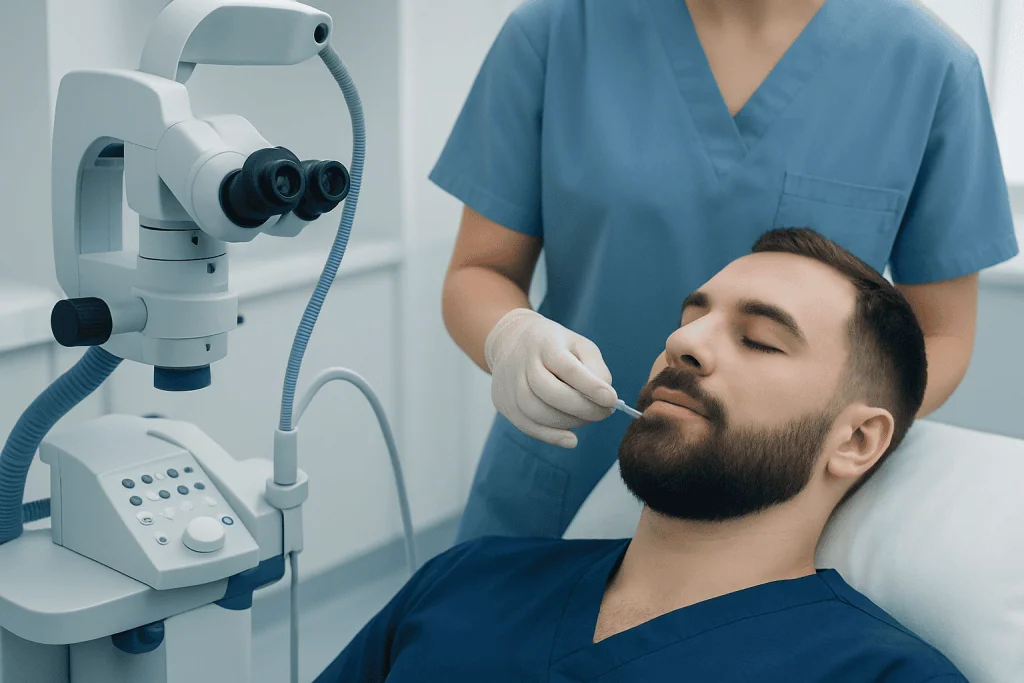
A good candidate is usually an adult whose facial hair pattern is unlikely to change significantly with time. In practice, this often means someone who has completed puberty and has had enough time for natural beard growth to develop. Since facial hair can continue to mature into the late 20s in some men, specialists may recommend waiting if growth still appears to be changing.
Suitable candidates typically have enough healthy donor hair, most often at the back or sides of the scalp. Donor hair should be similar enough in texture and caliber to blend well into the beard area. The person should also be in generally good health, free from uncontrolled medical conditions that could interfere with healing.
Realistic expectations are equally important. A beard transplant can improve density and shape, but it may not create the exact same pattern or thickness seen in someone with naturally dense facial hair. People who understand that results build gradually and may require careful grooming tend to be more satisfied.
- Healthy adult with mature facial hair pattern
- Adequate donor hair on the scalp or other suitable area
- Stable cause of beard loss or patchiness
- Healthy skin without active infection or major inflammation
- Willingness to follow aftercare instructions
- Realistic goals about density, shape, and timing
Common Reasons for Considering a Beard Transplant

Genetics is one of the most common reasons for sparse beard growth. Some men simply inherit a lighter or patchier beard pattern. In these cases, transplantation may help fill in empty areas, sharpen the jawline beard, or create a fuller mustache or goatee.
Scarring is another common reason. Old acne scars, burns, cuts, or surgical scars may prevent hair from growing in certain spots. Depending on the depth and quality of the scar tissue, transplantation may improve coverage, although scarred skin can sometimes affect graft survival and may require a particularly careful surgical plan.
Some men lose beard hair because of inflammatory or autoimmune conditions. If there is concern about disorders such as alopecia areata, the underlying condition should be assessed first, because ongoing or unpredictable hair loss can reduce the chances of lasting results. Likewise, active facial skin problems such as seborrheic dermatitis or contact dermatitis should be treated before surgery so the skin is in the best possible condition for healing.
Who May Need to Wait or May Not Be Suitable
A beard transplant is not ideal for everyone. Men with very limited donor hair may not achieve the density they want, especially if they also hope to preserve scalp donor hair for future hair restoration needs. If scalp hair is thinning significantly, the specialist may discuss long-term planning before using donor follicles for the beard.
People with active skin infection, ongoing inflammation, uncontrolled diabetes, bleeding disorders, or a history of poor wound healing may need treatment or stabilization before any procedure. Smoking can also impair healing and may affect graft survival, so stopping or reducing smoking is often advised before and after surgery.
Unstable hair loss disorders deserve extra caution. Conditions that cause scarring or recurrent inflammation may damage transplanted follicles as well as existing hairs. A history of keloid scarring can also be important, since some people heal with raised scars after even small procedures. In such situations, the doctor may recommend postponing treatment, choosing another option, or avoiding surgery entirely.
How Doctors Assess Candidacy
Evaluation starts with a detailed medical history and physical examination. The doctor asks when beard thinning began, whether it has changed over time, and whether there is a history of skin disease, autoimmune illness, infections, acne, injury, or previous cosmetic procedures. Medications, smoking status, and any tendency toward abnormal scarring are also reviewed.
The facial skin and beard area are then examined closely. The specialist looks at the pattern of hair loss, skin texture, scar tissue, direction of existing beard hairs, and the desired design. Donor hair is assessed for density, thickness, curl, and color. These details help estimate how many grafts may be available and how natural the final result may appear.
In some cases, extra testing may be needed if the cause of hair loss is unclear. For example, suspected fungal infection, inflammatory disease, or autoimmune hair loss may need dermatologic assessment before surgery. The doctor may also discuss related restoration techniques, such as FUE hair transplant, which is commonly used to harvest individual follicles for beard work.
Treatment Options and What the Procedure Involves
Beard transplantation usually uses follicular unit extraction, in which individual hair follicles are removed from the donor area and implanted one by one into the beard. Precise placement matters because beard hairs grow at specific angles and directions. The surgeon designs the beard shape carefully to suit the face, age, and goals of the patient.
The procedure is usually done with local anesthesia. Small grafts are placed into tiny recipient sites in the cheeks, chin, jawline, sideburns, or mustache area. The number of grafts depends on whether the aim is filling small patches, covering a scar, or building a full beard. Some centers may also discuss related methods such as DHI hair transplant techniques when appropriate for planning and implantation.
Results do not appear immediately. It is normal for transplanted hairs to shed in the early weeks before new growth starts. New beard growth often begins after several months and continues to improve over time. In selected cases, a second session may be considered to increase density or refine the shape once the first results are established.
Recovery, Aftercare, and Expected Results
After a beard transplant, there is usually mild redness, swelling, tenderness, or small crusts in the treated areas for a short period. Most of these changes improve gradually with proper care. Patients are usually advised to avoid touching, shaving, rubbing, or putting pressure on the newly transplanted area until the doctor says it is safe.
Aftercare instructions are important because they help protect grafts during the early healing phase. Gentle cleansing, avoiding strenuous activity for a short period, and following medication guidance can reduce discomfort and support recovery. The donor area on the scalp also needs care, although the tiny extraction points generally heal well.
People should expect a gradual process rather than instant fullness. Hair caliber, curl, and growth rate vary from person to person. Because scalp hairs keep the characteristics of scalp hair, transplanted beard hairs may grow somewhat differently and may need periodic trimming or shaping. For men seeking broader facial or scalp restoration planning, a surgeon may also discuss hair operations as part of a personalized approach.
When to See a Specialist
A specialist consultation is worthwhile when beard loss is patchy, bothersome, scar-related, or not improving with time. It is especially important if facial hair loss is new, rapidly worsening, associated with itching, scaling, redness, or pain, or happening together with scalp hair loss. These features may suggest an underlying condition that should be diagnosed before cosmetic treatment is considered.
Men who are unsure whether they have enough donor hair or whether they are old enough to proceed can also benefit from expert advice. A qualified dermatologist or hair transplant surgeon can explain what is medically suitable, what results are realistic, and whether non-surgical treatment should come first.
For international patients, Acibadem International’s multidisciplinary specialists in JCI-accredited hospitals evaluate beard restoration candidacy, diagnose contributing skin or hair conditions, and provide personalized treatment planning. A careful consultation helps ensure that surgery is performed for the right reason, at the right time, and on healthy skin.
Frequently asked questions
At what age is someone a good candidate for a beard transplant?
A beard transplant is usually considered only after facial hair growth has matured enough to show a stable pattern. Many specialists prefer to assess adults rather than teenagers, because beard development can continue for years after puberty. The right timing depends on the individual rather than a single exact age.
Can a beard transplant help with patchy beard growth caused by genetics?
Yes, genetic patchiness is one of the most common reasons people consider a beard transplant. If the person has enough healthy donor hair and realistic expectations, transplantation can often improve fullness and shape. A consultation is still important to confirm suitability.
Is a beard transplant permanent?
Transplanted follicles are generally expected to keep growing in their new location because they are moved with their biological characteristics intact. However, long-term appearance still depends on overall hair health, skin condition, grooming, and proper healing. A doctor can explain what permanence means in an individual case.
What if beard hair loss is caused by a skin condition?
The underlying skin condition should usually be diagnosed and treated first. Active inflammation, infection, or autoimmune disease can affect healing and may reduce the success of the transplant. Surgery is often delayed until the condition is controlled and the skin is stable.
Will the transplanted beard look natural?
A natural look depends on careful planning, proper hair angle placement, and a suitable donor hair match. Experienced specialists design the beard to fit the face and existing hair pattern. Even with good technique, density and texture may not be exactly the same as naturally dense beard growth.
How long does it take to see beard transplant results?
Visible improvement takes time. It is common for transplanted hairs to shed early on, with new growth starting later over the following months. Full maturation usually happens gradually, so patience is an important part of the process.
References
- American Academy of Dermatology
- International Society of Hair Restoration Surgery
- British Association of Dermatologists
- Mayo Clinic
- National Institute of Arthritis and Musculoskeletal and Skin Diseases
This article is for general information only and is not a substitute for professional medical advice. Please consult a qualified doctor about your individual situation.
Beard Transplant in Turkey — costs, top hospitals & a free quote
JCI-accredited · board-certified surgeons · reply within 24h
Add us as a Preferred Source to see more of our trusted health content across Google Search, AI Overviews and Discover.

Hair Transplant
Modern FUE and DHI hair restoration with natural, lasting results.
Related Treatments
Related Conditions
More from the Health Library


Related Specialists
Prof. Dr. Sedef Şahin
Dermatology
Prof. Dr. Emel Öztürk Durmaz
Dermatology
Prof. Dr. Özlem Dicle
Dermatology
Assoc. Prof. Dr. Yasemin Koyuncu
Dermatology