DHI vs FUE Hair Transplant: Key Differences in Technique and Results

Both DHI and FUE transplant individual follicular units and can produce natural-looking results. FUE refers mainly to graft extraction, while DHI emphasizes a direct implantation method using a specialized implanter pen.
Key Takeaways
- Both DHI and FUE transplant individual follicular units and can produce natural-looking results.
- FUE refers mainly to graft extraction, while DHI emphasizes a direct implantation method using a specialized implanter pen.
- The best option depends on donor hair quality, the size of the area being treated, styling preferences, and surgeon experience.
- Final results usually take months to appear because transplanted hairs shed first and then regrow.
- A healthy scalp and realistic expectations are important for satisfaction with either technique.
DHI and FUE are modern hair transplant methods that use individual hair follicles rather than a strip of scalp. The main difference is how the grafts are implanted, which can affect shaving needs, procedure flow, and which technique may be the better fit for a person’s hair loss pattern and goals.
Overview: What DHI and FUE Mean
When comparing DHI vs FUE hair transplant, it helps to know that both are forms of follicular unit transplantation. In both methods, tiny natural groupings of hair follicles are taken from a donor area, usually the back or sides of the scalp, and moved to areas with thinning or baldness. The aim is to restore hair growth in a way that follows the person’s natural hairline and hair direction.
FUE stands for follicular unit extraction. In standard FUE, individual grafts are extracted from the donor area, small recipient sites are created in the thinning area, and then the grafts are placed into those sites. DHI, or direct hair implantation, also uses individually extracted grafts, but the implantation step is done with a special pen-like device that allows the surgeon to place grafts directly into the scalp.
This is why many specialists describe DHI as a variation or refinement within the broader FUE family rather than a completely separate concept. A person may see these methods discussed as FUE hair transplant and DHI hair transplant, but both rely on careful follicle harvesting and artistic placement to achieve a natural result.
How the Techniques Differ
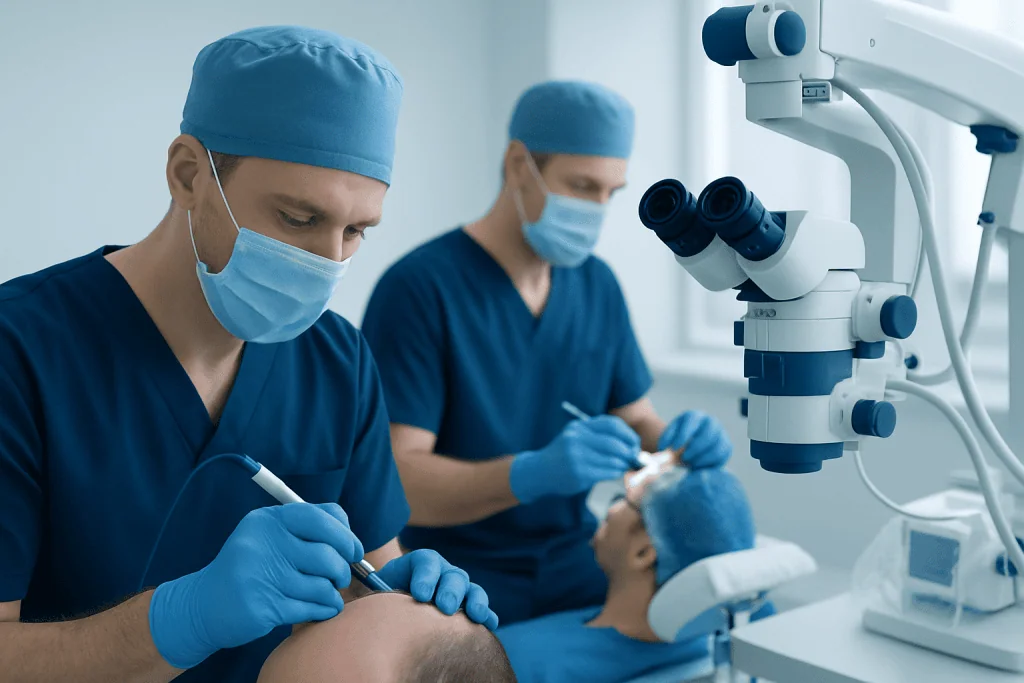
The biggest difference between DHI and FUE is the implantation process. In conventional FUE, the surgeon first makes tiny channels or incisions in the recipient area. These channels determine the angle, depth, and direction of the future hair growth. The grafts are then inserted into these prepared sites using fine forceps or similar instruments.
In DHI, after extraction, the graft is loaded into a specialized implanter pen. The surgeon uses this device to create the site and implant the graft in one controlled step. This can offer precise control in selected cases, especially when working around existing hair or when dense packing is planned in a smaller area.
There are also practical differences. DHI may sometimes allow less shaving in some patients, although shaving needs vary by clinic, surgeon preference, and the area being treated. Standard FUE is often favored for covering larger bald areas efficiently. Some centers may also discuss related variations such as hair transplant without shaving or sapphire transplant, which can be relevant depending on scalp characteristics and treatment goals.
- FUE: extraction first, recipient sites created separately, then graft placement.
- DHI: extraction first, then direct placement using an implanter device.
- Shared goal: natural hair growth using carefully selected follicular units.
Results: Is One Better Than the Other?

Many people ask whether DHI gives better results than FUE. In practice, natural-looking results depend less on the brand name of the method and more on planning, surgeon skill, graft quality, donor supply, and aftercare. Both methods can create a soft, age-appropriate hairline and good density when they are used for the right patient.
DHI may be chosen when precision around existing hairs is important, such as filling in smaller areas of thinning without fully shaving the scalp. FUE may be more practical for larger sessions where many grafts are needed. Neither method guarantees perfect density, and both are limited by the amount and quality of available donor hair.
Patients should also know that immediate appearance is not the same as final outcome. Newly transplanted hairs often shed within the first weeks, which is a normal part of the cycle. New growth usually begins gradually over the following months, and the full cosmetic result may take around 9 to 12 months or longer depending on the area treated, hair type, and individual healing.
Who May Be a Good Candidate
Suitable candidates for either DHI or FUE usually have stable hair loss, enough healthy donor hair, and realistic expectations about density and coverage. The most common reason for hair transplantation is pattern hair loss, but careful diagnosis is important because not all hair loss should be treated with surgery.
For example, people with patchy autoimmune hair loss such as alopecia areata are generally not ideal surgical candidates unless a specialist confirms the condition is inactive and transplantation is appropriate. Active scalp inflammation, infection, or significant scarring can also affect whether a transplant is advised. In some cases, scalp disorders such as seborrheic dermatitis need treatment first to create a healthier environment for healing.
Candidacy also depends on hair characteristics. Curly or coarse hair may create better visual coverage with fewer grafts, while very fine hair may require a different plan. Women with thinning hair can also be candidates, but their pattern of shedding often needs especially careful evaluation, and some may benefit from hair transplant for women planning tailored to diffuse thinning.
Diagnosis and Pre-Procedure Planning
A good hair transplant begins with diagnosis, not with the procedure itself. A specialist typically reviews the pattern and duration of hair loss, family history, medical conditions, medications, scalp health, and previous treatments. The donor area is examined to estimate how many grafts can be safely harvested while preserving a natural appearance at the back and sides of the head.
The consultation also includes hairline design and discussion of realistic goals. This step matters because a transplanted hairline should fit the person’s age, facial proportions, and likely future hair loss. A very low or overly dense front hairline may look unnatural over time and can use donor hair too quickly.
Doctors may recommend medical treatment before or after surgery to help stabilize ongoing shedding. Some patients are better served by non-surgical support, especially early in the course of hair loss. Options may include non-surgical hair restoration or selected supportive measures such as laser hair therapy, depending on the individual evaluation.
Recovery, Risks, and Aftercare
Recovery after DHI and FUE is usually measured in days to weeks rather than months, although hair growth itself takes much longer. Mild redness, swelling, scabbing, and tenderness can occur in both the donor and recipient areas. Most people can return to light daily activities soon, but they need to follow washing, sleeping, and exercise instructions closely during the early healing phase.
Possible risks are generally similar for DHI and FUE and may include infection, bleeding, poor graft survival, uneven density, temporary shock loss, numbness, and visible scarring in the donor area. Small dot scars are expected with FUE-type extraction, but they are often difficult to notice once surrounding hair grows. Results may be less satisfying if too many grafts are harvested, if the hairline design is poor, or if underlying hair loss continues without management.
Aftercare usually focuses on protecting the grafts, avoiding friction, and keeping the scalp clean according to the clinic’s instructions. Patients should avoid picking scabs and should discuss when they can resume work, sports, sun exposure, swimming, and hair products. If a person has had an unsatisfactory procedure elsewhere, a specialist may discuss whether hair transplant repair is possible after careful assessment.
How to Choose Between DHI and FUE
Choosing between DHI and FUE is less about finding a universally superior technique and more about matching the method to the patient. Key questions include: How large is the area to be covered? Does the person want or need minimal shaving? Is there existing hair between thinning areas that should be preserved? How strong is the donor area? What level of density is realistic?
Surgeon and team experience are often more important than the label of the technique. A well-trained team using careful graft handling and thoughtful planning can achieve excellent outcomes with either approach. It is reasonable to ask how the clinic performs extraction, stores grafts during the procedure, plans the hairline, and manages complications or future hair loss.
Near the end of the decision process, some patients also value access to broader dermatology and surgical support, especially if the diagnosis is uncertain or if previous procedures have been done. Acibadem International’s multidisciplinary specialists and JCI-accredited hospitals diagnose and treat hair loss and hair transplant candidates for international patients, with treatment plans tailored to scalp health, donor capacity, and long-term goals.
When to See a Doctor About Hair Loss
It is a good idea to see a doctor before considering any hair transplant if hair loss is sudden, patchy, rapidly worsening, or associated with itching, pain, scaling, redness, or scarring. These features can suggest a condition that needs medical treatment rather than immediate surgery. Early assessment may help preserve existing hair and improve future options.
Medical review is also important for people with chronic skin conditions, previous scalp procedures, or a family history of extensive baldness. A doctor can explain whether transplantation is appropriate now, whether hair loss should first be stabilized, and what result is realistic based on donor supply.
Even when a transplant is suitable, ongoing follow-up matters because native hair may continue to thin over time. A balanced long-term plan often combines procedural treatment with scalp care, monitoring, and, when appropriate, medical therapy to support existing hair.
Frequently asked questions
Is DHI better than FUE?
Neither method is automatically better for every person. DHI may be helpful when precise implantation into smaller or partially shaved areas is desired, while FUE is often well suited to larger areas of baldness. The best choice depends on scalp condition, donor hair, treatment goals, and the experience of the surgical team.
Do DHI and FUE leave scars?
Both methods involve tiny wounds, so some degree of scarring is expected. With FUE-type extraction, these are usually very small dot-like scars in the donor area that are often hard to see when hair is worn at a typical length. Visibility depends on healing, skin type, hair length, and how many grafts were taken.
How long does it take to see final hair transplant results?
Transplanted hairs often shed in the first weeks, which can be worrying but is usually normal. New growth generally starts over the next few months, and fuller results continue to develop gradually. Many people judge the outcome at around 9 to 12 months, although some areas may mature a bit longer.
Is one technique more painful than the other?
During the procedure, discomfort is usually minimized with local anesthesia. Afterward, both DHI and FUE can cause mild soreness, tightness, or tenderness for a short time. Individual comfort varies more by the extent of the procedure and personal sensitivity than by the name of the technique alone.
Can women have DHI or FUE hair transplants?
Yes, some women are good candidates for hair transplantation. However, female hair loss often has patterns that require careful diagnosis because diffuse thinning can affect both the donor and recipient areas. A specialist assessment is important to decide whether surgery, medical treatment, or a combination approach is most suitable.
Will transplanted hair fall out again?
Transplanted follicles are usually chosen from areas that are more resistant to pattern hair loss, so they often continue to grow long term. However, the surrounding non-transplanted hair can still thin over time. This is why doctors may recommend ongoing medical follow-up and supportive treatment after a transplant.
References
- American Academy of Dermatology
- International Society of Hair Restoration Surgery
- British Association of Dermatologists
- National Health Service
- Mayo Clinic
This article is for general information only and is not a substitute for professional medical advice. Please consult a qualified doctor about your individual situation.
FUE Hair Transplant in Turkey — costs, top hospitals & a free quote
JCI-accredited · board-certified surgeons · reply within 24h
Add us as a Preferred Source to see more of our trusted health content across Google Search, AI Overviews and Discover.

Hair Transplant
Modern FUE and DHI hair restoration with natural, lasting results.
Related Treatments
Related Conditions
More from the Health Library



Related Specialists

Prof. Dr. Sedef Şahin
Dermatology
Prof. Dr. Özlem Dicle
Dermatology
Prof. Dr. Emel Öztürk Durmaz
Dermatology
Assoc. Prof. Dr. Yasemin Koyuncu
Dermatology