Hair Restoration: Which Treatment Is Right for You?

A medical assessment is important because hair loss can have many different causes, some of which are treatable. Medicines may slow progression and support regrowth in some forms of hair loss, but results take time and ongoing use may be needed.
Key Takeaways
- A medical assessment is important because hair loss can have many different causes, some of which are treatable.
- Medicines may slow progression and support regrowth in some forms of hair loss, but results take time and ongoing use may be needed.
- Hair transplantation can redistribute permanent donor hairs but does not create new follicles or stop future hair loss.
- Non-surgical options, including scalp micropigmentation and hair systems, can improve the appearance of density without surgery.
- Early evaluation is especially important for sudden, patchy, painful, inflamed, or scarring hair loss.
Hair restoration is not one treatment but a group of medical, cosmetic, and surgical options for hair thinning or hair loss. The most suitable approach depends on the cause of hair loss, the health of the scalp, available donor hair, and the person’s expectations.
Hair Restoration Overview
Hair restoration describes treatments used to improve hair coverage, reduce the visible effects of thinning, or restore hair in areas affected by hair loss. Options range from treating an underlying medical cause to using medicines, procedures, camouflage techniques, and hair transplantation. The right option varies widely from person to person.
Hair loss is common and may affect the scalp, beard, eyebrows, or other areas. Pattern hair loss, also called androgenetic alopecia, is among the most frequent causes in both men and women. However, shedding can also occur after illness, childbirth, major stress, nutritional deficiency, medication changes, inflammatory scalp disease, autoimmune conditions, or hairstyles that place repeated tension on the hair.
Successful planning begins with a clear diagnosis. Some forms of hair loss are temporary and may improve when the trigger is addressed. Others are long-term conditions that can often be managed, while scarring forms of hair loss may require prompt specialist care to preserve remaining follicles.
Understanding Different Types of Hair Loss
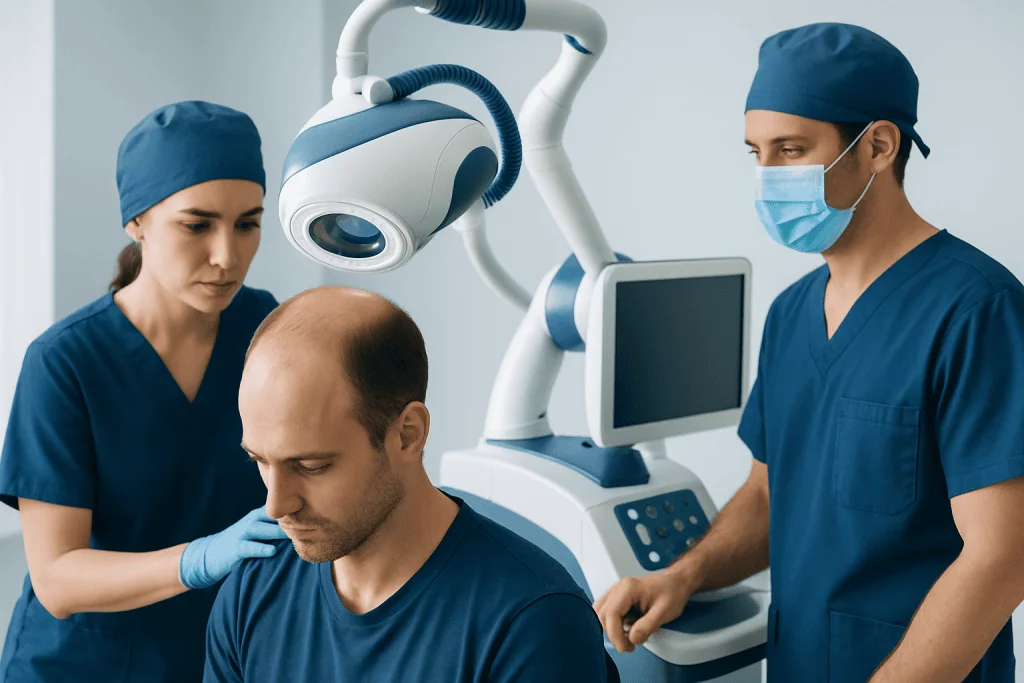
Pattern hair loss usually develops gradually. In men, it may cause a receding hairline or thinning at the crown. In women, it more often appears as widening of the central part or diffuse thinning over the top of the scalp while the frontal hairline is relatively preserved. Family history can increase the likelihood of this condition.
Telogen effluvium is a common type of diffuse shedding that can follow physical or emotional stress, fever, surgery, rapid weight change, childbirth, or certain medicines. The shedding often becomes noticeable several months after the trigger. It can improve over time, although a clinician should assess persistent or recurrent shedding.
Patchy hair loss may occur with alopecia areata, an autoimmune condition in which the immune system affects hair follicles. Scaling, itching, redness, broken hairs, or discomfort can point to scalp inflammation or infection. Scalp conditions such as seborrheic dermatitis may also contribute to irritation and increased shedding, although they do not usually cause permanent baldness when appropriately managed.
Scarring alopecia damages hair follicles and can lead to permanent hair loss. Smooth shiny areas without visible follicle openings, scalp pain, burning, pustules, or persistent inflammation should be assessed promptly by a dermatologist. Hair transplantation is generally not considered until the underlying disease is confirmed to be inactive and the scalp is stable.
Assessment and Diagnosis Before Treatment

A dermatologist or qualified hair-restoration clinician usually begins by discussing the timing and pattern of hair loss, family history, medical conditions, medicines, diet, recent illness, hair-care practices, and goals for treatment. The scalp and hair are examined to identify signs of miniaturization, breakage, inflammation, infection, or scarring.
In some cases, dermoscopy, also called trichoscopy, allows the clinician to examine hair shafts and follicles more closely. Blood tests may be considered when the history or examination suggests a possible nutritional deficiency, thyroid disorder, hormonal concern, or other medical contributor. A small scalp biopsy is sometimes needed when scarring alopecia or another uncertain diagnosis is suspected.
For people considering transplantation, the assessment also includes donor-area density and stability, hair shaft characteristics, scalp flexibility, the extent of current and likely future loss, and whether hair loss has been adequately controlled. A realistic long-term plan is important because native hair can continue to thin after a transplant.
Photographs taken under consistent lighting can help monitor change over time. This is useful because many effective treatments work gradually, and early improvement may be difficult to notice from day to day.
Non-Surgical Hair Restoration Options
For pattern hair loss, clinicians may recommend medicines that help reduce follicle miniaturization or support hair growth. The specific choice depends on factors such as age, sex, medical history, pregnancy plans, other medicines, and the type of hair loss. A doctor can explain expected benefits, limitations, possible side effects, and whether treatment is appropriate.
Topical hair-growth treatments may be used for some people with pattern hair loss. Prescription oral medicines are also used in selected patients under medical supervision. These treatments commonly require several months before a change is noticeable, and benefits may diminish if treatment is stopped. They are not appropriate for every cause of hair loss.
Low-level light devices are another non-surgical option that may be considered for some people with pattern thinning. Evidence and response can vary, so a clinician can help place this approach within a broader plan. Learn more about laser hair therapy as a non-invasive option that may be discussed for suitable patients.
Supportive care also matters. Gentle hair practices, avoiding tight styles and harsh chemical processing, treating scalp inflammation, and ensuring adequate nutrition can protect existing hair. Supplements are not a replacement for diagnosis, and they are most useful only when a true deficiency or dietary shortfall has been identified.
Hair Transplantation and Other Cosmetic Approaches
Hair transplantation moves hair follicles from a donor area, usually the back and sides of the scalp, to areas of thinning or baldness. The most common modern method is follicular unit extraction, or FUE, in which individual follicular units are harvested and implanted. FUE hair transplantation may be an option for appropriately selected people with stable donor hair and a healthy scalp.
Direct Hair Implantation, often called DHI, is a technique used for placing grafts into the recipient area. The suitability of a particular technique depends on the hair-loss pattern, scalp characteristics, available donor supply, desired coverage, and the experience of the clinical team, rather than on a technique name alone. DHI hair transplantation can be discussed during a personalized surgical consultation.
A transplant can improve coverage, but it cannot restore unlimited density or create new donor hair. Transplanted hairs commonly shed in the early healing period before new growth begins. Visible growth develops gradually over months, and final maturation can take longer. Existing non-transplanted hair may still need medical treatment to help slow future thinning.
Some people prefer non-surgical cosmetic choices. Scalp micropigmentation uses carefully placed pigment to create the appearance of closely cut hair or greater density. Hair fibers, wigs, and hair systems can provide immediate camouflage. These options may be useful alone or alongside medical treatment and surgery.
Choosing the Treatment That Fits Your Needs
The best hair restoration plan reflects the diagnosis first. A person with temporary shedding may benefit most from identifying and addressing the trigger. Someone with early pattern thinning may consider medical treatment to protect existing hair, while a person with stable, established hair loss and sufficient donor supply may consider transplantation.
Personal priorities also guide the decision. These may include whether the goal is slowing further loss, increasing visible density, restoring a hairline, avoiding daily treatment, minimizing downtime, or improving the appearance of thinning without surgery. Cost, maintenance, recovery time, and tolerance for uncertainty should all be discussed openly.
Women can experience many types of hair loss, including diffuse thinning, hormonal influences, traction-related loss, and autoimmune conditions. Surgical candidacy is assessed individually, particularly because donor-area thinning can be more diffuse. female hair transplantation may be appropriate for selected patients after careful evaluation.
A reputable clinician should explain what can reasonably be achieved, including the possibility that more than one treatment may be needed over time. Decisions should not be rushed, especially when hair loss is active, the diagnosis is unclear, or a person has signs of scalp disease.
Recovery, Self-Care, and Long-Term Planning
After a hair transplant, the care team provides instructions on washing, sleeping position, activity, sun protection, and when to return to usual hair care. Temporary redness, swelling, crusting, or shedding of transplanted hair can occur during healing. Following postoperative instructions closely helps protect grafts and reduce avoidable irritation.
Hair restoration is usually a long-term process rather than a one-time event. Pattern hair loss can progress, so medical treatment and regular review may be recommended even after surgery. Periodic photographs and follow-up appointments can help assess response and adjust the plan when needed.
Daily care should be gentle and practical. This includes avoiding persistent traction from tight braids, ponytails, extensions, or headwear; limiting heat and chemical damage; managing dandruff or other scalp symptoms; and eating a balanced diet that meets protein, vitamin, and mineral needs. People should seek medical advice before starting supplements or changing prescribed medication.
Acibadem International’s multidisciplinary specialists and JCI-accredited hospitals assess and treat hair-loss concerns for international patients, with treatment plans based on the cause of hair loss and individual goals.
When to See a Doctor
A medical assessment is advisable for new, persistent, or distressing hair loss. Early review is particularly important when loss is sudden, patchy, rapidly worsening, or accompanied by itching, scaling, redness, pain, burning, pus-filled bumps, or changes in the skin of the scalp.
People should also speak with a clinician if hair shedding begins after a new medicine, substantial illness, surgery, pregnancy, rapid weight change, or a major dietary change. A clinician can help determine whether a reversible trigger, a scalp condition, or a longer-term type of alopecia may be involved.
Urgent evaluation may be needed if hair loss occurs with severe scalp pain, marked swelling, fever, signs of infection, or a widespread rash. A dermatologist can identify conditions that require targeted treatment and advise whether cosmetic restoration should be delayed until the scalp is healthy and stable.
Frequently asked questions
What is the most effective hair restoration treatment?
There is no single best treatment for everyone because effectiveness depends on the cause and stage of hair loss. Medical treatment may help preserve existing hair in pattern hair loss, while transplantation may help restore coverage in selected people with stable loss and adequate donor hair. A diagnosis from a qualified clinician is the best starting point.
Can hair grow back after thinning?
Hair can regrow in some situations, particularly when shedding is related to a temporary trigger such as illness, stress, nutritional deficiency, or certain scalp conditions. In long-term pattern hair loss, treatment may slow progression and improve density, but results differ between individuals. Earlier treatment may help preserve more existing hair.
Is a hair transplant permanent?
Transplanted follicles are typically taken from areas that are more resistant to pattern hair loss, so they may continue growing for many years. However, a transplant does not stop thinning of the person’s existing, non-transplanted hair. Long-term planning and, when appropriate, medical treatment can help maintain a balanced appearance.
Who is not a good candidate for hair transplantation?
People may not be suitable candidates if they have insufficient donor hair, active scalp inflammation, uncontrolled hair loss, an untreated scarring condition, or expectations that cannot be met safely. Some people with diffuse thinning may need medical treatment and observation before surgery is considered. A detailed consultation helps determine suitability.
How long does it take to see results from hair restoration?
Non-surgical medical treatments often require several months of consistent use before improvement can be assessed. After transplantation, early shedding is common, and new growth usually develops gradually over subsequent months. The timing and extent of results vary with the treatment, hair-loss type, and individual healing.
Do vitamins stop hair loss?
Vitamins and minerals can help when hair loss is related to a confirmed nutritional deficiency, but they do not reliably treat all forms of hair loss. Taking high-dose supplements without medical advice may be ineffective or sometimes harmful. A clinician can advise whether testing or dietary support is needed.
References
- American Academy of Dermatology Association
- National Institute of Arthritis and Musculoskeletal and Skin Diseases
- British Association of Dermatologists
- Mayo Clinic
- National Health Service
This article is for general information only and is not a substitute for professional medical advice. Please consult a qualified doctor about your individual situation.
Hair transplant in Turkey — costs, graft counts & a free assessment
JCI-accredited · board-certified surgeons · reply within 24h
Add us as a Preferred Source to see more of our trusted health content across Google Search, AI Overviews and Discover.

Related Treatments
Related Conditions
More from the Health Library



Related Specialists

Prof. Dr. Sedef Şahin
Dermatology
Prof. Dr. Özlem Dicle
Dermatology
Prof. Dr. Emel Öztürk Durmaz
Dermatology
Assoc. Prof. Dr. Yasemin Koyuncu
Dermatology