How Do Hair Transplants Work? Step by Step

A hair transplant relocates a person’s own hair follicles to thinning or bald areas. The procedure usually includes consultation, design, donor harvesting, graft preparation, implantation, and recovery.
Key Takeaways
- A hair transplant relocates a person’s own hair follicles to thinning or bald areas.
- The procedure usually includes consultation, design, donor harvesting, graft preparation, implantation, and recovery.
- Results develop gradually because transplanted hairs typically shed first and then regrow over several months.
- Suitability depends on the cause of hair loss, donor hair quality, scalp health, and overall expectations.
- Modern methods such as FUE and DHI aim to create natural-looking hairlines with minimal visible scarring.
Hair transplants work by moving healthy hair follicles from a donor area, usually the back or sides of the scalp, to areas with thinning or hair loss. The process is carefully planned and performed in stages, from assessment and graft collection to implantation and recovery.
Overview: What Is a Hair Transplant?
Hair transplants are medical procedures used to restore hair in areas affected by thinning or baldness. They work by taking hair follicles from a donor area, most often the back or sides of the scalp where hair is usually more resistant to long-term shedding, and placing them into areas with reduced hair density. Because the transplanted follicles are the patient’s own tissue, the goal is a natural pattern of growth that continues over time.
The procedure is most commonly used for pattern hair loss, but it may also be considered in selected people with eyebrow, beard, or scar-related hair loss. A transplant does not create new hair. Instead, it redistributes available hair from one part of the scalp to another, so planning is important to make the best use of the donor supply.
Modern techniques are designed to improve precision, comfort, and cosmetic results. Common approaches include FUE hair transplant and DHI hair transplant, both of which focus on moving follicular units, the natural groupings of one to four hairs that grow together. The exact method used depends on hair type, the size of the treatment area, and the surgeon’s plan.
Who May Be a Good Candidate?
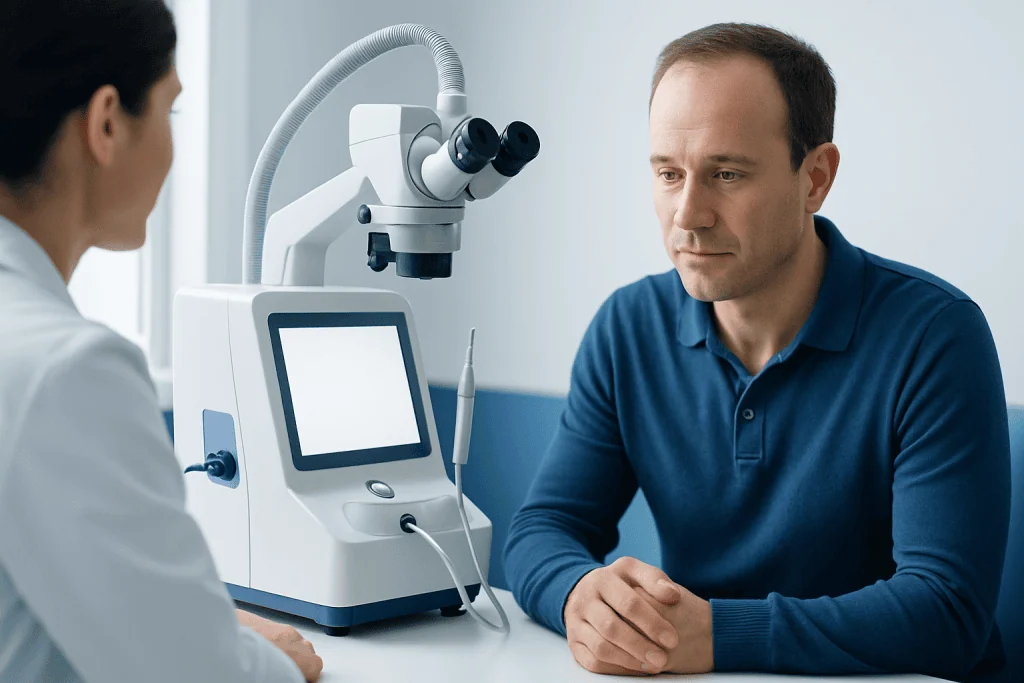
A good candidate for hair transplantation usually has stable hair loss, enough healthy donor hair, and realistic expectations about what the procedure can achieve. Hair transplant surgery can improve density and reshape the hairline, but it may not restore the same fullness a person had in adolescence. The most suitable candidates are often those with male or female pattern hair loss, where the donor zone remains relatively strong.
Before recommending treatment, doctors also consider the cause of hair loss. Some scalp conditions can affect whether a transplant is appropriate. For example, active inflammatory skin disease, heavy scarring, or unstable hair loss may need medical treatment first. In some cases, doctors may evaluate conditions such as alopecia areata or seborrheic dermatitis because ongoing scalp inflammation can influence timing and results.
Age alone does not decide eligibility, but timing matters. In younger people, hair loss may continue to progress, so treatment planning often includes a long-term strategy rather than only immediate cosmetic improvement. A consultation helps clarify goals, likely coverage, and whether surgical or non-surgical hair restoration options should be considered first.
Step by Step: How the Procedure Works

The first step is consultation and design. The doctor examines the scalp, evaluates the donor area, reviews medical history, and discusses the pattern of hair loss. Photos may be taken, and the new hairline is planned carefully to suit facial proportions, age, and expected future hair loss. This stage is important because natural results depend on good distribution, correct angling, and a realistic use of grafts.
The second step is preparation on the day of the procedure. The scalp is cleaned, and local anesthesia is used to numb the donor and recipient areas. Depending on the chosen method, some patients may have part or all of the donor hair trimmed, although options such as hair transplant without shaving may be available for selected cases. The surgical team then begins harvesting follicular units from the donor zone.
The third step is graft collection and preparation. In FUE, individual follicular units are removed one by one using specialized instruments. The grafts are then sorted and kept in a controlled environment to help preserve their quality. Next, the doctor creates tiny recipient sites or directly implants the follicles, depending on the technique. Each graft is placed with attention to angle, direction, spacing, and density so the final growth pattern looks as natural as possible.
The final step is completion and immediate aftercare. Once implantation is finished, the scalp is checked, cleaned, and protected. Patients receive instructions about washing, sleeping position, activity limits, and medicines if prescribed. Most people go home the same day, making the procedure a planned outpatient treatment rather than a prolonged hospital stay.
Techniques Used in Hair Transplantation
Several techniques may be used in modern hair transplantation, and each has a specific role. Follicular Unit Extraction, or FUE, is one of the most widely used methods. It removes individual follicular units from the donor area and can reduce the appearance of a linear scar. This approach is often chosen when patients prefer shorter hairstyles or need a flexible graft-harvesting plan.
Direct Hair Implantation, often called DHI, is a variation in which follicles are implanted using a specialized implanter tool. This can help the team control depth, direction, and placement during the implantation stage. Some clinics may also offer advanced variations such as sapphire transplant, which uses fine blades for recipient-site creation, or other technology-assisted options depending on the case.
The best technique is not the same for everyone. Hair texture, curl pattern, donor density, scalp laxity, previous procedures, and treatment goals all matter. For example, women may need a tailored approach to preserve existing hair and address diffuse thinning, while revision cases may need hair transplant repair to improve an earlier result. A personalized plan is usually more important than choosing a method based on its name alone.
Recovery and When Results Appear
Recovery after a hair transplant is gradual and usually manageable with proper aftercare. In the first few days, mild swelling, redness, tenderness, or small crusts can occur in the donor and recipient areas. These changes are generally temporary. Patients are usually advised to avoid rubbing the scalp, strenuous exercise, direct sun exposure, and activities that may disturb the newly placed grafts.
One part of the process that can surprise patients is temporary shedding of the transplanted hairs. This is common and does not usually mean the transplant has failed. The follicles remain in the scalp, and new growth typically begins later. Hair often starts to reappear over the following months, with gradual thickening and better coverage over time.
Final results take patience. Early improvement may be seen within a few months, but fuller maturation usually takes longer because hair grows in cycles. Texture and density can continue to improve as the transplanted follicles settle into their new location. Follow-up visits help the doctor monitor healing, assess growth, and discuss whether supportive medical treatments may help protect non-transplanted hair.
Benefits, Limits, and Possible Risks
The main benefit of hair transplants is that they use the patient’s own living follicles to restore hair in a lasting way. When the plan is well designed and the donor supply is suitable, the result can look natural and blend with surrounding hair. For many people, improved hair coverage can support confidence and reduce the daily need for cosmetic camouflage.
At the same time, a transplant has limits. It cannot stop every cause of future hair loss, and it cannot provide unlimited density if the donor area is limited. Some people may still need medicines or other therapies to help maintain existing hair. A transplant also may not be appropriate when hair loss is unstable or when the scalp has active disease, such as significant psoriasis affecting the treatment area.
Like any procedure, hair transplantation carries possible risks. These can include bleeding, infection, prolonged redness, swelling, numbness, uneven growth, or an unnatural appearance if graft placement is poorly planned. Some people may also form more noticeable scars. Choosing an experienced medical team and following aftercare instructions can help reduce these risks, but no procedure is completely risk free.
Preparation, Self-care, and When to Seek Medical Advice
Preparation begins with an honest consultation. Patients should share their full medical history, medicines, allergies, smoking status, and any scalp symptoms such as itching, scaling, or inflammation. The doctor may advise adjustments before the procedure and may recommend treatment first if there is a scalp condition, including irritation from contact dermatitis or another skin disorder that could affect healing.
After the procedure, self-care matters. Patients should wash the scalp only as directed, avoid picking crusts, protect the area from sun exposure, and follow activity restrictions for the recommended time. Good nutrition, smoking cessation, and careful follow-up can support healing. It is also helpful to understand that appearance changes week by week, so early shedding or patchy regrowth is often part of the normal timeline.
Medical advice should be sought if there is severe pain, increasing swelling, pus, fever, persistent bleeding, a sudden foul odor, or concerns about delayed healing. A specialist review is also sensible if hair loss is rapid, patchy, or associated with scalp rash before considering surgery. Near the end of the treatment journey, some patients choose centers with multidisciplinary support; Acibadem International’s specialists in JCI-accredited hospitals diagnose and treat hair loss and hair restoration needs for international patients.
Frequently asked questions
Do hair transplants really work?
Hair transplants can work well in carefully selected patients because they move living follicles from a stronger donor area to a thinning area. Results depend on the cause of hair loss, donor hair quality, surgical planning, and proper aftercare.
Is a hair transplant permanent?
Transplanted follicles are generally chosen from areas that are more resistant to common pattern hair loss, so they often continue growing long term. However, non-transplanted hair can still thin over time, which is why ongoing medical follow-up may still be useful.
How long does it take to see results after a hair transplant?
Visible growth usually does not happen immediately. Many patients notice temporary shedding first, then gradual regrowth over the following months, with more mature results appearing later as the hair thickens and lengthens.
Is the procedure painful?
The procedure is usually done with local anesthesia, so the scalp is numbed during treatment. Some soreness, tightness, or tenderness can occur afterward, but many patients describe recovery discomfort as manageable.
Can women have hair transplants?
Yes, some women can be good candidates, especially when there is a stable pattern of hair loss and a suitable donor area. Evaluation is important because diffuse thinning and certain medical causes of hair loss may need a different treatment approach.
Will transplanted hair look natural?
A natural look depends on careful design of the hairline and precise placement of each graft. The angle, direction, spacing, and density all matter, so an individualized surgical plan is essential.
Who should avoid or delay a hair transplant?
A transplant may need to be delayed in people with active scalp inflammation, uncontrolled medical problems, unstable hair loss, or unrealistic expectations. A doctor may first recommend treating the underlying scalp or hair condition before surgery is considered.
References
- American Academy of Dermatology
- National Health Service
- International Society of Hair Restoration Surgery
- Mayo Clinic
- DermNet
This article is for general information only and is not a substitute for professional medical advice. Please consult a qualified doctor about your individual situation.
Hair transplant in Turkey — costs, graft counts & a free assessment
JCI-accredited · board-certified surgeons · reply within 24h
Add us as a Preferred Source to see more of our trusted health content across Google Search, AI Overviews and Discover.

Related Treatments
Related Conditions
More from the Health Library



Related Specialists

Prof. Dr. Sedef Şahin
Dermatology
Prof. Dr. Özlem Dicle
Dermatology
Prof. Dr. Emel Öztürk Durmaz
Dermatology
Assoc. Prof. Dr. Yasemin Koyuncu
Dermatology