Manual FUE or NeoGraft: Which Method Do Surgeons Use?

Manual FUE and NeoGraft both belong to the FUE family of hair transplant methods. Neither method is universally better; outcomes depend strongly on surgical planning and operator experience.
Key Takeaways
- Manual FUE and NeoGraft both belong to the FUE family of hair transplant methods.
- Neither method is universally better; outcomes depend strongly on surgical planning and operator experience.
- Important differences include how grafts are extracted, handled, and implanted.
- Hair type, donor area quality, degree of hair loss, and scarring risk can influence method selection.
- A thorough consultation helps determine whether standard FUE, DHI, repair work, or non-surgical options are more suitable.
Manual FUE and NeoGraft are both ways to perform follicular unit extraction, a common hair transplant technique. The best choice usually depends less on the device itself and more on the surgeon’s skill, the patient’s hair characteristics, and the treatment plan.
Overview: Manual FUE and NeoGraft Explained
People comparing hair transplant options often ask whether surgeons use manual FUE or NeoGraft. In practice, both are forms of follicular unit extraction, commonly called FUE. With FUE, individual follicular units are removed from the donor area, usually the back or sides of the scalp, and then transplanted to areas with thinning or balding hair.
Manual FUE generally refers to extraction performed by the surgeon using handheld punches and instruments, with direct control over the angle, depth, and movement of each graft. NeoGraft is a device-assisted FUE system that helps with extraction and collection of follicles, often using pneumatic support. It is still FUE, but the tool and workflow differ.
For patients, the most important point is that the method name alone does not determine results. Naturalness, graft survival, donor preservation, and healing depend on many factors, including diagnosis, scalp condition, hair characteristics, and the expertise of the medical team. A well-planned FUE hair transplant can be performed with different tools while still aiming for safe and natural-looking outcomes.
How the Two Methods Differ in Practice
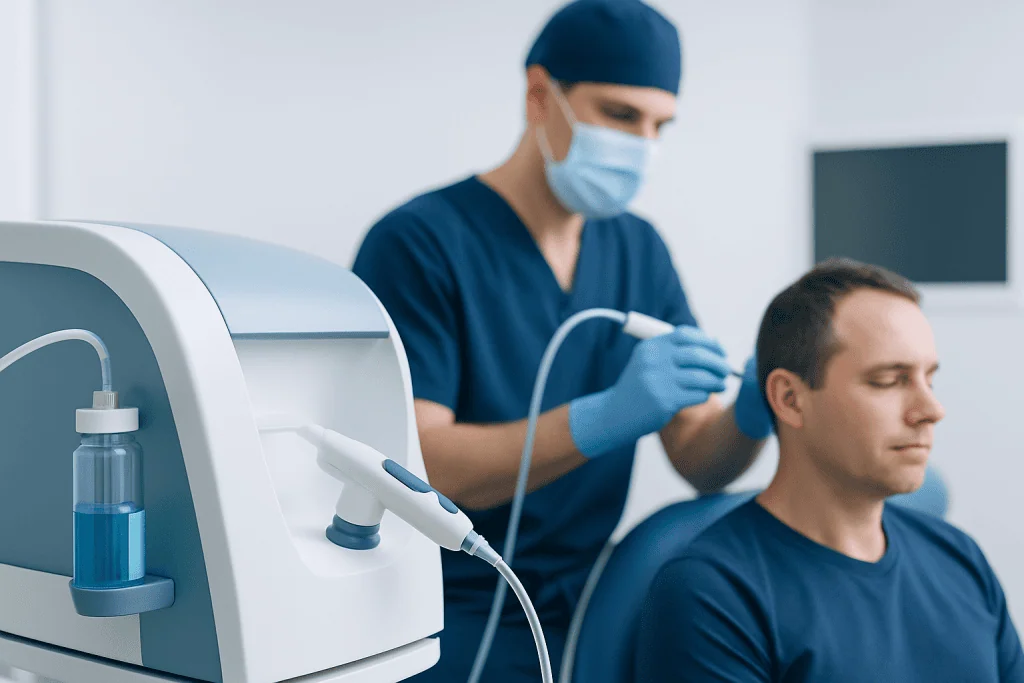
In manual FUE, the surgeon typically uses a small handheld punch to score around each follicular unit before gently removing it. This can allow a high degree of tactile feedback and fine control, which may be especially helpful in patients with curly hair, variable follicle angles, or scarred scalp tissue. The pace may be slower, but the surgeon can adapt moment by moment.
With NeoGraft, the device assists with extraction and often suction-based graft collection. This can improve workflow efficiency in some settings and may reduce handling steps. However, device-assisted extraction still requires careful technique. The surgeon must choose the correct punch size, depth, and approach to avoid unnecessary follicle injury or overharvesting.
Implantation is another important part of the procedure. Even if extraction is done manually or with NeoGraft, the placement of grafts into the recipient area has a major effect on density and natural appearance. Hairline design, angle, direction, and spacing all matter. Some clinics may also recommend alternatives such as DHI hair transplant when more direct implantation control is desired for selected patients.
- Manual FUE: more direct tactile control during extraction
- NeoGraft: device-assisted extraction and collection
- Both require careful graft handling and skilled implantation
- Neither method replaces surgical judgment and planning
Which Method Do Surgeons Use?
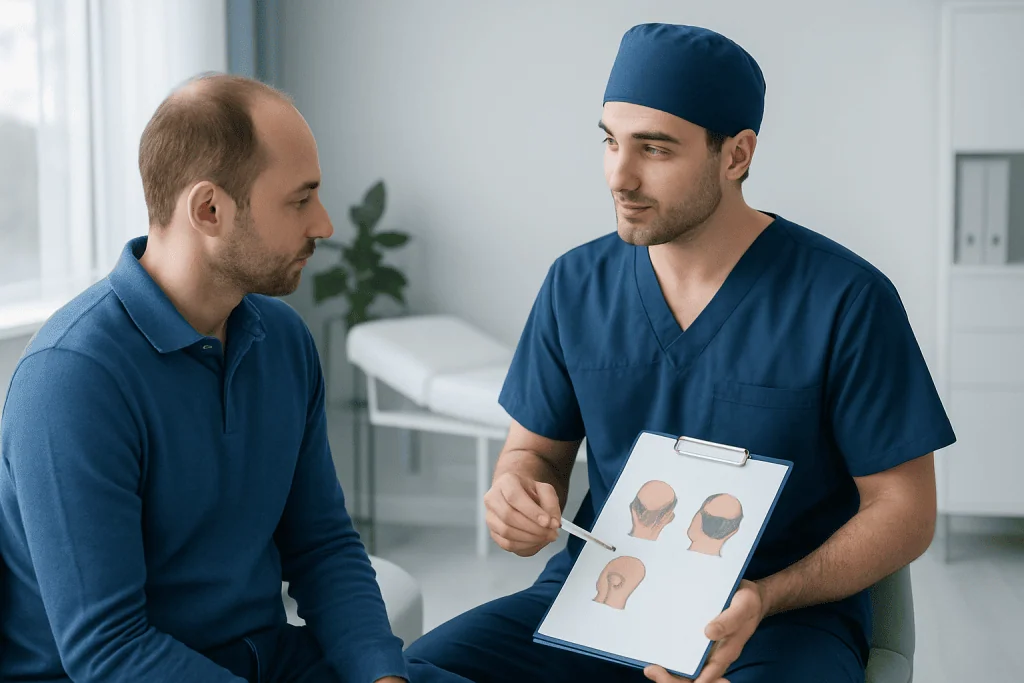
Surgeons may use manual FUE, NeoGraft, or another FUE-based system depending on their training, preferences, and the patient’s needs. There is no single method used by all surgeons. Many experienced hair restoration specialists choose the tools they believe will best support precision, graft protection, and an efficient procedure for a specific case.
Some surgeons prefer manual FUE because it offers hands-on control and flexibility, especially in challenging donor areas. Others use NeoGraft or similar motorized or pneumatic systems to support consistency and speed in suitable patients. In some clinics, both approaches are available, and the technique is selected after examining the scalp, donor density, and pattern of hair loss.
Patients benefit most when they ask not only which method is used, but why. A helpful consultation should explain the reasons behind the recommendation, expected graft numbers, limitations of the donor area, and whether the person is a good candidate for surgery at all. In some cases, non-surgical measures or staged treatment may be more appropriate than immediate transplantation.
Who May Be a Good Candidate for Each Approach?
Suitability depends on the cause of hair loss, the stability of the condition, and the quality of the donor area. People with androgenetic alopecia, often called pattern hair loss, are common candidates for FUE procedures when donor hair is adequate. Those with active inflammatory scalp disease, uncontrolled shedding, or uncertain diagnosis may need evaluation and treatment before surgery.
Manual FUE may be favored when the surgeon expects more technical complexity, such as unusual hair curl, sharply angled follicles, previous scarring, or the need for refined harvesting from a limited donor zone. Device-assisted FUE such as NeoGraft may be considered in patients with favorable scalp characteristics and when the treating surgeon believes it supports an efficient extraction process without compromising graft quality.
Not every patient with hair loss should undergo transplantation. Conditions such as alopecia areata can cause patchy hair loss driven by immune activity rather than simple pattern baldness, and active disease may make surgery inappropriate until the condition is stable. Scalp disorders like seborrheic dermatitis or scarring tendencies such as keloid may also affect planning and healing.
Benefits, Limitations, and What Results Depend On
Both manual FUE and NeoGraft aim to move healthy follicles while minimizing visible linear scarring. Compared with older strip harvesting methods, FUE often allows smaller extraction sites and can offer a different recovery experience. Many patients appreciate the possibility of wearing shorter hairstyles, although tiny donor scars may still be present.
Limitations exist with any transplant method. The donor area is finite, so overharvesting can thin the back or sides of the scalp. Hair transplantation also redistributes existing hair; it does not create new follicles. Density may improve, but it may not match natural youthful fullness, especially in advanced hair loss.
Results depend on several linked factors: accurate diagnosis, realistic goals, donor supply, graft survival, and ongoing management of future hair loss. The method used for extraction is only one piece of the picture. Some patients may also need supportive care such as non-surgical hair restoration or, if they have had an unsatisfactory prior procedure, hair transplant repair.
Consultation, Diagnosis, and Questions to Ask
A proper consultation should begin with diagnosis rather than device choice. The clinician will usually examine the scalp, assess the pattern and stability of hair loss, review medical history, and discuss medications, family history, and past procedures. Donor density, hair shaft thickness, scalp laxity, and skin health can all influence the plan.
Photographs and scalp mapping may help document baseline hair loss and support realistic expectations. The surgeon should discuss the estimated number of grafts, likely hairline design, whether a single session is sufficient, and what future hair loss may mean over time. This is also the right moment to ask who performs each part of the procedure and how graft quality is protected.
Useful patient questions include:
- Why is manual FUE or NeoGraft being recommended for this specific case?
- How many grafts are expected, and what result is realistic?
- What are the risks of shock loss, under-density, or donor thinning?
- Will ongoing medical treatment for hair loss still be needed after surgery?
- Are there alternatives, such as conservative management or another transplant technique?
Recovery, Aftercare, and Long-Term Maintenance
Recovery after FUE usually involves a short period of scalp tenderness, small crusts, and mild redness in the donor and recipient areas. Patients are commonly advised to follow detailed washing instructions, avoid rubbing or scratching, protect the scalp from sun exposure, and temporarily limit strenuous activity. Exact aftercare varies by clinic and should be followed carefully.
Transplanted hairs often shed in the early weeks before new growth begins later. This can be expected and does not necessarily mean the grafts failed. Visible improvement develops gradually, and final maturation may take many months. Patience is important, as early appearance does not reflect the final result.
Long-term maintenance also matters because transplanted hair may be permanent, but native non-transplanted hair can continue to thin. Some patients benefit from medical management, lifestyle guidance, or adjunctive treatments. Near the end of the care pathway, patients may wish to know that Acibadem International’s multidisciplinary specialists and JCI-accredited hospitals diagnose and treat hair loss concerns for international patients.
When to See a Specialist
A specialist review is a good idea when hair loss is progressive, patchy, sudden, associated with scalp symptoms, or causing significant distress. Medical evaluation is especially important if there is itching, scaling, redness, pain, or scarring, since these features may point to a condition that needs treatment before any cosmetic procedure is considered.
People who have already had a transplant and are unhappy with density, hairline shape, or donor appearance should also seek expert assessment. Revision may be possible, but planning must be careful to preserve the remaining donor supply. Those interested in other cosmetic hair restoration goals, such as facial hair or female-pattern concerns, may also need tailored approaches such as beard or eyebrow transplantation or specialized planning for women.
Overall, the answer to “Manual FUE or NeoGraft: which method do surgeons use?” is that surgeons may use either. What matters most is a clear diagnosis, appropriate patient selection, experienced technique, and a treatment plan designed around the individual rather than the machine.
Frequently asked questions
Is NeoGraft the same as FUE?
NeoGraft is a device-assisted way of performing FUE, or follicular unit extraction. It is not a separate transplant concept, but rather a tool and workflow used within the FUE method.
Is manual FUE better than NeoGraft?
Neither is always better for every patient. The quality of the result depends more on diagnosis, surgical planning, graft handling, and the experience of the surgeon than on the brand or type of device alone.
Do all surgeons use NeoGraft for hair transplants?
No. Some surgeons prefer manual FUE, some use NeoGraft or other motorized systems, and some offer more than one technique. The choice usually depends on the surgeon’s training and the patient’s scalp and hair characteristics.
Which method leaves less scarring?
Both manual FUE and NeoGraft are designed to avoid the linear scar associated with strip harvesting. However, both still create small extraction marks, and the visibility of these marks depends on technique, healing, skin type, and whether the donor area is overharvested.
Can people with any type of hair loss have FUE?
No. A person needs the right diagnosis and a stable enough condition for transplantation to be appropriate. Some causes of hair loss, including active inflammatory or autoimmune scalp disorders, may need medical treatment first.
How should a patient choose between manual FUE and NeoGraft?
A patient should focus on the surgeon’s assessment, experience, and explanation of why a specific method fits the case. Asking about graft survival, donor management, realistic density, and long-term planning is often more helpful than choosing based on the device name alone.
References
- American Academy of Dermatology
- International Society of Hair Restoration Surgery
- National Institute of Arthritis and Musculoskeletal and Skin Diseases
- Mayo Clinic
- MedlinePlus
This article is for general information only and is not a substitute for professional medical advice. Please consult a qualified doctor about your individual situation.
Hair transplant in Turkey — costs, graft counts & a free assessment
JCI-accredited · board-certified surgeons · reply within 24h
Add us as a Preferred Source to see more of our trusted health content across Google Search, AI Overviews and Discover.

Related Treatments
Related Conditions
More from the Health Library



Related Specialists

Prof. Dr. Sedef Şahin
Dermatology
Prof. Dr. Özlem Dicle
Dermatology
Prof. Dr. Emel Öztürk Durmaz
Dermatology
Assoc. Prof. Dr. Yasemin Koyuncu
Dermatology