Robotic Hair Surgery: Benefits, Limits, and Patient Selection
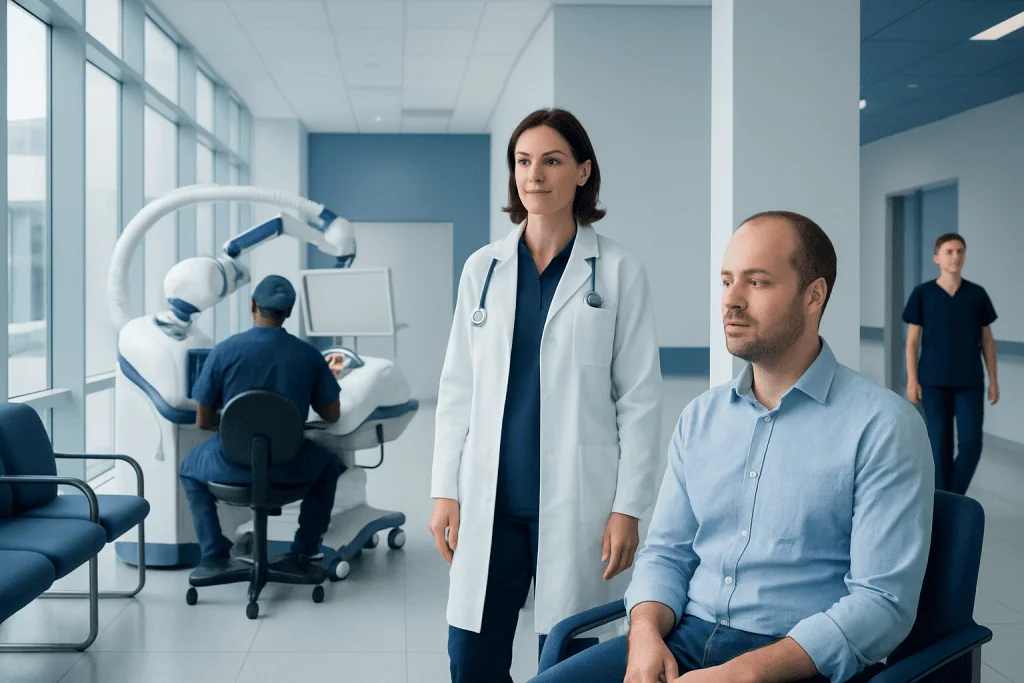
Robotic hair surgery is usually a tool used within FUE hair transplantation, not a separate cure for hair loss. Good candidates typically have stable hair loss, adequate donor hair, and scalp characteristics that the robotic system can track reliably.
Key Takeaways
- Robotic hair surgery is usually a tool used within FUE hair transplantation, not a separate cure for hair loss.
- Good candidates typically have stable hair loss, adequate donor hair, and scalp characteristics that the robotic system can track reliably.
- The main benefits are precision, consistency, and potentially less operator fatigue during graft harvesting.
- Important limits include cost, hair and skin characteristics, and the fact that implantation design still depends heavily on the clinical team.
- A medical assessment is essential because some causes of hair loss, such as [[DISEASE:alopecia-areata|alopecia areata]], may need medical treatment rather than transplant surgery.
Robotic hair surgery is a technology-assisted form of hair transplantation, most often used during follicular unit extraction (FUE). It can improve consistency in selected patients, but it is not suitable for everyone and does not replace careful medical evaluation, artistic planning, or experienced surgical judgment.
Overview: What Robotic Hair Surgery Means
Robotic hair surgery refers to a technology-assisted approach to hair transplantation in which a computer-guided system helps identify and harvest follicular units from the donor area. In practice, it is most commonly used as part of follicular unit extraction, or FUE. The system uses imaging, software analysis, and a robotic arm or automated device to support graft extraction under the supervision of a hair restoration surgeon.
It is important to understand that the robot does not independently diagnose hair loss, decide whether a person should have surgery, or guarantee a particular cosmetic result. Hair restoration remains a medical and aesthetic procedure that depends on diagnosis, donor supply, hair characteristics, hairline planning, and the skill of the clinical team. Robotic technology is best viewed as one tool that may improve certain steps of surgery in appropriately selected patients.
For many people considering robotic hair surgery, the main questions are whether it offers a real advantage, whether it is worth the added complexity or cost, and whether they are suitable candidates. The answers depend on individual anatomy, the pattern of hair loss, and the goals of treatment.
How the Procedure Works
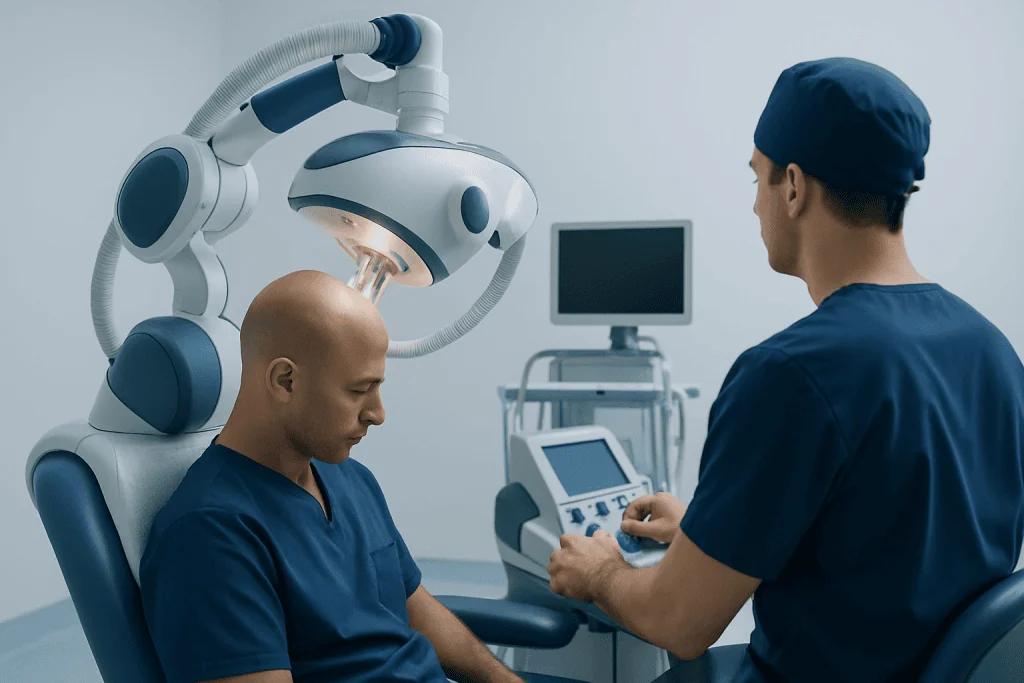
Robotic systems are generally designed to assist with donor harvesting during FUE. In FUE, individual follicular units are removed from areas of permanent hair growth, usually the back and sides of the scalp, and then prepared for implantation into thinning or bald areas. The robotic platform maps the donor area, measures angles and spacing, and helps guide extraction with a high degree of repeatability.
Before surgery, the surgeon evaluates the scalp, confirms the diagnosis, estimates donor density, and plans the hairline and overall coverage. The donor hair is usually trimmed short so the system can accurately identify follicular units. During the procedure, the robot helps select and score grafts, while the surgeon and team monitor graft quality, adjust settings, and protect the donor area from overharvesting.
After extraction, implantation may be performed manually or with another assisted method, depending on the clinic’s technique. This part remains highly dependent on human planning and artistry because the direction, density, and natural appearance of the transplanted hair must be customized to the patient’s facial features and future hair loss pattern. Patients comparing methods may also hear about FUE hair transplant and DHI hair transplant, which use different tools and workflows for extraction or implantation.
Potential Benefits of Robotic Hair Surgery
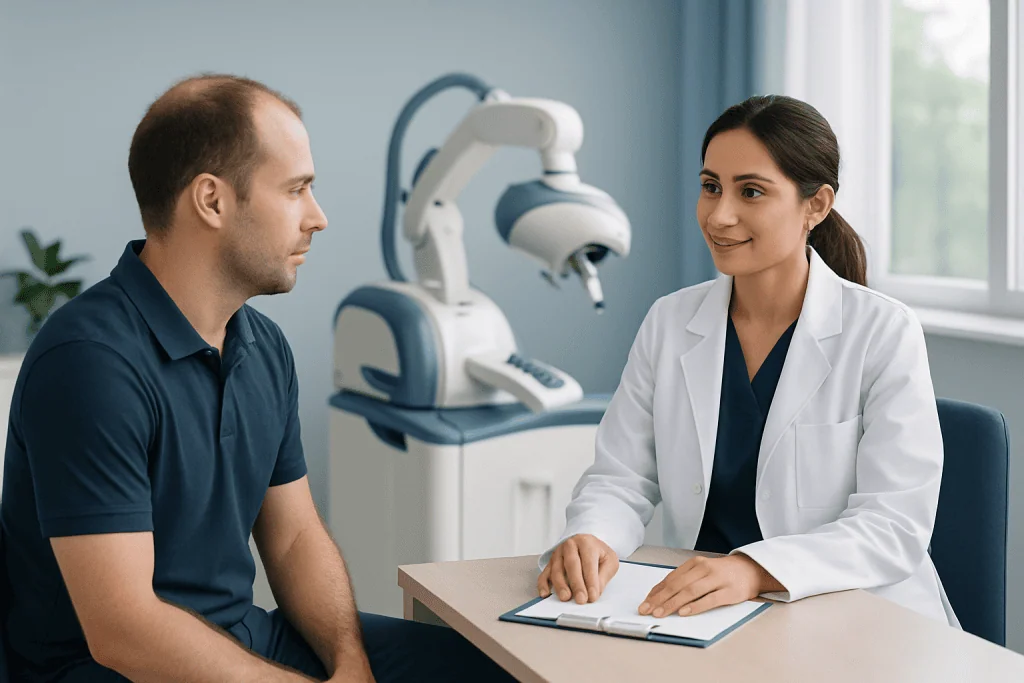
The main potential advantage of robotic hair surgery is consistency during graft harvesting. By analyzing follicle angle, spacing, and scalp characteristics, the system may help reduce variation from one extraction to the next. This can support efficient harvesting and may lower the risk of taking grafts too close together when the donor area is suitable for robotic tracking.
Another benefit is precision. Some systems can help select follicular units while attempting to preserve surrounding donor hair and maintain a more even appearance in the harvested area. This may be helpful when a patient needs a moderate number of grafts and has a well-defined donor zone. Robotics may also reduce operator fatigue during long procedures, which can contribute to steadier performance over time.
Patients often ask whether robotic technology means less invasive surgery. In general, robotic FUE is still a surgical hair transplant, so recovery, aftercare, and normal healing expectations remain similar to other FUE-based methods. The value of robotics is not that it changes the biology of healing, but that it may optimize one technical step of the procedure in selected cases.
- May improve consistency of graft harvesting
- Can assist with donor mapping and spacing
- May support efficient extraction in suitable candidates
- Can help reduce operator fatigue during repetitive steps
Limits and Disadvantages to Understand
Robotic hair surgery also has clear limits. Not every patient has hair or scalp characteristics that the system can track equally well. Very curly hair, certain hair colors with low contrast against the scalp, significant scalp laxity differences, or extensive scarring may reduce how effectively a robotic platform performs. Although technology continues to improve, these factors still matter during patient selection.
Another limitation is that the robot usually addresses only part of the transplant process. It does not replace diagnosis, hairline design, judgment about donor preservation, or decisions about long-term planning. A natural-looking result depends on more than graft extraction alone. If a patient is young or has progressive hair loss, poor planning can create an unnatural pattern later even if the technical harvest is excellent.
Cost can be higher than with conventional methods, and availability may be limited to certain centers. In addition, people with inflammatory scalp conditions, active infection, or uncontrolled skin disease may need treatment before surgery. For example, scalp inflammation related to seborrheic dermatitis or other disorders can affect comfort, healing, and the timing of transplantation. In some cases, non-surgical approaches or a different transplant method may be more appropriate than robotic extraction.
Who Is a Good Candidate?
The best candidates for robotic hair surgery are usually adults with stable pattern hair loss, a healthy donor area, and enough donor density to support transplantation. Men with androgenetic alopecia are often considered straightforward candidates when the donor hair is strong and the pattern of loss is predictable. Some women may also be candidates, but female hair loss patterns can be more diffuse, making donor assessment especially important.
People considering surgery should first have the cause of hair loss identified. Hair transplantation works best when follicles are being moved from a stable donor area to an area affected by permanent pattern loss. It is not ideal for every form of shedding or patchy hair loss. Conditions such as alopecia areata, recent stress-related shedding, or active scarring disorders may require medical treatment and follow-up rather than immediate surgery.
Other factors that influence candidacy include realistic expectations, willingness to keep the donor area short during the procedure, and understanding that transplanted density is limited by available donor supply. Good candidates usually want improvement rather than perfection and are prepared for gradual results over many months. Patients who prefer a broader discussion of options may also compare robotic methods with hair operations in general, including non-robotic FUE techniques.
Evaluation, Diagnosis, and Treatment Planning
A proper consultation is one of the most important parts of the process. The clinician reviews medical history, family history of hair loss, medications, scalp health, and prior treatments. The examination may include donor density assessment, miniaturization of existing hair, pattern analysis, and photos for planning. In some cases, blood tests or dermatology review may be advised if the cause of hair loss is uncertain.
The treatment plan should answer several practical questions: whether surgery is appropriate now, how many grafts may be needed, whether the donor area can support the plan, and what method is most suitable. The surgeon also considers future hair loss progression, because a conservative, age-appropriate hairline is often better than an overly aggressive design that may not age naturally.
Medical therapy may be recommended before or after transplantation to help preserve existing native hair. Some patients also benefit from supportive treatments such as non-surgical hair restoration or low-level light-based approaches like laser hair therapy as part of a broader plan. A thoughtful evaluation helps ensure that surgery complements, rather than replaces, long-term hair loss management.
Recovery, Results, and Self-Care After Surgery
Recovery after robotic hair surgery is similar to recovery after other FUE-based transplants. Mild redness, small crusts, temporary swelling, and scalp sensitivity are common in the first days. The clinical team provides instructions on washing, sleeping position, physical activity, and how to protect the grafts while they settle. Following these directions carefully helps support healing.
Patients should know that transplanted hairs often shed in the weeks after surgery before new growth begins. This is a normal part of the cycle. Early visible growth may start after several months, while fuller cosmetic improvement usually takes longer. Final maturation is gradual, and hair texture and density continue to evolve over time.
Long-term self-care includes scalp protection from sun exposure, gentle hair care, and keeping follow-up appointments. If the person has ongoing pattern hair loss, maintenance treatment may be discussed to protect non-transplanted hair. A transplant improves coverage in selected areas, but it does not stop the underlying tendency toward future loss.
When to See a Doctor and Questions to Ask
A person should see a doctor if hair loss is sudden, patchy, painful, associated with itching or scaling, or accompanied by other symptoms such as fatigue or significant shedding after illness. These patterns may suggest a cause that needs medical diagnosis before cosmetic planning. Persistent concern about hair thinning is also a good reason to seek assessment, especially when self-treatment has not helped.
During a consultation, helpful questions include whether the diagnosis is confirmed, whether robotic harvesting is suitable for the individual’s hair type, how the donor area will be preserved, and what results are realistic in one or more sessions. Patients can also ask whether non-robotic methods might be better for their anatomy or goals and what maintenance treatments may be needed after surgery.
Near the end of the decision process, it is reasonable to choose a center with experienced hair restoration specialists, clear aftercare instructions, and multidisciplinary support if dermatology input is needed. Acibadem International’s multidisciplinary specialists and JCI-accredited hospitals diagnose and treat hair loss for international patients, including evaluation for robotic and non-robotic transplant approaches when appropriate.
Frequently asked questions
Is robotic hair surgery the same as a regular hair transplant?
Robotic hair surgery is usually a form of FUE hair transplantation that uses a computer-guided system to assist with graft harvesting. It is not a completely different type of treatment, and many key parts of the procedure still depend on the surgeon and clinical team.
Does robotic hair surgery give better results than manual FUE?
It can offer advantages in consistency and precision for selected patients, especially during donor harvesting. However, better results are not automatic, because diagnosis, planning, graft handling, and natural hairline design remain just as important.
Who should avoid robotic hair surgery?
People with active scalp disease, unclear diagnosis, poor donor supply, or hair and skin characteristics that the system cannot track well may not be ideal candidates. Some individuals need medical treatment first, while others may do better with a different transplant method or non-surgical care.
Is robotic hair surgery painful?
The procedure is typically performed with local anesthesia, so patients should not feel sharp pain during the surgery itself. Some soreness, tightness, or tenderness afterward is common, but this is usually manageable with routine aftercare and the clinician's advice.
How long does it take to see results?
Hair transplant results develop gradually. It is common for transplanted hairs to shed before new growth begins, and visible improvement usually appears over several months, with fuller maturation taking longer.
Can women have robotic hair surgery?
Yes, some women may be candidates, but the evaluation is especially important because female hair loss can be diffuse and may affect the donor area. The decision depends on the diagnosis, donor density, and whether the pattern is suitable for transplantation.
Will robotic hair surgery stop future hair loss?
No. A hair transplant redistributes existing follicles but does not cure the underlying cause of common pattern hair loss. Many patients still need follow-up and, in some cases, ongoing medical or supportive treatment to help preserve their non-transplanted hair.
References
- American Academy of Dermatology
- International Society of Hair Restoration Surgery
- British Association of Dermatologists
- National Institute for Health and Care Excellence
- Mayo Clinic
This article is for general information only and is not a substitute for professional medical advice. Please consult a qualified doctor about your individual situation.
Robotic Hair Surgery in Turkey — costs, top hospitals & a free quote
JCI-accredited · board-certified surgeons · reply within 24h
Add us as a Preferred Source to see more of our trusted health content across Google Search, AI Overviews and Discover.

Hair Transplant
Modern FUE and DHI hair restoration with natural, lasting results.
Related Treatments
Related Conditions
More from the Health Library



Related Specialists

Prof. Dr. Sedef Şahin
Dermatology
Prof. Dr. Özlem Dicle
Dermatology
Prof. Dr. Emel Öztürk Durmaz
Dermatology
Assoc. Prof. Dr. Yasemin Koyuncu
Dermatology