Aesthetic Foot Surgery
Aesthetic foot surgery reshapes or corrects visible foot deformities to improve appearance, footwear comfort, and function. It may involve soft-tissue procedures, toe correction, or bone realignment.
Quick answer
Aesthetic foot surgery reshapes or realigns visible foot deformities, bunions, crooked or overlapping toes, a long toe, a broad forefoot, using bone, joint and soft-tissue techniques. Foot feminization surgery applies the same procedures, such as foot narrowing and toe shortening, to create a slimmer, more proportionate foot. Recovery is staged, with protected walking early and swelling that settles over months.
What Is Aesthetic Foot Surgery?
Aesthetic foot surgery is a group of surgical procedures that reshape, realign or correct visible deformities of the foot. It can involve bones, joints, tendons, ligaments, skin and soft tissues, and it is considered when the appearance of the foot, often together with pain, rubbing or footwear problems, affects daily life. People who research it include patients with bunions, crooked or overlapping toes, a toe that appears too long or too short, and a growing number of people searching for foot feminization surgery, which uses the same surgical toolkit to create a slimmer, more proportionate foot shape.
Feet are visible in ways that can feel unexpectedly personal. Open shoes, professional settings, social occasions, sports, travel and walking barefoot can make a visible foot deformity difficult to ignore. For some people, the concern is mainly appearance: a prominent bunion, curled toes, a broad forefoot that makes shoes hard to fit. For others, the cosmetic concern is closely linked with discomfort, calluses, nail pressure, skin irritation or aching after standing and walking. Both motivations are legitimate, and both deserve a proper medical assessment rather than a sales conversation.
It helps to be clear about what this surgery is not. It is not simply cosmetic surgery transplanted onto the foot. The foot is a complex weight-bearing structure, and every visible change must be considered in relation to balance, gait, joint motion, footwear comfort and long-term function. A toe that looks straighter but becomes stiff, painful or unstable is not a good result. A well-planned procedure aims to improve the shape and alignment of the foot while protecting, and, where possible, improving, the way the foot works.
The exact operation depends on the deformity. In some patients, treatment focuses on a bunion, a bony prominence and alignment problem at the base of the big toe. In others, the concern is hammertoes, claw toes, mallet toes, overlapping toes, a tailor’s bunion on the outside of the foot, toe length imbalance, prominent bony areas, painful structural calluses, or deformity left by previous injury or surgery. Some patients need only soft-tissue correction. Others need bone realignment, known as osteotomy, with small implants or fixation devices holding the corrected position while it heals. Procedures may be performed through open incisions, smaller limited incisions or minimally invasive methods when suitable: a choice driven by the deformity, bone quality, joint condition, skin health, activity level and the surgeon’s assessment, not by which technique sounds most appealing.
It is also worth understanding what a responsible surgeon will refuse. Aesthetic foot surgery is not a procedure to force the foot into a very narrow shoe style at the expense of joint health. It is not appropriate when the requested change would weaken the foot, create imbalance or increase the risk of future pain. An experienced foot and ankle surgeon will tell you plainly which changes are medically reasonable and which should be avoided, and that honesty is one of the most useful things you can take from a consultation.
 Dr. Tarek ArafatMDBoard Commentary
In foot surgery, a more attractive shape should never be achieved at the expense of stability or function. An Acıbadem Hospital-affiliated clinical series of patients undergoing Chevron osteotomy for hallux valgus showed substantial improvement in both alignment and functional scores, with the mean AOFAS score increasing from 43.8 to 85.4 during follow-up. More recent research from Acıbadem University has also investigated the biomechanical stability of different osteotomy designs for more advanced corrections. Together, these studies support an anatomy-based approach in which the degree of deformity, required bone correction and fixation stability are considered alongside the desired cosmetic improvement.
Foot Feminization Surgery
Foot feminization surgery is the application of established foot procedures, foot narrowing, toe shortening, bunion correction, soft-tissue contouring, with the specific aim of making the foot look slimmer, straighter and more conventionally feminine. It is sought by transgender women as part of a broader transition, and also by cisgender women who feel their feet are wide, long or angular in a way that troubles them. There is no single standard operation; the plan is assembled from individual corrections chosen to fit your anatomy.
Because the goal is often proportional rather than medical, the planning conversation matters even more than usual. The surgeon needs to understand what specifically bothers you, overall width, toe length, the profile of the big toe joint, the way the foot looks in open shoes, and then map each concern to a procedure with a known trade-off. Some requests can be met safely. Others, such as dramatic length reduction across the whole foot, would compromise the structures you walk on and are declined by careful surgeons. This works best when it is treated as reconstructive surgery with an aesthetic goal, held to the same standards of imaging, planning and fixation as any other foot operation.
Does foot feminization surgery exist?
Yes, but not as one branded operation. Foot feminization surgery exists as a recognised combination of orthopaedic and podiatric procedures that have been performed for decades for medical reasons: metatarsal osteotomies, phalangeal shortening, bunion correction, exostosis removal and soft-tissue balancing. What is newer is the framing, planning those procedures around gender-affirming or purely aesthetic goals rather than pain alone. That distinction matters when you research it, because much of what appears online is marketing language wrapped around ordinary foot surgery. Any clinic offering it should be able to name the specific procedures involved, explain the bone work in plain terms and describe the recovery honestly.
What is the Cinderella surgery?
“Cinderella surgery” is a media nickname, not a medical procedure. It usually refers to a combination of bunion correction, toe shortening and foot narrowing performed to help the foot fit slimmer or more pointed shoes. Similar branded labels, “jaws podiatry” style names among them, circulate online and describe the same underlying operations. The nickname is worth treating with caution for one reason: it frames surgery as a shoe-fitting service. The bone and joint work underneath is real surgery, with real healing time and real risks, and it should be indicated by your anatomy and goals, not by a shoe you want to wear. A surgeon who plans “Cinderella surgery” without weight-bearing X-rays, a gait assessment and a frank discussion of trade-offs is not planning it responsibly.
How to feminize your feet?
Surgery is only one option, and usually the last one. Non-surgical steps change how feet look without changing their structure: well-fitted footwear that does not crowd the toes, regular nail care and pedicure, skin care for calluses and dry skin, hair removal where wanted, and toe spacers or padding that improve toe position in shoes. These measures do not alter bone shape, but for many people they meaningfully change how the foot presents. Where the concern is structural, a wide forefoot, a long second toe, a prominent bunion, surgical correction is the only way to change the underlying shape, and it should be weighed against the recovery period and the small but genuine risks of any bone surgery. A specialist assessment can tell you honestly which category your concern falls into.
Foot Narrowing, Foot Reduction Surgery and Toe Shortening
Foot narrowing, sometimes marketed as foot reduction surgery, describes procedures that reduce the visible width of the forefoot. In practice, most forefoot width comes from two correctable sources: a bunion pushing the first metatarsal inward on the big-toe side, and a tailor’s bunion (bunionette) creating a prominence on the little-toe side. Correcting one or both realigns the metatarsals, and the forefoot narrows as a consequence of restored alignment. This is an important distinction: reputable foot narrowing is realignment, not removal of healthy weight-bearing structure. Operations that promise to shrink a structurally normal foot by taking out functional bone would undermine the platform you stand on, and careful surgeons do not perform them.
What does toe shortening surgery involve?
Toe shortening surgery removes a small, measured segment of bone from a toe, usually a phalanx, sometimes the metatarsal behind it, and fixes the toe in its new, shorter position while the bone heals. It is most often considered for a long second toe that overhangs the big toe, rubs in shoes, suffers repeated nail trauma or contributes to pain under the ball of the foot. A toe shortening procedure is typically performed through a small incision, with the corrected position held by a pin, screw or internal implant depending on the technique. The toe must remain straight, stable and able to press against the ground; shortening that leaves a floppy or floating toe trades one visible problem for another. Length is therefore planned in millimetres against the neighbouring toes, using weight-bearing X-rays, so the final cascade of toe lengths looks natural rather than operated.
Toe shortening is frequently combined with bunion correction or hammertoe correction in the same operation, because toe length, toe alignment and metatarsal position influence one another. Treating one element in isolation can leave an imbalanced forefoot. This is why the assessment always considers the whole foot, even when your concern is a single toe.
Who May Need Aesthetic Foot Surgery?
Patients who consider aesthetic foot surgery usually have a visible foot shape concern that affects confidence, comfort or daily life. Some have lived with a deformity for years and notice it worsening gradually. Others develop symptoms after pregnancy, weight change, ageing, increased activity, a change in footwear or an old injury. Many have already tried wider shoes, padding, orthotics, toe spacers, shoe modifications, physiotherapy or skin care and still feel limited.
Typical concerns include a visible bump at the side of the big toe, toes that curl or cross over each other, pressure marks from shoes, recurring corns or calluses, redness over a bony prominence, pain in dress shoes or athletic shoes, difficulty finding comfortable footwear, embarrassment in sandals, nail irritation from toe crowding, and aching in the forefoot after walking. In some cases the foot is painless but visibly misaligned. Even then, a full examination is needed to confirm whether surgery is appropriate, because a purely cosmetic indication raises the bar: the foot must stay durable for a lifetime of walking.
How is the foot assessed before surgery?
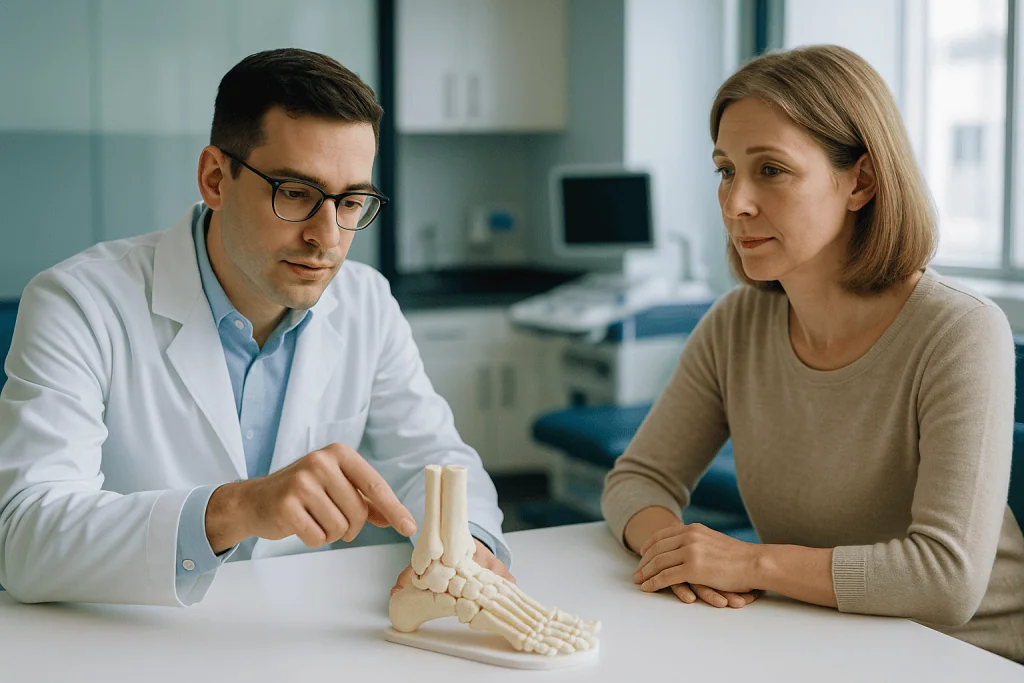
Assessment starts with a detailed consultation, not an operation menu. Your physician asks about symptoms, medical history, previous foot problems, footwear, occupation, sports, travel needs and your expectations for appearance. The physical examination evaluates toe alignment, joint flexibility, skin quality, circulation, nerve function, arch shape, gait pattern and the relationship between the forefoot, midfoot and hindfoot. This distinguishes a mainly soft-tissue issue from a structural deformity involving bone or joint alignment: a distinction that changes the entire surgical plan.
Weight-bearing X-rays are standard, because foot alignment changes when your body weight is on the foot. These images let the surgeon measure angles, assess joint condition, identify arthritis, plan bone cuts and choose a fixation strategy. In selected cases, ultrasound, CT or MRI may be recommended to evaluate cartilage, tendons, old injury, complex deformity or a previous operation being revised. Blood tests, vascular assessment or diabetes-related evaluation may be needed before surgery, particularly if you have conditions that affect wound healing.
Good candidates generally have a clear deformity or structural problem, realistic expectations, acceptable medical fitness for surgery and the willingness to follow postoperative instructions. Smoking, uncontrolled diabetes, poor circulation, active infection and certain inflammatory or neurological conditions increase risk and must be addressed carefully before any elective foot surgery is considered. None of these automatically rules surgery out, but each has to be weighed openly, because elective aesthetic surgery only makes sense when the risk profile is acceptable.
Conditions and Indications Aesthetic Foot Surgery Can Address
One of the most common indications is hallux valgus, widely known as a bunion. A bunion is not merely extra bone; it is a progressive alignment change in which the big toe drifts toward the smaller toes while the first metatarsal shifts outward. The result is a visible bump, shoe irritation, calluses and crowding of the neighbouring toes. Surgical correction realigns the bones and soft tissues to reduce the prominence and restore the position of the big toe, which is also why bunion surgery is the cornerstone of most foot narrowing plans.
Hammertoes, claw toes and mallet toes are deformities in which one or more toes bend abnormally at their joints. They can look curled, raised or contracted, and they often rub against shoes. Early, flexible deformities may respond to non-surgical care; fixed deformities or painful pressure points may require tendon balancing, joint release, bone work or fusion of a small toe joint. Overlapping or underlapping toes cause both cosmetic concern and practical discomfort, particularly when toes rub against each other or against footwear; treatment may involve soft-tissue release, tendon repositioning, joint correction or bone realignment depending on the cause.
Tailor’s bunion, also called bunionette, is a prominence near the base of the fifth toe on the outer edge of the foot. It creates lateral shoe pressure and a visibly widened forefoot, and correcting it addresses the outer half of forefoot width in the same way bunion surgery addresses the inner half. Toe length imbalance is another frequent concern: a long second toe may be visually bothersome or may cause shoe pressure, nail trauma or pain under the metatarsal heads, and in carefully selected cases toe shortening or metatarsal adjustment is considered.
Less commonly, reconstruction is needed for deformity after trauma, burns, congenital differences, prior surgery or chronic inflammatory disease. Aesthetic foot surgery may also address bony prominences, scar-related deformity, painful calluses caused by structural pressure, and selected nail or soft-tissue concerns linked to foot mechanics. Many of these overlap with the broader field of foot surgery performed for medical indications: the techniques are shared; what differs is how prominently appearance features in the goal. The indication for surgery is strongest when appearance, pain and footwear limitation overlap. When the concern is purely cosmetic, the threshold rises, because the plan must leave the foot at least as robust as it found it.
How Aesthetic Foot Surgery Is Performed
The process begins well before the day of surgery. After diagnosis, your surgeon explains the deformity, reviews the imaging with you, discusses non-surgical options and outlines the surgical choices that fit your anatomy. You will be asked about your priorities: appearance in open shoes, the footwear you want to wear, pain relief, return to work, sports, travel timing and your tolerance for recovery restrictions. That conversation shapes a plan that is medically sound and aligned with what you actually want.
Preoperative preparation may include blood tests, an electrocardiogram or an anaesthesia assessment depending on your age and medical history. If you take blood thinners, diabetes medication or immune-modifying drugs, your treating team will give you specific instructions for the period around surgery: these decisions always belong to your doctors, never to a website. Stopping smoking is strongly encouraged, because nicotine impairs bone and wound healing. You will also be advised to prepare your home for the early recovery period: comfortable elevation, safe walking paths, help with daily tasks and the postoperative footwear you will be given.
A typical surgical pathway looks like this:
- Anaesthesia. Procedures may be performed under local anaesthesia with sedation, regional anaesthesia or general anaesthesia, depending on the operation and your health. The team confirms the operative site and prepares the foot under sterile conditions.
- Correction. For a bunion, the surgeon releases tight soft tissues, realigns the metatarsal with a planned bone cut, corrects the toe position and secures the bone with small fixation devices. For hammertoes, contracted tendons or joint capsules are released, a small portion of bone may be removed, and the toe is realigned and stabilised temporarily or permanently. For overlapping toes or length concerns, the work may combine tendon balancing, soft-tissue repositioning, metatarsal osteotomy or phalangeal adjustment.
- Verification. Intraoperative imaging may be used to check alignment and fixation before the operation is completed, so the correction seen on the table matches the plan made on the weight-bearing X-rays.
- Protection. The foot is dressed and protected in a postoperative shoe, boot or splint. Many procedures are day surgery; some patients stay overnight for monitoring or comfort.
Modern foot surgery relies on careful imaging, precise measurement and soft-tissue preservation. Small instruments, refined fixation methods and minimally invasive approaches reduce tissue disruption in suitable cases, but the smallest incision is not always the best option. The right technique is the one that safely corrects the deformity, maintains stability and supports reliable healing, and that judgement is made case by case.
How long does the operation take?
It depends on how many toes or structures are treated and how complex the deformity is. A single minor toe procedure is relatively brief; a combined bunion correction with toe reconstruction takes considerably longer, and a bilateral or multi-procedure feminising plan longer still. Your surgeon can only give you a meaningful estimate after examination and imaging, because the duration follows the plan, not a standard timetable.
Why Acting Early Matters
Not every foot deformity needs surgery immediately, and many can be managed for a time without it. But waiting too long can make certain deformities harder to correct. A flexible toe can become fixed. A mild bunion can progress to more severe joint misalignment. Chronic shoe pressure can lead to skin thickening, painful corns, bursitis, nail changes or recurrent inflammation. As toes crowd, neighbouring toes become involved, and what could have been a small correction becomes a more complex reconstruction.
Delay can also affect more than the foot. When you avoid pressure on a painful area, you may shift weight to the outer foot, overload the smaller toes, shorten your stride or change posture, and over time that compensation can contribute to ankle, knee, hip or back discomfort. In active patients, foot deformity can limit exercise and erode general conditioning. In patients with diabetes, vascular disease or nerve problems, untreated pressure points demand particular caution, because skin breakdown can become serious.
Early evaluation does not mean early surgery. It means understanding the cause, monitoring progression and choosing the right time. Sometimes the best recommendation is footwear modification, orthotics or simple observation. In other cases, earlier correction allows a smaller procedure, a more predictable alignment and a smoother recovery than waiting until the deformity becomes rigid or involves multiple joints.
Benefits of Aesthetic Foot Surgery
When the procedure is carefully indicated and well planned, aesthetic foot surgery can offer several practical and appearance-related benefits. None of them is automatic, each depends on the right indication, sound technique and a recovery you follow through.
| Benefit | What It Means for You |
|---|---|
| Improved foot alignment | Correction of bunions, crooked toes or prominent areas can create a more balanced foot shape and reduce visible deformity. |
| Better footwear comfort | Reducing pressure points may make it easier to wear appropriate shoes with less rubbing, redness or irritation. |
| Reduced pain from structural pressure | When pain is caused by malalignment, correction may decrease overload on joints, skin and soft tissues. |
| More natural toe position | Straighter or better-aligned toes may improve appearance in open shoes and reduce crowding between toes. |
| Improved walking confidence | Patients may feel more comfortable standing, walking and participating in social or professional activities after recovery. |
| Prevention of worsening deformity in selected cases | Timely correction may help limit progression and reduce the need for more complex reconstruction later. |
Recovery Timeline After Aesthetic Foot Surgery
Recovery varies by procedure, but plan for a staged return to walking, shoes and normal activity rather than a quick bounce back. The foot hangs downward whenever you stand, has little spare soft-tissue space, and carries your full weight, three reasons swelling lasts longer here than after surgery elsewhere on the body.
| Time Period | What Patients Can Expect |
|---|---|
| Day 1 | The foot is protected in a dressing, surgical shoe, boot or splint. Elevation is essential. Some patients may place limited weight through the heel, while others must avoid weight-bearing. |
| First Week | Swelling, bruising and throbbing are common, especially when the foot is lowered. Pain medication, elevation and careful walking support comfort and wound healing. |
| First Month | Sutures may be removed if appropriate, and follow-up imaging may be performed. Many patients continue using protective footwear and gradually increase activity under medical guidance. |
| Six to Twelve Weeks | Bone healing and soft-tissue recovery progress. Some patients transition to wider supportive shoes. Longer walks and light daily routines usually increase gradually. |
| Longer Term | Swelling can continue to improve for several months. Final shape, scar maturity and comfort in different shoes evolve over time. Return to high-impact sports depends on the procedure and healing. |
Pain in the first days is usually managed with a structured medication plan alongside elevation and paced activity, and many patients describe the early discomfort as manageable when they follow that guidance closely: the approach is explained in detail in how we control pain after surgery and invasive procedures. Follow-up visits are used to monitor wound healing, remove sutures when appropriate, check alignment on X-ray and adjust your activity level. Expect a gradual reveal rather than an immediate final appearance: the foot continues to refine as swelling decreases, scars mature and walking mechanics normalise. If you are travelling for treatment, timing your return flight around the procedure matters too; the practical considerations are covered in flying after surgery: how soon is safe, procedure by procedure.
How Much Is Foot Feminization Surgery?
There is no single answer, because foot feminization surgery is not a single operation: it is a plan assembled from individual procedures, and the cost follows the plan. The main drivers are the number and type of corrections performed (bunion correction, toe shortening, tailor’s bunion correction, soft-tissue work), whether one foot or both are treated, the type of anaesthesia, the fixation implants used, whether the stay is day surgery or overnight, and the imaging and follow-up included in the pathway. Revision surgery after a previous operation typically involves more planning and more operative time than a first correction.
Treat any fixed price quoted before an examination with scepticism. A meaningful quotation can only follow a proper assessment with weight-bearing X-rays, because until the surgeon knows which bones need realigning, nobody knows what the operation actually is. When you compare offers, compare like with like: what procedures are included, what anaesthesia is planned, what implants are used, how many follow-up visits are covered, and who manages a complication if one occurs.
Factors That Influence Outcomes and a Good Result
A good result depends on more than the technical correction of a visible deformity. It begins with the right patient and the right indication. Surgery is more likely to satisfy when the concern is clearly defined, the deformity is anatomically correctable, and you understand the recovery. Patients seeking a natural, proportional improvement tend to do better than those seeking an extreme change that would compromise function, and a responsible surgeon will say so before the operation, not after.
The severity and flexibility of the deformity matter. Flexible toes may need less extensive correction than rigid ones. A bunion with a healthy joint is treated differently from a bunion with arthritis. Bone quality, ligament laxity, arch mechanics and previous surgery all shape the plan, and treating one toe without addressing the underlying forefoot structure risks an incomplete correction. The whole foot is always assessed, even when your concern is one visible feature.
General health matters too. Diabetes, circulation problems, inflammatory arthritis, smoking, obesity, osteoporosis, immune suppression and nerve disorders can affect healing and risk. These conditions do not always prevent surgery, but they require careful optimisation and an honest conversation about what they add to the risk profile. For patients travelling from abroad, completing the required medical evaluations before the trip keeps the pathway efficient and safe.
Surgeon experience in foot and ankle anatomy is central. The foot contains small structures under significant load, and millimetres of correction change how pressure is distributed across it. Aesthetic improvement has to be balanced against joint preservation, tendon function and stable fixation. Good planning means appropriate imaging, precise correction, protection of the soft tissues and a postoperative protocol matched to the procedure performed.
Your own participation weighs just as heavily. Keeping the foot elevated, protecting the dressing, using the postoperative shoe or boot correctly, attending follow-up visits, resisting narrow shoes until cleared and respecting activity restrictions all influence healing. Some patients feel ready to do more before bone and soft tissue have actually healed; returning too quickly to tight footwear, long walking days or high-impact exercise can increase swelling and pain or cost you part of the correction.
Finally, talk about scarring and swelling before surgery, not after. Incisions are planned thoughtfully, but every patient heals differently, and swelling is a normal part of foot surgery recovery that can make the foot look larger before it looks refined. Patients who expect this temporary phase are noticeably less anxious during it. A good outcome is measured not only in photographs but in comfort, shoe tolerance, alignment, skin health and the ability to move through an ordinary day with less limitation.
Aesthetic Foot Surgery at Acibadem
Aesthetic foot surgery is elective in many cases, but it still demands hospital standards: careful anaesthesia planning, infection prevention, proper imaging, structured follow-up and clear communication. At Acibadem, the evaluation begins with a medical and functional assessment, not a discussion of appearance alone. Weight-bearing imaging, physical examination, gait assessment and medical evaluation determine whether surgery is appropriate and which technique fits, rather than a standard operation being offered for every aesthetic concern.
Foot and ankle care can involve orthopaedic surgeons, specialists from the plastic, reconstructive and aesthetic surgery team, radiologists, anaesthesiologists, physiotherapists and wound-care specialists, with other physicians brought in when medical conditions require it. For complex deformities, revision cases or patients with multiple health considerations, multidisciplinary discussion helps refine the plan and reduce avoidable risk. Surgical teams work with modern operating room infrastructure, imaging support and contemporary fixation methods, with the caveat, stated plainly, that technology assists planning and verification but never replaces clinical judgement. The choice between open, limited-incision and minimally invasive technique follows the deformity and your anatomy.
For patients travelling from the United States, Europe, the Middle East or elsewhere, Acibadem International supports communication in more than 20 languages and coordinates the practical side of a treatment journey: medical record review, appointment scheduling, hospital admission, interpretation and travel-related logistics. Planning also covers timing, how long to remain locally after the procedure for early follow-up, when flying is likely to be appropriate, whether mobility assistance is worth arranging at the airport, and which parts of follow-up can continue with your local physician or physiotherapist afterwards. Discharge documentation, imaging copies and written postoperative recommendations are prepared so that ongoing care at home can pick up where the surgical team left off.
Second opinions are a normal part of this field. Patients seek them when they have been told they need extensive surgery, when a deformity has recurred after a previous operation, when the change they want is purely cosmetic, or when they want non-surgical alternatives laid out before deciding. A careful second opinion clarifies whether a proposed correction is medically reasonable, what the trade-offs are, and what recovery will genuinely require.
Making an Informed Decision
Aesthetic foot surgery, whether framed as bunion correction, foot narrowing, toe shortening or foot feminization surgery, can be a meaningful option when visible deformity, shoe discomfort or structural pressure affects your daily life. The decision deserves the same seriousness as any other operation. Your feet must carry you through work, travel, exercise and ordinary routines for decades, so any change in appearance must also respect function, stability and long-term comfort.
The most useful preparation is clarity about your own goals. Know which feature bothers you and in which situations, which shoes and activities cause difficulty, and what trade-off in recovery time you can realistically absorb. A thorough specialist evaluation, history, examination, weight-bearing imaging, can then establish whether non-surgical care is sufficient, whether surgery is appropriate, and which specific procedures match your anatomy. The strongest sign that you are in good hands is a surgeon who is willing to tell you what should not be done to your feet, as clearly as what can be.
Preparation
- Before aesthetic foot surgery, the surgeon evaluates foot structure, walking pattern, symptoms, and cosmetic goals. X-rays or other imaging may be requested to plan bone or soft-tissue correction. Patients may need to stop smoking and adjust blood-thinning medications under medical guidance.
Aftercare
- After surgery, the foot is usually protected with a dressing, surgical shoe, or splint, and weight-bearing may be limited. Keeping the foot elevated helps reduce swelling, and follow-up visits monitor healing. Patients should avoid tight shoes and strenuous activity until cleared by the surgeon.
Frequently Asked Questions
What affects the cost of aesthetic foot surgery?
The final cost depends on the type of correction, whether bone realignment is required, anesthesia, imaging, fixation materials, hospital services, aftercare, and whether more than one area is treated. A personalised plan is needed before an accurate quote can be prepared.
How can I get a personalised quote from Acibadem?
You can request a free consultation by sharing photos of the feet, any X-rays or medical reports, your symptoms, footwear concerns, and your treatment goals. A specialist review helps determine the likely procedure, expected pathway, and package details.
Is aesthetic foot surgery considered cosmetic or functional?
It may be cosmetic, functional, or both. Some patients want improved appearance and footwear comfort, while others also have pain, pressure points, or walking difficulties. The specialist will assess the medical indication and explain realistic goals.
What is usually included in an international patient package?
Packages may include specialist consultation, preoperative tests, surgery, anesthesia, hospital services, interpreter support, transfers, medication, special footwear, and follow-up planning. Inclusions vary, so they should be confirmed in writing before travel.
Will I need to stay in Turkey after surgery?
Many patients need a postoperative observation and follow-up period before flying, especially after bone realignment or toe correction. The recommended stay depends on the procedure, wound healing, mobility, and the surgeon’s travel advice.
Is this information medical or financial advice?
No. This is general educational information only. Treatment suitability, recovery expectations, and cost estimates should be confirmed through a specialist consultation and a personalised quotation.
Medically reviewed by the Acıbadem International Medical Board September 13, 2026
See our medical review board →
Update history
- PublishedJune 8, 2026
- Medical review approvedSeptember 13, 2026
- Board commentary addedAugust 27, 2026
- Last content updateSeptember 12, 2026
Trusted care for international patients
From the Acibadem Blog

Aesthetic Foot Surgery Results: What Toe Shortening and Foot Narrowing Realistically Change
Aesthetic foot surgery results are usually modest and structural: toe shortening removes a small segment of bone so a long toe sits level with…

Who Is a Candidate for Foot Feminization Surgery and Who Is Advised to Wait?
Foot feminization surgery candidates are usually healthy, skeletally mature adults with specific and modest goals, good circulation, no uncontrolled diabetes or nicotine use, and…