Cholecystitis Treatment
Cholecystitis is inflammation of the gallbladder, usually caused by gallstones. Treatment focuses on controlling infection and pain, often followed by laparoscopic gallbladder removal.
Quick answer
Cholecystitis is inflammation of the gallbladder, most often caused by a gallstone blocking the cystic duct. It produces persistent pain in the upper right abdomen, often with fever, nausea and tenderness. Treatment usually combines fasting, intravenous fluids, pain relief and antibiotics when indicated, followed in most suitable patients by laparoscopic removal of the gallbladder to prevent further attacks.
Cholecystitis: What It Is and How It Is Treated
Cholecystitis is inflammation of the gallbladder, the small pear-shaped organ that sits beneath the liver and stores bile, the fluid your body uses to digest fats. In most cases the inflammation develops when a gallstone blocks the cystic duct, the narrow channel that lets bile leave the gallbladder. Treatment aims to control the inflammation, manage pain, treat or prevent infection, and stop the attack from happening again, which, for most suitable patients, means removing the gallbladder with keyhole surgery.
Sudden pain in the upper right side of the abdomen can be frightening, especially when it is severe, persistent, or accompanied by fever, nausea or vomiting. Many people first assume they have indigestion or a stomach illness. In cholecystitis, the problem lies elsewhere: pressure and inflammation building inside a blocked gallbladder. Symptoms can escalate quickly, and the condition usually needs prompt medical evaluation rather than a wait-and-see approach at home.
Once the diagnosis is made, the questions tend to be practical ones. Is surgery truly necessary? How quickly does treatment need to happen? Is laparoscopic treatment possible in your case? How long is the hospital stay? Many people are also trying to untangle three phrases they have been given, gallstones, a gallbladder infection and a “gallbladder attack”, which describe overlapping but distinct problems.
Cholecystitis treatment is rarely a single intervention. A complete plan usually starts with hospital-based care to settle the acute episode, followed for many patients by gallbladder surgery, most often performed laparoscopically. When treated appropriately, most people recover well and return to normal digestion and daily activities. The exact plan and its timing depend on how severe the inflammation is, your overall health, and whether complications are already present.
What is cholecystitis?
Cholecystitis is inflammation of the gallbladder wall. When bile becomes trapped behind a blockage, usually a gallstone lodged in the cystic duct, pressure rises inside the organ. The wall swells, blood flow can be reduced, and bacteria that normally pass through the bile system harmlessly can multiply and cause infection. Left untreated, this sequence can progress to tissue damage, pus formation or, in severe cases, perforation of the gallbladder wall. The condition is common, well understood, and has established treatment pathways, so a diagnosis of cholecystitis is a reason for prompt action rather than alarm. The body copes without a gallbladder: bile continues to be produced by the liver and flows directly into the small intestine, which is why removal is a definitive treatment rather than a loss of function you would notice long term.
How do you pronounce cholecystitis?
Cholecystitis is pronounced koh-luh-sis-TY-tis, with the stress on the fourth syllable. The word comes from Greek roots: chole means bile, cyst refers to a sac or bladder, and the suffix -itis means inflammation, so the term literally describes an inflamed bile sac. Knowing the vocabulary helps when you read your own reports. A related word you may see is cholecystectomy (koh-luh-sis-TEK-tuh-mee), which means surgical removal of the gallbladder, and cholelithiasis, which describes the presence of gallstones. The similar spellings cause understandable confusion, but each term refers to a distinct part of the same clinical story.
What is acute cholecystitis?
Acute cholecystitis is a sudden episode of gallbladder inflammation, typically declaring itself with hours of persistent pain in the upper right abdomen, often after a fatty meal, and frequently accompanied by fever, nausea and marked tenderness under the right ribs. It differs from simple biliary colic, in which a stone temporarily obstructs the duct and the pain passes once the stone falls back; in acute cholecystitis the obstruction persists and inflammation takes hold. There is also a chronic form. Chronic cholecystitis develops when the gallbladder is irritated repeatedly over months or years, usually by recurrent gallstone attacks. The wall thickens and scars, the organ empties poorly, and symptoms become a pattern of recurring discomfort, bloating and intolerance of fatty foods rather than one dramatic episode. Both forms are indications to evaluate the gallbladder properly, because a chronically diseased gallbladder can still produce an acute, complicated attack without warning.
What Causes Cholecystitis?
Gallstones cause the large majority of cholecystitis cases. A stone lodges in the cystic duct, bile cannot drain, pressure builds, and the trapped bile irritates the gallbladder wall. Bacterial infection often follows, because stagnant bile is an inviting environment for organisms that would otherwise be flushed through. But stones are not the only mechanism, and understanding which one applies to you shapes the treatment plan.
Cholelithiasis: gallstones and the blocked duct
Cholelithiasis is the medical term for gallstones, hardened deposits of cholesterol or bile pigments that form inside the gallbladder. Many people carry gallstones for years without any symptoms at all; stones discovered incidentally on a scan done for another reason often need no treatment. The picture changes when a stone moves. If it obstructs the cystic duct briefly, the result is biliary colic: waves of pain that build and then fade. If it stays lodged, acute calculous cholecystitis develops. And if a stone escapes the gallbladder entirely and travels into the common bile duct, the main channel carrying bile from the liver and gallbladder to the intestine, it can cause jaundice, bile duct infection or pancreatitis. This is why the evaluation of cholecystitis always looks beyond the gallbladder itself to the whole bile duct system.
Acalculous cholecystitis: inflammation without stones
Acalculous cholecystitis is gallbladder inflammation that occurs without any stones. It is seen more often in people who are critically ill or medically complex, for example, after major surgery, severe trauma, serious infection or long periods without oral feeding. In these situations the gallbladder empties poorly, bile stagnates, and the wall becomes inflamed even though no stone is blocking the duct. Acalculous cholecystitis can be harder to recognise, because the patients affected are often already unwell for other reasons, and it can progress quickly. Treatment follows the same principles, control the inflammation and infection, then deal with the gallbladder definitively, but the balance between surgery and temporary drainage is weighed differently in patients who are already fragile.
Does biliary dyskinesia cause cholecystitis?
Biliary dyskinesia is a functional disorder in which the gallbladder does not contract and empty properly, even though no stones are present. It is best understood as a separate diagnosis that can produce very similar pain, rather than a direct cause of acute cholecystitis. That said, the two conditions are connected in a meaningful way: poor gallbladder emptying leads to bile stasis, and stagnant bile both encourages stone formation and irritates the gallbladder wall over time, which is one route toward chronic inflammation. Biliary dyskinesia is usually considered when a patient has typical gallbladder pain but a normal ultrasound; a HIDA scan measuring how well the gallbladder ejects bile helps clarify the diagnosis. When symptoms are persistent and the functional testing is clearly abnormal, gallbladder removal may be discussed, but the decision is more individualised than in stone disease.
Who is at higher risk of cholecystitis?
The risk of cholecystitis largely follows the risk of gallstones, because stones are the trigger in most cases. Gallstones form more readily in women, particularly during the reproductive years, because oestrogen increases the amount of cholesterol in bile; pregnancy adds to this effect by slowing gallbladder emptying. Risk also rises with age, with obesity, and with rapid weight loss, including after very restrictive diets or weight-loss surgery, because sudden shifts in fat metabolism make bile more likely to form cholesterol crystals. Diabetes, a family history of gallstone disease and prolonged fasting or intravenous feeding all contribute. A separate group of patients develops pigment stones, which form from bile pigments rather than cholesterol and are associated with conditions that break down red blood cells, such as sickle cell disease, and with cirrhosis of the liver. None of these factors means an attack is inevitable; they simply explain why gallbladder disease clusters in certain groups and why doctors ask the background questions they do. Understanding your own risk profile is also useful after treatment, because the same factors that produced stones in the gallbladder can, less commonly, produce them elsewhere in the bile system.
Gallbladder Symptoms: Recognising an Attack
Gallbladder symptoms in cholecystitis centre on pain that is persistent, localised to the upper right abdomen or the centre of the upper abdomen, and often triggered or worsened by a fatty meal. You may also see the same complaints described under “gall bladder symptoms”, the two-word spelling used in some countries, but the condition is identical. Unlike brief biliary colic, which comes and goes within an hour or two, the pain of cholecystitis typically lasts several hours and may steadily worsen rather than fade.
What does gallbladder pain feel like?
Gallbladder pain is usually a steady, deep ache or pressure under the right rib cage or in the pit of the stomach, rather than a cramping pain that fully comes and goes. It commonly radiates to the right shoulder blade or the back, a pattern caused by shared nerve pathways, and this radiation is one of the features doctors use to distinguish it from stomach or intestinal pain. Many people describe an attack starting an hour or two after a rich or fried meal, often in the evening or at night. Movement and deep breathing can make it worse, and unlike simple indigestion, it does not reliably settle with antacids. When the pain persists beyond a few hours and is joined by fever or vomiting, simple colic has likely progressed to inflammation.
What are three signs of cholecystitis?
The three signs that most strongly suggest cholecystitis are: persistent pain in the upper right abdomen lasting several hours rather than passing in waves; fever or chills, indicating that inflammation or infection has taken hold; and marked tenderness under the right rib cage, especially a catch in the breath when the area is pressed during examination: a finding doctors call Murphy’s sign. None of these alone confirms the diagnosis, but together they shift the picture firmly from indigestion toward gallbladder inflammation and justify blood tests and an ultrasound.
The fuller range of symptoms includes:
- Severe pain in the upper right or upper middle abdomen
- Pain that spreads to the right shoulder blade or back
- Nausea or vomiting
- Fever or chills
- Abdominal tenderness, especially when touched under the right rib cage
- Bloating, indigestion or intolerance of fatty foods
- Yellowing of the skin or eyes if bile duct obstruction is also present
- Dark urine or pale stools in cases involving bile flow obstruction
Jaundice, dark urine and pale stools deserve particular attention because they suggest the problem has extended beyond the gallbladder into the common bile duct. That changes the treatment plan, sometimes adding an endoscopic procedure to the pathway, which is why doctors check for these features specifically rather than treating all gallbladder attacks as identical.
How Cholecystitis Is Diagnosed
Diagnosis begins with a medical history and physical examination, followed by blood tests. Doctors look for markers of inflammation and infection, such as an elevated white blood cell count, and check liver enzymes, bilirubin and pancreatic enzymes to determine whether the bile ducts or pancreas are involved. These results do more than confirm the diagnosis: they grade its severity and flag complications that would change the plan.
Imaging is central. Abdominal ultrasound is usually the first test because it is quick, involves no radiation, and can show gallstones, thickening of the gallbladder wall, fluid around the gallbladder and tenderness when the probe presses directly over the organ. If the ultrasound is inconclusive, further imaging fills the gaps. A CT scan helps evaluate complications, such as perforation or abscess, and rules out alternative causes of abdominal pain. A HIDA scan, a nuclear medicine study, assesses gallbladder function and can confirm that the cystic duct is obstructed; it is also the key test when biliary dyskinesia is suspected. MRCP, a specialised MRI study of the bile ducts, can detect stones in the common bile duct without any invasive procedure, which is valuable when jaundice or abnormal liver tests raise that concern.
Accurate diagnosis matters because several other conditions can mimic gallbladder disease. Gastritis, peptic ulcers, hepatitis, kidney stones, appendicitis and pancreatitis can all produce upper abdominal pain, and each is treated differently. Recent imaging and laboratory reports are worth keeping together, because previous results help doctors avoid repeating tests unnecessarily and show how quickly the picture is changing. Some patients are evaluated after repeated attacks over months; others during their first severe episode. In either case, the combination of symptoms, blood results and imaging determines whether treatment is urgent or can be planned electively once the inflammation settles.
Conditions and Indications Addressed by Treatment
Cholecystitis treatment addresses both the acute episode in front of you and the underlying gallbladder problem that could cause the next one. The most common indication is acute calculous cholecystitis, inflammation caused by gallstones, but gallbladder inflammation arises in several clinical situations, and the plan varies accordingly.
- Acute calculous cholecystitis: inflammation caused by gallstones blocking the cystic duct: the classic presentation and the most frequent reason for urgent gallbladder treatment.
- Chronic cholecystitis: long-term gallbladder irritation, usually from repeated gallstone attacks, leading to scarring, wall thickening and poor gallbladder function.
- Recurrent biliary colic: repeated episodes of gallstone pain that have not yet caused acute inflammation but raise the risk of it with each attack.
- Complicated gallbladder disease: empyema (a gallbladder filled with pus), gangrenous cholecystitis, perforation or abscess formation, situations that demand faster, more intensive care.
- Acalculous cholecystitis: inflammation without stones, seen more often in critically ill or medically complex patients.
- Gallstone pancreatitis or bile duct stones: when stones have moved beyond the gallbladder and are affecting the pancreas or bile ducts, adding an endoscopic dimension to the plan.
- High-risk gallbladder disease: severe, recurrent or infected disease, or disease associated with jaundice or abnormal imaging findings that warrant definitive treatment.
Not every patient with gallstones needs surgery. Stones found incidentally, causing no symptoms, are often simply observed. Treatment becomes important when stones cause pain, inflammation, infection or obstruction: the aim is to resolve the current problem and reduce the likelihood of a more dangerous event later.
How Cholecystitis Is Treated
What is the first-line treatment for cholecystitis?
The first-line treatment for acute cholecystitis is supportive hospital care, fasting to rest the digestive system, intravenous fluids, pain control and antibiotics when infection is suspected, followed, in most patients who are fit for anaesthesia, by laparoscopic removal of the gallbladder. The supportive measures settle the acute inflammation and make the patient safe; the operation removes the source of the problem so it cannot recur. In many hospitals, surgery is performed during the same admission rather than weeks later, because early operation shortens the overall course of illness and removes the risk of a second attack while waiting. The sequence and timing are adjusted for severity and for the individual patient, which is why the sections below walk through each stage in turn.
Can cholecystitis resolve on its own?
A mild episode can settle without surgery, if the obstructing stone dislodges and falls back into the gallbladder, the pressure releases and the inflammation subsides, sometimes helped along by antibiotics and fasting. But settling is not the same as being resolved. The stone is still there, the gallbladder is still diseased, and the mechanism that caused the first attack remains fully in place. Recurrent attacks are common after an untreated episode, and each recurrence carries the risk of arriving as a more severe, complicated version. This is why doctors distinguish between calming an episode and treating the condition: the first can happen on its own, the second usually cannot. An episode that appears to be passing still deserves proper evaluation, so that the decision to operate, or to observe, is made deliberately rather than by default.
Initial assessment and stabilisation
When you are evaluated for suspected cholecystitis, the first priority is understanding how severe the condition is. Vital signs, pain level, hydration status and signs of infection are assessed, and blood tests and imaging determine whether the inflammation is confined to the gallbladder or involves the bile ducts, liver or pancreas. Initial treatment commonly includes fasting, intravenous fluids, pain relief and anti-nausea medication. Antibiotics are started when infection is suspected or the inflammation is moderate to severe. These measures improve comfort and reduce the risk of the infection worsening while the definitive plan is finalised.
The team also reviews your current medications, allergies, previous operations, chronic illnesses and any recent test results. This background shapes every subsequent decision, anaesthetic risk, antibiotic choice, surgical timing, which is why having your medical records and previous imaging available makes the process smoother.
Planning the definitive treatment
Once cholecystitis is confirmed, the question becomes when and how to treat the gallbladder itself. For many patients with acute cholecystitis, laparoscopic gallbladder removal during the same hospitalisation is recommended. Timing may be adjusted when there is severe infection, an unstable medical condition, very advanced inflammation or a high surgical risk; in those situations, doctors first concentrate on controlling infection and inflammation, and a drainage procedure may bridge the gap for patients who cannot safely undergo an operation straight away. After recovery, an interval cholecystectomy, surgery performed weeks later, once the acute illness has passed, may be planned if appropriate.
If there are signs of a stone in the common bile duct, jaundice, elevated bilirubin, dilated ducts on imaging, or pancreatitis, endoscopic evaluation may be needed before or after gallbladder surgery. An endoscopic procedure, performed through the mouth under sedation, can often remove bile duct stones without any external incision, and it slots into the treatment pathway either side of the operation depending on the findings.
Preparing for laparoscopic gallbladder removal
Before surgery, you meet the surgical and anaesthesia teams. The evaluation covers medical history, current medications, cardiac and respiratory risk factors, and any previous abdominal operations, since old scar tissue can affect the laparoscopic approach. Depending on age and health, some patients need an electrocardiogram, chest imaging or a consultation with another specialist first. You will be asked not to eat or drink for a set period before anaesthesia. If you take blood thinners, diabetes medication or certain supplements, the treating team will review these and tell you exactly what to do in the days around surgery: these decisions belong to the doctors who know your full picture, and clear written instructions are part of the preparation. The team also explains the surgical plan, the possibility of conversion to open surgery, and the expected hospital stay, so that nothing on the day comes as a surprise.
The operation, step by step
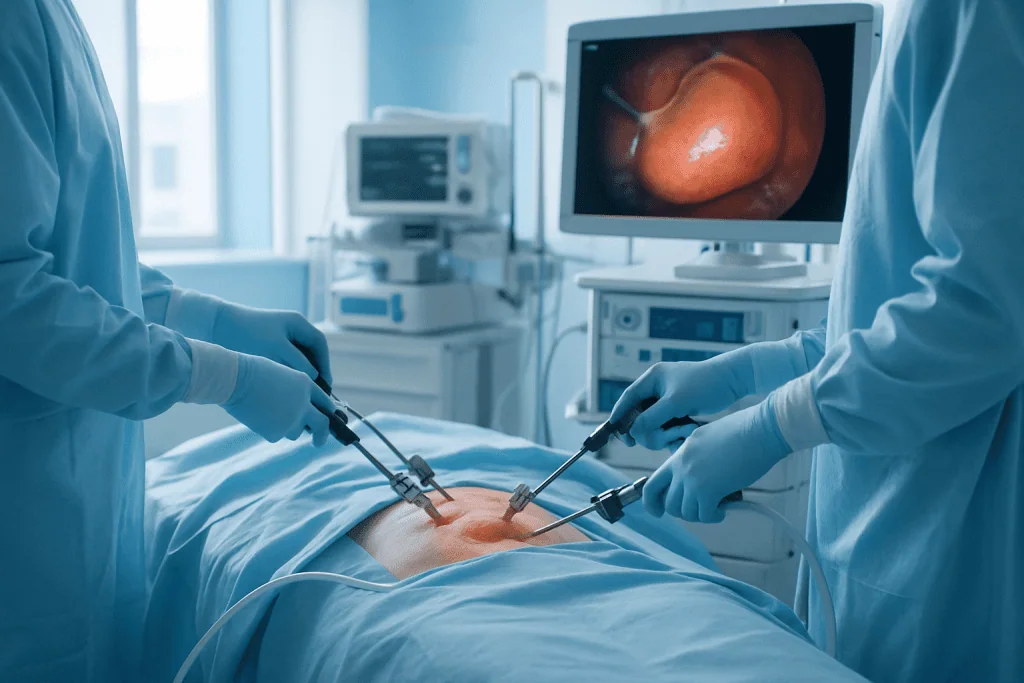
Laparoscopic cholecystectomy is performed under general anaesthesia and follows a well-established sequence:
- Step 1: Access: the surgeon makes several small incisions in the abdomen and gently inflates the abdominal cavity with carbon dioxide gas, creating working space around the organs.
- Step 2: Visualisation: a small camera is introduced, providing a magnified view of the gallbladder and surrounding structures on a monitor.
- Step 3: Identification: the surgeon carefully identifies the cystic duct and cystic artery: the structures connecting the gallbladder to the bile system and its blood supply. This is the critical safety step of the operation, and it is never rushed.
- Step 4: Division: once the anatomy is confirmed, these structures are securely closed and divided.
- Step 5: Removal: the gallbladder is separated from its bed on the liver and taken out through one of the small incisions, often inside a protective bag.
- Step 6: Closure: the gas is released, the incisions are closed, and you are taken to recovery.
Modern imaging and visualisation tools can support safer decision-making by improving the surgeon’s view of anatomy that inflammation has distorted. Intraoperative imaging of the bile ducts is sometimes used to clarify anatomy or check for stones, and energy devices help control small blood vessels and limit bleeding. The point of these technologies is not to make surgery automatic; it is to give the team better information during a procedure where inflammation can change what the anatomy looks like. The operation often takes about one to two hours, though timing varies with the severity of inflammation, previous surgery, body build and whether additional procedures are needed. A very inflamed, scarred or fragile gallbladder takes longer to remove safely, safety sets the pace, not the clock.
When open surgery or drainage is needed
Open cholecystectomy may be planned from the outset or become necessary during a laparoscopic operation. Conversion to open surgery is not a failure. It is the safer choice when inflammation is severe, bleeding occurs, the gallbladder has perforated, or the anatomy cannot be identified with enough confidence through the keyhole view. A surgeon who converts is protecting you from injury to the bile ducts, which matters far more than the size of the scar.
For patients who are critically ill or unfit for anaesthesia, percutaneous gallbladder drainage offers a different route. An interventional radiologist places a fine tube into the gallbladder through the skin, guided by imaging. The tube drains infected bile and releases the pressure, controlling the acute illness without an operation. It is a bridge, not usually a destination: once the patient has recovered enough, the team reassesses whether surgery is now appropriate.
Benefits of Cholecystitis Treatment
The benefits depend on the severity of disease and the approach used, but the goals are consistent: resolve the acute illness and remove the risk of the next one.
- Relief of acute inflammation and pain: treatment addresses the cause of persistent gallbladder pain rather than repeatedly masking symptoms with medication.
- Control of infection: antibiotics, drainage when needed, and surgery reduce the risk of worsening infection or abdominal complications.
- Lower risk of recurrent attacks: removing the gallbladder prevents future gallbladder attacks caused by stones in that organ: the stones cannot return to an organ that is no longer there.
- Minimally invasive recovery for many patients: laparoscopic surgery usually means smaller incisions, less postoperative discomfort and a quicker return to routine activities than open surgery.
- Protection against serious complications: timely care can help prevent perforation, abscess, bile duct infection and gallstone-related pancreatitis.
- Clear diagnosis and coordinated care: proper evaluation identifies whether the bile ducts, liver or pancreas are involved, so the right specialists take part when needed.
Recovery After Cholecystitis Treatment
Hospital stay and early recovery
After laparoscopic cholecystectomy, many patients stay in hospital for a short period, sometimes overnight, depending on the severity of the cholecystitis and their overall health. Patients with complicated inflammation, bile duct procedures, drainage tubes or significant infection need a longer stay. During this period the team monitors pain, temperature, ability to eat, bowel function and laboratory values when needed. You are encouraged to walk early: it reduces the risk of blood clots and supports lung function. Diet usually begins with liquids or light foods and advances as tolerated. Postoperative comfort is actively managed rather than left to chance: pain relief is planned before the operation ends, adjusted to how you actually feel, and reviewed regularly rather than waiting for you to ask. Before discharge, you receive written instructions covering wound care, medications, activity, diet, travel and the warning signs that would need review by a doctor.
Recovery varies with the severity of inflammation, the type of procedure and your general health, but many patients follow a broadly similar pattern after laparoscopic gallbladder removal:
| Time Period | What Patients Can Expect |
|---|---|
| Day 1 | Monitoring after anaesthesia, walking with assistance, and liquids or light foods as tolerated. Pain is usually well controlled with medication. |
| First week | Gradually increasing walking and light activity. Mild shoulder discomfort from the laparoscopic gas, bloating or incision tenderness may occur and settles with time. |
| First month | Energy improves and diet becomes more normal. Many patients return to work or travel, depending on the nature of their job, the surgeon’s advice and the complexity of the case. |
| Longer term | Most people live normally without a gallbladder. Some adjust their diet if fatty foods cause loose stools or discomfort, particularly in the early months. |
Living without a gall bladder
Life without a gall bladder is, for most people, indistinguishable from life with one. The liver continues to produce bile; it simply flows steadily into the intestine instead of being stored and released in bursts. In the early weeks, some patients notice bloating, loose stools or difficulty digesting very fatty meals: the digestive system is adapting to the new, continuous flow of bile. These symptoms usually improve with time, and a temporary preference for smaller, lower-fat meals often smooths the adjustment. There is no lifelong restriction imposed by the surgery itself; most people return to eating what they ate before, guided by their own tolerance.
If your plans after surgery include air travel, timing depends on the complexity of your operation and how your recovery is progressing, and it is a decision to make together with your surgical team. The guide on flying after gallbladder surgery covers the timing and precautions in detail, from cabin pressure considerations to what to carry in your hand luggage.
Why Acting Early Matters
Cholecystitis can worsen if diagnosis or treatment is delayed. Inflammation that begins as a blocked gallbladder can progress to infection, pus formation, tissue death or perforation. A perforated gallbladder can leak infected bile into the abdomen, causing a serious abdominal infection. Delay also increases the chance that stones migrate into the common bile duct, where they can cause jaundice, bile duct infection or pancreatitis, problems that are harder to treat than the original attack.
Early evaluation is particularly important for older adults, people with diabetes, patients with weakened immune systems, and those with heart, kidney or liver disease. In these groups the symptoms can be muted, less pain, a lower fever, while the underlying disease advances more rapidly. A quiet presentation is not a mild one.
Timely treatment does not always mean immediate surgery for every patient. It means prompt assessment, honest risk classification and a clear plan. For many patients, early laparoscopic cholecystectomy is the most direct path through the illness. For others, antibiotics, drainage or staged treatment is safer. The essential point is that cholecystitis should not be ignored, and it should not be treated repeatedly with pain medication alone without anyone establishing the underlying cause.
Factors That Influence Outcomes
Outcomes after cholecystitis treatment reflect both the disease and the patient. Someone with mild acute cholecystitis who receives timely laparoscopic surgery tends to recover quickly; someone with gangrenous inflammation, perforation, bile duct stones or severe infection needs more complex care and a longer recovery. The factors that matter most:
- Timing of treatment: earlier diagnosis and appropriate intervention reduce the likelihood of complications developing in the first place.
- Severity of inflammation: a swollen or infected gallbladder is easier to treat than one that is gangrenous, perforated or encased in dense scar tissue.
- Presence of bile duct stones: stones outside the gallbladder may require endoscopic treatment in addition to surgery, extending the pathway.
- General health: diabetes, obesity, heart disease, lung disease, kidney disease and immune suppression all affect surgical risk and healing.
- Previous abdominal surgery: scar tissue can make laparoscopic access more challenging, though it does not always rule out minimally invasive surgery.
- Surgical experience and team coordination: careful imaging review, meticulous operative technique and ready access to gastroenterology, radiology and intensive care influence the safety of the whole episode of care.
- Postoperative adherence: following the instructions you are given about activity, wound care, diet, medications and follow-up supports a smooth recovery.
A good result is not defined by the operation alone. It includes an accurate diagnosis, appropriate timing, safe anaesthesia, prevention of complications, effective pain control and clear follow-up arrangements: the whole chain, not a single link.
How Cholecystitis Care Is Organised at Acibadem
Gallbladder disease rarely needs only a surgeon. Depending on the case, care may involve general surgeons, gastroenterologists, radiologists, anaesthesiologists, internal medicine physicians, intensive care specialists and dietitians. In complex cases, cholecystitis with jaundice, pancreatitis, severe infection or significant medical risk, multidisciplinary discussion helps determine whether the right path is early laparoscopic surgery, endoscopic bile duct treatment, temporary drainage or staged treatment.
Diagnostic pathways are built around timely decision-making: ultrasound, CT, MRI-based bile duct imaging and laboratory testing clarify the diagnosis and detect complications, so that treatment is matched to the actual severity of disease rather than to assumptions. Minimally invasive surgical techniques are used when suitable, with imaging-guided and endoscopic procedures available for selected patients. Follow-up is planned before discharge rather than improvised afterwards, so that wound checks, laboratory reviews and any pending bile duct assessments have a place in the calendar from day one.
Personalised planning matters in this condition because there is no single pathway that fits everyone. A young, otherwise healthy patient with early acute cholecystitis needs a different plan from an older patient with diabetes, fever and bile duct obstruction. Someone seeking elective surgery after repeated attacks has different priorities from someone arriving mid-infection. The plan should reflect the diagnosis, the surgical risk and what a safe recovery genuinely requires, no more intervention than needed, and no less.
Moving Forward With Clarity
Cholecystitis is painful and unsettling, but it is a well-recognised condition with established treatment pathways and a clear logic behind them: settle the inflammation, protect against infection, and remove the source of future attacks. For many patients, laparoscopic gallbladder removal provides definitive treatment with a manageable recovery. For others, antibiotics, endoscopic care or temporary drainage are important steps along the way. What matters is that the decision, urgent or elective, laparoscopic or open, immediate or staged, is made deliberately, on the basis of proper evaluation, and that you understand the reasoning behind it before anything happens. That understanding is the difference between undergoing treatment and taking part in it.
Preparation
- Evaluation usually includes a physical examination, blood tests and abdominal ultrasound or other imaging to confirm gallbladder inflammation. Patients are commonly asked to fast before surgery, and medications such as blood thinners should be reviewed with the doctor. Antibiotics, fluids and pain control may be started before the procedure, especially in acute cases.
Aftercare
- After surgery, patients are monitored for pain control, fever, bile leakage or infection and are encouraged to walk early. A light diet is usually restarted gradually, while heavy lifting should be avoided until the surgeon approves. Patients should seek medical advice for persistent fever, worsening abdominal pain, jaundice or wound redness.
Frequently Asked Questions
What factors most affect the cost of cholecystitis treatment?
The main factors are disease severity, whether admission is urgent, diagnostic tests, antibiotics, type of surgery, anaesthesia, hospital stay, surgeon and hospital fees, and whether extra procedures such as bile duct stone removal are needed.
How can I get a personalised quote for treatment in Turkey?
You can request a free consultation and share your medical reports, imaging results, blood tests and current symptoms. A specialist team can review the information and provide a personalised treatment plan and cost estimate.
Is laparoscopic gallbladder removal always included in the quote?
Not always. Some quotes cover assessment and stabilisation first, while others include laparoscopic surgery, anaesthesia, hospital stay and standard follow-up. It is important to confirm exactly what is included and what may be billed separately.
Can the cost change after admission?
Yes. Costs may change if the inflammation is more complex than expected, if open surgery is required, if bile duct stones are found, if infection needs longer treatment, or if the hospital stay is extended for safety.
Do international patient packages usually include language and travel support?
Many international hospital packages in Turkey may include interpreter assistance, appointment coordination and transfer support. Accommodation, flights and companion expenses should be confirmed separately before travel.
Medically reviewed by the Acıbadem International Medical Board August 31, 2026
See our medical review board →
Update history
- PublishedJune 8, 2026
- Medical review approvedAugust 31, 2026
- Last content updateSeptember 8, 2026
References1
- Acute cholecystitis nhs.uk
Trusted care for international patients
From the Acibadem Blog

Fever, Pain or Yellow Skin After Gallbladder Surgery: Signs Your Team Wants to Hear About
A low temperature in the first day or two after gallbladder surgery is common and usually settles. A fever of 101°F (38.3°C) or higher,…

How Cholecystitis Is Treated: Antibiotics, Pain Relief and Timing Gallbladder Removal
Cholecystitis, inflammation of the gallbladder, is usually treated in hospital with intravenous fluids, a period without food, pain relief and, when infection is suspected,…
Managing Pain After Gallbladder Removal: Shoulder-Tip Ache, Incisions and Safe Relief
Pain after gallbladder removal is usually expected and temporary: soreness at the small incisions, a sharp shoulder-tip ache from the gas used during keyhole…