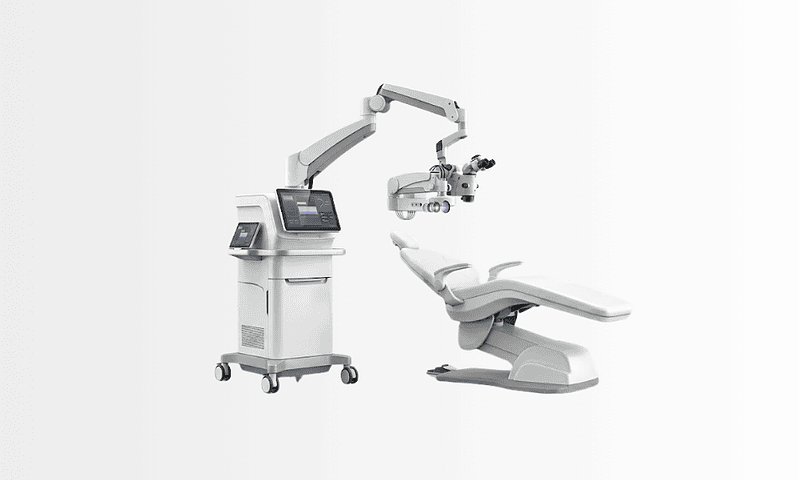
Femto LASIK
Femto LASIK is a bladeless laser eye surgery that reshapes the cornea to correct myopia, hyperopia and astigmatism, reducing dependence on glasses or contact lenses.
Quick answer
Femto LASIK is bladeless laser vision correction. A femtosecond laser creates a thin, precisely planned flap in the cornea, then an excimer laser reshapes the tissue beneath to correct myopia, hyperopia or astigmatism. The flap settles back without stitches. It suits adults with a stable prescription and healthy corneas, and vision typically improves within days, then stabilises over the following weeks.
Femto LASIK: What It Is and Whether It Might Suit You
Femto LASIK is laser vision correction performed with two lasers instead of one laser and a blade. A femtosecond laser creates a thin, precisely planned flap in the cornea, and an excimer laser then reshapes the tissue underneath to correct myopia (nearsightedness), hyperopia (farsightedness) or astigmatism. It is intended for adults with a stable prescription and healthy corneas who want to reduce their dependence on glasses or contact lenses.
Most people who research femto LASIK arrive at the decision gradually. Years of glasses, contact lenses that dry out by evening, sports that punish eyewear, travel with lens solutions and spare pairs, at some point the question shifts from “could I have this done?” to “should I?”. That caution is appropriate. Your eyes are delicate, the tissue removed during treatment does not grow back, and questions about safety, accuracy, recovery time and long-term results deserve specific answers rather than reassurance.
For well-selected patients, femto LASIK is a short procedure with a fast visual recovery. Many people notice clearer vision within the first day, although vision continues to settle over days to weeks. The honest limits matter just as much: the procedure reduces dependence on corrective lenses, it does not promise perfect vision in every situation. Some patients still use glasses for night driving, fine detail work, or reading later in life once age-related presbyopia arrives. Success depends heavily on detailed preoperative testing, correct patient selection, careful surgical planning and realistic expectations, in that order.
This page explains what femto LASIK is, how it differs from standard LASIK and from topography-guided treatments such as Contoura, who is and is not a candidate, what the procedure and recovery actually involve, and what to expect years later. If you are weighing up the broader family of treatments, our LASIK eye surgery treatment guide covers the wider landscape.
What Is Femto LASIK?
Femto LASIK, also written femtosecond LASIK or FS-LASIK, is a bladeless form of LASIK eye surgery. Every LASIK procedure begins by creating a thin flap in the cornea, the transparent front surface of the eye, so the laser can reshape the tissue beneath it. Traditional LASIK creates this flap with a mechanical blade called a microkeratome. Femto LASIK creates it with laser energy instead, which lets the surgeon plan the flap’s depth, diameter and shape in advance, matched to your individual corneal anatomy.
Once the flap is created and gently lifted, an excimer laser reshapes the exposed corneal tissue. The reshaping pattern depends on the refractive error being treated. In myopia, the cornea is flattened slightly so light focuses properly on the retina rather than in front of it. In hyperopia, the cornea is steepened in a controlled way. In astigmatism, the laser smooths an uneven corneal curvature so light enters the eye more evenly. The flap is then repositioned, where it adheres naturally without stitches.
It is worth being clear about what femto LASIK does not do. It does not treat the lens, the retina or the optic nerve. It corrects focusing errors caused by the shape of the cornea, nothing more. Cataracts, retinal disease, glaucoma-related visual loss and advanced corneal disease all require different evaluation and different treatment. This is one reason a thorough preoperative examination matters: some people who assume they need laser correction actually have a problem that laser correction cannot fix.
What is femto, and why does the name matter?
“Femto” refers to the femtosecond, one quadrillionth of a second, which is the pulse duration of the flap-creating laser. Pulses this short deliver energy so briefly that they separate corneal tissue at a microscopic level with minimal heat spread to surrounding structures. In practical terms, this is what allows the flap to be created to planned dimensions rather than cut mechanically. When you see “femto” in the name of an eye procedure, it describes how the flap is made, not what the treatment corrects.
How is femto LASIK different from standard LASIK?
The difference is the flap, not the correction. In standard LASIK, a microkeratome blade cuts the flap; in femto LASIK, the femtosecond laser creates it. The second step, excimer laser reshaping of the cornea, is essentially the same in both. Because the laser-created flap follows a digital plan for thickness, diameter and edge profile, the surgeon has more control over flap architecture, which is particularly relevant when corneal measurements leave less margin. For you as a patient, the visible experience of the two procedures is very similar; the distinction lies in the planning and instrumentation.
Is femto LASIK the same as Contoura Vision?
No, they are not the same thing: they answer two different questions. Femto LASIK describes how the corneal flap is created (with a femtosecond laser). Contoura Vision is a brand name for topography-guided excimer treatment, which describes how the reshaping itself is planned: the ablation is guided by a detailed map of your individual corneal surface rather than by the glasses prescription alone. The two can be combined: this is what people mean by “Contoura femto LASIK”: a femtosecond laser flap followed by topography-guided reshaping. Whether topography-guided treatment adds meaningful value depends on how irregular your cornea is; your surgeon judges this from your corneal maps, not from a menu. A perfectly regular cornea may gain little from it, while an irregular one may benefit.
Who Is a Candidate for Femto LASIK?
Femto LASIK may be considered by adults who have a stable glasses or contact lens prescription and want to reduce their dependence on optical correction. The most common candidates are people with nearsightedness, farsightedness or astigmatism who are otherwise in good eye health. Typical reasons for seeking evaluation include blurred distance vision, difficulty reading road signs, dependence on glasses from the moment of waking, contact lens dryness or irritation, and inconvenience during sport or travel. Some patients are motivated by occupational requirements; others simply want a long-term alternative to lenses.
Candidacy is decided by measurement, not motivation. A refractive surgery assessment is far more detailed than a routine glasses check. The ophthalmology team evaluates visual acuity, your current prescription and how stable it has been, corneal thickness, corneal shape, tear film quality, pupil size, eye pressure and the health of the front and back of the eye. Advanced corneal imaging can detect subtle irregularities, early keratoconus patterns, for example, that a standard eye examination would miss, and which change the recommendation entirely.
Good candidates generally share the same profile: realistic expectations, healthy corneas of adequate thickness, a prescription that has stopped changing, and no active eye disease that would interfere with healing. Some patients are better suited to a different form of vision correction, surface laser treatment (PRK), phakic intraocular lens implantation or refractive lens exchange. The right procedure is not the most familiar one; it is the one that matches your anatomy, age, prescription and visual goals.
Femto LASIK may not be recommended in certain situations, including:
- An unstable or still-changing prescription
- Keratoconus or suspected corneal weakness
- Corneas too thin for the planned correction
- Severe dry eye that has not been treated first
- Active eye infection or inflammation
- Uncontrolled autoimmune conditions that affect healing
- Pregnancy or breastfeeding, when the prescription can shift temporarily
- Certain medications that may affect corneal healing
Patients with very high prescriptions also need a careful discussion of alternatives, because higher corrections remove more tissue and narrow the safety margin. A responsible LASIK evaluation identifies who should not have the procedure just as clearly as who is likely to benefit, and a clinic that never says no to anyone is a warning sign, not a convenience.
Conditions and Indications Femto LASIK Addresses
Femto LASIK treats refractive errors. These are focusing problems, not diseases: light entering the eye does not land precisely on the retina, so the image is blurred. In selected patients, the procedure is appropriate for the following indications:
- Myopia: nearsightedness, where distant objects appear blurred while near vision is often clearer.
- Hyperopia: farsightedness, where near tasks are difficult and distance vision may also be strained, depending on the degree.
- Astigmatism: irregular corneal curvature causing blurred, shadowed or distorted vision at multiple distances.
- Contact lens intolerance: discomfort, dryness, allergy or lifestyle limitation from lenses, when the eye is otherwise suitable for laser correction.
- Selected presbyopia strategies: in some patients, monovision or blended vision, correcting one eye for distance and one for near, may be discussed to reduce dependence on reading glasses. This requires careful testing beforehand, ideally a trial with contact lenses, and clear expectation-setting.
Two limits deserve emphasis. Femto LASIK does not treat presbyopia the way reading glasses do, and it does not prevent age-related changes such as cataract. Patients in their 40s and beyond need a more detailed conversation about near vision, future lens changes and whether corneal laser surgery or a lens-based procedure serves them better over the coming decades.
The Femtolasik Procedure, Step by Step
The femtolasik procedure follows a fixed sequence: detailed measurement, treatment planning, flap creation, laser reshaping and a short observation period. The laser work itself takes minutes; the preparation that makes it safe takes far longer.
Preparation Before Surgery
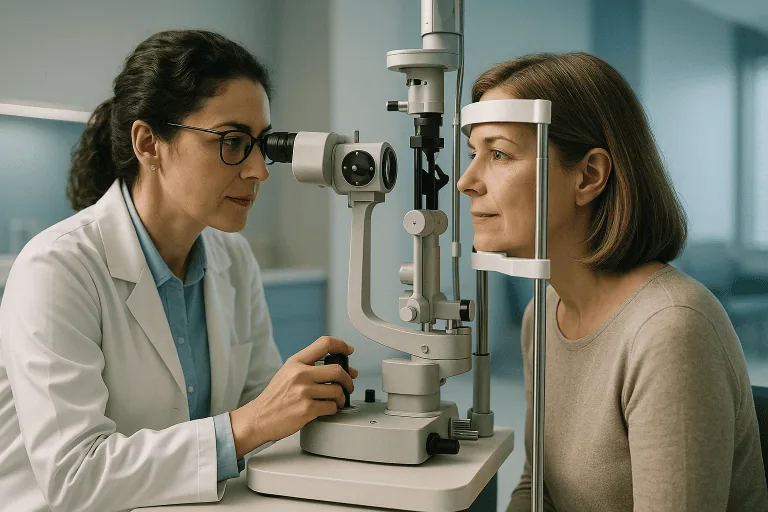
Preparation is the most consequential phase. Before surgery is even offered, you undergo a diagnostic work-up that may include refraction testing, corneal topography and tomography, pachymetry to measure corneal thickness, tear film evaluation, pupil measurement, ocular surface assessment and a retinal examination. Together, these determine whether your cornea can safely tolerate reshaping and whether hidden risk factors exist.
If you wear contact lenses, you will usually be asked to stop wearing them for a period before testing and surgery. Lenses temporarily mould the corneal surface, and accurate measurements require the cornea to return to its natural shape. The exact pause depends on the lens type, soft lenses need less time than rigid ones, and your physician sets the interval.
Your surgeon also reviews your medical history, current medications, allergies, previous eye problems and visual priorities. Expect questions about night driving, screen work, sport, occupation and reading habits: these details genuinely shape the plan, particularly the choice of visual target. Any dry eye, allergy or eyelid inflammation identified at this stage is treated before surgery, because a healthy ocular surface improves both comfort and the quality of the final result.
What Happens on the Day
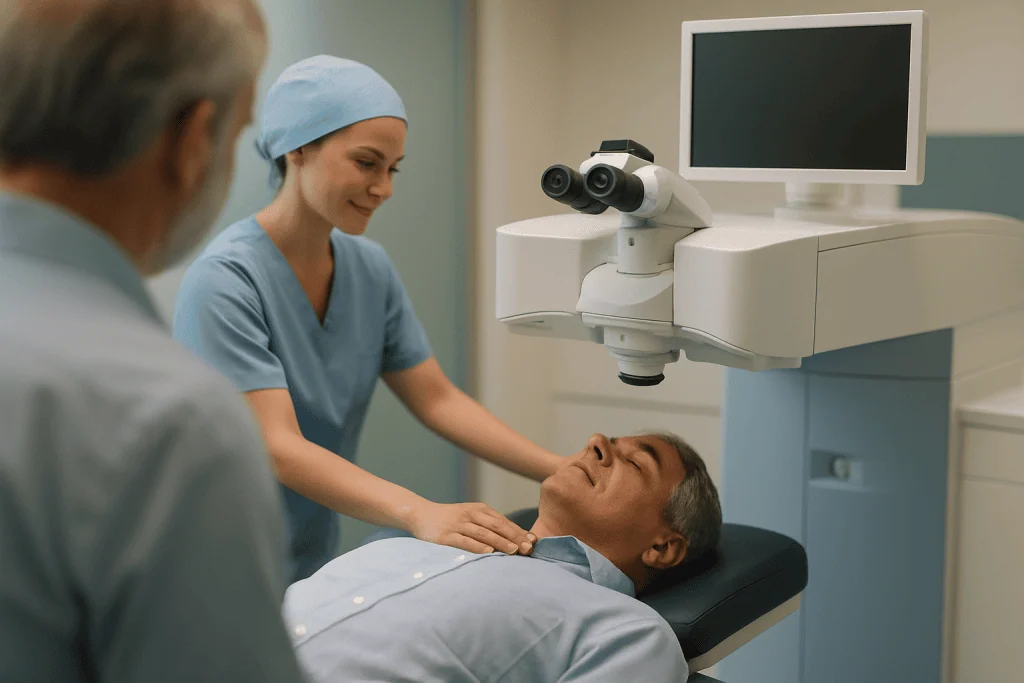
Femto LASIK is an outpatient procedure, and both eyes are commonly treated in the same session when appropriate. The steps run as follows:
- Confirmation checks: your measurements and treatment plan are verified before you enter the laser suite.
- Numbing: anaesthetic eye drops numb the eye. You remain awake throughout. A small device holds the eyelids open so blinking cannot interfere.
- Flap creation: the femtosecond laser creates the corneal flap to the planned dimensions. You may feel pressure and vision may dim briefly; this step is typically over in well under a minute per eye.
- Reshaping: the surgeon lifts the flap and the excimer laser reshapes the cornea according to your measurements. The laser time may be only seconds, depending on the degree of correction. Eye-tracking systems maintain alignment if your eye makes small natural movements.
- Repositioning: the flap is laid back into place, where it adheres without stitches.
- Check and discharge: your eyes are examined, and you receive drops and instructions before leaving. Antibiotic and anti-inflammatory drops are commonly prescribed, with lubricating drops for comfort.
You should not drive immediately afterwards; arrange transport back to your accommodation. The full appointment typically takes a few hours including preparation and observation, even though the laser portion is brief.
The Technology Behind Femtosecond Laser Eye Surgery
Femtosecond laser eye surgery depends on two laser platforms working from one diagnostic plan: the femtosecond laser for flap creation and the excimer laser for reshaping. A femto laser, the shorthand surgeons use, fires ultra-short pulses that separate tissue at a planned depth, which is what makes the “bladeless” flap possible. Around these two devices sits a suite of supporting technology: corneal imaging systems that map shape and thickness in fine detail, wavefront analysis in selected cases to assess optical imperfections beyond the glasses prescription, tear film testing to catch dryness before it degrades the result, and planning software that customises the ablation pattern to your prescription and corneal characteristics.
The technology supports accuracy, but it does not replace judgment. Deciding whether LASIK is appropriate at all, how much tissue can be safely treated and what visual target best fits your life remains the surgeon’s responsibility. Femto LASIK sits within a wider family of laser surgery techniques, and across all of them the same rule holds: the machine executes the plan; the physician makes it.
Does Femto LASIK Hurt?
During the procedure itself, most patients feel pressure rather than pain, because anaesthetic drops numb the eye’s surface. The flap-creation step produces a sensation of firm pressure and brief dimming of vision, which some people find strange but few describe as painful. Discomfort tends to arrive afterwards, once the drops wear off: burning, grittiness, watering and light sensitivity are common in the first several hours and usually settle within a day or two. Lubricating drops, rest and keeping the eyes closed help considerably. If you want to understand how discomfort is managed around procedures more generally, see how we control pain after surgery and invasive procedures. Persistent or worsening pain after the first days is not typical, and your surgeon will explain in advance which symptoms warrant an earlier review.
Recovery After Femto LASIK
Immediately after surgery, vision is often hazy or foggy, and mild burning, watering or a foreign-body sensation is common. The standard advice for the first hours is simple: go back to your accommodation, keep your eyes closed as much as possible and do not rub them. Rubbing is the one habit that can genuinely disturb a freshly repositioned flap. A follow-up examination, typically the next day, confirms early healing and flap position.
Recovery varies from person to person, but most patients follow a predictable pattern of early improvement followed by gradual stabilisation:
| Time Period | What Patients Can Expect |
|---|---|
| Day 1 | Vision may be clearer but can fluctuate. Mild burning, tearing, light sensitivity or haziness is common. A follow-up visit checks early healing and flap position. |
| First week | Many patients return to desk work and normal indoor activities. Drops are used as prescribed. Eye rubbing, swimming, eye makeup and dusty environments are avoided. |
| First month | Vision continues to stabilise. Dryness, glare or halos, if present, tend to gradually improve. Follow-up visits assess healing and visual quality. |
| Longer term | Most healing is complete, though subtle changes can continue. Some patients use glasses for specific tasks, discuss enhancement if a residual prescription remains, or need reading correction with age. |
Activity restrictions are set individually, but swimming pools, saunas, dusty environments, eye makeup and contact sports are usually off the list for a period your surgeon defines. Desk-based work generally resumes within days, depending on comfort, dryness and how visually demanding the work is.
When Can You Fly After Femto LASIK?
Flying itself does not harm a LASIK-treated eye, and many surgeons permit air travel within days once the first follow-up confirms the flap has settled. The practical issue is cabin air, which is very dry and can aggravate the temporary dryness that follows surgery, frequent lubricating drops during the flight make a real difference. The timing differs by procedure type; our comparison of flying after eye surgery for LASIK, retinal laser and cataract sets out the differences in detail. Your own surgeon’s clearance, based on your healing, is the timeline that counts.
Why Acting Early Matters
Femto LASIK is elective, so it is almost never urgent. Timely evaluation still has value. If your vision is changing, your astigmatism is increasing or contact lenses are becoming harder to tolerate, an eye examination can establish whether the issue is a simple refractive error or a sign of something else. Some people who assume they need LASIK actually have early corneal irregularity, dry eye disease, developing cataract or a retinal problem, conditions that need different management and that make laser reshaping the wrong answer. Early assessment directs you to the right treatment and can prevent unsuitable surgery.
For good candidates, timing also smooths the path. Dry eye, allergy or eyelid inflammation may need treatment before surgery. Contact lens wear must pause long enough for accurate measurements. And building the schedule around examination, surgery and the early follow-up visit, rather than compressing everything into a few days, leaves room for a delayed decision if the measurements call for one.
Benefits of Femto LASIK
The potential benefits are best understood in practical terms, how the procedure may change daily life for a suitable patient, not in the abstract:
| Benefit | What It Means for You |
|---|---|
| Reduced dependence on glasses or contact lenses | Many suitable patients manage most daily distance-vision activities without corrective lenses, though some still use glasses for specific tasks. |
| Bladeless flap creation | The femtosecond laser allows the corneal flap to be planned with precise dimensions based on your own eye measurements. |
| Rapid visual recovery | Vision often improves quickly, with routine activities resuming within days, depending on healing and comfort. |
| Personalised treatment planning | Diagnostic imaging and refractive measurements tailor the procedure to your prescription, corneal shape and visual needs. |
| Relief from contact lens intolerance | Patients troubled by lens-related dryness, irritation or inconvenience may find daily life simpler after successful correction. |
Results, Risks and What Influences a Good Outcome
A good femto LASIK result begins before the laser is switched on. The single most important factor is patient selection: corneal thickness, corneal shape, prescription level, age, tear film quality, pupil size and overall eye health together determine whether LASIK is suitable and what result can reasonably be expected. Prescription stability is essential, if your refraction is still changing, today’s correction will not stay accurate. Age matters too: younger adults need evidence of stable vision, while patients over 40 must understand that LASIK corrects distance vision but does not stop the natural, age-related loss of near focusing ability.
Corneal health is central. Conditions such as keratoconus, or its subtle early form, can make laser reshaping unsafe, which is exactly what advanced corneal mapping is designed to detect. The degree of refractive error matters as well: higher corrections require more tissue removal and carry a greater chance of residual prescription, visual fluctuation or the need to consider an alternative procedure with a better risk-benefit profile for that eye.
Technique and aftercare complete the picture. Accurate measurements, proper laser calibration, controlled flap creation and careful alignment all contribute, and so do you, by using the prescribed drops, attending follow-up visits, avoiding eye rubbing and respecting the activity restrictions during healing.
What Are the Disadvantages of Femto-LASIK?
The main disadvantages fall into four groups. First, side effects: dry eye is the most common complaint after LASIK and can persist for months in some patients; glare, halos and fluctuating vision can occur, particularly early on and at night. Second, imprecision of biology: undercorrection or overcorrection can leave a residual prescription, occasionally needing enhancement treatment. Third, uncommon but real complications: infection, inflammation or flap-related problems, which require prompt diagnosis and management. Fourth, permanence and eligibility: the tissue removed does not grow back, so the safety margin is fixed at the outset, and a meaningful proportion of people who want the procedure are simply not anatomical candidates for it. A balanced consultation covers all of this before you decide; our guide to laser eye surgery risks, side effects and safety goes deeper into each risk and how it is managed.
How Long Does Femto LASIK Last?
The corneal reshaping itself is permanent: the tissue removed by the laser does not return, so the correction achieved is a lasting change to the eye’s optics. What can change is the eye around it. A small number of patients experience regression, where part of the original prescription drifts back over time, and this is more likely with higher initial corrections. More universally, presbyopia arrives with age regardless of any surgery, gradually affecting near focus from the mid-40s. So the accurate answer is: the treatment lasts, but your eyes keep ageing, and the two facts should not be confused.
What Happens 10 Years After LASIK?
For most well-selected patients, the distance correction achieved in the first months is still doing its job a decade later. What typically changes over ten years is not the LASIK but the eye: near vision declines with presbyopia, some patients pick up a small residual prescription for specific tasks such as night driving, and, much later in life, cataract can develop exactly as it would have without surgery. If cataract surgery is eventually needed, previous LASIK does not prevent it, although your records of the original corneal measurements help the cataract surgeon calculate the replacement lens accurately, which is a good reason to keep them. Regular eye examinations remain sensible after LASIK for the same reason they are sensible for everyone: the procedure corrects focus, it does not exempt the eye from the rest of ophthalmology.
How Much Does Femto LASIK Cost?
There is no single answer, because the price of femto LASIK reflects several distinct components rather than one procedure fee. The laser platforms themselves are a major factor: a femtosecond flap laser and a modern excimer system represent a substantial investment for any clinic, and that capital cost is reflected in treatment fees. Beyond the hardware, the price is shaped by the scope of the diagnostic work-up, whether topography-guided or wavefront-guided planning is included, the surgeon’s involvement in evaluation and follow-up, the medications supplied, and the clinic’s policy on enhancement treatment if a residual prescription remains.
When comparing quotes, the useful question is not “what is the number?” but “what does the number include?”. A quote that covers full preoperative imaging, both eyes, medications, scheduled follow-up visits and a defined enhancement policy is a different product from a headline figure that covers the laser minutes alone. Ask for the inclusions in writing before comparing anything.
Femto LASIK at Acibadem
At Acibadem, femto LASIK sits within a structured ophthalmology pathway rather than a standalone laser service. The process begins with the detailed diagnostic assessment described above, corneal imaging, tear film evaluation, refraction and prescription-stability review, and the recommendation follows the findings. Ophthalmologists evaluate the whole eye, not only the prescription. When the measurements suggest LASIK is not the best option, patients are advised toward another treatment or toward postponing surgery; a measured refusal is part of responsible refractive care, because an unsuitable procedure creates consequences that outlast any convenience.
Where more than one refractive option is anatomically reasonable, femto LASIK, surface laser treatment or a lens-based procedure, the alternatives are explained side by side so the decision is informed rather than assumed. Treatment plans are personalised to examination findings, medical history, lifestyle and expectations, and patients receive clear instructions on drop use, activity limits and eye protection during healing.
Aftercare is built into the pathway from the start rather than added on afterwards. The schedule includes the early postoperative review, planned checks through the first months while vision stabilises, and clear written guidance on how healing will be monitored, including which changes, such as persistent dryness or visual fluctuation, justify bringing a scheduled check forward. Records of the preoperative corneal measurements are kept with the treatment plan, because they remain clinically useful for decades, particularly if cataract surgery is needed later in life.
Making the Decision
Femto LASIK can be a genuinely useful option for people who want to reduce their dependence on glasses or contact lenses, but the right decision starts with measurement, not motivation. The safest recommendation is the one built on your corneal maps, your prescription’s stability, your eye health and your long-term visual needs, and it is only as good as the examination behind it. Approach the choice the way a careful surgeon does: confirm candidacy first, understand the limits as clearly as the benefits, and treat realistic expectations not as a disclaimer but as part of the plan. For appropriately selected patients, that combination, precise diagnosis, honest counselling and physician-led planning, is what turns a short laser procedure into years of practical visual independence.
Preparation
- A detailed eye examination, corneal mapping and refractive measurements are performed to confirm suitability. Patients may need to stop wearing contact lenses for a period before surgery. Eye drops or medication use should be discussed with the ophthalmologist before the procedure.
Aftercare
- Patients should use prescribed eye drops and avoid rubbing the eyes after surgery. Swimming, eye makeup and dusty environments are usually avoided for a short period. Follow-up visits are scheduled to monitor healing and visual recovery.
Frequently Asked Questions
What affects the cost of Femto LASIK?
Cost is influenced by the preoperative tests, whether one or both eyes are treated, corneal findings, surgeon and clinic factors, laser technology, follow-up care and any travel-related services included in the package.
How can I get a personalised quote for Femto LASIK in Turkey?
A personalised quote requires a specialist review of your prescription, corneal measurements, eye health history and treatment goals. Acibadem International can arrange a free consultation pathway to help estimate the most appropriate option and package inclusions.
Is the cheapest Femto LASIK option always the best choice?
Not necessarily. Patients should consider the quality of screening, surgeon experience, technology, safety protocols, follow-up care and whether the clinic can manage unexpected findings or recommend an alternative when needed.
What is usually included in an international patient package?
Packages may include diagnostic eye tests, ophthalmologist consultation, the laser procedure, routine medications, follow-up planning, interpreter support and care coordination. Exact inclusions should be confirmed before travel.
Could I be advised to choose a different procedure instead of Femto LASIK?
Yes. If corneal thickness, corneal shape, dry eye status, prescription or other eye findings make Femto LASIK unsuitable, a specialist may discuss options such as PRK, SMILE, phakic intraocular lens or another treatment.
Medically reviewed by the Acıbadem International Medical Board September 13, 2026
See our medical review board →
Update history
- PublishedJune 8, 2026
- Medical review approvedSeptember 13, 2026
- Last content updateSeptember 12, 2026
Planning tools for this treatment
Indicative figures for orientation only: your written plan and quote follow a free medical review.
Trusted care for international patients
Laser eye surgery costsledger-based guide ranges, or browse the full Turkey Medical Price Index.
From the Acibadem Blog

Can Athletes and Swimmers Have Femto LASIK? Timing Training Around Recovery
Most healthy adult athletes and swimmers can be considered for femto LASIK, but timing matters more than eligibility. Typical guidance keeps water, dust and…