Kidney Cancer Treatment
Kidney cancer treatment is personalized according to tumor stage, kidney function and overall health. Options may include partial or radical nephrectomy, robotic surgery, immunotherapy, targeted therapy or radiotherapy.
Quick answer
Kidney cancer treatment removes, controls or slows cancer that begins in the kidney, most often renal cell carcinoma. Options include partial nephrectomy (removing only the tumour), radical nephrectomy (removing the whole kidney), robotic-assisted surgery, immunotherapy, targeted therapy, radiotherapy for specific sites, ablation for selected small tumours, or monitored surveillance. The choice depends on tumour size, location, stage, kidney function and overall health.
Kidney Cancer: Understanding the Diagnosis and Your Options
Kidney cancer is cancer that begins in the cells of the kidney, most often in the small tubes that filter waste from the blood. Treatment ranges from surgery that removes only the tumour while preserving the kidney, to removal of the entire kidney, to medicines and radiotherapy for disease that has spread beyond the kidney. It is a diagnosis with many possible paths, and the right one depends on the specific features of your tumour and your health, not on a standard formula.
A diagnosis of kidney cancer usually arrives with urgent questions: Is the tumour contained? Will I lose my kidney? Do I need surgery, medication, or both? How quickly should treatment begin? These concerns weigh especially heavily if you are reading medical reports and imaging findings written in unfamiliar terminology, or weighing recommendations from more than one doctor.
Kidney cancer treatment has changed considerably in recent years. Many tumours are now detected earlier, on ultrasound, CT or MRI scans performed for entirely unrelated reasons. For selected patients, surgeons can remove only the tumour and preserve the rest of the kidney. For others, removal of the whole kidney, systemic therapy, or carefully planned radiotherapy is more appropriate. Which plan fits you depends on the tumour’s size, location, stage and biology, the function of both kidneys, and your overall health.
At Acibadem, kidney cancer care is built on detailed evaluation and multidisciplinary planning. Urologists, medical oncologists, radiation oncologists, radiologists, nuclear medicine specialists, pathologists, anaesthesiologists, nephrologists and supportive care teams may all contribute to a single treatment plan when the case requires it. The goal is not only to treat the cancer, but to protect kidney function, avoid unnecessary treatment, manage risk honestly, and support your quality of life during and after care.
What is kidney cancer?
Kidney cancer is a disease in which cells in the kidney grow abnormally and form a tumour that can invade nearby tissue and, in some cases, spread to other organs. The kidneys are two bean-shaped organs that sit either side of the spine, below the ribcage. They filter blood, remove waste through urine, regulate blood pressure and fluid balance, and produce hormones involved in red blood cell production. Most kidney cancers arise in the cells lining the kidney’s filtering tubules. A smaller number begin in the renal pelvis, the funnel where urine collects before draining into the ureter, and these behave differently, more like cancers of the urinary tract lining.
How common is kidney cancer?
Kidney cancer is among the more commonly diagnosed cancers in adults worldwide. It occurs more often in men than in women, and most people are diagnosed in middle age or later, although it can occur at younger ages, particularly in hereditary forms. Because modern imaging is used so widely, a growing share of kidney cancers are now found incidentally, at a small size and before any symptoms appear. This shift towards earlier detection is one of the reasons kidney-preserving surgery has become possible for more patients than in the past.
Kidney cancer and renal cell carcinoma: what the names mean
Kidney cancer and renal cell carcinoma are closely related terms, but they are not identical. Renal cell carcinoma is the most common type of kidney cancer in adults, and in everyday conversation the two terms are often used interchangeably. In some medical reports you may see the abbreviation RCC, occasionally written as RC carcinoma, both refer to the same disease. Within renal cell carcinoma there are several subtypes with different behaviours and treatment responses. Clear cell renal cell carcinoma is the most frequently seen subtype, named for the pale appearance of its cells under the microscope; papillary and chromophobe subtypes are less common and often behave differently. Cancers of the renal pelvis are usually urothelial cancers, biologically closer to bladder cancer than to typical renal cell carcinoma, and they are staged and treated on a different pathway. This is why the exact wording on your pathology report matters: two patients who have both been told they have “kidney cancer” may need quite different treatment.
Kidney Cancer Symptoms and How the Disease Is Found
Kidney cancer symptoms are often absent in the early stages, which is why so many tumours are discovered by chance. When symptoms do occur, they can be subtle or easily mistaken for other conditions. Visible blood in the urine, persistent pain in the flank or back on one side, an unexplained mass in the abdomen or side, unexplained weight loss, fatigue, fever, night sweats, new high blood pressure, or anaemia can each prompt further evaluation. None of these findings is specific to kidney cancer, most people with blood in the urine or flank pain have another explanation, but they are the signals that most often lead to the scan that reveals a kidney tumour.
What are the early signs of kidney cancer?
The honest answer is that early kidney cancer usually produces no signs at all. A small tumour confined to the kidney rarely bleeds, rarely causes pain, and rarely changes anything you would notice day to day. When early signals do appear, the most recognisable is blood in the urine, which may come and go rather than persist. Less specific changes, tiredness that does not resolve, mild one-sided back discomfort, low-grade fever, or blood test abnormalities such as anaemia or high calcium, sometimes appear before a tumour is large. Because the early stage is so quiet, most early diagnoses come from imaging performed for another reason rather than from symptoms.
How do people find out they have kidney cancer?
Most people find out through imaging, and often unexpectedly. A typical story is an ultrasound ordered for digestive complaints, a CT scan after a minor injury, or an evaluation for kidney stones that happens to reveal a solid mass in one kidney. Others are diagnosed after investigating blood in the urine or persistent flank pain. A smaller group learn of the disease only after it has spread, when symptoms such as bone pain, cough, shortness of breath, headaches, neurological changes or general weakness lead to scans that trace the problem back to the kidney. However the diagnosis arrives, the next step is the same: precise imaging to define the tumour, and a careful assessment of whether it has spread.
What Causes Kidney Cancer?
What causes kidney cancer in an individual patient usually cannot be pinned down with certainty. What research has established is a set of factors that raise the likelihood of developing the disease. Smoking is one of the clearest, and the risk falls after quitting. Excess body weight and long-standing high blood pressure are both associated with higher risk. People with advanced chronic kidney disease, particularly those on long-term dialysis, can develop cystic changes in the kidneys that carry an increased cancer risk. Certain occupational exposures, including some industrial chemicals, have been linked to kidney cancer. Age and male sex also play a role. It is important to keep perspective: many people with several risk factors never develop kidney cancer, and some patients develop it with no identifiable risk factor at all.
Is kidney cancer hereditary?
Most kidney cancer is not hereditary: it arises from genetic changes acquired during life rather than inherited from a parent. A minority of cases, however, occur as part of inherited syndromes, of which von Hippel-Lindau disease is the best known; others involve inherited changes that predispose to papillary or chromophobe tumours. Hereditary kidney cancer tends to be suspected when tumours appear at a young age, affect both kidneys, occur as multiple tumours, or cluster in a family alongside other characteristic findings. Recognising a hereditary pattern matters because it changes the strategy: surgeons lean more strongly towards kidney-preserving approaches, since further tumours may develop over a lifetime, and relatives may be advised to consider genetic counselling and screening. If your family history includes kidney tumours, tell the team evaluating you: it genuinely alters the planning conversation.
What Kidney Cancer Treatment Involves
Kidney cancer treatment refers to the surgical, medical and supportive strategies used to remove, control or slow cancer that begins in the kidney. There is no single standard package. A small tumour confined to one kidney may be treated with partial nephrectomy, in which only the tumour and a margin of surrounding tissue are removed. Larger or more complex tumours may require radical nephrectomy, removal of the entire kidney and sometimes nearby tissue. In selected cases, minimally invasive or robotic-assisted surgery allows precise dissection through small incisions, which can support recovery and reduce blood loss compared with traditional open surgery in appropriate patients.
When cancer has spread beyond the kidney, treatment usually centres on systemic therapies: immunotherapy, targeted therapy, or a combination. Immunotherapy helps the immune system recognise and attack cancer cells. Targeted medicines interfere with specific pathways that cancer cells use to grow and to build the blood vessels that feed them. Radiotherapy is not usually the main treatment for a tumour inside the kidney, but it has an important role in controlling pain, treating bone or brain metastases, managing bleeding, and addressing selected local disease situations. These systemic and local approaches sit within the broader framework of oncology and cancer treatment, where sequencing and combination decisions are made case by case.
Not every kidney tumour needs immediate intervention. In carefully selected patients, especially older adults or people with significant medical conditions and very small kidney masses, active surveillance may be considered. This means monitoring the tumour with scheduled imaging and intervening only if it grows or develops concerning features. Thermal ablation, which destroys tumour tissue using heat or cold delivered through image-guided probes, is another option for selected small tumours when surgery is not ideal. The existence of these gentler pathways is worth knowing: for some patients, the safest treatment is a well-organised plan of watching rather than an operation.
Who May Need Kidney Cancer Treatment
Many people with kidney cancer have no symptoms at diagnosis; the tumour is found incidentally during imaging for back pain, digestive symptoms, kidney stones or routine evaluation. Others come to attention through the symptoms described above, or after the cancer has already spread. Even when kidney cancer is advanced, treatment can often help control the disease, relieve symptoms, and extend meaningful time with acceptable quality of life. Advanced disease is a different treatment conversation, not the absence of one.
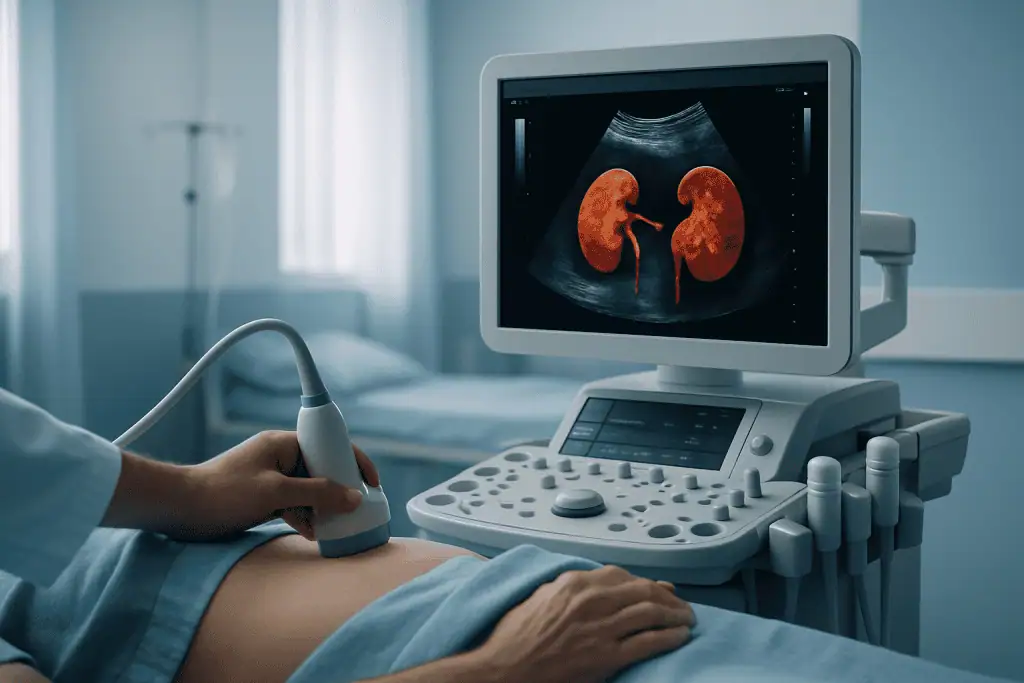
Diagnosis begins with imaging. Ultrasound may identify a kidney mass, but CT or MRI with contrast is typically used to define it precisely. These scans show the size of the tumour, whether it extends into nearby blood vessels, whether lymph nodes are enlarged, and whether there are signs of spread. Chest imaging is commonly added, and additional MRI, bone imaging or PET-based imaging, performed within a nuclear medicine unit, may be recommended in selected cases.
Blood and urine tests complete the picture. They assess kidney function, anaemia, calcium levels, liver function and general fitness for surgery or medication. One point often surprises patients: in many kidney tumours, a biopsy is not required before surgery. If imaging strongly suggests cancer and the mass can be removed, the operation itself provides both treatment and definitive diagnosis. Biopsy becomes useful when the diagnosis is uncertain, when ablation or active surveillance is being considered, or when systemic therapy is planned for advanced disease and the exact subtype needs to be confirmed first.
Patients who may need kidney cancer treatment include those with:
- A newly discovered solid kidney mass on ultrasound, CT or MRI.
- A kidney tumour that appears suspicious for renal cell carcinoma on imaging.
- A tumour that has grown during a period of surveillance.
- Symptoms such as blood in the urine, flank pain, or unexplained systemic symptoms traced to a kidney mass.
- Kidney cancer that has spread to lymph nodes, lung, bone, brain, liver or other organs.
- Recurrent kidney cancer after previous surgery or treatment.
- A hereditary cancer syndrome or family history associated with multiple kidney tumours.
Stages and Situations Kidney Cancer Treatment Addresses
Kidney cancer treatment covers a wide range of clinical situations, from a straightforward small localised tumour to disease involving major blood vessels, lymph nodes or distant organs. Accurate staging is essential because it determines whether the main goal is eliminating the disease, achieving long-term control, relieving symptoms, or a combination of these aims. Understanding which category you are in makes every subsequent recommendation easier to follow.
Localised kidney cancer means the tumour appears confined to the kidney. These cancers are usually treated surgically, with partial nephrectomy preferred whenever it is technically safe and medically appropriate. Preserving kidney tissue matters most for patients with chronic kidney disease, diabetes, high blood pressure, a single functioning kidney, tumours in both kidneys, or hereditary syndromes, situations where every unit of kidney function has long-term value.
Locally advanced kidney cancer may extend beyond the kidney into surrounding tissues, nearby lymph nodes, or into the renal vein and sometimes the inferior vena cava, the major vein returning blood to the heart. These cases require careful surgical planning and may involve collaboration among urological surgeons, vascular specialists, anaesthesiologists and intensive care teams. In selected patients, systemic therapy may be considered before or after surgery, depending on risk features and disease characteristics.
Metastatic kidney cancer means the cancer has spread to distant organs, most commonly lung, bone, liver, brain or lymph nodes. Treatment may include immunotherapy, targeted therapy, surgery in carefully selected cases, radiotherapy to specific sites, or combinations of these. The decision rests on the extent of disease, symptoms, pace of growth, your fitness, prior treatments and the tumour’s biology.
Recurrent kidney cancer may appear in the kidney bed after surgery, in remaining kidney tissue, in lymph nodes or at distant sites. Options include further surgery, systemic therapy, radiotherapy, ablation, or observation in selected slow-growing cases. Recurrence is a setback, not a dead end; the plan is rebuilt around the new situation.
Small renal masses deserve a category of their own because they are so commonly found incidentally. Not every small mass behaves aggressively, and some are benign. For certain patients, active surveillance or ablation is a reasonable strategy. Others benefit from early partial nephrectomy, particularly if the mass is growing, shows suspicious imaging features, or the patient is healthy enough that surgery carries low risk and removes uncertainty.
How quickly can kidney cancer spread?
There is no single speed. Some kidney cancers, particularly small low-grade tumours, grow slowly over years and may never spread; this is precisely why active surveillance can be safe for selected patients. Others, especially larger tumours, higher-grade tumours, and those with aggressive microscopic features such as sarcomatoid change, can progress and spread more rapidly. Imaging features, tumour size, growth rate on repeated scans, and the pathology report together give the best available estimate of how a particular tumour is behaving. This variability is the strongest argument for individual assessment rather than assumptions in either direction: neither panic nor complacency fits every kidney tumour.
How Kidney Cancer Treatment Is Performed
Preparation and Treatment Planning
Before treatment begins, the team reviews your imaging, laboratory results, medical history, medications and previous surgeries. This review often raises questions that need answering before a date is set: whether the imaging is recent and detailed enough to plan surgery, whether kidney function has been measured properly on both sides, and whether other health conditions need optimising first. Settling these points early keeps the treatment itself on schedule and prevents avoidable surprises later.
A set of key questions guides the planning: How large is the tumour? Is it close to major blood vessels, the urine-collecting system, or the centre of the kidney? Is the other kidney healthy? Are there signs of spread? Are there conditions, diabetes, hypertension, heart disease, clotting risks, reduced kidney function, that change the safety calculation? And ultimately: which treatment offers the best cancer control while preserving as much long-term health as possible?
When surgery is planned, preoperative assessment may include anaesthesia evaluation, an electrocardiogram, chest imaging, kidney function testing, blood typing and cross-matching if needed, and a full medication review. Blood thinners, diabetes medicines and supplements are reviewed by the treating team, which decides whether any adjustment is needed before the operation: this is always a decision made by your doctors, never a change to make on your own. You receive clear instructions about fasting, hydration, and what to expect on the day of surgery.
Partial Nephrectomy
Partial nephrectomy removes the tumour while leaving the remaining healthy kidney tissue in place. It is commonly considered for smaller tumours and whenever kidney preservation is especially important. The operation may be performed through an open, laparoscopic or robotic-assisted approach, depending on tumour complexity and surgical judgement. In broad terms, the operation follows a sequence:
- The surgeon exposes the kidney and identifies the tumour, often using intraoperative ultrasound to confirm its borders.
- Blood flow to part or all of the kidney is temporarily controlled to limit bleeding during the critical phase.
- The tumour is removed together with a margin of surrounding tissue.
- The kidney is reconstructed: the collecting system is closed if it was entered, and bleeding points are secured.
- The removed tissue goes to pathology, which confirms the cancer type, grade, margins and other features that shape follow-up.
The main advantage of partial nephrectomy is kidney preservation, which can reduce the risk of long-term decline in kidney function, particularly for patients who already carry risk factors for chronic kidney disease. The honest counterweight is that partial nephrectomy is technically more demanding than removing the whole kidney, and it is not suitable for every tumour. A tumour buried deep in the centre of the kidney or wrapped around major vessels may simply not permit safe partial removal.
Radical Nephrectomy
Radical nephrectomy removes the entire kidney together with the tumour. Depending on the case, surrounding fatty tissue, the adrenal gland, nearby lymph nodes, or tumour extension into blood vessels may also be addressed during the same operation. Radical nephrectomy is generally chosen for larger tumours, centrally located tumours, tumours that have replaced much of the kidney, or cancers where partial removal would not be safe or oncologically sound.
Losing a kidney sounds alarming, but many people live well with one kidney provided the remaining kidney functions normally. Before surgery, the team evaluates the health of the opposite kidney and your risk factors for future kidney disease, so the decision is made with full knowledge of what you would be left with. After surgery, long-term follow-up includes monitoring of blood pressure, kidney function, urine protein and general metabolic health, quiet, routine checks that protect the remaining kidney over the years.
Robotic-Assisted and Minimally Invasive Surgery
Robotic-assisted kidney surgery uses small incisions and surgeon-controlled instruments capable of fine movements in confined spaces. The surgeon remains fully in control throughout, working with magnified three-dimensional visualisation and specialised instruments to perform delicate dissection and reconstruction. This approach is particularly useful in selected partial nephrectomy cases, where millimetres matter and precise suturing inside a small field is required.
Minimally invasive surgery may be associated with smaller incisions, less postoperative discomfort, shorter hospital stays and a faster return to daily activity for appropriate patients. That said, the best approach is the one that achieves safe, complete cancer removal with good functional results, not the one with the smallest scar. Some complex tumours still require open surgery, especially when major blood vessels are involved or when previous operations and unusual anatomy create additional challenges. A recommendation for open surgery is not a step backwards; it is a judgement about what your particular tumour demands.
Systemic Therapy: Immunotherapy and Targeted Therapy
For advanced or metastatic kidney cancer, medicines that treat the whole body are usually the backbone of care. Immunotherapy includes medications that release the immune system’s “brakes”, allowing immune cells to recognise and attack cancer more effectively. Targeted therapies act on the pathways tumours use for growth and blood vessel formation. Modern treatment plans frequently combine these approaches, guided by international guidelines, your risk category, symptoms, kidney function, autoimmune history and any prior treatments.
Systemic therapy requires close, structured monitoring. Blood tests, blood pressure checks, symptom review and scheduled imaging track both the treatment’s effect and its side effects. Many side effects are manageable with early recognition and supportive care; others require treatment pauses, dose adjustments, steroids or specialist input. As part of treatment, the care team explains which symptoms should be reported to them promptly, for example diarrhoea, breathlessness, severe fatigue, rash, fever, neurological changes or signs of hormone imbalance, so that problems are caught while they are still small.
Radiotherapy and Local Control Treatments
Radiotherapy in kidney cancer is mainly used to treat painful bone metastases, brain metastases, bleeding, or local symptoms from specific tumour sites. Modern planning techniques focus radiation on the intended target while limiting exposure to surrounding healthy tissue. The number of sessions varies with the location, size, symptoms and overall goal of treatment, sometimes a short course is enough for symptom control.
Ablation may be considered for selected small kidney tumours, particularly in patients who are not ideal candidates for surgery. Under image guidance, probes are placed into the tumour and heat or cold is applied to destroy the cancer cells. Ablation avoids a larger operation, but it comes with an obligation: follow-up imaging is essential to confirm that the treated area remains controlled, because the tumour is destroyed in place rather than removed and examined.
Typical Duration, Hospital Stay and Early Recovery
The length of treatment depends entirely on the chosen approach. Kidney surgery may take several hours, influenced by tumour complexity, the surgical technique and whether additional procedures are needed. Hospital stay is often shorter after minimally invasive surgery and longer after open or complex vascular operations. From the first day, you are encouraged to walk early, breathe deeply and gradually resume eating as bowel function returns, small actions that measurably reduce complications.
After discharge, recovery continues at home. The care team provides instructions on incision care, activity restrictions, pain medication, hydration, diet and warning signs to watch for. Once the pathology results are available, they are reviewed with you, and the follow-up plan is set according to stage, grade, margins, kidney function and recurrence risk.
Why Acting Early Matters
Kidney cancer behaves very differently from one patient to another. Some small tumours grow slowly; others are aggressive. Early evaluation is what distinguishes the situations where careful observation is reasonable from those where prompt treatment is advisable. Delaying assessment can allow a tumour to enlarge, invade nearby structures, close off the option of kidney-sparing surgery, or spread to other parts of the body, outcomes that narrow your choices rather than widen them.
Acting early also protects kidney function. A smaller, more favourably located tumour is more likely to be suitable for partial nephrectomy or ablation. As a tumour grows into complex anatomical territory, the likelihood of needing radical nephrectomy increases. For patients with a single kidney, reduced baseline kidney function, diabetes or hypertension, the difference between keeping and losing kidney tissue has meaningful long-term health implications.
For advanced kidney cancer, timely treatment helps control symptoms, prevent complications such as fractures from bone metastases or neurological problems from brain metastases, and establish a systemic therapy plan before overall condition declines. Early supportive care matters just as much: managing pain, nutrition, fatigue, emotional stress and treatment side effects from the start makes every subsequent step easier to tolerate.
Benefits of Kidney Cancer Treatment
The benefits of treatment depend on the stage of disease and the chosen approach, but the central aim is constant: control the cancer while protecting your overall health wherever possible.
| Benefit | What It Means for You |
|---|---|
| Cancer control | Surgery, systemic therapy, radiotherapy, or a combined plan can remove, reduce, or control disease based on stage and tumour behaviour. |
| Kidney preservation when feasible | Partial nephrectomy or selected local treatments may help maintain kidney function, especially for patients at risk of chronic kidney disease. |
| Personalised treatment selection | Your plan is adapted to tumour size, location, spread, pathology, kidney function, general health, and personal priorities. |
| Symptom relief | Treatment can help reduce pain, bleeding, pressure symptoms, or complications from metastatic sites such as bone or brain lesions. |
| Long-term monitoring | Structured follow-up helps detect recurrence, track kidney function, and manage late effects of treatment. |
Recovery Timeline After Kidney Cancer Treatment
Recovery varies according to whether your treatment involves partial nephrectomy, radical nephrectomy, open or minimally invasive surgery, systemic therapy, radiotherapy, or a combination. The table below describes a typical surgical course; your own timeline may run faster or slower.
| Time Period | What Patients Can Expect |
|---|---|
| Day 1 | After surgery, patients are monitored for pain control, urine output, bleeding, breathing, and early mobility. Many begin walking with assistance and gradually resume liquids or light food. |
| First Week | Hospital discharge may occur during this period for many surgical patients, depending on the operation and recovery. Fatigue, incision discomfort, and reduced appetite are common and usually improve gradually. |
| First Month | Activity increases step by step. Heavy lifting is usually restricted. Pathology results and follow-up plans are reviewed, and kidney function may be checked with blood tests. |
| Longer Term | Patients continue surveillance imaging and laboratory monitoring. Those receiving immunotherapy or targeted therapy attend scheduled assessments to evaluate response and manage side effects. |
Outcomes: What Shapes Them, and What Honest Answers Look Like
Outcomes in kidney cancer depend on several medical and tumour-related factors, and no responsible clinician will quote you a single number without knowing your case. Stage is one of the most important factors: tumours confined to the kidney generally offer more favourable treatment possibilities than cancers that have spread to distant organs. Tumour size, grade, subtype, growth pattern, and whether the cancer extends into veins, lymph nodes or surrounding tissue all matter as well.
Is kidney cancer curable?
Kidney cancer that is confined to the kidney and completely removed may never return, and treatment in this setting is planned with curative intent. That is a realistic aim for many patients with localised disease, but it is an aim, not a promise, and no doctor can guarantee it in advance. For cancer that has spread, the honest framing shifts from elimination to control: modern immunotherapy and targeted therapy can hold the disease in check for extended periods in some patients, sometimes with remarkable responses, while others need their treatment changed over time. Structured follow-up after any treatment exists precisely because recurrence is possible and is easier to manage when found early.
What is the survival rate for kidney cancer?
Survival in kidney cancer varies so widely with stage, subtype, grade and general health that a single figure would mislead more than it informs, which is why this page does not quote one. What can be said honestly: outlook is generally most favourable when the tumour is small, confined to the kidney and completely removed, and becomes more guarded as the disease extends into vessels, lymph nodes or distant organs. Published statistics also describe groups of patients treated in the past, not the individual sitting with a fresh diagnosis today. The most meaningful estimate you can get is one given by a specialist who has reviewed your imaging, your pathology and your health as a whole.
What else influences the result?
Kidney function before treatment plays a major role in planning. Patients with chronic kidney disease, diabetes, high blood pressure, a single kidney, or tumours in both kidneys need particular attention to preserving renal function; in these cases partial nephrectomy, staged procedures, ablation or surveillance may be preferred when medically suitable. In surgical cases, the completeness of tumour removal matters: the pathology report describes margins, grade, subtype, necrosis, sarcomatoid or rhabdoid features and other findings that shape recurrence risk, the follow-up schedule, and whether additional therapy should be discussed.
For metastatic kidney cancer, outcomes depend on the extent and pace of disease, the sites of spread, laboratory markers, general performance status, and how the cancer responds to systemic therapy. Careful monitoring lets the team adapt the plan as the disease changes rather than discovering problems late.
Your own health and engagement also affect recovery. Smoking status, cardiovascular health, nutrition, body weight, physical activity, adherence to prescribed treatment, and control of blood pressure or diabetes all influence surgical safety and long-term kidney function. Sharing every medication, supplement, allergy and detail of your medical history allows the team to reduce avoidable risk. A good result is never defined by one factor alone: it means cancer control, a safe recovery, preserved kidney function where possible, manageable side effects, and a follow-up plan you can realistically continue at home.
How Acibadem Organises Kidney Cancer Care
Kidney cancer care at Acibadem is delivered by experienced physicians working within multidisciplinary pathways. Cases may be reviewed by specialist boards when appropriate, particularly when decisions involve complex surgery, metastatic disease, the sequencing of systemic therapy, radiotherapy planning, or preservation of kidney function. This collaborative model exists so that no treatment decision rests on a single perspective.
Advanced diagnostics sit at the centre of planning. High-quality cross-sectional imaging, laboratory evaluation, pathology assessment and functional review of both kidneys define the stage and inform the choice among partial nephrectomy, radical nephrectomy, minimally invasive surgery, immunotherapy, targeted therapy, radiotherapy, ablation or surveillance. Where imaging and pathology have already been performed elsewhere, the team reviews the available records and advises whether any tests genuinely need to be repeated, repetition for its own sake serves no one.
Technology supports precision and safety, but it serves the clinical plan rather than replacing judgement. In kidney cancer this may include detailed CT and MRI to map tumour anatomy, robotic-assisted surgical systems for selected procedures, minimally invasive instruments, intraoperative imaging or ultrasound where appropriate, advanced anaesthesia monitoring, modern radiation planning systems, and digital pathology workflows. Each tool has one purpose: to help surgeons and oncologists make better-informed decisions, spare healthy tissue, and monitor response carefully.
Personalised planning matters more in kidney cancer than in many other diseases, because the “right” treatment genuinely differs from patient to patient. A younger patient with a small tumour at the edge of the kidney is managed very differently from an older patient with heart disease, a centrally located mass and reduced kidney function. One patient with metastatic disease may need systemic therapy first; another may benefit from surgery combined with medication or radiotherapy to specific sites. The plan follows the medical facts, your health status, and the practical realities of your daily life.
Follow-up planning is addressed before treatment ends, not after. Kidney cancer surveillance typically requires imaging at defined intervals, kidney function tests and blood pressure monitoring, while patients on systemic therapy need clear side-effect education and a treatment calendar they can realistically keep. Before discharge, the team sets out what will be checked, when, and which findings should prompt an earlier review, so that the plan continues safely wherever your routine care is delivered afterwards.
Life After Kidney Cancer Treatment
Follow-up is not an afterthought; it is part of the treatment. After surgery for localised disease, surveillance usually combines periodic imaging with blood tests, on a schedule set by stage, grade and pathology findings. After radical nephrectomy, protecting the remaining kidney becomes a lifelong project of ordinary habits: keeping blood pressure controlled, managing diabetes if present, staying hydrated, maintaining a healthy weight, and avoiding unnecessary strain on kidney function. Most people who lose one kidney to cancer return to their usual work, exercise and daily life once recovery is complete.
For patients on long-term systemic therapy, life after diagnosis is organised around treatment cycles and scheduled assessments. Many people continue working, travelling and living actively between appointments. Emotional adjustment deserves the same attention as physical recovery: anxiety around scan dates is common and normal, and supportive care, counselling and patient communities can all help carry that weight.
Making a Well-Informed Decision
If you or someone close to you has been diagnosed with kidney cancer, the most valuable next step is a thorough review of the medical information itself. Tumour size, stage, location, imaging quality, kidney function, pathology and general health together determine which options are safe and which are best. A second opinion carries particular weight in certain situations: when you have been advised to remove the entire kidney, when the tumour is anatomically complex, when the cancer has spread, or when different doctors have recommended different approaches. In kidney cancer, reasonable specialists can genuinely disagree, for example on partial versus radical nephrectomy, or surgery versus surveillance for a small mass, and hearing the reasoning behind each recommendation is what turns a frightening diagnosis into a decision you understand and own.
Whatever path you take, insist on clarity: which type of kidney cancer you have, what stage it is, what each proposed treatment aims to achieve, what it costs you in terms of kidney function and recovery, and what the follow-up plan looks like. Those answers exist for every case, and you are entitled to all of them.
Preparation
- Evaluation usually includes blood and urine tests, kidney function assessment, imaging such as CT, MRI or PET-CT, and staging review. Patients should share all medications, previous surgeries and medical conditions. Fasting is required before surgery, and some blood thinners may need to be adjusted under medical guidance.
Aftercare
- After surgery, pain control, wound care, early walking and kidney function monitoring are important. Follow-up imaging and lab tests help detect recurrence and assess the remaining kidney. If systemic therapy is used, patients are monitored for side effects and treatment response.
Frequently Asked Questions
What affects the cost of kidney cancer treatment?
Cost is influenced by the tumor stage and location, kidney function, the chosen treatment, the surgical approach, hospital stay, diagnostic tests, pathology review and whether systemic therapy or radiotherapy is needed. International patient services such as interpreter support, transfers and follow-up coordination may also affect the total.
How can I get a personalised quote?
A personalised quote usually requires review of medical records, imaging reports, laboratory results and any biopsy or pathology findings. You can request a free consultation so the clinical team can assess your case and outline a treatment plan and estimated package.
Is robotic kidney cancer surgery more expensive than other approaches?
Robotic surgery may involve different technology, operating room and specialist team costs compared with open or laparoscopic surgery. However, suitability and final cost depend on tumor anatomy, the planned procedure and the surgeon’s assessment.
Does the quote include immunotherapy or targeted therapy?
Systemic medicines are usually planned according to disease stage, pathology and oncology assessment. Whether these treatments are included depends on the individual plan, treatment duration and hospital policy, so they should be clarified during the quote process.
Are travel and language services included for international patients?
Many international patient programs can help with translation, appointment scheduling, airport transfers and accommodation guidance. Inclusions vary by package, so patients should confirm what is covered before travel.
Medically reviewed by the Acıbadem International Medical Board August 30, 2026
See our medical review board →
Update history
- PublishedJune 5, 2026
- Medical review approvedAugust 30, 2026
- Last content updateSeptember 8, 2026
References3
- Kidney Cancer Treatment (PDQ) – Patient Version cancer.gov
- Kidney cancer nhs.uk
- Kidney Cancer medlineplus.gov
Trusted care for international patients
From the Acibadem Blog
Follow-Up After Kidney Cancer Treatment: Why Imaging and Lab Tests Continue
Follow-up after kidney cancer treatment continues because the disease can return in the kidney bed, the remaining kidney, the lungs, bones or elsewhere, usually…
What Robotic Surgery Changes for Kidney Cancer Patients: Incisions, Precision, Recovery
Robotic kidney cancer surgery is keyhole surgery in which the surgeon removes part or all of a kidney using instruments controlled from a console…
Kidney Cancer Surgery Recovery: Walking, Wound Care and the Return to Normal Days
Kidney cancer surgery recovery time typically runs about four to six weeks for most people, with a hospital stay of a few days that…