Rhinoplasty
Rhinoplasty reshapes the nose to improve facial balance and, when needed, nasal breathing. It may correct the bridge, tip, nostrils, or structural problems after careful planning.
Quick answer
Rhinoplasty is surgery that reshapes the nose. It can reduce a bridge hump, refine the tip, narrow the nostrils, straighten a crooked nose or correct internal structures that block breathing. The operation is usually performed under general anaesthesia through incisions inside the nostrils or across the columella, and typically takes a few hours. A splint protects the nose for about a week; swelling settles gradually over months.
Rhinoplasty: Reshaping the Nose for Appearance, Breathing or Both
Rhinoplasty is a surgical procedure that reshapes the nose. It can change the nasal bridge, refine the tip, adjust nostril width, straighten a crooked nose, improve symmetry or correct structural problems that interfere with breathing. It is suitable for adults and older adolescents whose facial growth is complete and who have a realistic understanding of what surgery can and cannot achieve.
Large numbers of international patients travel each year for rhinoplasty in Turkey, and most arrive with the same two sets of questions. The first set is personal: would changing my nose help me feel more comfortable with my face? A prominent bridge, a drooping tip, wide nostrils or visible asymmetry can bother someone for years. The second set is practical: how the surgery works, what recovery demands, how long to stay abroad and what happens after the flight home. This page answers both.
For some people the decision is not aesthetic at all. Difficulty breathing through the nose, previous trauma, a deviated septum or structural narrowing can affect sleep, exercise, sinus comfort and daily quality of life. Rhinoplasty can address these problems too, often in the same operation that reshapes the visible nose.
Caution is reasonable. The nose sits at the centre of the face, and even small changes influence overall facial balance. Patients worry about looking overdone, losing their identity or needing revision surgery. These are legitimate concerns, and the honest answer is that outcomes depend on anatomy, planning, technique and healing, which is why the assessment before surgery matters as much as the operation itself.
Is a nose job the same as rhinoplasty?
Yes. A nose job is the informal name for rhinoplasty; surgeons use the medical term, but the operation is the same. When the procedure also corrects the nasal septum, the wall of cartilage and bone separating the two nasal passages, it may be called septorhinoplasty.
Types of Rhinoplasty
Rhinoplasty falls into three broad categories, and many operations combine elements of more than one.
- Cosmetic rhinoplasty improves the external shape and proportion of the nose: reducing a hump, refining the tip, narrowing the bridge or correcting nostril flare.
- Functional rhinoplasty improves airflow by correcting structural issues such as septal deviation, nasal valve weakness, turbinate enlargement or post-traumatic deformity. Some patients seek rhinoplasty for nose breathing problems alone, with no wish to change how the nose looks.
- Reconstructive rhinoplasty restores shape and support after injury, previous surgery, congenital differences or certain medical conditions.
Revision rhinoplastycorrecting problems after a previous rhinoplasty, is a category of its own. Scar tissue, altered cartilage and reduced structural support make planning and healing less predictable, and these cases often need cartilage grafts and longer settling time.
What is the difference between open and closed rhinoplasty?
The difference is where the incisions sit. In a closed rhinoplasty, all incisions are made inside the nostrils, leaving no visible external scar. In an open rhinoplasty, the surgeon adds a small incision across the columella, the narrow strip of tissue between the nostrils, and lifts the nasal skin to see the underlying framework directly. Open access helps in complex cases, extensive tip work, marked asymmetry and revision surgery. Neither approach is universally better; the right choice depends on your anatomy and what needs to be done.
Where do cartilage grafts come from?
Grafts are usually taken from the nasal septum itself. When more material is needed, typically in revision cases, cartilage may be taken from the ear or, in complex reconstructions, the rib. Grafts strengthen weak areas, improve symmetry and support the airway so the reshaped nose holds its structure over time.
Who May Be a Candidate for Rhinoplasty
Good candidates are generally in stable health, have completed facial growth, do not smoke or are willing to stop before and after surgery, and understand that final refinement takes time. Patients with untreated body image distress, unstable medical conditions, active nasal infection or unrealistic expectations may be advised to delay surgery or seek additional evaluation first.
Common aesthetic concerns include a dorsal hump, a wide or flat bridge, a bulbous or poorly defined tip, a tip that droops when smiling, nostrils that appear too wide or uneven, a crooked nose, visible asymmetry, or a nose that feels out of proportion with the rest of the face. Some patients want subtle refinement; others want correction of a deformity visible in photographs or from certain angles.
Functional symptoms that prompt evaluation include persistent nasal obstruction, difficulty breathing through one or both nostrils, mouth breathing during sleep, snoring related to nasal blockage, reduced exercise tolerance, or a feeling that the nose collapses inward during deep breaths. These symptoms may reflect a deviated septum, nasal valve collapse, enlarged turbinates, a previous fracture or scar tissue from earlier surgery.
How is a rhinoplasty candidate assessed?
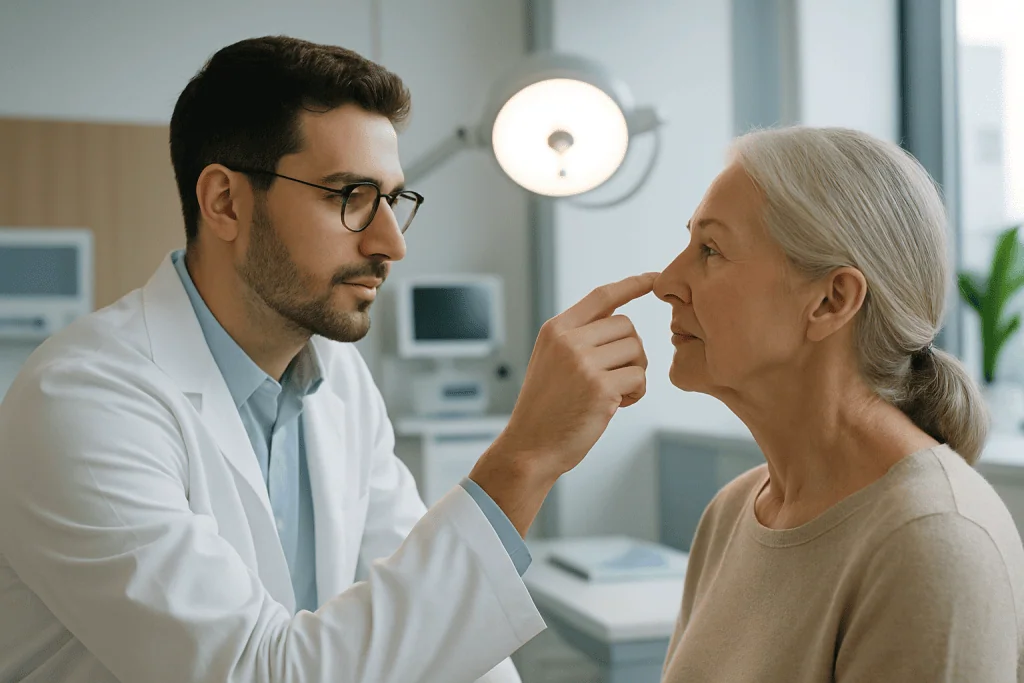
Assessment starts with a detailed consultation covering the external nose, facial proportions, skin quality, nasal support, airway function and medical history. The surgeon asks about previous trauma, allergies, sinus disease, prior nasal procedures, medications, smoking, healing tendencies and personal goals. An internal nasal examination checks the septum, turbinates and nasal valves. Imaging may be recommended in selected cases where sinus disease, trauma or complex anatomy needs further evaluation.
Standardised photographs from multiple angles document the starting point and support planning; you can read how this works in practice in our guide to medical photography before and after treatment. Digital imaging is sometimes used to discuss potential changes, but these images are planning and communication tools, not exact predictions. Similarly, studying nose job before and after photographs of other patients can help you calibrate expectations, provided you understand what realistic before-and-after results actually show. The final outcome always depends on individual anatomy, healing, surgical technique and how tissue behaves over time.
Conditions and Concerns Rhinoplasty Can Address
Because the operation is tailored to each patient, two surgical plans are rarely alike. Some patients need subtle tip reshaping; others need structural reconstruction of the bridge, septum and nasal valves.
Cosmetic indications include a bridge hump, a crooked appearance, a broad or narrow bridge, a drooping or upturned tip, a bulbous tip, nostril flare, asymmetry after injury, or lack of definition. Facial context matters here: the surgeon may discuss whether chin contour or other proportions influence how prominent the nose appears, although rhinoplasty alone is often sufficient.
Functional indications include deviated septum, nasal valve collapse, obstruction after trauma, narrowing from previous surgery, and selected cases of turbinate enlargement. The outer shape and the inner airway are often linked: a visibly crooked nose frequently reflects internal septal deviation, and correcting only the outside may not solve breathing problems.
Reconstructive indications include deformity after fracture, congenital nasal differences, changes related to cleft lip and palate, loss of support after previous surgery, or tissue changes after certain medical treatments.
In every case the central question is the same: which combination of changes improves nasal balance and function while preserving your natural facial character? That is decided through examination and shared discussion, not from a template.
How Rhinoplasty Surgery Is Performed
Rhinoplasty begins well before the day of surgery. Preparation includes medical evaluation, review of medicines and supplements with the treating doctor, discussion of the anaesthesia plan, photographic documentation and a detailed surgical plan. Smoking and nicotine products impair blood flow and healing, so patients are advised to stop before and after surgery; the practical timings are covered in our guide on when to stop eating, drinking or smoking before a procedure.
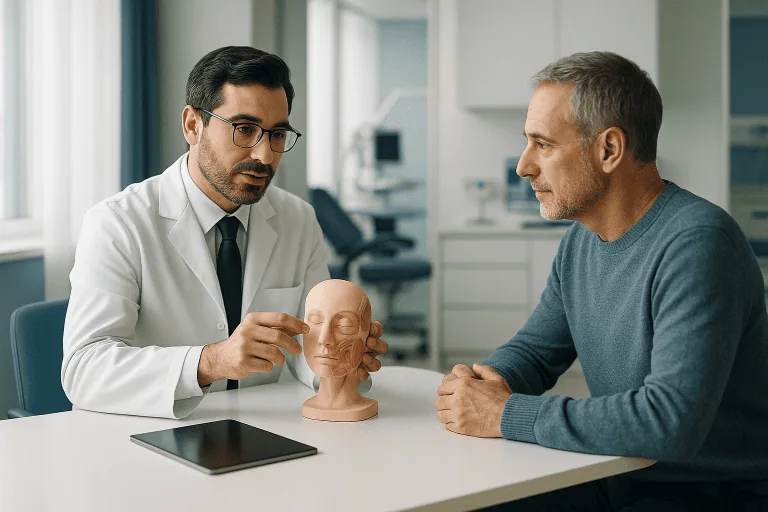
During planning, the surgeon translates your priorities into specifics: “I want my nose to look natural from the front”, “I dislike the hump in profile”, “I want to breathe better through the right side”. The surgeon then explains which changes are feasible, which are limited by skin thickness or cartilage strength, and which choices affect long-term stability. This conversation is where realistic expectations are set.
What happens during the operation?
Rhinoplasty is usually performed under general anaesthesia, with the exact plan depending on the patient and the extent of surgery. A typical operation follows this sequence:
- Access. Incisions are placed inside the nostrils (closed approach) or inside the nostrils plus a small incision across the columella (open approach). The skin and soft tissue are carefully lifted from the underlying bone and cartilage.
- Bridge work. A hump may be reduced, irregularities smoothed, the nasal bones narrowed, or a crooked bony framework repositioned.
- Tip refinement. The tip cartilages are reshaped, repositioned or supported. Where tip support is weak, grafts provide structure and help prevent drooping over time.
- Airway correction. A deviated septum can be straightened while preserving key support areas; nasal valve weakness may be treated with structural grafts; enlarged turbinates may be reduced in selected cases.
- Nostril adjustment. Carefully placed incisions can narrow or balance a nostril base that is too wide or asymmetric.
- Closure and splinting. The surgeon may place a small external splint to protect the new shape during early healing. Internal splints or soft packing are used in selected cases, particularly after septal work; contemporary techniques aim to minimise packing where appropriate, because it can be uncomfortable, but the decision is based on surgical need and safety.
Duration varies. A straightforward primary rhinoplasty takes less time than a complex septorhinoplasty or revision procedure. Many operations finish within a few hours, depending on the reshaping, airway work, grafting and scar tissue involved. Afterwards, patients spend time in a recovery area while the team monitors comfort, breathing, bleeding and anaesthesia recovery.
Modern planning draws on high-quality imaging where indicated, endoscopic evaluation of the internal nose, detailed photographic analysis and precise instruments designed for controlled bone and cartilage work. In complex cases, imaging can reveal prior fractures, sinus issues or structural asymmetry. Technology supports assessment and precision; the surgeon’s judgement remains central.
Recovery After Rhinoplasty
Most patients experience swelling, bruising around the eyes, nasal stuffiness and mild to moderate discomfort during the first several days. Pain is usually manageable with prescribed medication: our guide to how we control pain after surgery explains the approach. The nose often feels blocked at first because of swelling and internal healing, even when the surgery was designed to improve airflow. This is expected and gradually improves.
| Time Period | What Patients Can Expect |
|---|---|
| Day 1 | Rest with the head elevated. Swelling, nasal stuffiness, mild bleeding or drainage, and pressure around the nose are common. A splint may be in place. |
| First week | Bruising and swelling peak, then begin to improve. The surgeon may remove the external splint and any internal supports according to the treatment plan, often after about one week. |
| First month | Many patients return to light routines and feel more comfortable socially. Swelling keeps decreasing, but the nose is still healing and must be protected from impact. |
| Three to six months | The bridge and upper nose often look more settled. Tip swelling may persist, especially with thicker skin or complex cases. Breathing generally continues to improve as internal swelling resolves. |
| Longer term | Final refinement can take a year or longer. The tip is usually the last area to mature, and revision cases may need additional time to settle fully. |
Practical instructions in the early weeks typically include sleeping with the head elevated, avoiding bending and heavy lifting, protecting the nose from any impact, and following the plan for cleaning and medication. Bruising commonly improves markedly within one to two weeks, while swelling resolves more gradually. Many patients can return to remote work or light daily activities within one to two weeks, although social readiness varies from person to person.
Exercise, swimming, glasses, sun exposure and contact sports need specific guidance from the surgical team. Strenuous activity is typically delayed for several weeks, and contact sports much longer, to protect the healing bones and cartilage. Patients who wear glasses may need instructions to avoid pressure on the bridge during early healing. Air travel has its own timing considerations after nasal surgery, see flying after rhinoplasty or septoplasty for what changes in cabin pressure mean for a healing nose.
Why Timing Matters
Rhinoplasty is usually elective, and there is rarely a reason to rush a purely cosmetic decision. Timing matters more when trauma or breathing problems are involved.
After a nasal injury, early assessment can identify fractures, septal deviation, septal haematoma or airway compromise. Some injuries are easier to correct within a specific window; a nose that heals in a displaced position can affect both appearance and breathing, and delayed treatment may require more complex reconstruction later.
Functional obstruction tends to erode quality of life quietly. Chronic mouth breathing, poor sleep, exercise limitation and recurrent congestion accumulate, and many patients adapt to poor airflow without realising how much it affects them. When obstruction is structural, medication alone may not correct it.
The opposite can be true after an unsatisfactory previous rhinoplasty. Tissues need time to heal before revision, so many surgeons prefer to wait until swelling has matured and scar tissue has softened, unless a pressing functional issue demands earlier action. The main risk of delaying an evaluation is not that the nose looks the same for longer: it is that treatable airway problems, post-traumatic changes or structural weakness become harder to correct.
Benefits of Rhinoplasty
When carefully planned and appropriately performed, rhinoplasty can offer aesthetic, functional and emotional benefits that are meaningful in daily life.
| Benefit | What It Means for You |
|---|---|
| Improved facial balance | The nose can be reshaped to better harmonise with the eyes, lips, chin and overall facial proportions while preserving a natural appearance. |
| Refinement of specific features | Concerns such as a bridge hump, wide nostrils, drooping tip, asymmetry or lack of tip definition can be addressed with a tailored surgical plan. |
| Better nasal breathing when structural problems are corrected | Septal deviation, valve weakness or other airway-related issues may be improved during functional rhinoplasty or septorhinoplasty. |
| Correction after trauma or previous surgery | Rhinoplasty can help restore nasal shape and support after injury or address selected concerns after an earlier procedure. |
| Long-lasting structural change | Once healing is complete, the reshaped nasal framework is intended to remain stable, although natural ageing and tissue changes continue over time. |
What Influences the Outcome of Rhinoplasty
A good result reflects the interaction between anatomy, planning, healing and expectations, not technique alone. Two patients may request the same change and need entirely different operations.
Skin thickness is one of the most important factors. Thin skin reveals small irregularities more easily; thick skin limits how much definition shows, particularly at the tip. Patients with thick skin can still achieve meaningful improvement, but ultra-fine tip definition is less predictable.
Cartilage strength and nasal support matter just as much. Weak cartilage may need grafting to hold shape and prevent collapse. Over-reduction of cartilage can create long-term breathing or contour problems, which is why structural support is a core principle of contemporary rhinoplasty.
Facial proportions define what looks natural. A nose that suits one face may not suit another, so the surgeon evaluates the relationship between the nose and the chin, forehead, cheeks, lips and eyes. The goal is not to copy a photograph but to design changes that fit your face.
Breathing anatomy must be assessed even when the patient’s focus is cosmetic. If internal septal deviation, valve narrowing or turbinate enlargement goes unaddressed, dissatisfaction can follow even a good external result.
Previous surgery or trauma makes outcomes less predictable. Revision cases involve scar tissue, missing cartilage, altered blood supply and weakened support, and they demand especially frank discussion of realistic goals.
Healing behaviour and communication complete the picture. Some patients swell more than others; scar tissue influences the final contour; following instructions, avoiding nicotine and attending follow-up all support healing. And the surgeon must understand your priorities as clearly as you understand the limits of what is possible. The best plan balances appearance, airway function and long-term structural stability.
How Much Does Rhinoplasty Cost?
There is no single honest answer, because the cost of rhinoplasty depends on what your individual operation involves. The main drivers are the complexity of the case (primary versus revision surgery), whether functional airway work such as septoplasty or valve repair is included, the need for grafts, the type of anaesthesia, operating time, the hospital setting, and the length of any inpatient stay and follow-up. A quote for a straightforward primary rhinoplasty and a quote for a complex revision with rib cartilage grafting describe two very different operations.
Be cautious of any page that advertises one fixed number before anyone has examined your nose. A meaningful quote follows an assessment of your anatomy, your goals and your medical history, and it should itemise what is included, surgery, anaesthesia, hospital stay, splints, medications and follow-up. At Acibadem, the process after a quote is accepted is set out step by step in our guide to what happens after you accept a quote and before you arrive.
How much is nose reshaping?
Nose reshaping is priced by scope, like the rest of rhinoplasty. Limited tip refinement, full septorhinoplasty and revision reconstruction sit at very different levels of surgical complexity, and the cost reflects the operating time, technique and aftercare each requires. The only reliable figure is a written, itemised quote based on your own assessment.
Rhinoplasty in Turkey: Planning as an International Patient
Turkey has become a recognised destination for aesthetic and reconstructive nasal surgery, and travelling for rhinoplasty is manageable when it is planned properly. A typical care pathway for an international patient has three phases.
Before travel, many patients share photographs, medical history and any previous surgical records for preliminary review, so the surgical team can assess feasibility and outline a plan before anyone books a flight. This is also when travel dates, length of stay and time away from work are worked out around the clinical schedule.
During the visit, the plan is confirmed through in-person examination and discussion, photographs alone never replace this step. Surgery follows once preoperative checks are complete, and the early recovery period, including splint care and the first follow-up, happens locally before departure.
After returning home, patients follow written instructions for wound care, activity restrictions and medication use, with follow-up communication coordinated according to the clinical plan. Building recovery time into the trip, rather than treating surgery as a stop on a holiday, is the single most useful planning decision an international patient can make.
Is it a good idea to get a nose job in Turkey?
It can be, provided you choose carefully. The sensible test is not the country but the setting: a hospital-based programme with qualified surgeons, appropriate anaesthesia support, established infection control and postoperative monitoring, transparent communication and a realistic approach to outcomes. A patient who verifies those things is making a considered medical decision; a patient who books on price and photographs alone is taking a risk they do not need to take, in any country.
How long should you stay in Turkey after a nose job?
Long enough for the external splint to be removed and the first follow-up examination to take place: the splint typically comes off after about one week, depending on the surgeon’s protocol, so many patients plan their stay around that milestone. Your surgeon confirms the exact timing based on how you heal, and gives specific guidance on when flying is appropriate for your case.
Which country is best for nose surgery?
No country is inherently best. What determines your outcome is the individual surgeon’s experience with cases like yours, the quality of the hospital environment, the honesty of the preoperative assessment and the structure of the follow-up. Those factors vary within every country far more than they vary between countries, which is why evaluating a specific programme matters more than choosing a flag.
Rhinoplasty at Acibadem
At Acibadem, rhinoplasty planning gives equal weight to form and function. Patients are evaluated not only for the external appearance of the nose but also for internal nasal anatomy, breathing quality, skin thickness, cartilage strength, prior surgery or trauma, and overall facial proportions. The most satisfying outcomes are usually those that look natural, respect the patient’s ethnic and personal identity, and maintain stable nasal support over time, and that is what the assessment is built around.
Depending on the patient’s needs, care may involve plastic surgeons, ear, nose and throat specialists, anaesthesiologists, radiology teams and nursing staff. Where breathing problems, prior trauma, revision surgery or complex anatomy are present, multidisciplinary evaluation helps ensure that cosmetic and functional issues are considered together, and collaborative decision-making is part of Acibadem’s clinical culture for complex cases that benefit from more than one perspective.
Treatment planning follows evidence-based medical principles. Before surgery, patients receive a detailed assessment of nasal structure, airway function, medical history and aesthetic goals, and the care team explains the surgical approach, expected recovery, limitations, risks and follow-up requirements. Diagnostic and surgical technology, high-resolution imaging where clinically indicated, endoscopic evaluation of the internal nose, standardised medical photography, precise instruments for cartilage and bone work, and modern anaesthesia monitoring, supports assessment, accuracy and patient safety rather than replacing surgical judgement.
For patients travelling from abroad, Acibadem International’s services are organised around cross-border care: appointment coordination, medical record transfer, interpreter support in many languages, guidance on airports and accommodation, and communication with the medical team before and after the visit. The treatment plan itself is personalised rather than standardised, some patients need subtle refinement, others major structural correction; some prioritise the profile, others the front view or breathing, and the surgical plan is shaped around those distinctions.
Making the Decision
Rhinoplasty can improve the shape of the nose, support facial balance and, when functional problems exist, help improve nasal breathing. The strongest outcomes start with honesty on both sides of the consultation table: what bothers you, what you hope to change, how your nose functions, and what is medically realistic for your anatomy.
It is reasonable, and wise, to take time over this decision. An evaluation does not obligate anyone to have surgery; it clarifies the diagnosis, the options and the timing, and determines whether rhinoplasty, septorhinoplasty or another pathway fits your situation. A well-planned operation should respect your face, your breathing and your long-term wellbeing, and a patient who understands the recovery timeline, the limits set by their own anatomy and the reasoning behind the surgical plan is in the best position to judge whether the procedure is right for them.
Preparation
- Before rhinoplasty, the surgeon evaluates facial proportions, nasal structure, breathing function, medical history, and patient goals. Photos and, when needed, imaging or ENT assessment may support planning. Patients are usually asked to stop smoking and avoid blood-thinning medicines or supplements before surgery, as advised by the doctor.
Aftercare
- After surgery, a nasal splint and internal supports may be used for about one week. Patients should keep the head elevated, avoid strenuous activity, and protect the nose from impact. Follow-up visits are important to monitor healing, remove supports, and assess swelling as the final shape gradually appears.
Frequently Asked Questions
What affects the cost of rhinoplasty most?
The main factors are case complexity, whether breathing correction is needed, the chosen surgical approach, surgeon expertise, hospital standards, anaesthesia, tests, aftercare, and any travel or accommodation support. A personalised assessment is needed to understand the full scope.
How can I get a personalised rhinoplasty quote?
You can request a free consultation by sharing medical history, breathing concerns, previous surgery details if any, and clear photos requested by the medical team. A specialist review helps determine the suitable plan and what the package may include.
Is functional rhinoplasty priced differently from cosmetic rhinoplasty?
It can be, because functional surgery may involve septal correction, valve support, turbinate treatment, or additional diagnostic assessment. The final plan depends on examination findings and the specialist recommendation.
What is usually included in an international patient package in Turkey?
Packages may include surgeon and hospital services, anaesthesia, standard preoperative checks, interpreter support, local transfers, aftercare instructions, and coordination by an international patient team. Patients should always confirm inclusions and exclusions before booking.
Will I need to stay in Turkey after rhinoplasty?
Most patients need a planned recovery period for early checks, splint care, and safe travel clearance. The exact stay depends on the procedure, healing, surgeon preference, and individual medical suitability.
Is the cheapest rhinoplasty option the best choice?
Cost should be considered together with surgeon qualifications, hospital accreditation, safety standards, communication, aftercare, and the complexity of your goals. This information is general and not medical or financial advice; a specialist consultation is the safest way to compare options.
Medically reviewed by the Acıbadem International Medical Board September 14, 2026
See our medical review board →
Update history
- PublishedJune 8, 2026
- Medical review approvedSeptember 14, 2026
- Last content updateSeptember 14, 2026
References1
- Rhinoplasty (Nose Job) my.clevelandclinic.org
Read this treatment guide in your language
Planning this treatment in Turkey
Our English guides for international patients: costs, timelines, safety and travel.
Planning tools for this treatment
Indicative figures for orientation only: your written plan and quote follow a free medical review.
Trusted care for international patients
Compare options, costs and recovery
Rhinoplasty cost in Turkeyledger-based guide ranges, or browse the full Turkey Medical Price Index.
From the Acibadem Blog

What Happens During Rhinoplasty? Anesthesia, Incisions and the Steps Inside the Operating Room
During rhinoplasty, you are given general anesthesia or intravenous sedation with local anesthetic, the surgeon makes incisions inside the nostrils (closed approach) or adds…
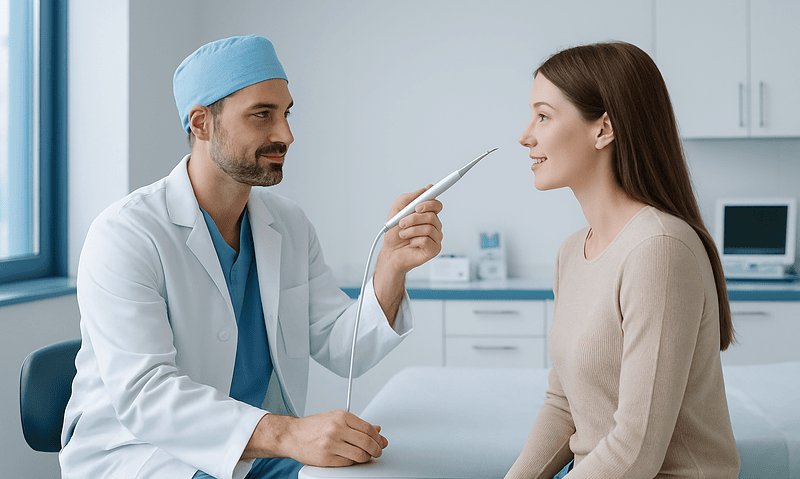
Ultrasonic (Piezo) Rhinoplasty: What the Instrument Changes About Bone Work and Bruising
Ultrasonic rhinoplasty, also called piezo rhinoplasty, reshapes the nasal bones with a fine tip that vibrates at ultrasonic frequency instead of a chisel and…
Doctors Performing This Treatment


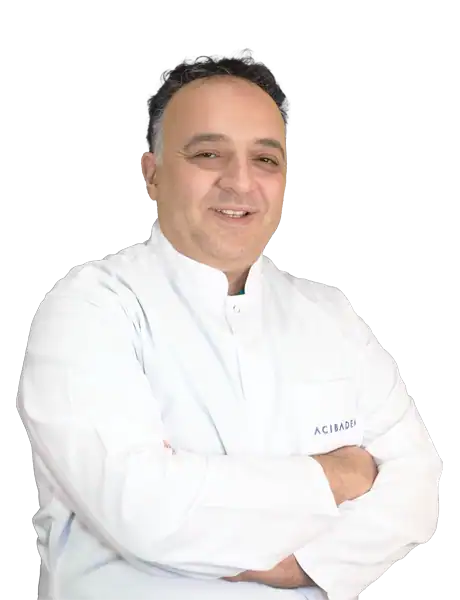
Aesthetic Plastic & Reconstructive Surgery
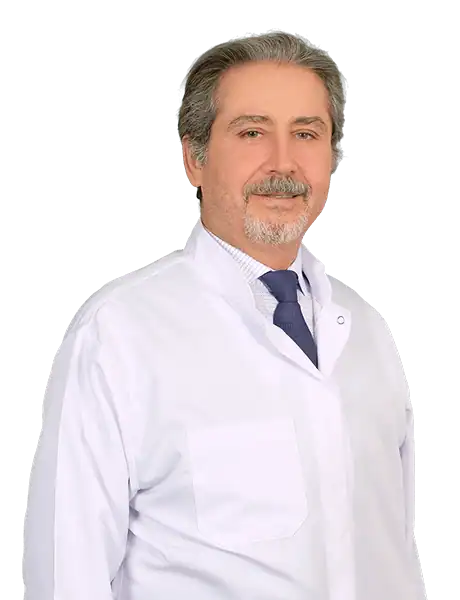
Prof. Mehmet Veli Karaaltın, MD

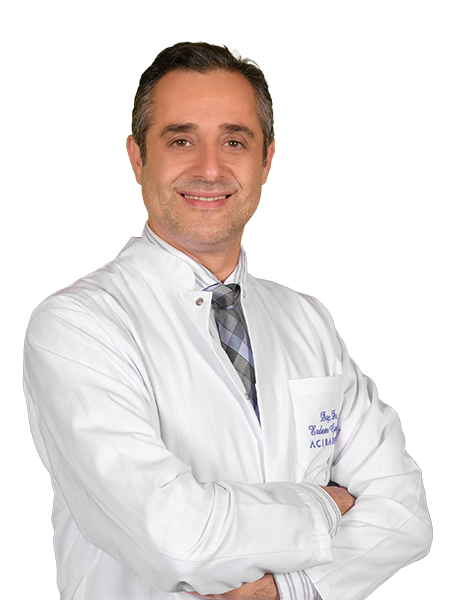
Aesthetic Plastic & Reconstructive Surgery
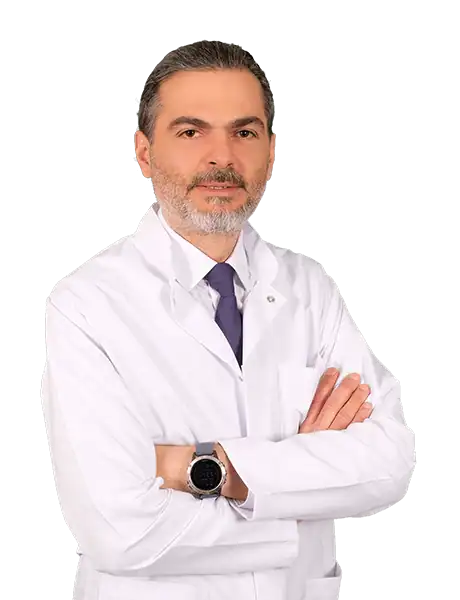
Assoc. Prof. Erdem Güven, MD

Aesthetic Plastic & Reconstructive Surgery
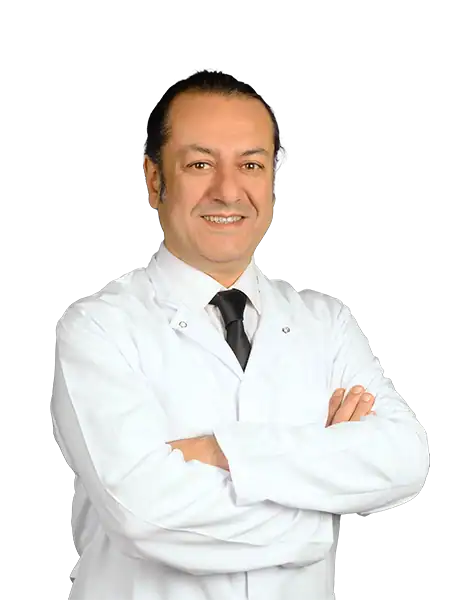
Assoc. Prof. Ahmet Küçükçelebi, MD
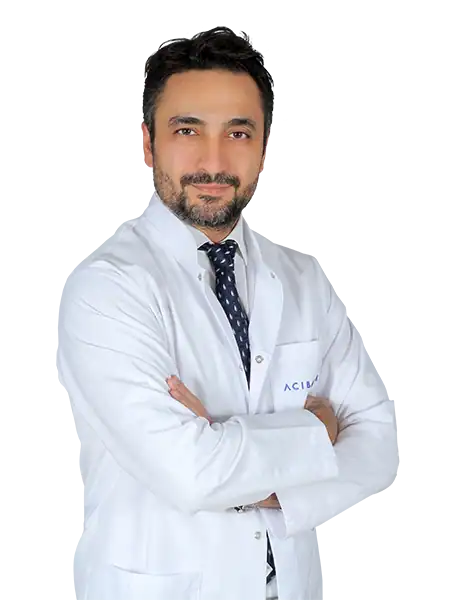
Aesthetic Plastic & Reconstructive Surgery
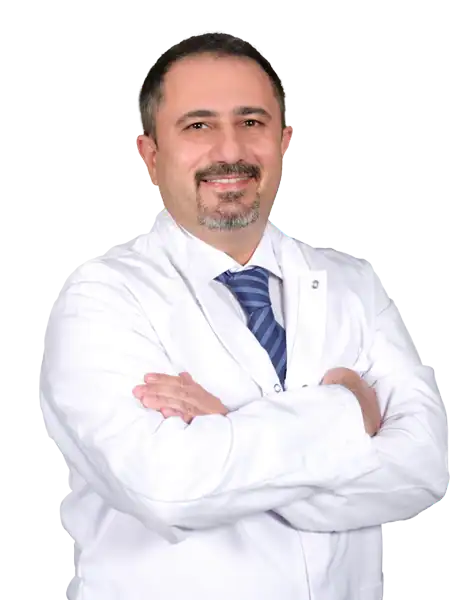
Assoc. Prof. Mehmet Altıparmak, MD

Aesthetic Plastic & Reconstructive Surgery