Scoliosis Bracing
Scoliosis bracing is a non-surgical treatment for growing children and adolescents with a moderate sideways curve of the spine. A custom-fitted brace, such as a Boston brace, applies steady pressure to the…
Quick answer
A scoliosis brace is a rigid or semi-rigid support worn around the trunk to slow or stop a spinal curve from worsening while a child or teenager is still growing. It does not permanently straighten the spine. Wear time is prescribed in hours per day, and treatment usually continues until skeletal maturity, with regular X-ray follow-up.
What is scoliosis bracing?
Scoliosis is a sideways curve of the spine, often with a twist of the vertebrae (the individual bones of the spine). Scoliosis bracing is a non-surgical treatment in which a rigid or semi-rigid scoliosis brace is worn around the trunk to apply gentle, steady pressure on the curve. The main goal is not to make the spine straight, but to slow or stop the curve from getting worse while a child or teenager is still growing.
Bracing is most commonly used for adolescent idiopathic scoliosis, meaning a curve that appears during the growth spurt of adolescence without a known cause. It is sometimes used for younger children with early-onset scoliosis, and occasionally for curves related to nerve or muscle conditions (neuromuscular scoliosis), although in those cases it is often used for comfort and sitting balance rather than to control the curve.
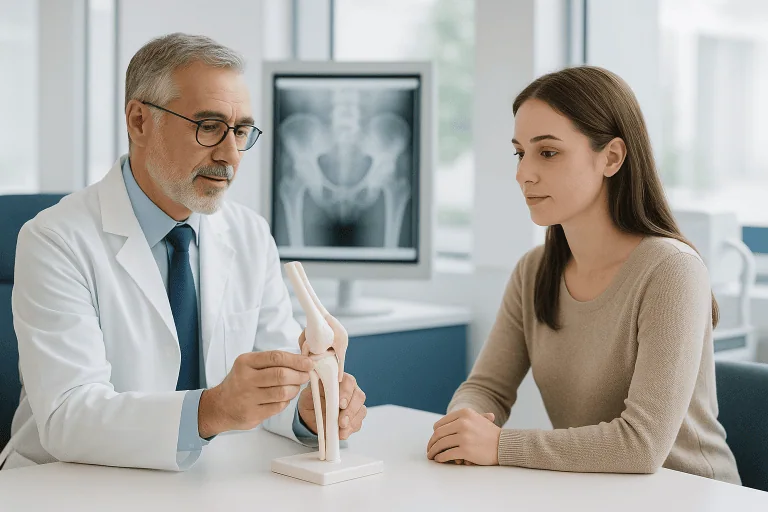
A back brace for scoliosis is prescribed and monitored by a spine or orthopedic specialist and is usually made or fitted by an orthotist, a health professional who designs and fits braces and supports. At Acibadem, bracing is coordinated through the Orthopedics & Joint Center together with pediatric spine specialists.
Who is a candidate for a scoliosis brace
Whether bracing is advised depends mainly on three things: how large the curve is, how much growth the patient has left, and whether the curve is showing signs of progression. Curve size is measured on an X-ray using the Cobb angle, which is the angle between the most tilted vertebrae at the top and bottom of the curve.
In general, a scoliosis brace may be recommended when:
- The curve is moderate in size, roughly in the range where it is too large to simply observe but not large enough to consider surgery.
- The patient is still growing. Doctors judge this using age, signs of puberty, and X-ray markers of bone maturity, such as the growth plates of the pelvis.
- The curve has been shown to be increasing between check-ups, or is considered at high risk of progression.
Bracing is usually not suitable when:
- The skeleton has stopped growing. A brace works by guiding growth, so it has little effect on a mature spine.
- The curve is very large. In many cases a large curve is discussed in terms of surgery rather than bracing, because a brace cannot be expected to control it.
- The curve is very small and stable, where regular observation alone is often the recommended approach.
- The curve is located very high in the spine, near the neck, where a standard trunk brace cannot reach it.
A scoliosis brace for adults is a different situation. Adult scoliosis is often related to age-related wear in the discs and joints of the spine (degenerative scoliosis). Because adults are no longer growing, a brace cannot correct or halt the curve in the way it can in adolescents. Some adults use a soft or semi-rigid support for short periods to ease pain during activity, but this is a comfort measure, and long-term use is generally discouraged because it may weaken the core muscles. Your doctor may suggest other approaches, such as physical therapy or pain management, ahead of bracing.
How scoliosis bracing works
Bracing is a process rather than a single event. It involves assessment, brace design, fitting, regular wear, and ongoing monitoring until growth is complete.
Before the brace is made
Your specialist confirms the diagnosis with a physical examination and a standing X-ray of the whole spine. They assess the size and shape of the curve and estimate how much growth remains. If bracing is recommended, the orthotist takes detailed measurements of the trunk. This is done either with a plaster mold of the body or, increasingly, with a digital 3D scan. Some brace designs also use specific X-ray positions to plan where the pressure pads should sit.
Types of scoliosis brace
Several designs exist, and the choice depends on the curve pattern and on local expertise:
- Boston brace: the most widely known type of rigid brace. It is a molded plastic shell, usually made from a standard blank and customized with pressure pads and relief areas. It extends from under the arms to the hips and is often called a TLSO (thoracolumbosacral orthosis, a brace covering the chest, lower back, and pelvis).
- Custom-molded rigid braces: made from a mold or scan of the patient, including designs that place the body in an over-corrected position while wearing the brace.
- Nighttime braces: designed to bend the spine strongly toward the opposite side and worn only during sleep. They are considered for some curve patterns, particularly lower curves.
- Soft or flexible braces: systems of straps and pads that aim to guide posture. The evidence for these is more limited than for rigid braces.
During fitting and wear
At the fitting appointment, the orthotist trims and adjusts the shell so that pads press on the curve and open areas allow the spine to shift toward a straighter position. An X-ray taken in the brace is often used to check how much correction the brace achieves. You are then taught how to put the brace on and take it off, how to tighten the straps, and how to check the skin.
The brace is worn for a set number of hours each day, prescribed by your specialist. Most rigid braces are designed to be worn over a thin, seamless undershirt and under normal clothing. Wear time is usually built up gradually over one to two weeks so that the skin and body can adjust.
After fitting
Follow-up visits are scheduled regularly, often every four to six months, with X-rays to track the curve and adjustments to the brace as the body grows. Because children grow, a brace typically needs to be replaced one or more times during the course of treatment. Treatment continues until the skeleton is mature, and wear time is then reduced over a period of weeks or months before the brace is stopped completely.
Preparation for a scoliosis brace
Preparation for bracing is mostly practical and emotional rather than medical. Because there is no anesthesia or surgery involved, there are no fasting or medication rules for the fitting itself.
- Understand the goal. Ask the specialist to explain what the brace is expected to do and what “success” means, so expectations are realistic from the start.
- Clarify the wear schedule. Write down the prescribed number of hours per day and whether the brace may be removed for sport, bathing, or school activities.
- Plan clothing. Thin, snug, seamless cotton or moisture-wicking undershirts worn beneath the brace reduce rubbing. Looser tops, and pants one size larger, often make the brace easier to hide if the wearer wishes.
- Prepare the school and family. Letting teachers and close family know about the brace can make daily wear easier and reduce awkward situations.
- Talk about feelings. Many adolescents find the idea of a brace upsetting. Open discussion, and if needed support from a counselor or a scoliosis peer group, can help with adherence.
- Bring questions to the fitting. Ask how to clean the brace, what to do about pressure marks, and who to contact if the brace breaks or no longer fits.
Recovery and aftercare: adjusting to daily life in a brace
There is no surgical recovery after bracing, but there is an adjustment period. Many patients find the first two to three weeks the hardest. The brace feels tight, sleeping may be awkward, and the skin may become red where the pads press. Wear time is typically increased step by step during this period until the full prescribed schedule is reached.
Aftercare points that often make bracing more comfortable and effective include:
- Skin care. Check the skin every time the brace is removed. Redness that fades within about 20 to 30 minutes is usually acceptable; redness that persists, blisters, or open areas mean the brace needs adjustment.
- Hygiene. Wash the skin daily and let it dry fully before the brace goes back on. Wipe the inside of the brace with mild soap and water and let it dry.
- Exercise. Most specialists encourage regular physical activity and sport. Some allow the brace to be removed for sport and physical education, counting this against the daily hours. Physiotherapy programs designed for scoliosis are sometimes added, and these may support posture and core strength.
- Growth and fit. A brace that suddenly feels loose, rides up, or causes new pressure points usually signals that the body has grown and the brace needs modification or replacement.
- Tracking wear. Some braces contain a small temperature sensor that records how many hours the brace is actually worn. This is not intended as punishment; it helps the team understand whether a changing curve is related to wear time or to the curve itself.
Treatment typically lasts until growth is finished, which for many adolescents means two to four years. Weaning off the brace is gradual, and follow-up visits usually continue for a while after bracing ends to confirm that the curve stays stable.
Risks and side effects
Bracing is considered safe, and it avoids the risks of surgery. However, it is not free of side effects, and honest discussion of these helps families cope.
- Skin problems. Pressure marks, rashes, and occasionally sores are the most common issues, especially in hot weather. Almost all can be managed with brace adjustment and skin care.
- Discomfort and heat. Rigid plastic traps heat and can be uncomfortable during exercise or in warm climates.
- Muscle weakness or stiffness. Long hours in a rigid shell can reduce use of the trunk muscles. Regular exercise out of the brace is usually recommended to counter this.
- Emotional and social impact. Body image concerns, embarrassment, and frustration are common, particularly in the teenage years. Reduced self-esteem and lower adherence are recognized challenges, and support from the treating team matters.
- Breathing and digestion. A tight brace may make deep breathing feel restricted or cause a sense of fullness after meals. These usually settle with small adjustments to strap tension or brace shape.
- Treatment may not work. Some curves continue to progress despite good brace wear, and surgery may still be needed. This is not a failure by the patient.
Results and outlook
The best available evidence, including a large controlled trial in adolescents with idiopathic scoliosis, indicates that rigid bracing reduces the likelihood that a moderate curve will progress to the size at which surgery is usually considered. The benefit was closely linked to how many hours per day the brace was worn: patients who wore the brace for more hours generally did better than those who wore it for fewer.
It is important to understand what bracing does and does not do. In most cases the brace holds the curve close to where it started rather than making it smaller permanently. Some correction seen on in-brace X-rays is partly lost once the brace is stopped. The realistic aim is to reach skeletal maturity with a curve that is stable and unlikely to need surgery.
Outcomes are influenced by curve size at the start, the amount of growth remaining, the curve pattern, brace quality and fit, and adherence to the prescribed hours. Curves that are already large or that progress rapidly despite bracing may still require surgical treatment. Your specialist can explain how these factors apply in an individual case, but no clinician can guarantee a particular result.
Cost considerations
The cost of scoliosis bracing varies widely between countries and health systems, and it is usually spread across several years rather than paid at one time. Factors that generally drive the overall expense include:
- The brace itself. Custom-molded rigid braces involve scanning or casting, fabrication, and fitting time by an orthotist. Nighttime and soft braces have different fabrication requirements.
- Replacements. Because children grow, most patients need more than one brace over the course of treatment, and some need repairs or modifications between replacements.
- Imaging. Standing spine X-rays are repeated at regular intervals, and an in-brace X-ray is often taken after fitting. Low-dose imaging systems may be used where available.
- Specialist follow-up. Regular visits with the spine specialist and orthotist continue until growth is complete.
- Additional therapy. Scoliosis-specific physiotherapy, if recommended, adds to the total.
Insurance coverage for braces and follow-up varies considerably, and it is sensible to check what is covered before treatment begins. Bracing does not involve a hospital stay, anesthesia, or implants, so its costs are structured very differently from those of spinal surgery.
Frequently asked questions
How long do you have to wear a scoliosis brace each day?
Most rigid braces are prescribed for a set number of hours per day, commonly in the range of 16 to 23 hours, depending on the design and the individual plan. Nighttime braces are worn only during sleep. Evidence suggests that more hours of wear are associated with better control of the curve, so following the prescribed schedule matters. Your specialist will set the target for your situation.
How long to wear a scoliosis brace overall?
Bracing usually continues until the spine has stopped growing, which is judged by X-ray markers of bone maturity rather than by a fixed age. For many adolescents this means around two to four years, though it can be shorter or longer. Wear time is then reduced gradually before the brace is stopped, and follow-up checks continue afterward.
Can a back brace for scoliosis straighten the spine?
A brace often produces noticeable correction while it is being worn, but the main purpose is to prevent the curve from getting worse during growth. Some of the in-brace correction is typically lost once bracing ends. Permanent full straightening is not a realistic expectation, and any treatment that promises this should be viewed with caution.
Is a scoliosis brace for adults effective?
In adults the spine has finished growing, so a brace cannot slow curve progression in the way it can in children. Some adults use a soft or semi-rigid support briefly for pain relief during particular activities. Long-term daily use is generally not advised because it may weaken the trunk muscles. Adults with painful scoliosis are more often offered exercise therapy, pain management, or, in selected cases, surgical assessment.
What is a Boston brace and how is it different from other braces?
The Boston brace is a widely used rigid brace worn under the arms and around the trunk. It is typically made from a prefabricated shell that is customized with pads to press on the curve and open areas to let the spine shift. Other rigid braces are fully custom-molded from a scan or cast, and some use over-corrected positions or nighttime-only wear. The choice depends on the curve pattern and the experience of the treating team.
Can my child play sports while wearing a scoliosis brace?
In most cases, yes. Physical activity is encouraged, and many specialists allow the brace to be removed for sport and physical education, with those hours counted as part of the daily time out of the brace. Contact sports or activities where the hard shell could injure others may need adjustment. Ask your specialist how sport fits into the prescribed schedule.
What happens if the curve gets worse despite bracing?
Some curves progress even with good brace wear. If the curve increases into the range where surgery is usually considered, or continues to grow quickly, your specialist may discuss surgical options such as spinal fusion or growth-modulating procedures. This does not mean the bracing period was wasted; in many cases it delays or avoids surgery, and the decision is made based on the individual pattern of change.
When to see a doctor
Scoliosis is often first noticed by a parent, a school nurse, or a coach rather than by the child. A specialist assessment is advisable if you notice any of the following in a child or adolescent:
- One shoulder or shoulder blade sitting higher than the other.
- An uneven waist, one hip that appears higher, or clothes that hang unevenly.
- A visible rib hump or trunk shift when the child bends forward.
- A known curve that appears to be changing, or a family history of scoliosis in a growing child.
Adults should seek assessment for a known or suspected curve when back pain is persistent, when there is a visible change in posture or height, or when leg pain, numbness, or weakness develops, since these may point to nerve compression.
During bracing, contact your treating team promptly if:
- The skin under the brace develops blisters, open sores, or redness that does not fade within about half an hour of removal.
- The brace causes new, persistent pain, difficulty breathing, or repeated nausea after meals.
- The brace cracks, breaks, or no longer fits after a growth spurt.
- New symptoms appear such as numbness, tingling, weakness in the legs, or changes in bladder or bowel control. These are not expected effects of a brace and need urgent medical evaluation.
Regular follow-up with the spine specialist and orthotist is the best way to make sure the brace continues to fit well and is doing what it is meant to do throughout the growing years.
Preparation
- No fasting or medication changes are needed because there is no anesthesia. Ask the specialist to explain the wear schedule and what the brace is expected to achieve. Prepare thin seamless undershirts and slightly looser clothing, and consider informing school staff. Bring questions about skin care, cleaning, and sport to the fitting appointment.
Aftercare
- Build up wear time gradually as instructed and check the skin each time the brace is removed. Wash and dry the skin daily and clean the inside of the brace with mild soap. Stay physically active, and report persistent redness, sores, pain, breathing difficulty, or a brace that no longer fits. Attend all follow-up visits for X-rays and adjustments until growth is complete.
Medically reviewed by the Acıbadem International Medical Board September 8, 2026
See our medical review board →
Update history
- PublishedSeptember 8, 2026
- Medical review approvedSeptember 8, 2026
- Last content updateSeptember 8, 2026
References2
From the Acibadem Blog

Who Needs a Scoliosis Brace? Curve Size, Growth Remaining and the Cases Where Bracing Helps
Doctors usually consider a scoliosis brace for a child or teenager who is still growing and whose spinal curve measures roughly 25 to 40…
Living in a Scoliosis Brace: School, Sport, Sleep and Skin Care Day to Day
Living with a scoliosis brace means wearing a rigid, custom-molded shell for a set number of hours each day while the spine is still…
Getting Used to a Scoliosis Brace: How Wear Time Is Built Up in the First Weeks
Getting used to a scoliosis brace is a gradual process. Most orthotists start with a few hours of wear on day one and add…