Joint Replacement
Joint replacement removes a damaged joint surface and replaces it with an artificial implant to reduce pain and restore mobility, most commonly in the hip, knee, or shoulder.
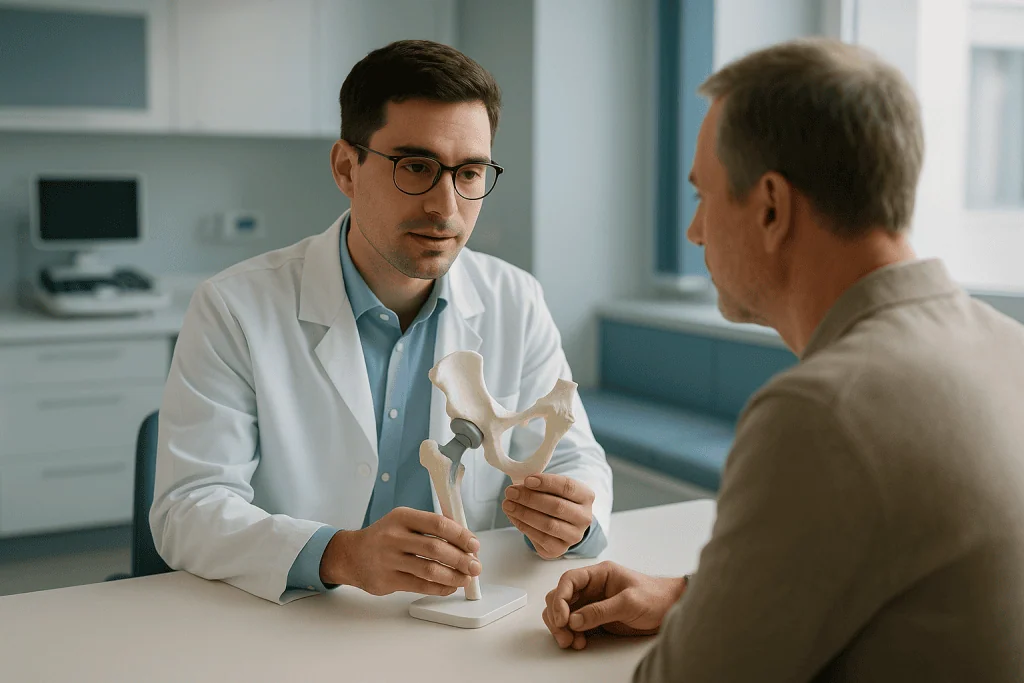
Quick answer
Joint replacement, or arthroplasty, is surgery that removes the worn surfaces of a damaged joint — most often the knee, hip or shoulder — and resurfaces them with artificial implants. It is considered when arthritis or injury causes persistent pain and limits daily life despite non-surgical treatment. Many patients begin standing or walking with assistance within a day of hip or knee surgery.
What Is Joint Replacement?
Joint replacement, also called arthroplasty, is a surgical procedure that removes damaged or worn joint surfaces and replaces them with artificial components called implants or prostheses. The implants are shaped to recreate the smooth, low-friction movement of a healthy joint and to remove the bone-on-bone contact that causes pain, stiffness, swelling and loss of function. It is considered for people whose joint damage continues to limit daily life despite appropriate non-surgical treatment such as medication, physiotherapy and injections.
The knee is the joint most commonly replaced, followed by the hip and the shoulder, although other joints can be treated in selected cases. Knee arthritis tends to announce itself in specific, practical ways: stairs taken one step at a time, a knee that swells after a walk, pain that flares at night or when standing up from a chair. Hip arthritis often shows itself as groin pain and a shortening stride. Shoulder arthritis makes reaching overhead or behind the back progressively harder. Because each joint fails in its own way, the operation, the implant design and the rehabilitation plan differ from joint to joint — and from patient to patient within the same joint.
What is the difference between a total and a partial joint replacement?
In a total joint replacement, both sides of the affected joint are resurfaced with implants; in a partial joint replacement, only the damaged portion is replaced while the healthy structures are preserved. The choice depends on the pattern of joint damage, ligament stability, bone condition, age and functional goals. A knee with arthritis confined to the inner compartment may suit a partial design, while a knee worn across all compartments needs a knee arthroplasty that resurfaces the whole joint. A partial replacement keeps more of your natural anatomy, but it is only sensible when the rest of the joint is genuinely healthy — a judgement made on imaging and often confirmed during the operation itself.
How does the operation differ between the knee, hip and shoulder?
In a knee replacement, the worn cartilage and bone at the end of the thigh bone, the top of the shin bone and sometimes the undersurface of the kneecap are reshaped and resurfaced with implants. In a hip replacement, the damaged ball-and-socket surfaces are replaced with a femoral component, a ball and a socket liner. In a shoulder replacement, the ball of the upper arm bone and the socket may be replaced, or a reverse design may be used when the rotator cuff is severely damaged — the reverse geometry allows the large deltoid muscle to power the arm instead of the failed tendons.
Modern joint replacement is not a single standardised operation applied to every patient. Implant selection, surgical approach, fixation method, alignment strategy, anaesthesia planning, pain control and rehabilitation are all tailored to the patient’s anatomy and medical profile. The best results usually come from careful diagnosis, appropriate timing, surgical precision and a well-structured recovery plan — in that order.
When Joint Pain Starts to Shape Your Life
Living with severe joint pain is not simply a matter of discomfort. It changes the way you walk, sleep, work, travel, exercise and take part in family life. Many people who consider joint replacement have already spent months or years adapting around pain: taking stairs one step at a time, avoiding long walks, giving up sports and social plans, or waking at night because a hip, knee or shoulder will not settle.
The decision to consider surgery usually comes with mixed feelings. Patients worry about the operation itself, about anaesthesia, implant durability, recovery time, and whether they will get back to the activities that matter to them. International patients often carry additional questions: how the diagnosis will be confirmed, how long they need to stay abroad, who coordinates appointments, and how care continues once they return home. These are reasonable questions with concrete answers, and a careful surgical team addresses them before an operation is scheduled, not after.
Joint replacement is one of the most established procedures in modern orthopaedic surgery. When it is appropriately recommended and carefully performed, it can reduce pain, improve mobility, correct joint deformity and help restore independence. The goal is not simply to swap a joint surface; it is to help you move with less pain and more confidence.
What stops knee pain fast?
Honestly, nothing stops advanced arthritic knee pain both quickly and permanently. Short-term measures — resting the joint, applying ice or heat, pacing activity, using a walking stick — can take the edge off a flare, and a doctor may discuss anti-inflammatory medication or an injection as part of a broader plan. But when the cartilage has worn away, these measures manage the symptom rather than the cause. Any product or procedure promising instant, lasting relief for a structurally damaged knee deserves scepticism. The realistic sequence is slower and more useful: identify the true source of the pain, exhaust proportionate non-surgical care, and consider surgery when that care no longer holds the line.
Who May Need Joint Replacement?
Joint replacement may be considered when joint damage causes persistent pain and functional limitation despite appropriate non-surgical treatment. Most patients have already tried medication, physiotherapy, activity modification, injections, assistive devices or weight management. Surgery is usually discussed when these approaches no longer provide adequate relief, or when the joint has become structurally damaged to the point that they cannot.
Common symptoms that lead to an evaluation include pain during walking, climbing stairs, standing up from a chair, lifting the arm, dressing or sleeping. Patients often describe stiffness after rest, reduced range of motion, swelling, instability, grinding sensations, or a visible deformity such as bowing of the knee. In advanced hip or knee arthritis, walking distance tends to shorten over time. In shoulder arthritis, reaching overhead or behind the back becomes steadily more difficult.
How is the diagnosis confirmed?
The diagnostic process begins with a careful medical history and physical examination, not a scan. The orthopaedic specialist assesses joint movement, strength, alignment, tenderness, gait, stability and — just as importantly — how the symptoms affect your daily life. Imaging then confirms the degree and location of damage. Standard X-rays typically show narrowing of the joint space, bone spurs, deformity or collapse of the joint surface. In selected cases, MRI, CT, ultrasound or laboratory tests are used to evaluate soft tissues, bone loss, infection risk, inflammatory disease or changes from previous surgery.
Joint replacement is never recommended on imaging alone. Some patients have significant X-ray changes but manageable symptoms; others have severe pain with more complex underlying causes, because problems in the spine, nerves, tendons, muscles or circulation can mimic joint arthritis. A thoughtful evaluation determines whether surgery is likely to address the actual source of pain, or whether non-surgical treatment should continue.
Candidates typically include people with advanced osteoarthritis, inflammatory arthritis, post-traumatic arthritis, avascular necrosis, severe joint deformity, failed previous joint surgery, or certain fractures in older adults. Overall health matters as much as the joint itself: conditions such as diabetes, heart disease, obesity, smoking, dental infection, skin problems, anaemia or a history of blood clots may need to be optimised before surgery to reduce risk.
Conditions Treated with Joint Replacement
Joint replacement treats advanced joint damage — the point at which the joint surface can no longer do its job. Although the knee, hip and shoulder are the most common sites, the underlying reason for surgery varies from patient to patient, and it shapes the surgical plan.
- Osteoarthritis: the most common reason for joint replacement. Cartilage gradually wears away, leading to pain, stiffness, inflammation and reduced motion.
- Rheumatoid and inflammatory arthritis: chronic inflammation can damage cartilage, bone, ligaments and tendons, sometimes affecting several joints at once.
- Post-traumatic arthritis: previous fractures, ligament injuries or dislocations can alter joint mechanics and lead to progressive wear years later.
- Avascular necrosis: loss of blood supply to the bone, especially in the hip or shoulder, can cause the joint surface to collapse.
- Severe joint deformity: bowed legs, knock knees, hip deformities or shoulder imbalance cause pain and inefficient movement.
- Complex fractures: in some older patients, certain hip or shoulder fractures are better treated with replacement than with reconstruction.
- Failed previous surgery: revision joint replacement is needed when an earlier implant becomes loose, worn, unstable, infected or mechanically problematic.
Different indications demand different strategies. A first-time hip replacement for osteoarthritis may be relatively straightforward. A revision knee replacement, or a shoulder replacement after a fracture, may require more advanced imaging, specialised implants, bone reconstruction and multidisciplinary planning. This is why a precise diagnosis — and a surgeon experienced in the specific joint and the specific condition — matters more than any single piece of technology.
Alternatives to Knee Replacement
Alternatives to knee replacement are worth exhausting before surgery is discussed. They include weight management, structured physiotherapy and muscle strengthening, activity modification, walking aids, bracing, pain-relief medication planned with a doctor, and injections. In younger patients with damage confined to one part of the joint, joint-preserving operations such as osteotomy — realigning the leg to shift load away from the worn area — may also be considered. None of these rebuilds worn cartilage; their aim is to reduce load and inflammation and keep the supporting muscles strong for as long as possible.
What is the new injection instead of knee replacement?
No injection can replace a knee replacement once the cartilage has worn through and the joint is structurally damaged. The injections most often discussed are corticosteroid (which calms inflammation for a limited period), hyaluronic acid or viscosupplementation (intended to improve lubrication), and platelet-rich plasma or other biologic preparations. The evidence for each varies, the relief is temporary where it occurs, and none of them regrows cartilage or corrects deformity. For earlier-stage disease, or for postponing surgery, an injection can be a reasonable part of a plan — but whether it suits your knee is a decision for the treating specialist, made on examination and imaging rather than on marketing.
What is the best knee support brand?
There is no single best knee support brand; the type of brace and the quality of the fit matter far more than the label. A simple compression sleeve offers warmth and a sense of stability. A hinged or unloader brace is designed to shift load away from a worn compartment, and correct sizing determines whether it actually does. A brace can ease symptoms and support activity, but it does not change the structure of an arthritic joint — it is a useful bridge, not a substitute, where surgery is genuinely indicated.
How Joint Replacement Is Performed
Preparation Before Surgery
Preparation begins well before the operation date. For international patients, the process usually starts with sharing medical records, imaging studies, laboratory results and a summary of previous treatments, which the orthopaedic team reviews to determine whether joint replacement is appropriate and which additional tests will be needed after arrival. The preoperative assessment then looks at both the joint and the whole patient: updated X-rays, long-leg alignment films for knee replacement, CT or MRI in selected cases, blood tests, an electrocardiogram, chest imaging when indicated, and consultation with anaesthesia or other specialists. Patients with heart, lung, endocrine, kidney or blood-clotting conditions may need additional clearance. The point is to identify and manage risks before surgery rather than react to them afterwards.
Medication planning is part of this. Blood thinners, diabetes medications, immune-suppressing drugs and certain supplements may need adjustment before implant surgery — decisions the treating doctor makes and explains, never changes a patient should attempt alone. Any active infection, including dental, urinary or skin infection, is addressed first, because artificial joints are particularly vulnerable to infection. Patients are also advised on smoking cessation, nutrition, skin care and simple pre-operative exercises that make the early recovery easier.
What Happens During the Operation
Joint replacement is performed in an operating theatre under regional anaesthesia, general anaesthesia or a combination, depending on the joint, the patient’s preference and medical suitability. The sequence is broadly consistent across joints:
- Anaesthesia is administered and the patient is positioned carefully, protecting nerves, blood vessels and soft tissues while giving the surgeon clear access to the joint.
- An incision is made over the joint and the surgeon moves through the soft tissues to reach the damaged surfaces.
- The worn cartilage and a precise, planned amount of bone are removed or reshaped.
- Trial components are placed to test alignment, stability, range of motion and soft-tissue balance.
- Once the fit and mechanics are satisfactory, the final implants are fixed — either with bone cement or with surfaces designed for bone to grow onto, depending on bone quality, joint type, age and the surgical plan.
- The joint is moved through its range to confirm stability and tracking.
- The incision is closed in layers and a dressing is applied.
Each joint has its own priorities. In a knee replacement, the surgeon pays particular attention to the mechanical alignment of the leg, ligament balance and the tracking of the kneecap. In a hip replacement, the focus is on stable socket placement, leg length, hip offset and reducing dislocation risk. In a shoulder replacement, the condition of the rotator cuff, the bone stock and the state of the socket decide between an anatomic and a reverse design. Pain-control measures usually begin before the patient wakes fully, using modern anaesthetic techniques and multimodal medication to reduce reliance on stronger opioids where possible.
How many hours does a full knee replacement surgery take?
From arrival in the operating theatre to transfer to the recovery room, a full knee replacement commonly takes a few hours in total. The operation itself is usually the shorter part; anaesthesia preparation, positioning and recovery-room monitoring account for the rest. Revision procedures, significant deformity or bone loss take longer, and shoulder replacement timing likewise depends on whether tendon damage or bone loss is present. Speed is not the objective — a well-aligned, well-balanced joint is — so a longer theatre time is not a sign that something went wrong.
Should you watch a knee replacement surgery video?
Only if it helps you. A knee replacement surgery video can demystify the steps described above — bone preparation, trial components, alignment checks — and some patients find that seeing the procedure makes it less frightening, not more. Others find surgical footage distressing, and an animated explanation conveys exactly the same sequence without the graphic detail. Nothing in a video changes what your surgeon will plan for your specific anatomy; treat it as preparation for a better-informed conversation, not an obligation.
Technology in Modern Joint Replacement
Technology supports planning and precision, but it does not replace surgical judgement. Digital imaging lets the surgeon evaluate bone shape, deformity, alignment and implant sizing before the operation. In selected cases, three-dimensional planning or patient-specific assessment helps anticipate bone defects or unusual anatomy. Computer-assisted navigation, robotic-assisted knee replacement systems and mechanical alignment tools may be used where appropriate to help position implants and balance the joint more accurately.
During the operation, imaging and measurement systems can verify implant position, leg length, stability and component alignment. Modern sterilisation systems, theatre protocols and infection-prevention pathways are just as central to implant surgery as any robot. For you as a patient, the value of all of this is consistency: less avoidable variation, and better-informed decisions made during the procedure itself.
Hospital Stay and the First Days
Length of stay varies with your health, the joint replaced, pain control, mobility and — for international patients — travel planning. Many patients begin standing or walking with assistance on the day of surgery or the following day, particularly after hip or knee replacement. Shoulder replacement patients usually begin protected movement while wearing a sling. Before discharge, the team confirms that pain is controlled, the incision is stable, walking or transfer safety is adequate, and that you understand your medication and rehabilitation instructions well enough to follow them without guesswork.
Knee Replacement Recovery and Rehabilitation
Knee replacement recovery is active and progressive — it is something you do, not something that happens to you. It includes wound care, swelling control, blood-clot prevention, pain management, physiotherapy and a gradual return to daily activities. Hip and knee patients work on walking, range of motion, muscle activation, balance and stair safety. Shoulder patients focus on protecting healing tissues while gradually restoring motion under guidance. The same principles apply to every replaced joint: consistent effort, sensible pacing, and no shortcuts.
What is the recovery time on knee replacement?
The recovery time on knee replacement is best understood in stages rather than as a single date. The first days are about safe mobility with support and controlling swelling. Over the first weeks, most patients walk further, need less pain medication and steadily regain bend and straightening. By around three months, many notice substantial functional improvement, with strength, endurance and range of motion continuing to build for months afterwards. Your own timeline shifts with age, general health, muscle condition and how stiff the joint was before surgery. For a stage-by-stage breakdown, see the knee replacement recovery timeline and aftercare guide.
A Typical Recovery Timeline
Knee replacement surgery recovery — like recovery after hip or shoulder replacement — tends to follow the pattern below, at each patient’s own pace.
| Time Period | What Patients Can Expect |
|---|---|
| Day 1 | Monitoring in the recovery area or hospital room, pain control, early breathing and circulation exercises, and assisted movement when medically appropriate. |
| First Week | Progressive walking or protected shoulder movement, swelling management, incision care, medication review, and initial physiotherapy goals. |
| First Month | Improved mobility and confidence, continued therapy, gradual reduction in pain medication, and increasing independence with daily activities. |
| Three Months | Many patients notice substantial functional improvement, although strength, endurance and range of motion may continue to develop. |
| Longer Term | Ongoing gains can continue for several months. Long-term implant care includes maintaining a healthy weight, staying active, and following medical guidance. |
Travelling Home After Surgery
International patients should plan enough time for an early postoperative review before returning home. The appropriate travel date depends on the operation performed, your medical history, the flight duration and your blood-clot risk — long-haul travel may come with specific instructions on compression stockings, hydration, walking during the flight and medication timing, all set by the treating team. The practicalities are covered in detail in the guides on flying after knee or hip replacement surgery and when extra recovery time may be needed before flying home. Building a margin into your travel plans is cheaper, in every sense, than cutting the recovery short.
Why Acting Early Can Matter
Joint replacement does not need to be rushed simply because arthritis appears on an X-ray. But delaying evaluation of severe, progressive symptoms can make treatment harder. When pain leads to inactivity, muscles weaken, balance declines, weight may increase and cardiovascular fitness suffers. Each of these changes slows recovery after eventual surgery and increases the effort required to regain function.
Advanced joint damage also progresses mechanically. Stiffness, contractures, deformity and altered walking patterns develop over time. A painful knee starts to load the hip, the back and the opposite leg. A severely arthritic hip causes limping and muscle shortening. A stiff shoulder erodes independence in dressing, bathing and reaching. In some cases, bone loss or deformity advances to the point where surgery becomes more complex, requiring specialised implants or reconstruction that a timelier operation would have avoided.
There are quality-of-life considerations too. Chronic pain disturbs sleep, mood, work and social participation. Patients often give up travel, family activities or exercise not because they want to, but because the joint will not allow it. A timely assessment does not commit you to surgery; it clarifies whether continued non-surgical care is reasonable, or whether an operation is now the more appropriate path.
Potential Benefits of Joint Replacement
The benefits vary by patient and by joint, but the central goals are consistent: pain relief, improved movement and better daily function.
| Benefit | What It Means for You |
|---|---|
| Reduced joint pain | Many patients experience meaningful relief from the deep arthritic pain that limited walking, sleep, dressing or lifting. |
| Improved mobility | Restoring smoother joint movement can make walking, stairs, standing from a chair or reaching overhead easier. |
| Better alignment and stability | Correcting deformity or instability may improve confidence with movement and reduce compensatory strain on nearby joints. |
| Greater independence | Daily activities such as bathing, shopping, travelling and household tasks may become less restricted by pain. |
| Return to appropriate activities | After recovery, many patients resume low-impact exercise, recreational walking, swimming, cycling and other activities approved by their surgeon. |
What Influences a Good Result?
A good result depends on more than the operation itself. It begins with choosing the right procedure for the right patient at the right time. Accurate diagnosis is the foundation: pain from the spine, nerves, tendons, muscles, vascular disease or inflammatory conditions can mimic joint arthritis, and an operation aimed at the wrong target helps no one. When the source of pain is clearly identified, treatment can be properly aimed.
The severity and pattern of damage matter next. A patient with isolated inner-knee arthritis may be a candidate for partial knee replacement; a patient with arthritis throughout the joint needs a total replacement. A shoulder with an intact rotator cuff suits one implant design; a cuff-deficient shoulder needs another. In revision surgery, bone loss, infection history, implant loosening and soft-tissue condition strongly influence the plan.
Your general health is the third pillar. Diabetes control, nutrition, body weight, smoking status, circulation, immune function and skin condition all affect wound healing and infection risk. Blood-clot risk, heart and lung health, and previous anaesthesia reactions are weighed carefully. Optimising these factors before surgery improves safety and supports recovery — which is why a good team sometimes asks you to wait and prepare rather than operating immediately.
Rehabilitation carries equal weight. Physiotherapy restores movement, strength, balance and confidence, and patients who understand their precautions and participate consistently generally progress more predictably. At the same time, recovery should not be forced: overexertion increases swelling and pain, while underuse slows gains. A structured plan helps you find the right pace rather than guessing at it.
Finally, expectations should be realistic. Joint replacement is designed to reduce pain and improve function, but it does not make the joint identical to a natural young joint. High-impact sports, heavy repetitive loading and certain extreme movements may be discouraged to protect the implant. A replaced joint is a working mechanical solution, not a reversal of time — and patients who understand that tend to be the most satisfied.
How long does a joint replacement implant last?
Implant longevity varies with activity level, body weight, bone quality, implant type, surgical factors and time. Many modern implants remain in service for many years, but wear, loosening, infection, fracture or instability can occur and may require further treatment, including revision surgery. No honest surgeon will quote a lifetime figure for an individual patient; what they can do is explain the factors within your control — weight, activity choices, follow-up — that protect the implant.
What are the risks of joint replacement?
The recognised risks include infection, blood clots, nerve or blood vessel injury, stiffness, dislocation in hip or shoulder replacement, persistent pain, implant loosening, fracture, leg-length difference, instability, anaesthesia-related complications, and the possibility of revision surgery. These complications are uncommon in many patients, but they are real, and they belong in an open conversation before consent — not in the small print. Careful preoperative evaluation, sound surgical technique, infection-prevention protocols and postoperative monitoring are all designed to reduce these risks as far as possible. No process reduces them to zero.
Joint Replacement at Acibadem
At Acibadem, joint replacement planning is built on a detailed evaluation of the individual: the affected joint, the cause of damage, bone quality, age, activity level, medical history, expectations, and — for patients travelling for treatment — the safety considerations of surgery away from home. That last element matters. A plan that works clinically but ignores travel logistics is an incomplete plan for an international patient.
Orthopaedic care is delivered through the Orthopaedics & Joint Center, with support from anaesthesiology, internal medicine, cardiology, infectious diseases, radiology, physiotherapy, rehabilitation and nursing teams as each case requires. Complex situations — revision joint replacement, patients with several medical conditions, unusual deformity or bone loss — may be taken to multidisciplinary review, so that the surgical plan considers the whole patient rather than only the damaged joint.
Diagnostic pathways are evidence-based and individualised. Imaging can include detailed X-rays, alignment studies, cross-sectional imaging and laboratory evaluation when indicated. The resulting plan may involve continued non-surgical care, primary joint replacement, partial replacement, revision surgery, or staged treatment where infection or major reconstruction is suspected. The working principle is simple: surgery is recommended only when it is medically appropriate and likely to address the symptoms that brought you in.
Modern operating theatres, advanced imaging, digital planning tools and selected navigation or robotic-assisted technologies support surgical precision where they fit the case. The value of that technology lies in how it helps the surgeon plan implant sizing, alignment, bone cuts, soft-tissue balance and component position. Patients benefit most when technology is combined with sound judgement, careful technique and a rehabilitation plan built for their circumstances — not when it is treated as a selling point in itself.
For patients coming from abroad, international patient services support the practical side of care: coordination of medical record review, appointment scheduling, interpreter support, hospital admission guidance, discharge planning, medical reports and communication with the clinical team. Planning also covers how long you may need to remain near the hospital after surgery, when follow-up imaging or wound review should happen, what mobility aids you will need, how to manage medicines during travel, and what information your physician at home should receive. Clear discharge instructions and written rehabilitation guidance are what make care continue smoothly once you land.
Making an Informed Decision
If joint pain is limiting your life despite appropriate treatment, a specialist evaluation clarifies where you actually stand. You may not need surgery now — many people do not — but you deserve a clear diagnosis, an honest explanation of the stage of joint damage, and a realistic discussion of what joint replacement could and could not offer in your specific situation.
A second opinion is a normal and sensible part of this process, and for international patients it often begins with a review of existing records and imaging, so the assessment of whether replacement is appropriate can start before any travel is arranged. Useful questions to bring to any surgeon, anywhere: what is my diagnosis and its stage, what are the alternatives, which implant and approach do you propose and why, what does my recovery look like week by week, what would make you advise against operating, and what happens if I wait a year.
Joint replacement is a major procedure, and it should be treated as one. But for carefully selected patients, it is a well-established step toward less pain, better movement and restored independence. The right plan is medically sound, clearly explained, and tailored to your health, your anatomy, your lifestyle and your goals — and a plan that meets all four of those tests is worth taking the time to find.
Preparation
- Preparation includes orthopedic examination, X-rays or other imaging, blood tests, and anesthesia assessment. Patients may be advised to stop certain medications, manage infections or dental problems, and plan home support for recovery. Prehabilitation exercises may help improve strength before surgery.
Aftercare
- After surgery, pain control, wound care, and early mobilization are closely monitored. Physical therapy is essential to restore strength, range of motion, and safe walking. Patients should follow implant precautions, attend follow-up visits, and report fever, increasing pain, swelling, or wound changes promptly.
Frequently Asked Questions
What affects the cost of joint replacement abroad?
The final cost depends on the joint involved, whether the surgery is total, partial, or revision, the implant selected, surgeon and hospital factors, preoperative tests, anaesthesia, hospital stay, rehabilitation, medications, and follow-up needs. Travel, accommodation, interpreter support, and companion arrangements may also affect the overall budget.
How can I get a personalised quote for joint replacement in Turkey?
A personalised quote usually requires recent medical reports, imaging, a summary of previous treatments, and information about your general health. Acibadem International can arrange a free consultation process so the orthopaedic team can review your case and outline the expected treatment plan and package inclusions.
Are implant costs always included in a joint replacement package?
Package inclusions vary, so this should always be confirmed in writing. Some packages include a standard implant, while specialised implants, revision components, complex reconstruction materials, or additional diagnostics may be quoted separately.
Will rehabilitation change the total cost?
Yes. Physiotherapy, mobility training, assistive devices, follow-up appointments, and extended inpatient recovery can affect the total cost. The rehabilitation plan depends on the joint replaced, your preoperative mobility, medical condition, and surgeon’s recovery protocol.
Is the lowest quote the best choice for joint replacement?
Not necessarily. Patients should compare what is included, the surgeon’s experience, hospital accreditation, implant quality, infection control standards, anaesthesia support, rehabilitation planning, and follow-up arrangements. This information is general and should not replace medical or financial advice.
Medically reviewed by the Acıbadem International Medical Board — September 8, 2026
See our medical review board →
Update history
- PublishedJune 7, 2026
- Medical review approvedSeptember 8, 2026
- Last content updateSeptember 8, 2026
References1
- Hip replacement — nhs.uk