Hair Implants for Men: Options, Cost, and Results

Hair implants for men usually involve transplanting healthy follicles from the back or sides of the scalp to thinning areas. Common methods include FUE and DHI, and the most suitable approach depends on hair pattern, scalp condition, and styling goals.
Key Takeaways
- Hair implants for men usually involve transplanting healthy follicles from the back or sides of the scalp to thinning areas.
- Common methods include FUE and DHI, and the most suitable approach depends on hair pattern, scalp condition, and styling goals.
- Cost varies widely based on the number of grafts, clinic expertise, technique used, and whether extra treatments are needed.
- Results take time; transplanted hair commonly sheds first, then new growth appears gradually over several months.
- A specialist should assess the cause of hair loss before treatment, because some medical scalp conditions may need treatment first.
Hair implants for men are a long-term hair restoration option that uses a person’s own hair follicles to improve thinning or bald areas. The best technique, cost, and results depend on the cause of hair loss, donor hair quality, and realistic treatment goals.
Overview: What Are Hair Implants for Men?
Hair implants for men usually refer to hair transplantation, a procedure that moves healthy hair follicles from one part of the scalp to another. In most cases, follicles are taken from the back or sides of the head, where hair is often more resistant to the hormonal effects that cause male pattern hair loss. These follicles are then placed into areas with thinning hair or baldness to create a fuller look.
Although the term “implant” is commonly used, modern treatment typically uses a person’s own natural hair rather than artificial fibers. This makes the result more natural in appearance and texture. Because the transplanted follicles continue to behave like they did in the donor area, the outcome can be long lasting when the procedure is carefully planned.
Hair transplantation is not the right choice for every man with hair loss. Success depends on having enough healthy donor hair, a stable pattern of hair loss, and realistic expectations about density and coverage. A thorough scalp and hair assessment is important before choosing a treatment plan.
Who May Benefit and What Results to Expect
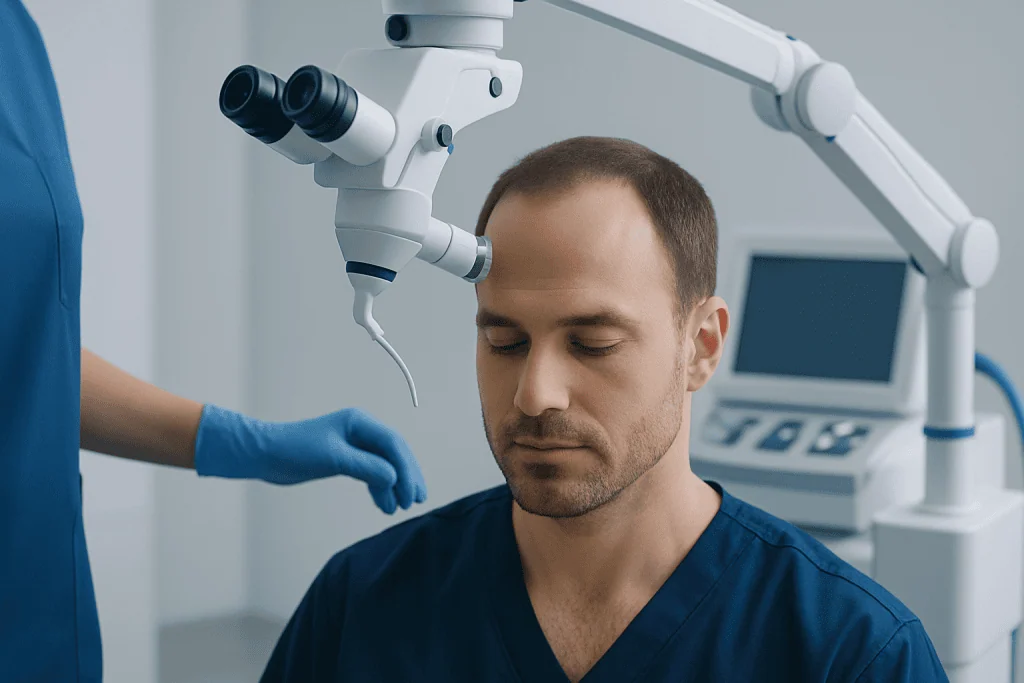
Men with androgenetic alopecia, also called male pattern baldness, are often the most common candidates for hair implants. Typical concerns include a receding hairline, thinning at the crown, or more widespread loss across the top of the scalp. Some men also seek treatment for eyebrow, beard, or scar-related hair loss, but scalp transplantation remains the most frequent reason for consultation.
Results are usually judged by improved coverage rather than returning to the exact hair density of adolescence. A skilled surgeon plans the hairline, angle, and distribution of grafts to match facial features, age, and future hair loss patterns. This careful design helps achieve a natural result that continues to look balanced over time.
It is important to understand the timeline. Newly transplanted hairs often shed in the first few weeks, which is expected. Visible regrowth usually begins after several months, and fuller results continue to develop over 9 to 12 months, sometimes longer depending on the area treated and individual healing.
Types of Hair Implant Procedures
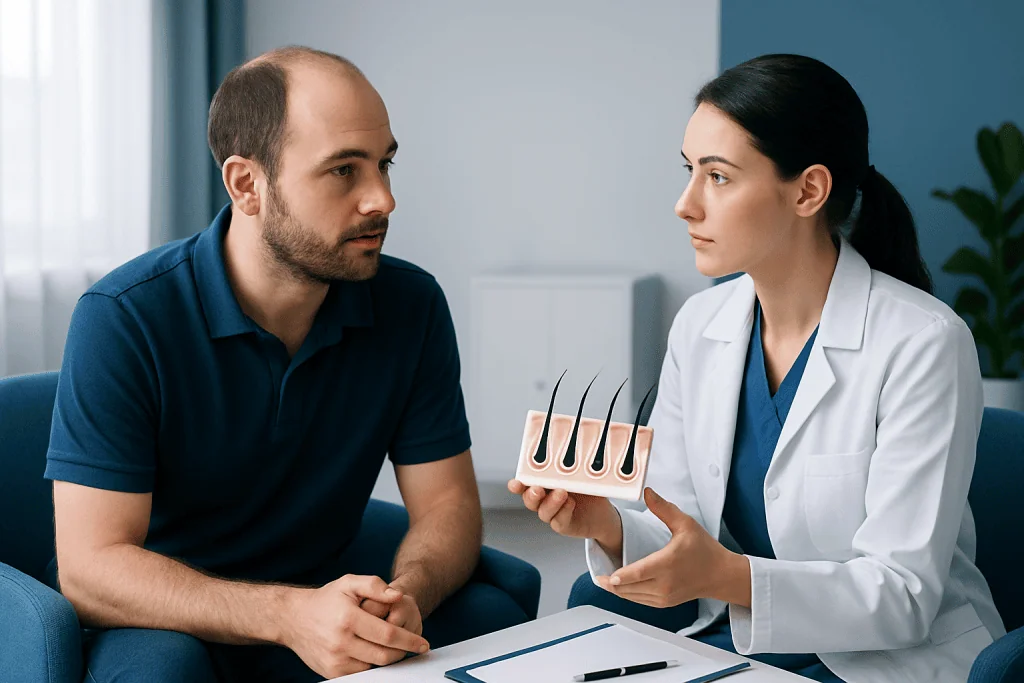
The two most commonly discussed techniques are follicular unit extraction and direct hair implantation. In follicular unit extraction, individual follicular units are removed one by one from the donor area and then placed into tiny recipient sites. Many patients learn about this as FUE hair transplant, which is widely used because it avoids a long linear scar and can offer a relatively comfortable recovery.
Another option is DHI hair transplant, a variation in which follicles are implanted using a specialized pen-like tool. This may help with control over angle and placement in selected cases. Some clinics also offer sapphire transplant techniques, which use sapphire blades to create recipient channels, or hair transplant without shaving for carefully chosen patients who wish to keep more of their existing hairstyle during the process.
The best method is not the same for everyone. The right choice depends on donor hair density, hair texture, the size of the bald area, the desired hairline, and whether the scalp has inflammation or scarring. Men with patchy autoimmune hair loss such as alopecia areata may need medical evaluation first, because transplantation is not always appropriate when disease activity is ongoing.
Causes of Hair Loss and Why Evaluation Matters
Not all male hair loss is the same. The most common cause is androgenetic alopecia, a hereditary condition influenced by hormones and genetics. However, hair shedding or patchy loss may also happen because of stress, illness, nutritional deficiency, medications, thyroid problems, traction, or inflammatory scalp disorders.
A specialist assessment matters because hair transplantation works best when the cause of hair loss is understood. If a man has active scalp disease, the scalp may need treatment before surgery is considered. For example, conditions such as seborrheic dermatitis or severe irritation may need to be controlled to support scalp health and healing.
Evaluation also helps estimate future hair loss. A man in his 20s with rapidly changing hair loss may need a conservative hairline design and discussion of medical therapy alongside surgery. The goal is not only to improve today’s appearance, but also to plan for how the scalp may look in the years ahead.
Diagnosis and Pre-Procedure Assessment
Before recommending hair implants for men, a qualified doctor usually reviews medical history, medications, family history of baldness, and any scalp symptoms such as itching, scaling, redness, or sudden shedding. The scalp and donor area are examined to assess hair density, hair shaft thickness, and the likely pattern of ongoing loss. Photographs are often taken to support planning and future comparison.
In some cases, additional tests may be helpful. These can include blood tests when nutritional deficiency or hormonal imbalance is suspected, or dermoscopic scalp examination to look more closely at follicles and scalp skin. If there is concern about scarring alopecia or another inflammatory condition, a dermatologist may recommend further evaluation before any transplant is planned.
The pre-procedure consultation should also cover expectations, limitations, and aftercare. Patients benefit from understanding how many sessions may be needed, what level of density is realistic, and whether non-surgical support such as non-surgical hair restoration or laser hair therapy may be considered as part of an overall hair care plan.
Cost, Recovery, and Possible Risks
Hair transplant cost varies from one person to another. The final price often depends on the number of grafts needed, the complexity of the hairline design, the technique used, the clinic’s experience, and whether extra sessions or supportive treatments are recommended. Because each case is individualized, a detailed consultation is usually the best way to receive a reliable estimate.
Recovery is generally manageable, but it still requires care. Mild swelling, redness, scabbing, and tenderness can occur for several days after the procedure. Most men can return to desk-based activities relatively soon, but they are usually advised to protect the scalp, avoid heavy exercise for a period, and follow washing instructions carefully to support healing.
As with any procedure, there are possible risks. These may include infection, bleeding, temporary numbness, folliculitis, uneven growth, unnatural direction of hairs, or visible scarring. Some men may also be disappointed if expectations are unrealistic or if future hair loss changes the overall appearance, which is why careful planning and qualified medical care are so important.
Treatment Planning, Aftercare, and Long-Term Maintenance
Hair transplantation is often one part of a broader long-term plan rather than a one-time cosmetic decision. Doctors may discuss medical treatments that help slow further hair loss, especially when native hair around the transplant area is still thinning. This can be important for maintaining a balanced appearance over time.
Aftercare instructions usually include gentle scalp washing, sleeping with the head elevated for a short period, avoiding scratching or picking at scabs, and protecting the scalp from direct sun. Transplanted follicles need time to settle, so patience is essential. Early shedding of the transplanted hairs is common and does not usually mean the procedure has failed.
Some men may later benefit from touch-up treatment, especially if hair loss progresses. If a previous transplant produced an unsatisfactory cosmetic result, revision options such as hair transplant repair may be discussed. Near the end of the care journey, some patients also ask about camouflage options such as scalp micropigmentation to create the appearance of greater density.
For international patients seeking evaluation and treatment, Acibadem International’s multidisciplinary specialists in JCI-accredited hospitals diagnose and treat hair loss conditions and offer personalized hair restoration planning when appropriate.
When to See a Doctor
A doctor should be consulted when hair loss is sudden, patchy, rapidly worsening, or associated with scalp pain, scaling, redness, or scarring. These signs may suggest a condition that needs medical treatment rather than cosmetic restoration alone. Early assessment can also help preserve existing hair.
Men who are thinking about hair implants should seek a consultation if hair loss is affecting confidence or daily life, or if they want to understand their options clearly. A specialist can explain whether surgery, medical treatment, or a combined plan is the safest and most realistic approach.
It is especially helpful to seek professional advice before pursuing treatment abroad or comparing prices online. Lower cost alone does not indicate better value. The experience of the medical team, attention to scalp health, and the quality of planning and follow-up all play an important role in safe care and natural-looking results.
Frequently asked questions
Are hair implants for men permanent?
Transplanted hair follicles are usually long lasting because they are taken from areas that are less affected by male pattern baldness. However, existing non-transplanted hair may continue to thin over time, so some men need ongoing medical treatment or additional procedures to maintain overall balance.
How long does it take to see results after a hair transplant?
It is normal for transplanted hairs to shed in the first few weeks. New growth usually starts to become visible after several months, with fuller results developing gradually over 9 to 12 months, and sometimes longer.
Is a hair transplant painful?
Most procedures are performed with local anesthesia, so pain during treatment is usually limited. Some soreness, tightness, or tenderness can occur afterward, but this is often temporary and manageable with the care plan advised by the doctor.
How much do hair implants for men cost?
The cost depends on the number of grafts, the technique used, the clinic’s expertise, and whether more than one session is needed. A personalized assessment is the most accurate way to understand the likely total cost and what is included in care.
Who is not a good candidate for hair implants?
Men with very limited donor hair, unrealistic expectations, uncontrolled medical conditions, or active inflammatory scalp disease may not be ideal candidates until these issues are addressed. A specialist evaluation helps determine whether surgery is appropriate and safe.
Can hair implants treat all types of hair loss?
No. Hair transplantation is most often used for stable hair loss such as male pattern baldness. Some causes of hair loss, including active autoimmune or scarring conditions, may need medical treatment first and may not always respond well to transplantation.
References
- American Academy of Dermatology
- British Association of Dermatologists
- International Society of Hair Restoration Surgery
- National Health Service
- Mayo Clinic
This article is for general information only and is not a substitute for professional medical advice. Please consult a qualified doctor about your individual situation.
Hair transplant in Turkey — costs, graft counts & a free assessment
JCI-accredited · board-certified surgeons · reply within 24h
Add us as a Preferred Source to see more of our trusted health content across Google Search, AI Overviews and Discover.

Related Treatments
Related Conditions
More from the Health Library



Related Specialists

Prof. Dr. Sedef Şahin
Dermatology
Prof. Dr. Özlem Dicle
Dermatology
Prof. Dr. Emel Öztürk Durmaz
Dermatology
Assoc. Prof. Dr. Yasemin Koyuncu
Dermatology