Hair Transfer Surgery: Is It the Same as a Transplant?

Hair transfer surgery generally refers to hair transplant surgery. The procedure moves a person’s own hair follicles from one area of the scalp to another.
Key Takeaways
- Hair transfer surgery generally refers to hair transplant surgery.
- The procedure moves a person’s own hair follicles from one area of the scalp to another.
- Results are typically gradual, with visible improvement developing over months rather than days.
- Not everyone with hair loss is a good candidate; the cause of hair loss matters.
- A specialist assessment is important to confirm diagnosis, plan the hairline, and discuss realistic expectations.
Hair transfer surgery and hair transplant are usually two names for the same procedure: relocating healthy hair follicles from a donor area to areas of thinning or baldness. Understanding the terms, techniques, benefits, and limitations can help patients make informed decisions about hair restoration.
Overview: Hair Transfer Surgery vs Hair Transplant
Hair transfer surgery is commonly used as another term for hair transplant surgery. In both cases, the aim is the same: to move healthy hair follicles from a donor area, usually the back or sides of the scalp, to areas where hair has thinned or stopped growing. Because the transplanted follicles are genetically more resistant to common pattern hair loss, they can continue to grow in their new location.
In everyday use, people may hear different phrases such as hair transfer, hair implantation, hair restoration surgery, or hair transplant. These terms can sound different, but they often describe the same general concept. What matters most is not the wording, but the method used, the reason for the hair loss, and whether the person is a suitable candidate.
Modern hair transplantation is designed to create a natural-looking result by placing individual follicular units carefully according to hair direction, density, and hairline shape. Two well-known approaches are FUE hair transplant and DHI hair transplant. A consultation with a qualified specialist helps clarify which technique, if any, is appropriate.
Why People Consider Hair Transfer Surgery
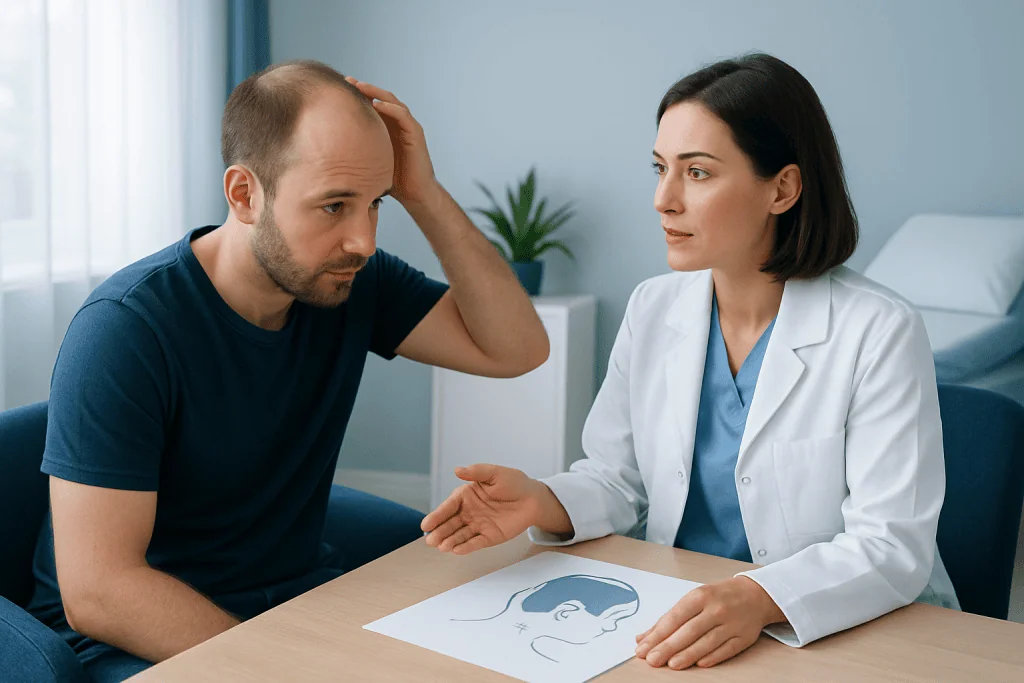
People consider hair transfer surgery for several reasons. The most common is androgenetic alopecia, also called male or female pattern hair loss, which causes gradual thinning over time. Others may seek treatment for hair loss related to scars, past injuries, burns, or previous cosmetic procedures that changed the hairline.
Hair restoration can affect more than appearance alone. For some people, visible hair loss influences confidence, self-image, and daily comfort in social or professional settings. Surgery may offer a long-term option when non-surgical treatments have not provided enough improvement or when a stable pattern of hair loss makes transplantation more practical.
However, surgery is not the right first step for every patient. Some forms of hair loss are temporary, inflammatory, or autoimmune. For example, alopecia areata can cause patchy hair loss and usually needs medical evaluation before any surgical plan is considered. In other cases, scalp conditions such as seborrheic dermatitis should be controlled first to support scalp health.
How the Procedure Works
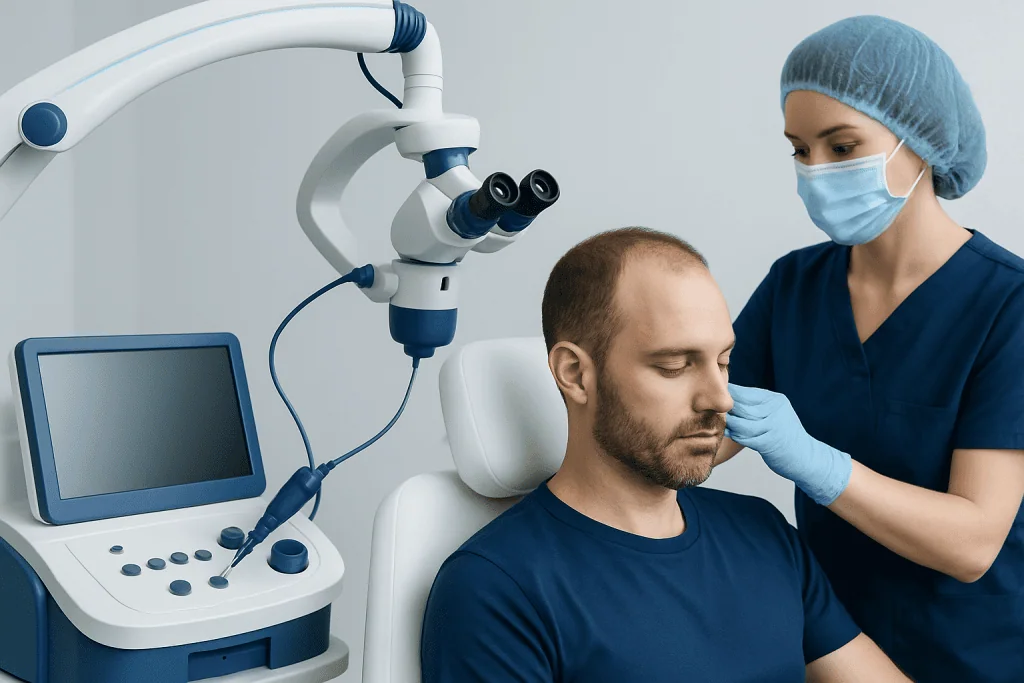
Hair transplant surgery works by harvesting follicles from a donor area and implanting them into recipient sites. The donor area is usually selected because those hairs are less likely to be affected by pattern baldness. After transplantation, the follicles enter a healing phase and then gradually begin to produce new hair growth.
In follicular unit extraction, or FUE, individual follicular units are removed one by one. In direct hair implantation, or DHI, follicles are also harvested individually but implanted using a specialized implanter tool. Each approach has advantages in specific situations, and the choice depends on hair characteristics, the amount of coverage needed, and the surgeon’s assessment.
Patients may also hear about variants or related options such as hair transplant without shaving for selected cases, or broader supportive approaches such as non-surgical hair restoration. These do not change the core principle: transplanted hair comes from the patient’s own hair-bearing areas rather than from another person.
Although the procedure is usually performed under local anesthesia, it is still a medical intervention that requires careful planning. The design of the hairline, graft distribution, and protection of the donor area are all important for a balanced, natural result.
Who Is a Good Candidate?
A good candidate for hair transfer surgery usually has a clear cause of hair loss, enough healthy donor hair, and realistic expectations about what surgery can achieve. The ideal candidate also has hair loss that is relatively stable or predictable. This allows the specialist to plan a hairline and density that will continue to look natural over time.
Both men and women may be candidates, but the evaluation can be different. Women often have more diffuse thinning, which may limit donor availability or change the treatment plan. Younger patients also need careful counseling because hair loss can continue to progress, making future planning especially important.
Not all hair loss should be treated surgically. Active scalp inflammation, uncontrolled skin disease, certain scarring alopecias, or ongoing shedding from medical causes may need treatment first. A person with scalp irritation, scaling, or redness may need a dermatology review to rule out conditions such as psoriasis or other inflammatory disorders before proceeding.
Realistic expectations are essential. Hair transplantation can improve density and reshape a hairline, but it does not create unlimited new hair. The final appearance depends on donor supply, hair texture, color contrast between hair and scalp, and the extent of hair loss.
Diagnosis and Pre-Procedure Assessment
Before recommending hair transfer surgery, a specialist will assess the pattern and cause of hair loss. This often includes a medical history, scalp examination, and review of family history, medications, hormonal factors, and any previous hair treatments. The goal is to confirm that transplantation is likely to help and to avoid surgery when another condition is the real cause.
The scalp and donor area are examined closely for hair density, hair shaft quality, miniaturization, and signs of inflammation or scarring. Photographs may be taken for planning and follow-up. In some cases, blood tests or a dermatology evaluation may be advised, especially if hair shedding is sudden, patchy, or linked to symptoms such as itching or scaling.
During this assessment, the specialist discusses expected graft numbers, likely coverage, hairline design, recovery, and the possibility of future sessions. Patients should also mention smoking, chronic medical conditions, bleeding risks, and any tendency to form thick scars. This conversation helps build a treatment plan that is individualized, safe, and realistic.
Results, Recovery, and Possible Risks
Recovery after hair transplant surgery is usually manageable, but it still requires patience. Mild swelling, redness, tenderness, or small crusts can occur in the days after the procedure. These effects generally improve with time and aftercare instructions from the treating team. Most people can return to light routine activities fairly quickly, though the exact timeline depends on the technique used and the individual case.
It is important to know that transplanted hairs often shed in the first weeks after surgery. This is a normal part of the cycle and does not mean the grafts failed. New growth commonly appears gradually over several months, and fuller results take longer to develop. Because hair grows slowly, improvement is best judged over time rather than immediately.
As with any procedure, there are possible risks. These may include infection, poor graft survival, unnatural-looking density or hairline design, prolonged redness, numbness, or donor area thinning. Some people may need more than one session to reach their goals. Choosing an experienced medical team and following aftercare advice can help reduce these risks.
- Early shedding of transplanted hairs is usually expected.
- Visible growth takes time and is gradual.
- Results depend on donor hair quality and surgical planning.
- Some ongoing non-transplanted hair loss may still need medical management.
Treatment Options Beyond Surgery
Hair transfer surgery is only one part of hair restoration. Many patients benefit from a broader plan that includes non-surgical support, especially if native hair is still thinning. This may include medical therapies recommended by a doctor, scalp care, and follow-up monitoring to protect existing hair and maintain overall appearance.
Adjunctive treatments can sometimes help improve scalp health or complement a surgical result, depending on the cause of hair loss. For selected patients, options such as laser hair therapy may be discussed as part of a wider management plan. These approaches do not replace transplantation when donor relocation is needed, but they may support hair care goals in some cases.
When previous hair restoration has produced an unsatisfactory outcome, corrective planning may be possible. In certain situations, hair transplant repair can address issues such as an unnatural hairline, poor density distribution, or visible scarring. A specialist can explain whether revision surgery is appropriate or whether a non-surgical option would be better.
When to See a Doctor and What to Ask
A doctor should be consulted when hair loss is sudden, patchy, associated with scalp symptoms, or causing ongoing concern. Medical advice is also important before any cosmetic procedure if there is a history of autoimmune disease, dermatologic conditions, or previous scalp surgery. An accurate diagnosis comes first, because the best treatment depends on the reason for the hair loss.
During a consultation, patients may wish to ask about the diagnosis, likely progression of hair loss, donor area strength, recommended technique, expected number of grafts, recovery, and whether non-surgical treatment should be tried first. It is also helpful to ask how a natural hairline is planned and what kind of long-term maintenance may be needed.
For international patients seeking evaluation and treatment, Acibadem International’s multidisciplinary specialists and JCI-accredited hospitals diagnose and treat hair loss conditions and perform hair restoration procedures with individualized planning. Even so, every patient should understand that suitability, safety, and expected results vary from person to person.
In short, hair transfer surgery is usually the same as a hair transplant. The key difference lies less in the name and more in proper diagnosis, careful technique, and realistic expectations. A qualified specialist can help determine whether surgery is appropriate and what kind of result is reasonable to expect.
Frequently asked questions
Is hair transfer surgery the same as a hair transplant?
Yes, in most cases the terms refer to the same procedure. Both describe moving a person’s own hair follicles from a donor area to a thinning or bald area of the scalp.
Is hair transfer surgery permanent?
Transplanted follicles are usually long-lasting because they are taken from areas that are more resistant to pattern hair loss. However, non-transplanted hair can still continue to thin over time, so some people may need ongoing medical management or future procedures.
Who should not have a hair transplant right away?
People with unexplained hair shedding, active scalp inflammation, certain scarring hair disorders, or unstable medical conditions may need evaluation and treatment first. Surgery is best planned after the cause of hair loss is clearly understood.
How long does it take to see results after hair transfer surgery?
Results are gradual rather than immediate. It is common for transplanted hairs to shed early and then begin growing again over the following months, with fuller improvement appearing later.
Does hair transfer surgery hurt?
The procedure is usually performed with local anesthesia, so significant pain during surgery is generally limited. Some soreness, tightness, or tenderness afterward can occur, but this is usually temporary and manageable with the care instructions given by the medical team.
Can women have hair transfer surgery too?
Yes, some women are suitable candidates for hair transplant surgery. The decision depends on the pattern and cause of hair loss, donor hair availability, and whether there is an underlying medical or hormonal issue that should be treated first.
References
- American Academy of Dermatology
- British Association of Dermatologists
- International Society of Hair Restoration Surgery
- National Health Service
- Mayo Clinic
This article is for general information only and is not a substitute for professional medical advice. Please consult a qualified doctor about your individual situation.
Hair transplant in Turkey — costs, graft counts & a free assessment
JCI-accredited · board-certified surgeons · reply within 24h
Add us as a Preferred Source to see more of our trusted health content across Google Search, AI Overviews and Discover.

Related Treatments
Related Conditions
More from the Health Library



Related Specialists

Prof. Dr. Sedef Şahin
Dermatology
Prof. Dr. Özlem Dicle
Dermatology
Prof. Dr. Emel Öztürk Durmaz
Dermatology
Assoc. Prof. Dr. Yasemin Koyuncu
Dermatology