Hair Transplant for Women: Benefits, Risks, and Results

Hair transplant for women is most suitable for selected types of hair loss, not every cause of thinning. A careful scalp and medical evaluation is essential before surgery.
Key Takeaways
- Hair transplant for women is most suitable for selected types of hair loss, not every cause of thinning.
- A careful scalp and medical evaluation is essential before surgery.
- Results develop gradually over several months as transplanted follicles grow.
- Possible risks include temporary shedding, infection, scarring, and uneven density.
- Medical treatment or non-surgical options may be recommended before or alongside transplantation.
Hair transplant for women may help restore fuller-looking hair when thinning is stable and suitable donor hair is available. The best results depend on identifying the cause of hair loss, choosing the right technique, and having realistic expectations about coverage and density.
Overview
Hair transplant for women is a procedure that moves healthy hair follicles from one part of the scalp, usually the back or sides, to areas with thinning or hair loss. Because transplanted follicles often keep their original growth characteristics, they can continue producing hair in their new location. The goal is usually improved coverage and a more natural hairline or part line rather than dramatic overall volume.
Women can experience hair loss for many reasons, including female pattern hair loss, traction from tight hairstyles, scarring conditions, hormonal changes, and stress-related shedding. For this reason, a woman is not automatically a transplant candidate simply because she has thinning hair. A specialist first needs to determine the cause, pattern, and stability of the hair loss.
When a transplant is appropriate, it can be a long-lasting option. Common methods include follicular unit extraction and direct implantation approaches such as FUE hair transplant and DHI hair transplant. In some cases, less invasive support options such as non-surgical hair restoration are also discussed as part of a broader treatment plan.
Who Is a Good Candidate?
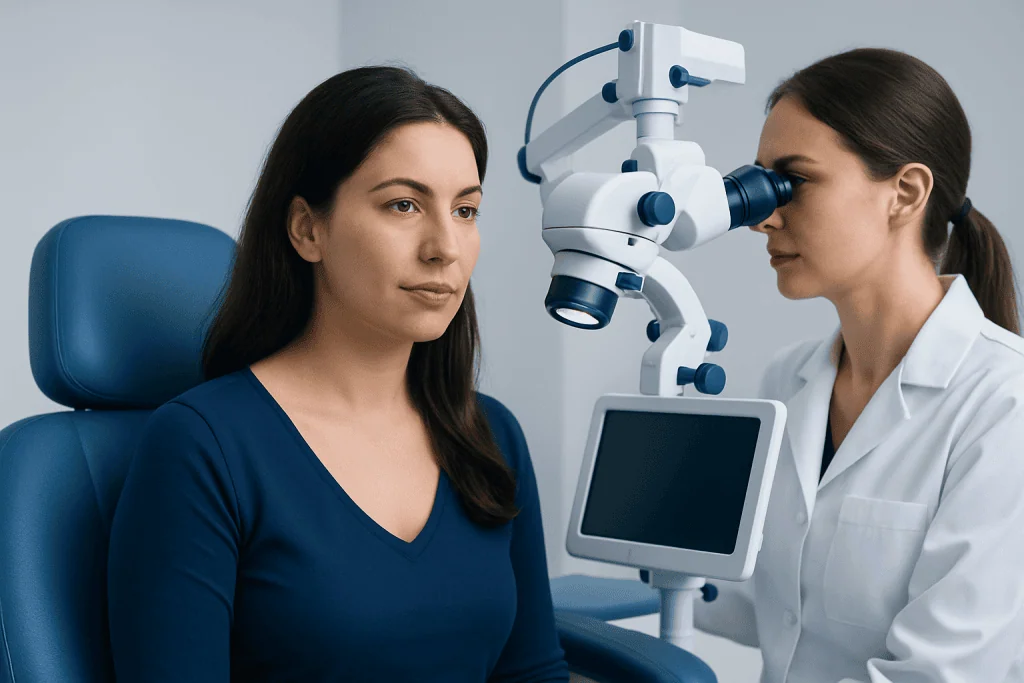
The best candidates are women with stable, well-defined areas of thinning and enough healthy donor hair at the back or sides of the scalp. This often includes women with traction alopecia from long-term tight hairstyles, a widened part with preserved donor density, eyebrow loss, scars from injury or surgery, or some localized areas of permanent hair loss.
Hair transplant may be less suitable when hair loss is diffuse across the entire scalp, including donor areas. In diffuse thinning, moving follicles from one area to another may not provide enough benefit because the donor hair is also reduced. Ongoing inflammation or active scalp disease can also make surgery unsuitable until the underlying problem is treated.
A full assessment is especially important when the scalp shows redness, scaling, itching, or patchy loss. Conditions such as alopecia areata, seborrheic dermatitis, or scarring disorders can affect outcomes and may need medical treatment first. Women with realistic expectations, good general health, and willingness to follow aftercare instructions tend to do best.
Benefits and Expected Results

The main benefit of hair transplant for women is that it can improve coverage in areas that no longer respond well to medical treatment alone. A successful procedure can make the hairline look softer, reduce the visibility of the scalp through a widened part, and help restore hair in selected scars or traction-related bald spots. Because the follicles are the patient’s own, the result can look natural when planned carefully.
Another advantage is durability. Transplanted hairs usually continue growing after the follicles settle in, although natural aging and ongoing non-transplanted hair loss can still change overall appearance over time. This is why many women benefit from a combined approach that may include medications, topical therapies, or supportive treatments such as laser hair therapy.
Results are gradual, not immediate. Many patients notice temporary shedding of transplanted hairs in the first weeks, followed by new growth after several months. Visible improvement often becomes clearer between 6 and 12 months, and sometimes longer depending on the area treated and the individual growth cycle. Hair density usually improves, but it may not return to the thickness present before hair loss began.
- Can improve hairline shape or part-line fullness
- Uses the patient’s own follicles for a natural appearance
- May offer long-term improvement in suitable candidates
- Works best when combined with proper diagnosis and follow-up care
Risks, Limitations, and Possible Side Effects
Hair transplant is generally considered safe when performed by experienced specialists, but it is still a medical procedure with possible risks. Temporary swelling, mild discomfort, crusting, itching, and redness are common in the early healing period. Small scabs usually form around grafts and then resolve as the scalp heals.
Other possible complications include infection, bleeding, numbness, prolonged redness, poor graft survival, unnatural growth direction, visible scarring, or patchy density. Some women may also experience shock loss, meaning temporary shedding of existing or transplanted hair after the procedure. In many cases this shedding improves, but the timeline can be emotionally difficult.
There are also important limitations. Hair transplant does not stop future hair loss in untreated areas, and it does not create unlimited density. Women with active inflammatory scalp conditions, significant scarring tendencies such as keloid, or unstable hair loss may need a different plan. If a previous procedure produced an unsatisfactory result, specialists may discuss options such as hair transplant repair.
Causes of Hair Loss and Pre-Procedure Evaluation
Before surgery, doctors try to identify why the hair loss is happening. Female pattern hair loss is a common cause, but thinning can also be linked to childbirth, menopause, iron deficiency, thyroid disease, nutritional issues, autoimmune conditions, stress, medications, or repeated tension from hairstyles. A transplant works best when the hair loss pattern is understood and, if possible, stabilized.
Evaluation usually includes a detailed medical history, scalp examination, and review of family history, medications, and hair care practices. The doctor may assess donor density, hair shaft thickness, scalp elasticity, and the pattern of thinning. Sometimes blood tests or additional dermatologic assessment are recommended, especially if the history suggests hormonal or nutritional factors.
Women with scalp inflammation, flaking, tenderness, or visible skin changes may need treatment before any procedure. For example, disorders such as discoid lupus erythematosus or other scarring forms of alopecia can make surgery inappropriate unless the disease is inactive. This careful evaluation helps protect the patient and supports more reliable results.
How the Procedure Is Done and Recovery
Most hair transplant procedures are performed under local anesthesia. Hair follicles are harvested from donor areas and then implanted into carefully planned recipient sites to match the natural angle, direction, and pattern of hair growth. In women, surgical planning often focuses on preserving an unshaven or discreet appearance where possible, and some clinics may discuss options such as hair transplant without shaving for selected patients.
After the procedure, patients usually go home the same day. The scalp may feel tender for a few days, and tiny crusts are expected around the implanted grafts. Doctors provide instructions about washing, sleeping position, physical activity, and avoiding pressure, scratching, or harsh hair products while the scalp heals.
Recovery is gradual. Most routine activities can often be resumed within days, but vigorous exercise and certain hair treatments may need to wait until the surgeon advises it is safe. Transplanted hairs often shed before new growth begins, which is a normal part of the cycle. Follow-up visits help the team monitor healing and guide longer-term scalp care.
Alternatives, Self-Care, and When to See a Doctor
Not every woman with hair loss needs or benefits from transplantation. Depending on the diagnosis, doctors may recommend medical treatment, nutritional correction, treatment of scalp disease, camouflage strategies, or supportive procedures. Some women benefit from medications to slow progression, while others may consider cosmetic options such as styling changes, fibers, or scalp camouflage.
Self-care matters before and after any treatment. Gentle hair care, avoiding tight braids or ponytails, managing heat and chemical damage, eating a balanced diet, and addressing underlying medical issues can all support scalp health. It is also wise to discuss any supplements or over-the-counter hair products with a doctor, since some may be unhelpful or unsuitable.
A woman should see a doctor if hair loss is sudden, patchy, painful, associated with itching or rash, or accompanied by symptoms such as fatigue, menstrual changes, or weight changes. Expert help is also important if thinning is affecting confidence or daily life. Near the end of the care journey, some patients seek evaluation at centers such as Acibadem International, where multidisciplinary specialists in JCI-accredited hospitals diagnose and treat hair loss and offer tailored options including hair transplant for women when appropriate.
Frequently asked questions
Does hair transplant for women work for all types of hair loss?
No. It works best for selected causes of permanent or stable hair loss when there is enough healthy donor hair. Conditions causing diffuse shedding, active inflammation, or unstable autoimmune hair loss may need medical treatment instead of or before surgery.
How long does it take to see results after a female hair transplant?
New growth is gradual. Many women begin to notice visible improvement after several months, with fuller results often becoming clearer around 6 to 12 months. Final appearance can continue to mature beyond that depending on the area treated.
Will transplanted hair fall out again?
Transplanted follicles are usually chosen because they are more resistant to thinning, so they often continue growing long term. However, non-transplanted hairs can still thin over time, which may affect overall density. Ongoing follow-up and supportive treatment may help maintain the result.
Is hair transplant for women painful?
The procedure is usually done with local anesthesia, so discomfort during surgery is generally limited. Mild soreness, tightness, or tenderness afterward can happen, but this is often temporary and manageable with the care plan provided by the doctor.
Can women with diffuse thinning have a hair transplant?
Sometimes, but diffuse thinning can make transplantation more difficult because donor hair may also be reduced. A specialist needs to examine the scalp carefully to decide whether surgery is likely to help or whether medical or non-surgical treatments are more appropriate.
Are there visible scars after a hair transplant?
Very small marks can occur where follicles are removed or implanted, but the visibility depends on the technique, healing pattern, hairstyle, and individual skin characteristics. Skilled planning aims to keep any scarring as discreet as possible.
References
- American Academy of Dermatology
- British Association of Dermatologists
- International Society of Hair Restoration Surgery
- National Health Service
- Mayo Clinic
This article is for general information only and is not a substitute for professional medical advice. Please consult a qualified doctor about your individual situation.
Hair Transplant For Women in Turkey — costs, top hospitals & a free quote
JCI-accredited · board-certified surgeons · reply within 24h
Add us as a Preferred Source to see more of our trusted health content across Google Search, AI Overviews and Discover.

Hair Transplant
Modern FUE and DHI hair restoration with natural, lasting results.
Related Treatments
Related Conditions
More from the Health Library



Related Specialists

Prof. Dr. Sedef Şahin
Dermatology
Prof. Dr. Özlem Dicle
Dermatology
Prof. Dr. Emel Öztürk Durmaz
Dermatology
Assoc. Prof. Dr. Yasemin Koyuncu
Dermatology