Turkish Hairlines: What Makes a Natural Design?
A natural hairline should suit facial shape, age, ethnicity, and existing hair pattern. The best designs usually avoid a straight, overly low, or unnaturally dense front line.
Key Takeaways
- A natural hairline should suit facial shape, age, ethnicity, and existing hair pattern.
- The best designs usually avoid a straight, overly low, or unnaturally dense front line.
- Donor hair quality, scalp health, and long-term hair loss planning all affect the final design.
- Different techniques, including FUE and DHI, can support natural placement when used appropriately.
- A skilled assessment is important to balance aesthetics with realistic, lasting results.
A natural-looking hairline is not defined by how low or dense it is, but by how well it fits the person’s face, age, hair characteristics, and pattern of hair loss. Turkish hairline design is widely recognized for combining artistic planning with medical assessment to create results that look balanced rather than overdone.
Overview: What a Natural Hairline Really Means
When people talk about “Turkish hairlines,” they are usually referring to hairline designs created during hair restoration procedures in Turkey that aim to look soft, balanced, and realistic. A natural hairline is not simply a lower hairline or one with the highest possible density. Instead, it is a carefully planned transition zone that blends with the patient’s facial proportions, hair texture, age, and likely future hair loss.
The front hairline is one of the most noticeable parts of a hair transplant. Even if graft survival is good, an unnatural design may still look artificial. For this reason, experienced teams focus not only on placing hairs, but also on shaping the hairline with irregularity, gradual density, and proper angle so that it resembles natural growth.
Turkey has become well known for hair restoration partly because of the emphasis many clinics place on detailed planning and high procedural volume. In well-selected patients, options such as FUE hair transplant or DHI hair transplant can support a refined, individualized front hairline when they are performed by trained professionals.
Features of a Natural-Looking Hairline
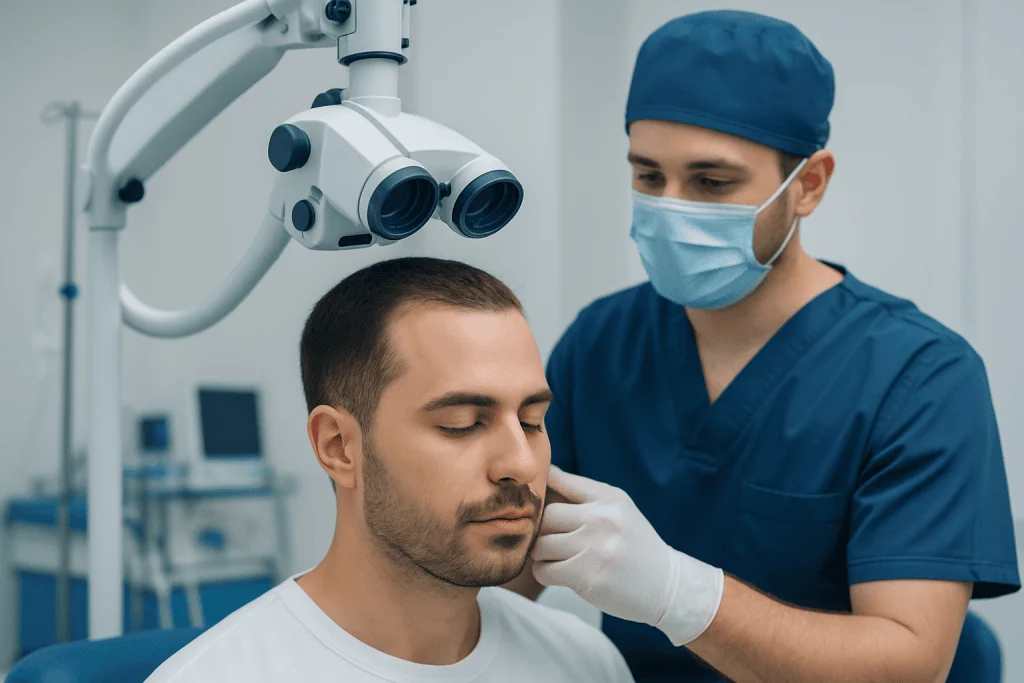
A natural hairline usually has a soft and slightly irregular outline. In real life, hair does not grow in a perfectly straight row. Small variations in position, direction, and spacing help create a feathered edge. The very front often contains finer, single-hair grafts, while slightly denser grafts are placed behind them to build a gradual, realistic transition.
Another key feature is proportion. The hairline should fit the forehead height, temple shape, and overall face. A design that looks attractive on one person may look unnatural on another. Hair caliber also matters: thick, coarse hair creates stronger visual density than fine hair, so the plan should be adjusted accordingly.
Natural design also includes temporal and frontal angles. The corners of the hairline should not be recreated in a way that ignores normal anatomy or age-related changes. In many cases, a mature hairline looks more believable than a very low youthful line, especially in adults with ongoing androgenetic hair loss.
- Soft, irregular front edge
- Single-hair grafts placed at the leading border
- Gradual increase in density behind the front line
- Appropriate height for the patient’s age and face
- Hair direction and angulation that mimic natural growth
Why Hairline Design in Turkey Gets Attention

Hairline design in Turkey receives attention because many patients travel there specifically for hair restoration, and experienced centers often perform these procedures regularly. Repetition can help teams refine technical and aesthetic judgment, especially in planning the front line. However, the quality of results depends on the individual clinic and surgeon, not the country alone.
A well-designed Turkish hairline often reflects a blend of artistry and restraint. The goal is usually to avoid common mistakes such as making the line too low, too straight, or too dense in the wrong places. Careful mapping before the procedure helps align the design with the person’s natural facial expressions, hair pattern, and future needs.
Technique selection also influences design. For some patients, sapphire transplant methods or hair transplant repair may be discussed depending on scalp characteristics or previous procedures. The best approach is the one that supports a realistic distribution of grafts and protects donor reserves for the long term.
Factors Doctors Consider Before Designing the Hairline
Before creating a hairline, doctors assess much more than the visible bald area. They look at the pattern and likely progression of hair loss, donor area strength, scalp laxity or skin condition, hair shaft thickness, curl pattern, color contrast between hair and skin, and family history. All of these influence how full and natural the final result may appear.
Age is especially important. A very low, dense hairline in a young patient may look appealing at first but can become unnatural over time if surrounding native hair continues to thin. Conservative planning often produces results that age more gracefully. The aim is to preserve enough donor hair for possible future sessions if they are ever needed.
Scalp health should also be reviewed before any procedure. Conditions such as seborrheic dermatitis, psoriasis, or alopecia areata may affect timing, healing, or suitability for surgery. In some cases, medical treatment or a period of stabilization is needed before hair restoration planning can move forward safely.
Men and women may need different design strategies. Female hairline restoration often requires special attention to diffuse thinning, preservation of existing hairs, and softer framing around the temples. The best plan is always individualized rather than based on a standard template.
How the Hairline Is Planned and Built
Hairline creation usually begins with consultation, photographs, scalp examination, and a discussion of expectations. The proposed line is often drawn on the scalp so the patient and doctor can review height, shape, and symmetry together. This planning stage is important because small changes can significantly affect the final appearance.
Once the design is agreed upon, graft placement follows a strategic pattern. Single-hair follicular units are commonly used at the very front to create delicacy. Behind them, two-hair and sometimes three-hair grafts may be used to add density without producing a harsh edge. The angle of placement is kept shallow so the hairs lie naturally and can be styled more easily.
Different methods can support this process. Some patients are candidates for hair transplant without shaving when preserving the existing hairstyle is important, while others may benefit from broader hair operations planning if the restoration area extends beyond the frontal line. In every case, the most natural outcomes come from matching technique to anatomy, not from choosing a trend.
Healing and growth also affect the final result. Transplanted hairs typically shed before regrowing, and the front line may look sparse early on while maturation continues. Final texture and fullness take time, so patients are usually advised to judge the shape and density only after the recommended follow-up period.
Common Mistakes That Can Make a Hairline Look Unnatural
The most common mistake is designing the hairline too low. While this may seem desirable initially, it can look artificial and may consume a large number of grafts that might be needed later. Overly low placement can also reduce harmony with the forehead and facial proportions.
A second issue is making the line too straight or sharply defined. Natural hairlines have micro-irregularities, subtle asymmetry, and softer transitions. When the front edge is dense and uniform from one side to the other, it may appear more like a drawn line than natural hair growth.
Other problems include using too many multi-hair grafts in the first row, placing hairs at the wrong angle, ignoring temple recession patterns, or failing to account for future hair loss. In revision cases, specialists may discuss corrective options, including repair procedures or supportive measures such as non-surgical hair restoration to improve overall appearance.
- Hairline placed too low for age or face
- Dense, plug-like front row
- Straight or symmetrical outline without natural irregularity
- Poor angulation causing hairs to stand out unnaturally
- Inadequate long-term planning for ongoing hair loss
Aftercare, Long-Term Results, and Self-Care
Good design is only one part of the outcome. Aftercare also matters because the newly transplanted area needs time to heal and establish growth. Patients are usually advised to follow washing instructions carefully, protect the scalp from trauma and excessive sun exposure, avoid smoking if possible, and attend follow-up appointments as recommended by their medical team.
Long-term appearance depends not only on the transplanted grafts but also on the surrounding native hair. If underlying hair loss continues, the original design may need support from medical treatment or future planning. Depending on the cause of shedding, doctors may recommend therapies aimed at maintaining existing hair, such as laser hair therapy in selected cases, along with broader medical evaluation.
Healthy scalp care remains important after a transplant. Persistent flaking, itching, inflammation, or sudden patchy loss should be assessed rather than ignored. Lifestyle measures such as balanced nutrition, stress management, and avoidance of harsh hair practices may also help support overall scalp health, although they do not replace medical treatment for inherited hair loss.
For international patients seeking assessment and treatment, Acibadem International’s multidisciplinary specialists and JCI-accredited hospitals evaluate hair loss, scalp health, and hairline design as part of individualized care planning.
When to See a Specialist
It is sensible to see a qualified dermatologist or hair restoration specialist before deciding on any hairline procedure. An evaluation is especially important if hair loss is rapid, patchy, associated with redness or pain, or accompanied by scalp scaling. Not every type of hair loss is suitable for transplantation, and some causes should be treated medically first.
A consultation is also helpful for people who feel unsure about how low or dense their hairline should be. A specialist can explain what is realistic based on donor supply, current pattern of loss, and expected progression over time. This can prevent disappointment and reduce the risk of choosing an overly aggressive design.
People who have had an unsatisfactory transplant in the past should seek expert review rather than assuming nothing can be improved. Revision planning may involve reshaping the front line, redistributing grafts, or supporting the area with non-surgical options. A thoughtful second opinion can help clarify safe next steps.
Frequently asked questions
What makes a Turkish hairline look natural?
A natural Turkish hairline is usually designed to match the person’s face, age, hair type, and pattern of hair loss. It typically has a soft, slightly irregular front edge rather than a straight, dense line.
Is a lower hairline always better?
No. A lower hairline is not always more attractive or more natural. If it is too low for the patient’s proportions or future hair loss pattern, it may look artificial and use too many grafts.
Do FUE and DHI create different hairlines?
Both techniques can create natural-looking hairlines when used well. The final result depends more on planning, graft selection, angle, and surgeon experience than on the technique name alone.
Can women also benefit from natural hairline design?
Yes. Women may seek hairline restoration for thinning, a naturally high forehead, or traction-related loss. Their design often requires a softer frame and careful protection of existing hairs.
How long does it take to see the final hairline result?
The transplanted hairs often shed first and then gradually regrow. Visible improvement usually develops over months, and the final appearance may take around a year or sometimes longer to mature.
What if I already had an unnatural hair transplant?
In many cases, revision is possible. A specialist can assess whether reshaping the hairline, redistributing grafts, or adding supportive treatments may improve the result.
References
- American Academy of Dermatology
- International Society of Hair Restoration Surgery
- British Association of Dermatologists
- National Health Service
- Mayo Clinic
This article is for general information only and is not a substitute for professional medical advice. Please consult a qualified doctor about your individual situation.
Hair transplant in Turkey — costs, graft counts & a free assessment
JCI-accredited · board-certified surgeons · reply within 24h
Add us as a Preferred Source to see more of our trusted health content across Google Search, AI Overviews and Discover.

Related Treatments
Related Conditions
More from the Health Library



Related Specialists

Prof. Dr. Sedef Şahin
Dermatology
Prof. Dr. Özlem Dicle
Dermatology
Prof. Dr. Emel Öztürk Durmaz
Dermatology
Assoc. Prof. Dr. Yasemin Koyuncu
Dermatology