

What Causes Hair Loss? Common Triggers and When Treatment May Help

Hair loss is common and may be temporary, treatable, or long-term depending on the cause. Common triggers include genetics, stress, illness, hormonal shifts, medications, and nutritional deficiencies.
Key Takeaways
- Hair loss is common and may be temporary, treatable, or long-term depending on the cause.
- Common triggers include genetics, stress, illness, hormonal shifts, medications, and nutritional deficiencies.
- A medical evaluation can help distinguish normal shedding from a condition that needs treatment.
- Treatment options range from managing the underlying cause to medications, procedures, and hair restoration methods.
- Sudden patchy loss, scalp inflammation, or hair loss with other symptoms should be assessed by a doctor.
Hair loss can happen for many reasons, including heredity, hormonal changes, illness, stress, nutrition issues, and scalp disease. The best treatment depends on the cause, the pattern of hair loss, and whether the condition is temporary or ongoing.
Overview: What Hair Loss Means
Hair loss is a broad term that describes losing more hair than usual, developing thinning over time, or noticing visible bald patches. Some degree of daily shedding is normal because hair naturally cycles through growth, rest, and shedding phases. Hair loss becomes more noticeable when this cycle is disrupted or when new hairs do not grow back as expected.
The pattern of hair loss often gives important clues. Some people develop gradual thinning at the crown or temples, which is commonly linked to hereditary pattern hair loss. Others experience sudden diffuse shedding after stress or illness, while some notice round patches of missing hair that may suggest an autoimmune cause such as alopecia areata.
Hair loss can affect the scalp alone or involve eyebrows, eyelashes, beard hair, or body hair. It can happen at any age and in all genders. Although it is usually not dangerous, it can be emotionally distressing and may sometimes point to an underlying health issue that deserves attention.
Common Symptoms and Patterns
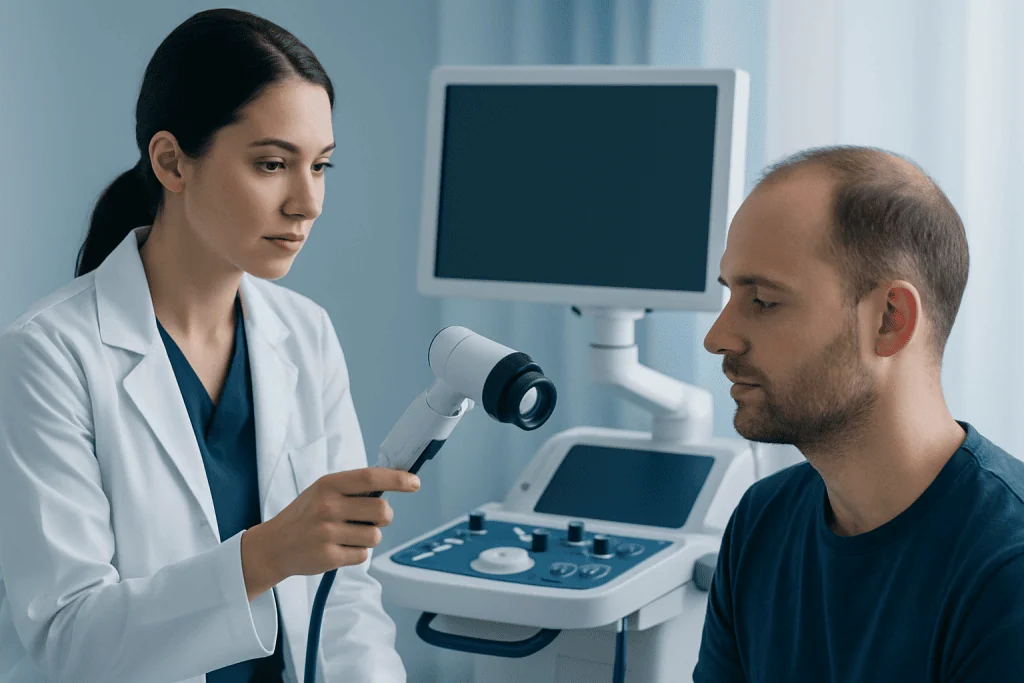
Hair loss does not look the same in every person. A common pattern is gradual thinning on the top of the scalp, often with a widening part line or receding hairline. This type usually develops slowly over months or years. Other people notice more hair on the pillow, in the shower, or in the brush, which may reflect increased shedding rather than permanent loss.
Patchy hair loss may appear as smooth, round, or oval bald spots. In some cases, the scalp looks normal, while in others there may be redness, scaling, tenderness, or itching. These signs can suggest a scalp disorder that needs diagnosis and treatment, such as seborrheic dermatitis or another inflammatory condition.
Symptoms that can accompany hair loss include:
- Thinning ponytail or reduced hair volume
- Receding hairline or thinning at the crown
- Sudden increased shedding after stress, childbirth, fever, or surgery
- Broken hairs or fragile strands
- Itchy, flaky, painful, or inflamed scalp
- Loss of eyebrows, eyelashes, or beard hair
Because different conditions can look similar at first, persistent or unusual changes are best evaluated by a dermatologist or another qualified doctor.
What Causes Hair Loss?
There is no single cause of hair loss. One of the most common reasons is hereditary pattern hair loss, also called androgenetic alopecia. This condition tends to run in families and is influenced by genetics and hormones. It often causes gradual thinning at the top of the scalp in both men and women.
Temporary shedding can occur when the body is under stress. High fever, major illness, surgery, emotional stress, rapid weight loss, or childbirth may trigger a condition called telogen effluvium. In this situation, more hairs than usual enter the shedding phase. Hair often begins to recover once the trigger resolves, but regrowth may take several months.
Hormonal changes can also play a role. Thyroid disorders, menopause, polycystic ovary syndrome, and changes after pregnancy may contribute to thinning or excess shedding. In some people, nutritional factors such as low iron, low protein intake, or other vitamin and mineral deficiencies affect hair growth. Certain medications, including some used for cancer, blood pressure, acne, mood disorders, and blood thinning, may also contribute.
Scalp conditions are another important cause. Fungal infection, scarring disorders, and inflammatory skin diseases can damage hair follicles if left untreated. Hair may also thin because of repeated tension from tight hairstyles, frequent heat or chemical processing, or habitual pulling of the hair. Understanding the trigger is essential because treatment is most effective when it matches the cause.
Risk Factors and Scalp Conditions That Can Contribute
Several factors can increase the chance of noticeable hair loss. A family history of thinning hair is one of the strongest predictors. Age also matters, since many inherited forms become more visible over time. Hormonal changes, chronic stress, restrictive dieting, and certain medical conditions can raise risk as well.
Scalp health is especially important. Ongoing inflammation may interfere with healthy hair growth. Conditions such as dandruff, eczema, psoriasis, or contact reactions to hair products can irritate the scalp. In some cases, treating the skin problem helps reduce shedding and improve the scalp environment. When there is scaling, redness, or itch, doctors may consider conditions like psoriasis or contact dermatitis among other possibilities.
Hair care habits can also matter. Tight braids, buns, extensions, or head coverings that create ongoing traction may lead to traction alopecia. Repeated bleaching, straightening, or high-heat styling can weaken the hair shaft, causing breakage that may look like hair loss. These factors do not always damage the follicle permanently, but long-term tension or inflammation can sometimes lead to lasting change.
How Hair Loss Is Diagnosed
Diagnosis begins with a medical history and a close look at the hair and scalp. A doctor will usually ask when the hair loss started, whether it is sudden or gradual, and whether there were recent triggers such as illness, stress, childbirth, medications, or dieting. They may also ask about family history, hair care practices, and symptoms such as itching, pain, or flaking.
The scalp examination helps identify the pattern of loss and whether the follicles appear inflamed, scarred, or miniaturized. In some cases, a pull test may be used to see how easily hairs shed. Dermoscopy, a magnified examination of the scalp, can provide additional detail. Blood tests may be ordered if the history suggests thyroid disease, iron deficiency, hormonal imbalance, or another internal cause.
Sometimes further testing is needed. A fungal test may be done if infection is suspected, and in selected cases a scalp biopsy helps distinguish scarring from non-scarring forms of alopecia. This step-by-step approach is important because hair loss is not one disease. It is a sign with many possible explanations, each requiring a different treatment plan.
Treatment Options: When Treatment May Help
Treatment may help when the underlying cause is identified early, especially if the hair follicles are still active. For temporary shedding, the main approach is treating or removing the trigger and allowing time for the growth cycle to recover. This may include addressing illness, correcting nutritional deficiencies, reviewing medications with a doctor, or managing hormonal or thyroid problems.
For hereditary pattern hair loss, treatment often aims to slow progression, preserve existing hair, and encourage thicker growth where possible. Doctors may recommend medical therapies, scalp treatments, or supportive options depending on the individual case. Some people with diffuse thinning or early-stage loss may benefit from non-surgical hair restoration approaches, while selected patients may be considered for laser hair therapy as part of a broader plan.
When hair loss is stable and significant, hair transplant procedures may be an option for suitable candidates. Techniques such as FUE hair transplant or DHI hair transplant may help restore hairlines or improve density in carefully selected cases. These procedures are not right for every cause of hair loss, especially when active inflammation or diffuse shedding is still ongoing.
If the scalp itself is affected, treating the skin condition is essential. Anti-inflammatory or antifungal treatment may help when disease is driving the loss. Near the end of the care journey, some patients also explore cosmetic camouflage strategies. Acibadem International’s multidisciplinary specialists in JCI-accredited hospitals diagnose and treat hair loss for international patients, tailoring care to the cause and scalp condition.
Prevention and Self-care
Not all hair loss can be prevented, especially when genetics are involved, but healthy habits can reduce avoidable triggers. A balanced diet that includes enough protein, iron, and other essential nutrients supports normal hair growth. Sudden restrictive diets and rapid weight loss should be avoided when possible, as they can increase shedding.
Gentle hair care is also important. Using less heat, limiting harsh chemical treatments, and avoiding tight hairstyles may reduce breakage and traction-related loss. People with a sensitive or itchy scalp may benefit from fragrance-free products or from changing products that seem to trigger irritation.
Stress management, sleep, and control of chronic medical conditions can support overall hair health. It is also wise not to start supplements or over-the-counter treatments without advice, since excess amounts of certain vitamins or inappropriate products may be unhelpful or even worsen the problem. If shedding continues or the scalp becomes inflamed, professional assessment is the safest next step.
When to See a Doctor
A doctor should be consulted if hair loss is sudden, rapidly worsening, or causing visible patches or thinning. Medical review is also important when hair loss occurs together with scalp redness, scaling, pain, pus, or itching, since these signs may indicate infection or inflammation. Early treatment may help protect the follicles in some conditions.
People should also seek advice if hair loss begins after starting a new medicine, after a major illness, or along with fatigue, weight changes, irregular periods, or other symptoms that may suggest an internal medical cause. Children with hair loss should be evaluated promptly, as fungal infection and other causes may need specific treatment.
Even when hair loss is not dangerous, it can affect self-confidence and quality of life. A qualified doctor can help clarify what type of hair loss is present, whether it is likely to be temporary, and which treatment options are reasonable. Seeking help early can make the process more reassuring and more effective.
Frequently asked questions
Is it normal to lose hair every day?
Yes. Some daily shedding is part of the normal hair growth cycle. Hair loss becomes more concerning when shedding suddenly increases, thinning becomes visible, or hair does not seem to grow back as expected.
Can stress cause hair loss?
Yes, significant physical or emotional stress can trigger increased shedding. This often happens a few weeks to a few months after an illness, surgery, childbirth, or a stressful event, and it may improve gradually once the trigger has passed.
Does hair loss always mean permanent baldness?
No. Many forms of hair loss are temporary or treatable, especially when linked to stress, illness, medications, or nutritional problems. Permanent loss is more likely in hereditary pattern hair loss or in some scarring scalp disorders.
When should someone worry about hair loss?
Medical advice is important if hair loss is sudden, patchy, painful, associated with scalp rash or scaling, or happening with other symptoms such as fatigue or menstrual changes. It is also wise to seek assessment if thinning continues for several months.
Can hair grow back after thinning?
In many cases, yes. Regrowth depends on the cause and on whether the hair follicle is still healthy. Temporary shedding often improves over time, while inherited thinning may require ongoing treatment to maintain results.
Are supplements enough to treat hair loss?
Not always. Supplements only help if a true deficiency is contributing to the problem, and unnecessary supplements may be ineffective or inappropriate. A doctor can advise whether testing is needed before treatment begins.
References
- American Academy of Dermatology
- National Health Service
- Mayo Clinic
- National Institute of Arthritis and Musculoskeletal and Skin Diseases
- British Association of Dermatologists
This article is for general information only and is not a substitute for professional medical advice. Please consult a qualified doctor about your individual situation.
Hair transplant in Turkey — costs, graft counts & a free assessment
JCI-accredited · board-certified surgeons · reply within 24h
Add us as a Preferred Source to see more of our trusted health content across Google Search, AI Overviews and Discover.
Check your numbers in seconds
BMI, calories, due date, blood pressure and 30+ more clinical calculators — free, instant, doctor-reviewed ranges.

Related Treatments
Related Conditions
More from the Health Library



Related Specialists

Prof. Dr. Sedef Şahin
Dermatology
Prof. Dr. Özlem Dicle
Dermatology
Prof. Dr. Emel Öztürk Durmaz
Dermatology
Assoc. Prof. Dr. Yasemin Koyuncu
Dermatology