Spine Surgery
Spine surgery treats back or neck conditions causing pain, nerve compression, deformity, or instability. Procedures may include decompression, fusion, disc surgery, or scoliosis correction.
Quick answer
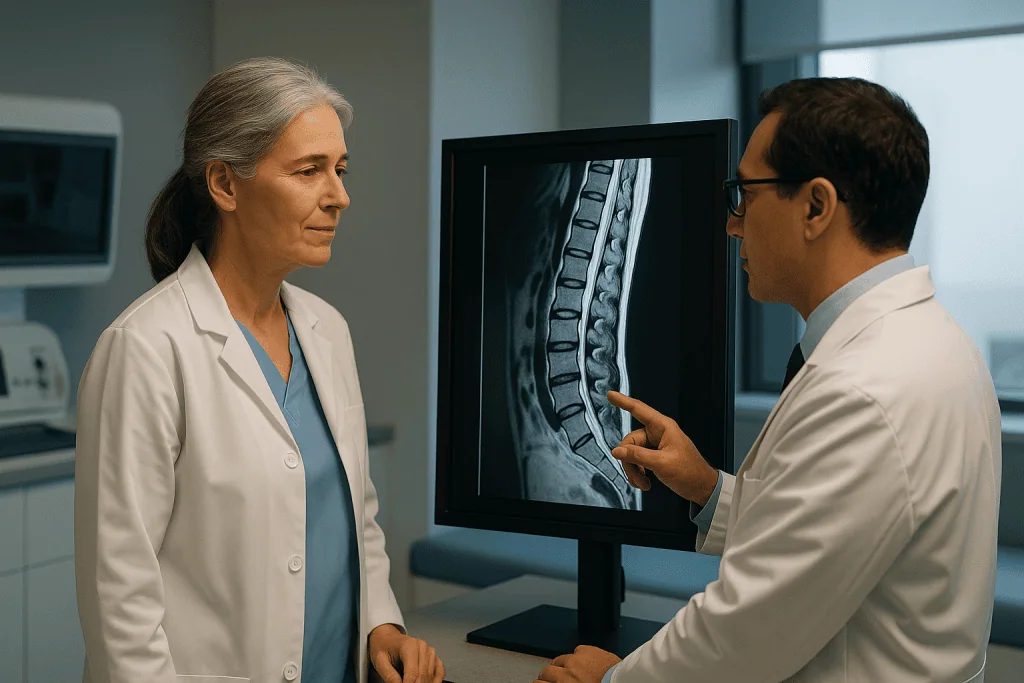
Spine surgery is a group of operations that treat structural problems of the back and neck, herniated discs, spinal stenosis, instability, deformity, fractures, tumours and infections. Depending on the diagnosis, the surgeon relieves pressure on nerves or the spinal cord, stabilises vertebrae, corrects alignment or removes abnormal tissue. Most operations are performed under general anaesthesia, followed by structured rehabilitation.
What Is Spine Surgery?
Spine surgery is a group of operations that treat problems affecting the bones, discs, joints, ligaments, nerves and spinal cord. Depending on the diagnosis, the surgeon relieves pressure on nerves or the spinal cord, stabilises vertebrae that move abnormally, corrects deformity, or removes damaged or abnormal tissue. It is considered for people whose symptoms are severe, persistent or progressive, and whose structural problem is unlikely to improve with non-surgical care alone.
Spine problems rarely stay in the spine. Pain travels into the arms or legs, numbness makes everyday tasks uncertain, and weakness interferes with walking, balance, work, sleep and independence. For many people the hardest part is not the discomfort itself but the uncertainty around it: Is an operation really necessary? What will recovery be like? Could waiting make things worse? How do I choose the right team, especially if I am considering treatment abroad? This page answers those questions as directly as the evidence allows.
Start with the most important fact. Most back and neck conditions do not need spine surgery. Many improve with medication, physical therapy, posture and activity changes, injections or other non-surgical treatments. An operation enters the conversation when symptoms are linked to nerve compression, spinal instability, deformity or structural damage that conservative care cannot fix, and when the symptoms themselves justify the risks of surgery.
The goal of spine surgery is never to operate on an X-ray or MRI finding. Many people carry imaging changes that need no treatment at all. The goal is to treat the specific condition causing pain, neurological symptoms, deformity or loss of function. The best surgical decisions are made when your symptoms, physical examination, imaging results, lifestyle needs and overall health all point to the same plan, and a responsible team will tell you plainly when they do not.
At Acibadem, patients are evaluated through a structured diagnostic pathway. Depending on the case, spine surgeons from neurosurgery, orthopaedic specialists, radiologists, anaesthesiologists, physical medicine and rehabilitation physicians, and pain specialists may all be involved. This multidisciplinary approach matters most in complex situations: revision surgery, scoliosis, spinal tumours, infection, trauma, or patients whose other medical conditions affect surgical risk and recovery.
Do you really need spine surgery?
Probably not, most people who ask this question do not, and a careful evaluation exists precisely to separate those who will benefit from those who will not. Surgery becomes a serious option in a narrower set of circumstances: nerve or spinal cord compression with matching symptoms, instability that produces pain or neurological risk, deformity that is progressing, fractures that threaten the spine’s structure, or tumour and infection cases where tissue must be removed or the spine stabilised.
A fair test is whether three things line up: what you feel, what the examination shows, and what the imaging demonstrates. When all three tell the same story, for example, leg pain that follows the exact nerve a herniated disc is compressing, surgical back treatment tends to be a reasonable discussion. When they do not line up, more surgery is rarely the answer, and continued conservative care usually is. If you are weighing this choice, the guide on how to choose between surgery and non-surgical treatment sets out the questions worth asking before any decision.
Spine surgery, back surgery or a backbone operation, is there a difference?
Back surgery, spinal surgery and spine surgery all describe the same family of procedures; the terms are interchangeable in everyday use. “Back surgery” usually refers to operations on the lumbar (lower) spine, because that is where most back pain lives, while “spine surgery” covers the whole column from neck to sacrum. What some people call a backbone operation is simply any procedure on the vertebral column described in lay terms. The distinctions that actually matter are clinical ones: which level of the spine is involved (cervical, thoracic, lumbar or sacral), what the operation does (decompression, stabilisation, correction or removal), and how it is performed (open or minimally invasive).
Is spinal surgery considered a major surgery?
Yes, spinal surgery is generally classed as major surgery, because it involves general anaesthesia, work close to the spinal cord and nerve roots, and a structured recovery period. That said, the category covers an enormous range. A single-level microdiscectomy through a small incision is a very different undertaking from a multi-level fusion or scoliosis correction lasting several hours. The seriousness of the operation is defined less by the incision than by what is done inside: how many levels are treated, whether implants are placed, how close the work comes to neural structures, and how much the spine’s mechanics are changed. Your surgeon should be able to place your specific procedure on that spectrum before you consent to it.
The Main Types of Spine Surgery
Surgical spinal procedures fall into a small number of categories, and understanding them makes any surgical recommendation easier to interrogate. The main groups are decompression, disc surgery, spinal fusion, motion-preserving surgery, deformity correction and tumour or infection-related surgery. The exact procedure depends on the diagnosis, the location of the problem, the severity of symptoms, and your anatomy and health status. Many operations combine categories: a decompression with a fusion, for instance.
What are the three types of spinal surgery?
Most operations fall into three broad groups: decompression, which removes tissue pressing on nerves or the spinal cord; stabilisation, most often spinal fusion, which stops painful or dangerous movement between vertebrae; and correction, which realigns a spine deformed by scoliosis, kyphosis or degeneration. Motion-preserving procedures such as disc replacement sit alongside fusion as an alternative form of disc surgery in carefully selected patients. In practice the boundaries blur: a surgeon correcting a deformity will usually also decompress nerves and fuse levels within the same operation.
Decompression surgery
Decompression surgery removes or reshapes tissue that is pressing on nerves or the spinal cord. That tissue may be part of a herniated disc, a thickened ligament, bone overgrowth, an enlarged joint or a portion of the vertebral arch. Laminectomy removes bone to widen the spinal canal; laminotomy and foraminotomy create smaller, targeted openings; microdiscectomy removes the fragment of disc irritating a nerve root while leaving the rest of the disc in place. Decompression treats the leg or arm symptoms caused by compression, which is why patient selection depends on confirming that the compression seen on imaging genuinely explains the symptoms felt.
Spinal fusion surgery
Fusion surgery joins two or more vertebrae so they heal into a single unit, reducing painful motion or stabilising a spine that can no longer stabilise itself. It is used for instability, severe degeneration, deformity, certain fractures, and after removal of structures that would otherwise leave the spine unstable. Screws, rods, cages and plates hold the vertebrae in position while bone graft material, taken from the patient, a donor source, or a biologic substitute chosen for the individual case, encourages the bones to unite over the following months. Fusion trades motion for stability, which is why surgeons reserve it for situations where the motion itself is the problem.
Disc surgery and motion preservation
Disc surgery may mean removing a herniated fragment, replacing a damaged disc, or supporting the disc space as part of a fusion. In the neck, carefully selected patients may be candidates for cervical disc replacement, which aims to maintain motion at the treated level rather than fusing it. Not everyone is suitable. Candidacy for motion-preserving surgery depends on the state of the facet joints, spinal alignment, bone quality and the number of affected levels; significant arthritis or instability usually points back towards fusion. A surgeon who explains why you are or are not a candidate, rather than simply offering the newer option, is giving you the honest version.
Scoliosis and spinal deformity correction
Deformity surgery addresses abnormal curvature, rotation, imbalance or progressive change in the spine’s shape. It may be recommended when a curve is severe, progressing, causing pain or nerve problems, or affecting posture, walking, lung function or quality of life. These are among the largest operations in spine care: the surgeon may release stiff segments, place instrumentation across many levels, correct alignment and fuse the treated portion of the spine. Planning balances the degree of correction against neurological safety, spinal stability and long-term posture, which is why deformity cases are typically reviewed by a full team before a plan is fixed.
Tumour, infection and trauma surgery
Spine surgery and cancer care intersect when tumours involve the vertebrae or press on neural structures; surgery may remove tumour tissue, obtain a diagnosis, stabilise the spine or relieve compression, usually in coordination with surgical oncology and radiation teams. Infection surgery drains abscesses, clears infected tissue and stabilises damaged segments when antibiotics alone are not enough. Trauma surgery reconstructs and stabilises fractures that threaten the spinal cord or the spine’s ability to bear load. In all three, the operation is one part of a broader treatment plan rather than a standalone fix.
What is the most common spine surgery?
Decompression procedures for the lumbar spine, microdiscectomy for herniated discs and laminectomy for spinal stenosis, are among the most frequently performed spine operations worldwide, with lumbar fusion also common in degenerative disease. This reflects where problems concentrate: the lower back carries the most load and degenerates earliest, and sciatica from a herniated disc is one of the classic surgical indications. Frequency is not a recommendation, though. The right operation for you is the one that matches your diagnosis, not the one performed most often.
Who is a candidate for minimally invasive spine surgery?
Candidates for minimally invasive spine surgery are typically patients whose problem is focal and well-defined: a single-level disc herniation, limited stenosis, or certain one- or two-level fusions, and whose anatomy allows the surgeon to reach the target through smaller corridors. Minimally invasive techniques use small incisions, tubular retractors and specialised instruments to reduce muscle disruption, which can mean less early postoperative soreness and quicker mobilisation in suitable cases. They are less suitable for extensive deformity, complex revision situations, or cases where wide visualisation is needed for safety. The honest framing: the approach is chosen for the problem, not the other way around. The safest and most effective operation is the one that lets the surgeon address the pathology accurately while protecting nerves, the spinal cord and surrounding tissue, whatever the incision size.
Who May Need Spine Surgery
You may be considered for spine surgery when symptoms significantly affect your life, when neurological function is threatened, or when a structural problem requires correction. The discussion usually follows a careful medical history, physical examination, imaging review and an honest look at what non-surgical treatment has and has not achieved.
Typical symptoms that lead to a surgical evaluation include persistent back or neck pain, pain radiating into an arm or leg, numbness, tingling, muscle weakness, difficulty walking, loss of balance, or pain that worsens with standing or walking and eases with sitting. Some patients describe electric-like or burning pain, heaviness in the legs, hand clumsiness or changes in fine motor skills. In spinal deformity, the signs may be visible rather than felt: uneven shoulders or hips, rib prominence, forward-leaning posture, reduced height or worsening imbalance.
Some presentations change the timescale entirely. Clinicians treat certain findings as urgent rather than elective: new loss of bladder or bowel control, numbness in the groin or saddle area, rapidly progressing weakness, severe trauma, fever combined with severe spine pain, unexplained weight loss, or severe pain in someone with a known cancer history. These patterns can signal serious nerve compression, infection, unstable fracture or tumour involvement, and they move a case from the waiting list to the front of it.
Diagnosis begins with a detailed consultation. The physician asks when symptoms started, where the pain travels, what worsens or relieves it, and how it affects walking, sleep, work and daily life. A neurological examination then evaluates reflexes, sensation, muscle strength, coordination, balance and any signs of spinal cord involvement.
Imaging carries the rest of the decision. MRI shows discs, nerves, the spinal cord, ligaments, infection, tumours and soft tissue. CT provides detailed views of bone, fractures, prior surgical changes, fusion status and complex anatomy. X-rays, including standing and bending views, reveal alignment, instability, scoliosis and motion between vertebrae that a lying-down MRI can miss. Where needed, nerve conduction studies, electromyography, diagnostic injections, bone density testing or blood tests complete the picture.
Surgery is genuinely indicated when symptoms, examination and imaging all match. Leg pain from a compressed lumbar nerve root tends to respond to decompression when the imaging confirms the compression and the clinical pattern fits it. Progressive cervical spinal cord compression producing hand clumsiness and gait change may need timely surgery to reduce the risk of further neurological decline. When the pieces do not match, imaging findings without corresponding symptoms, or symptoms without a structural explanation: a good team says so and recommends against operating.
Conditions Spine Surgery May Address
Spine surgery treats a wide range of conditions across the cervical, thoracic and lumbar spine and the sacrum. The most common indications are degenerative, traumatic, deformity-related, tumour-related, infectious and congenital.
Herniated disc occurs when disc material moves out of position and irritates or compresses a nerve. In the lower back this can cause sciatica; in the neck, arm pain, numbness or weakness. Surgery is considered when symptoms are severe, persistent or accompanied by a neurological deficit, not for every herniation, many of which settle without an operation.
Spinal stenosis is narrowing of the spinal canal or the openings where nerves exit, usually from age-related change: thickened ligaments, enlarged joints, bulging discs and bone overgrowth. Lumbar stenosis typically causes leg pain, heaviness or a shrinking walking distance. Cervical stenosis can compress the spinal cord itself, producing myelopathy: a condition affecting balance, hand function and coordination that deserves prompt assessment.
Degenerative disc disease and facet joint arthritis can contribute to chronic pain and instability, but surgery is not recommended for degeneration alone, because much of it is normal aging. It becomes an option when degeneration produces nerve compression, deformity, instability, or disabling pain that has genuinely failed non-surgical care.
Spondylolisthesisone vertebra slipping forward on another, can cause back pain, nerve compression, stenosis or instability. Treatment may involve decompression, fusion or both, depending on the type and degree of slip.
Scoliosis, kyphosis and adult spinal deformity involve abnormal curvature or alignment, present from adolescence or developing later through degeneration, fractures, prior surgery or other disease. Surgery is considered for progressive deformity, imbalance, severe pain, neurological symptoms or meaningful functional limitation.
Spinal fractures arise from trauma, osteoporosis, tumours or infection. Stable fractures are often managed with bracing and medical therapy; unstable fractures, or those compressing nerves, may need surgery. In selected osteoporotic compression fractures, cement augmentation procedures are an option.
Spinal tumours may be benign or malignant, primary or metastatic. Surgery can remove tumour tissue, secure a diagnosis, stabilise the spine, relieve spinal cord or nerve compression, or clear the way for radiation and systemic therapy. These cases are reviewed jointly by oncology and spine teams rather than decided by a single surgeon.
Spinal infectionsdiscitis, osteomyelitis and epidural abscess, are serious conditions. Treatment usually starts with antibiotics; surgery adds drainage, decompression and stabilisation when there is neurological risk, deformity, instability, abscess or failure of medical treatment.
Revision spine surgery may be needed when symptoms return or complications develop after a previous operation: recurrent disc herniation, nonunion after fusion, hardware problems, adjacent segment disease, scar-related nerve compression or persistent instability. Revision work demands detailed planning and experienced judgement, because scar tissue and altered anatomy raise the technical stakes considerably.
Is thoracic spine surgery dangerous?
Thoracic spine surgery carries particular considerations, but “dangerous” is the wrong frame: the honest answer is that risk depends on the specific problem, the approach and the team. The thoracic spine is the least commonly operated region, and the spinal cord occupies more of the canal there, leaving less margin around it during decompression. Access can also be more involved, since some thoracic problems are best reached from the front or side of the chest. Against that, surgeons manage these factors deliberately: with detailed imaging, careful approach planning and, in many cases, neurophysiological monitoring that tracks spinal cord function throughout the operation. As with all spine surgery, the relevant comparison is not surgery versus zero risk, but the risk of operating versus the risk of leaving a progressing problem untreated.
How Spine Surgery Is Performed
Spine surgery follows a structured pathway that begins well before the day of the operation. In outline, it runs:
- Diagnostic work-up: history, examination and imaging that confirm what is being treated and why.
- Medical optimisation: managing health factors that affect surgical risk and healing.
- The operation itself, under anaesthesia, with monitoring appropriate to the case.
- Inpatient recovery: pain control, neurological checks and early mobilisation.
- Rehabilitation and follow-up, continuing for weeks to months after discharge.
Preparation Before Surgery
Before surgery, the spine team reviews your medical history, prior treatments, imaging, medications, allergies and general health. Additional MRI, CT, standing or dynamic X-rays, laboratory tests, heart and lung evaluation, bone density assessment or specialist consultations are arranged where needed. Complex conditions are discussed in specialist boards so the surgical plan aligns with evidence-based treatment protocols rather than one clinician’s preference.
Medication planning is part of preparation. Blood-thinning medicines, some supplements and certain anti-inflammatory drugs can affect surgery, and any adjustment to them is decided and supervised by the treating doctor as part of the surgical plan. Patients with diabetes, heart disease, lung disease, kidney disease, osteoporosis or obesity may need optimisation beforehand to reduce risk. Smoking deserves particular emphasis: it impairs wound healing and bone fusion, so stopping before spine surgery, especially fusion, is strongly encouraged.
Before consent, the surgical team explains the proposed procedure, expected benefits, alternatives, potential risks, the anaesthesia plan, the likely hospital stay and the recovery process. Take that conversation seriously. A well-informed patient is better prepared for the practical realities of recovery, temporary restrictions, the daily work of walking and rehabilitation, and a realistic timeline for returning to travel, work and exercise.
During the Procedure
Most spine surgery is performed under general anaesthesia. You are positioned carefully to protect skin, eyes, joints, nerves and breathing. The approach may be from the back, front, side or a combination, depending on the condition and level: cervical disc removal with fusion or disc replacement is often done through a small anterior incision in the neck, while many lumbar conditions are treated from the back or side.
In decompression, the surgeon removes whatever is compressing the nerve or spinal cord: a small portion of bone, thickened ligament, disc material or overgrown joint tissue. Microdiscectomy uses magnification and fine instruments to extract the herniated fragment while sparing surrounding structures; laminectomy removes more bone to expand a stenotic spinal canal.
In fusion, the surgeon prepares the vertebrae and places bone graft to encourage them to unite over time, with screws, rods, plates or cages maintaining alignment and stability while the fusion develops. In deformity correction, the operation may involve releasing stiff segments, placing instrumentation, correcting alignment and fusing selected levels, always balancing the degree of correction against neurological safety. In tumour, infection or trauma cases, the procedure can combine tissue removal, decompression, reconstruction and stabilisation, coordinated with oncology or infectious disease treatment.
Technology Used to Support Precision and Safety
Modern spine surgery draws on tools that help the surgeon see and verify in real time. Intraoperative imaging confirms spinal levels and hardware position. Computer-assisted navigation supports orientation during complex instrumentation. Surgical microscopes and high-definition visualisation improve the view of delicate neural structures during decompression. Neurophysiological monitoring tracks spinal cord and nerve function during the operation itself, particularly valuable in deformity correction, spinal cord compression, tumour surgery, revision cases and complex instrumentation. Minimally invasive instruments and tubular retractors reduce muscle injury in suitable patients. One caution keeps all of this in proportion: technology is chosen for the specific procedure and supports the surgeon’s judgement; it does not replace it.
How long does a spine surgery take?
Anywhere from around an hour to most of a working day, depending on the operation. A limited lumbar microdiscectomy is comparatively short, while multi-level fusion, scoliosis correction, tumour surgery or revision work can take several hours. Duration reflects the number of levels treated, the approach, whether implants are placed and how complex the anatomy is: a longer operation is not a worse one, simply a bigger one. Hospital stay follows the same logic: limited procedures may need only a short stay, while complex operations require longer monitoring, pain control, mobilisation and rehabilitation planning.
After surgery, you are monitored as the anaesthesia wears off. Nurses and physicians assess pain control, neurological status, wound condition, circulation and mobility. Most patients are encouraged to stand and walk with assistance soon after surgery, depending on the operation, early movement reduces the risk of blood clots, stiffness and deconditioning, and it is one of the few parts of recovery entirely in your hands.
Recovery After Spine Surgery
Recovery is an active process, not a waiting period. Pain typically shifts character over the first weeks: the nerve-related or mechanical pain that prompted surgery gives way to surgical soreness that fades with time. Some nerve symptoms improve quickly; numbness and weakness recover more slowly, and if a nerve was compressed for a long period before surgery, sensation and strength may not return entirely. Spine surgery and rehabilitation are two halves of one treatment, and the second half is yours to do.
| Time Period | What Patients Can Expect |
|---|---|
| Day 1 | Monitoring after anaesthesia, pain control, neurological checks, wound assessment, and assisted standing or walking when medically appropriate. |
| First Week | Gradual increase in walking, transition to oral pain medication, wound care instructions, and discharge planning. Some patients return to a hotel or home environment with restrictions. |
| First Month | Improving mobility and stamina. Surgical soreness usually decreases, but bending, lifting, twisting, driving and work may remain limited depending on the procedure. |
| First 3 Months | Rehabilitation may progress to strengthening and posture training. Many patients return to light activities, although fusion and complex surgery require more cautious progression. |
| Longer Term | Nerve recovery, bone fusion, conditioning and return to higher-level activities may continue for several months or longer. Follow-up imaging may be used to assess healing. |
How long does it take to recover from lumbar spine surgery?
For a limited lumbar decompression such as microdiscectomy, many patients walk on the day of surgery, manage daily activities within the first weeks, and return to desk-based work within roughly a month, with heavier activity phased in later under guidance. Lumbar fusion runs on a longer clock: the bone itself needs months to unite, so restrictions on bending, lifting and twisting last longer, and return to strenuous work or sport is a staged process over several months. Individual timelines vary with age, general health, the number of levels treated and how consistently rehabilitation is followed: your surgeon’s estimate for your specific operation outranks any general figure.
Physical therapy may begin in hospital or after discharge. The early focus is safe walking, posture, transfers, breathing exercises and avoiding movements that stress the surgical area. Later rehabilitation adds strengthening, flexibility, balance, core stability and a structured return-to-activity plan.
Patients travelling home after surgery receive individualised instructions covering wound care, medications, activity restrictions, warning signs, follow-up appointments and fitness to fly. Travel timing depends on the procedure, blood clot risk, pain control, mobility, wound healing and flight duration. When flying is approved, preventive measures such as walking during the flight, hydration and compression stockings may be advised where medically appropriate.
Why Acting Early Matters
Not every spine condition needs urgent treatment, and many patients can safely start with non-surgical care. But certain problems worsen when evaluation is delayed. Progressive nerve compression can lead to increasing weakness, numbness, balance problems or loss of function, and nerve damage can become less reversible the longer compression continues.
Cervical myelopathy illustrates the point. When the spinal cord is compressed in the neck, patients may develop hand clumsiness, difficulty with buttons, changes in handwriting, gait instability or falls. Surgery may be recommended to prevent further deterioration even when pain is not the dominant complaint: a counterintuitive fact that catches many patients off guard.
Delay also raises the stakes in unstable fractures, spinal infections, tumours and severe deformity. Infection can spread; tumours can further compress nerves or weaken bone; unstable fractures can threaten neurological structures. In scoliosis and adult deformity, worsening imbalance makes walking, breathing, sitting and daily function harder, and can mean a more extensive correction later than would have been needed earlier.
Early evaluation does not mean early surgery. It means understanding the diagnosis, knowing which changes matter, and choosing the timing deliberately rather than by default. In many cases, early clarity simply buys time: time to consider options, optimise health, arrange travel and prepare properly for recovery.
Benefits of Spine Surgery
When the indication is right and the operation carefully performed, spine surgery can deliver meaningful gains in pain, function, stability and quality of life. The realistic version of each benefit is set out below.
| Benefit | What It Means for You |
|---|---|
| Relief of nerve compression | Arm or leg pain, numbness, tingling or weakness may improve when pressure on the affected nerve or spinal cord is reduced. |
| Improved walking and daily function | Patients with stenosis, deformity or nerve compression may be able to stand, walk, sleep, work and perform daily activities with less limitation. |
| Spinal stability | Fusion or stabilisation procedures can help treat abnormal motion, fractures, deformity or instability that contributes to pain or neurological risk. |
| Correction of alignment | For scoliosis, kyphosis or adult spinal deformity, surgery may improve posture, balance and the ability to look forward while standing or walking. |
| Protection of neurological function | In selected cases, surgery may reduce the risk of further deterioration from spinal cord or nerve compression. |
| Support for broader treatment plans | In tumour, infection or trauma cases, surgery can help stabilise the spine and support oncology, infectious disease or rehabilitation care. |
Factors That Influence Outcomes
A good result depends on accurate diagnosis, appropriate patient selection, careful planning, technical execution and committed recovery. The most successful operations are those in which the source of symptoms is clearly understood and the surgical goal is realistic, and stated plainly before anyone consents to anything.
The type and duration of symptoms matter. Leg or arm pain caused by nerve compression responds more predictably than long-standing, generalised back or neck pain without a clear structural cause. Weakness and numbness improve more slowly than pain, and long-term compression reduces the chance of complete neurological recovery. This is one reason timing matters as much as technique.
Overall health shapes healing. Diabetes, smoking, osteoporosis, obesity, heart and lung disease, autoimmune conditions, poor nutrition and chronic infection risk all influence recovery and complications. Bone quality is particularly important for fusion and instrumentation; where osteoporosis is present, it may need treatment before or after surgery to support stability and reduce fracture risk.
The extent of surgery sets the recovery profile. A one-level decompression recovers differently from a multi-level fusion or scoliosis correction, and revision surgery adds complexity from scar tissue, altered anatomy, existing implants or incomplete healing from earlier operations.
Your own participation is not optional. Following activity restrictions, walking regularly, attending rehabilitation, taking medications as prescribed, avoiding smoking, eating well and keeping follow-up appointments all support the result. Surgery is a procedure; recovery is a partnership.
Finally, emotional readiness deserves honest attention. Chronic pain affects mood, sleep, confidence and expectations. Patients who understand both the goals and the limits of surgery cope better with the gradual nature of recovery. An operation may reduce pain and restore function, but it does not make the spine immune to aging, future degeneration or the need for ongoing back care, and a team that pretends otherwise is not serving you well.
How Much Does a Spine Surgery Cost?
There is no single answer, because “spine surgery” covers everything from a one-level microdiscectomy to a multi-level deformity correction, and the cost follows the operation. Anyone asking how much is a spine surgery should really be asking what drives the figure for their specific case. The main drivers are consistent everywhere: the type and complexity of the procedure; the number of spinal levels treated; whether implants such as screws, rods, cages or an artificial disc are used, and which ones; the length of hospital stay; anaesthesia and operating time; the extent of pre-operative diagnostics; and the rehabilitation required afterwards.
Two practical points help you compare quotes sensibly. First, ask whether a quoted figure covers the full pathway, surgeon and anaesthesia fees, implants, hospital stay, imaging and follow-up, or only the operation itself; incomplete quotes are the most common source of unpleasant surprises. Second, treat any price given before your imaging and history have been reviewed with caution, because the procedure cannot honestly be specified, and therefore cannot honestly be priced, until the diagnosis is clear. A written, itemised treatment plan tied to a named procedure is the standard worth insisting on.
Spine Surgery at Acibadem
Acibadem hospitals plan and perform spine surgery across the full spectrum of conditions, from herniated discs and spinal stenosis to scoliosis, complex deformity, tumours, trauma, infections and revision cases. Depending on the diagnosis, evaluation may involve neurosurgeons, orthopaedic spine surgeons, neurologists, radiologists, anaesthesiologists, rehabilitation physicians, pain specialists, oncologists and infectious disease physicians.
Multidisciplinary decision-making is where this structure earns its keep. A patient with metastatic spinal disease needs coordinated input from oncology, radiation oncology, interventional radiology, pathology and spine surgery. A patient with adult spinal deformity needs alignment analysis, bone health assessment, cardiopulmonary evaluation and rehabilitation planning. A revision candidate needs a detailed review of previous operative reports, implant status, fusion healing and current nerve compression. A team-based process matches the plan to the patient’s actual condition rather than to a single imaging finding.
Diagnostic pathways may include high-resolution MRI, CT imaging, standing full-spine X-rays, dynamic radiographs, nerve studies and laboratory evaluation as appropriate. During surgery, imaging guidance, navigation, microscopic visualisation, minimally invasive instruments and nerve monitoring are used when clinically indicated. For patients coming from abroad, coordination is available in more than 20 languages, with interpreters and patient coordinators supporting communication between patient, family and clinical staff, which matters in spine care, where consent discussions, rehabilitation instructions, medication guidance and travel planning must be genuinely understood, not merely translated.
Personalised planning also means being told no. Some patients who arrive expecting surgery are advised to continue non-surgical treatment because the risks outweigh the likely benefit. Others are offered a less extensive procedure than they anticipated, while complex cases may need staged surgery or combined approaches. The aim is the treatment that fits the diagnosis, the functional goals and the medical risk profile, not the largest operation available.
Making the Decision
If back or neck pain, nerve symptoms, deformity or instability is limiting your life, the essential first step is an accurate diagnosis and a plan built around your symptoms, imaging, health status and goals. You may not need an operation at all; you may benefit from a targeted procedure; or you may face a genuine choice between approaches, where understanding the trade-offs matters more than speed.
For many patients, a second opinion is the single most useful step before committing. It can clarify whether surgery is necessary at all, whether the proposed procedure fits the diagnosis, whether a minimally invasive option is realistic rather than merely marketable, and what recovery will genuinely involve. It is also the natural place to weigh decompression against fusion, single-level against multi-level surgery, and surgical against continued non-surgical care. A second opinion that reaches a different conclusion is not a problem to resolve quickly: it is information worth understanding fully.
Ask any surgeon proposing an operation the same set of questions: What exactly is the diagnosis, and how confident are you in it? What happens if I wait? What are the realistic best, likely and worst outcomes of this procedure for someone like me? How many levels are involved, and why that number? What will my restrictions be, and for how long? Clear, specific answers are a good sign; vague reassurance is not. If you are researching where and with whom to have treatment, the guides on how to choose the right surgeon for spine surgery and the broader spine surgery treatment guide cover the credentials, questions and planning details worth checking before you decide.
Spine surgery is a significant decision. When it is the right treatment for the right patient, it can mean less nerve pain, better function, a more stable spine and renewed confidence in movement. A thorough, honest medical review, one that treats “no surgery” as a legitimate answer, is what lets you make that decision with clarity.
Preparation
- Evaluation usually includes a spine examination, MRI or CT imaging, blood tests, and anesthesia assessment. Patients may be asked to stop smoking and adjust blood-thinning or anti-inflammatory medicines before surgery. Fasting is typically required from the night before the procedure.
Aftercare
- Pain control, wound care, and early assisted walking are important after spine surgery. Physical therapy may be recommended to restore mobility, strength, and posture safely. Patients should avoid heavy lifting, bending, and twisting until cleared by the surgical team.
Frequently Asked Questions
What affects the cost of spine surgery abroad?
The main factors are the diagnosis, type of procedure, complexity of the spinal condition, implant needs, hospital stay, surgeon expertise, anaesthesia, imaging, rehabilitation, and follow-up requirements. Travel, accommodation, interpreter support, and companion arrangements can also affect the total budget.
How can I get a personalised quote for spine surgery at Acibadem?
You can request a free consultation and share your medical reports, recent imaging, diagnosis, current symptoms, and previous treatments. A spine specialist can review the information and the international patient team can prepare a personalised estimate based on clinical suitability and the proposed care plan.
Are spine surgery packages the same for every patient?
No. Package inclusions depend on the planned operation, hospital stay, implants, tests, anaesthesia, and recovery needs. Some patients may require additional imaging, specialist consultations, intensive monitoring, physiotherapy, or extended follow-up.
Does a lower initial estimate always mean a lower total cost?
Not necessarily. It is important to check what is included, such as surgeon and hospital fees, anaesthesia, implants, imaging, medication, rehabilitation, interpreter support, and follow-up. A clear written estimate helps patients compare options more accurately.
Will I know the exact surgical plan before travelling?
A preliminary plan can often be made after remote review of records and imaging, but the final plan may depend on an in-person examination and any additional tests required before surgery. The treating specialist decides the safest and most appropriate approach.
Is this information medical or financial advice?
No. This is general educational information for international patients. For medical recommendations and an individual cost estimate, you should consult a qualified spine specialist and request a personalised quote.
Medically reviewed by the Acıbadem International Medical Board August 31, 2026
See our medical review board →
Update history
- PublishedJune 8, 2026
- Medical review approvedAugust 31, 2026
- Last content updateAugust 31, 2026
Trusted care for international patients
From the Acibadem Blog

Getting a Second Opinion Before Spine Surgery: Reading the Plan and the Questions to Ask
A second opinion before spine surgery is a routine, reasonable step for any planned (non-emergency) operation such as a discectomy, decompression, or fusion. Bring…

Spine Surgery Recovery: A Week-By-Week Timeline and What Speeds It Up
Spine surgery recovery time depends mostly on the procedure. After a decompression such as a diskectomy or laminectomy, most people walk within a day,…

Laser Spine Surgery: What It Means, What to Expect and When to See a Specialist
Laser spine surgery is a marketing term more than a distinct operation. In practice it usually describes a minimally invasive procedure, such as a…