

Hair Replacement for Men: Surgical and Nonsurgical Options

Hair replacement for men can be surgical, nonsurgical, or a combination of both. Male pattern hair loss is the most common reason men seek hair restoration.
Key Takeaways
- Hair replacement for men can be surgical, nonsurgical, or a combination of both.
- Male pattern hair loss is the most common reason men seek hair restoration.
- A specialist evaluation helps confirm the cause of hair loss and identify the best treatment plan.
- Hair transplant techniques move existing hair follicles; they do not create new follicles.
- Nonsurgical options may slow hair loss, improve appearance, or support transplant results.
- Realistic expectations and long-term follow-up are important for natural-looking outcomes.
Hair replacement for men includes both surgical and nonsurgical approaches to improve hair density, restore a natural-looking hairline, or reduce the appearance of thinning. The best option depends on the cause of hair loss, scalp health, available donor hair, expectations, and long-term planning.
Overview of Hair Replacement for Men
Hair replacement for men is a broad term that covers treatments used to restore the look of fuller hair. Some options aim to slow ongoing hair loss, some improve the appearance of thinning without surgery, and others permanently relocate healthy hair follicles from one part of the scalp to another. Because hair loss can affect confidence and self-image, many men look for solutions that feel natural, practical, and suited to their lifestyle.
The most common reason men explore hair replacement is androgenetic alopecia, often called male pattern hair loss. This usually causes gradual thinning at the temples, hairline, or crown. However, not every case of hair loss is the same. Other causes include medical conditions, stress-related shedding, scalp inflammation, medications, nutritional issues, and autoimmune disorders such as alopecia areata. An accurate diagnosis is important before any treatment is chosen.
Hair restoration is rarely a one-size-fits-all process. Age, family history, the speed of hair loss, donor hair quality, scalp condition, and personal goals all influence the plan. Some men do best with medical and nonsurgical care alone, while others are suitable candidates for transplant surgery. In many cases, combining methods gives the most balanced and durable result.
Common Signs and Causes of Male Hair Loss
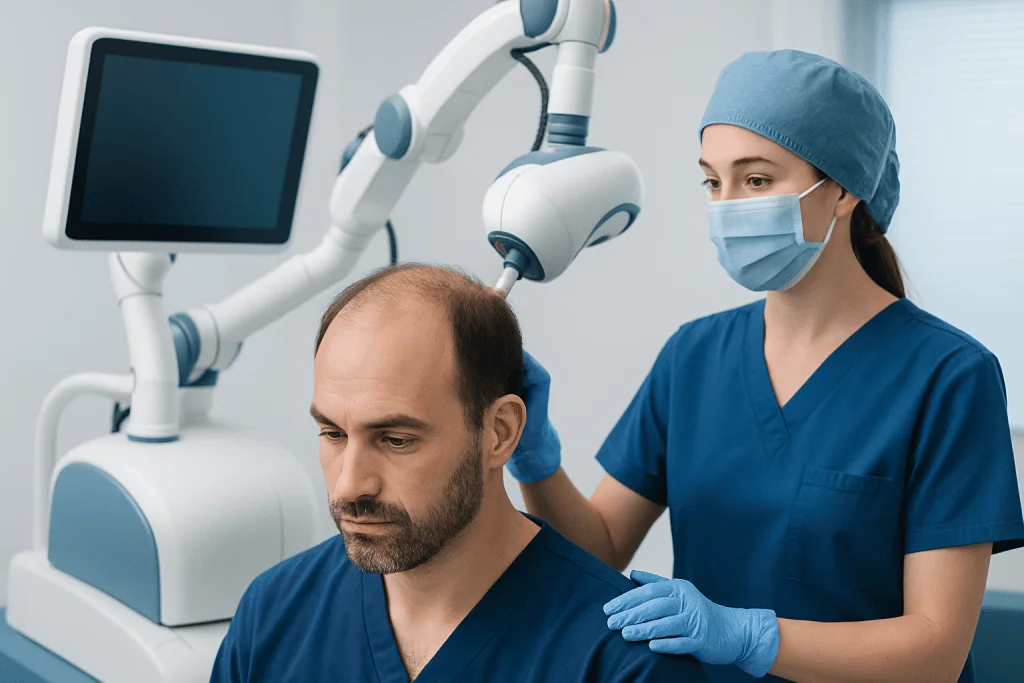
Male hair loss often develops gradually. Typical signs include a receding hairline, thinning at the crown, widening of the part, reduced hair density, and increased scalp visibility under bright light. Some men notice more shedding in the shower or on pillows, but pattern hair loss can also progress without dramatic daily shedding.
Androgenetic alopecia is linked to genetics and the effect of hormones on hair follicles. Over time, affected follicles shrink and produce shorter, finer hairs until growth becomes minimal. This process usually follows a recognizable pattern, but the speed and extent vary from person to person.
Other causes should also be considered, especially when hair loss is sudden, patchy, or associated with itching, redness, pain, or flaking. Scalp conditions such as seborrheic dermatitis or psoriasis may irritate the scalp and worsen shedding. Illness, rapid weight loss, emotional stress, iron deficiency, thyroid disorders, and some medicines can also contribute. If the cause is not clear, professional assessment is the safest next step.
- Gradual recession at the temples often suggests male pattern hair loss.
- Patchy hair loss may point to autoimmune or inflammatory causes.
- Diffuse thinning can be related to stress, illness, or nutritional factors.
- Scalp redness, scale, or tenderness may indicate an underlying skin condition.
How Hair Loss Is Evaluated

Before recommending hair replacement for men, a doctor usually begins with a medical history and scalp examination. This helps clarify when hair loss started, whether it runs in the family, and whether symptoms such as itching, scaling, or sudden shedding are present. The pattern of loss, the stability of existing hair, and the quality of the donor area at the back and sides of the scalp are especially important when transplant surgery is being considered.
In some cases, further testing may be advised. Blood tests can help look for thyroid problems, iron deficiency, or other medical factors that may contribute to thinning. If there is uncertainty about the diagnosis, a dermatologist may use dermoscopy or occasionally recommend a scalp biopsy. These steps can help distinguish pattern hair loss from scarring disorders or inflammatory causes that require a different treatment approach.
A careful consultation also explores expectations. Many men want a lower hairline or denser coverage, but a natural result depends on the available donor hair and long-term planning. Because hair loss can continue over time, treatment should consider not only current thinning but also future changes. A conservative, well-designed plan often gives the most believable and sustainable outcome.
Surgical Hair Replacement Options
Surgical hair replacement for men usually refers to hair transplantation. In this procedure, hair follicles are moved from a donor area, typically the back or sides of the scalp, to areas affected by thinning or baldness. Since these donor hairs are usually more resistant to pattern hair loss, they can continue to grow in their new location. Transplant surgery does not stop future hair loss in untreated areas, so it is often combined with medical or nonsurgical support.
Several modern techniques are used. Follicular unit extraction is a widely used method in which individual follicular units are removed and implanted with careful attention to hairline design and density; patients may learn more about FUE hair transplant approaches during consultation. Another option is DHI hair transplant, which places grafts with specialized tools that can support precise implantation. Some centers also offer sapphire transplant methods, which use sapphire-tipped instruments during channel creation.
Men with extensive thinning, previous unsatisfactory surgery, or unique aesthetic goals may need a more tailored discussion. In some cases, general hair operations planning covers donor management, hairline design, and staged procedures over time. The right candidate usually has stable donor hair, realistic expectations, and good overall scalp health.
Recovery varies, but temporary redness, scabbing, and shedding of transplanted hairs are common early on. Visible regrowth takes time, often developing gradually over several months. Patience is important, because the final appearance is judged after the transplanted follicles complete a normal growth cycle.
Nonsurgical Hair Replacement and Supportive Treatments
Nonsurgical methods can help men who are not ready for surgery, are not suitable transplant candidates, or want to improve the appearance of thinning while preserving existing hair. These options may include medical therapy, low-level light devices, camouflage techniques, and customized hair systems. They can also play a supportive role before or after transplantation.
One established supportive approach is laser hair therapy, which uses low-level light to stimulate follicles in selected patients. Another cosmetic option is scalp micropigmentation, a technique that places pigment into the scalp to reduce contrast between hair and skin, making thinning less noticeable. Men interested in broader conservative approaches may also discuss non-surgical hair restoration options that combine medical and cosmetic strategies.
Doctors may also recommend approved medications to slow pattern hair loss or support regrowth in some patients. Not every treatment works equally well for everyone, and some options are better at maintenance than restoration. Results often depend on how early treatment begins, how consistently it is used, and whether the underlying hair loss is still active.
Nonsurgical care can be especially helpful when donor hair is limited, hair loss is still rapidly evolving, or scalp conditions need treatment before any procedure. For many men, these approaches provide meaningful improvement in coverage, confidence, or long-term stabilization even without surgery.
Choosing the Best Option and What Results to Expect
The best hair replacement plan depends on several practical questions: What is causing the hair loss? Is it stable or still progressing? How much donor hair is available? What level of maintenance is acceptable? What result feels natural for the patient’s age and facial features? A specialist uses these factors to help decide whether a surgical, nonsurgical, or combined plan is the most suitable approach.
Expectations are important. Hair transplantation can improve density and reshape the hairline, but it cannot fully recreate the thickness of a youthful scalp in every case. Nonsurgical options can be very useful, yet they may require ongoing use to maintain benefits. A thoughtful plan usually aims for natural framing of the face, sensible density, and protection of future donor reserves.
Men should also understand that hair restoration is a process rather than a single event. It may involve phased treatment, follow-up photography, and adjustments over time. A provider may suggest starting with medical stabilization first, especially in younger men whose pattern of loss is not yet clear.
Near the end of care planning, it is reasonable to ask about experience, technique, expected recovery, and how complications are managed. Acibadem International’s multidisciplinary specialists and JCI-accredited hospitals diagnose and treat hair loss and provide hair restoration care for international patients when appropriate.
Self-care, Prevention, and When to See a Doctor
Not all hair loss can be prevented, especially when genetics play a major role. Still, good scalp care and timely medical attention can help protect existing hair. Men are generally advised to avoid harsh traction, frequent aggressive chemical treatments, and hairstyles that pull on the hairline. Managing stress, eating a balanced diet, and addressing underlying medical conditions may also support hair health.
Scalp symptoms should not be ignored. Persistent dandruff-like flaking, marked itching, tenderness, sores, or sudden shedding deserve professional review. Treating scalp inflammation early may improve comfort and reduce avoidable hair breakage or shedding. Men should also be cautious with unproven products or supplements that make dramatic promises without clear evidence.
A doctor should be consulted if hair loss is rapid, patchy, associated with scalp pain, or beginning at a young age with significant distress. Consultation is also sensible before transplant surgery, since candidacy depends on diagnosis, donor supply, and long-term planning. Early guidance often creates more options and better decisions.
- Seek care for sudden or patchy hair loss.
- Arrange evaluation if thinning is progressive or emotionally distressing.
- Get scalp symptoms checked if there is redness, scaling, pain, or sores.
- Discuss long-term planning before choosing transplant surgery.
Frequently asked questions
What is the difference between surgical and nonsurgical hair replacement for men?
Surgical hair replacement usually means hair transplantation, where existing follicles are moved from a donor area to thinning areas. Nonsurgical options do not move follicles; instead, they may slow hair loss, stimulate existing hair, or improve the appearance of coverage. Many men benefit from using both approaches together.
Who is a good candidate for a hair transplant?
A good candidate usually has pattern hair loss, enough healthy donor hair, and realistic expectations about density and long-term results. The scalp should be in good condition, and the cause of hair loss should be clearly understood. A specialist evaluation is important before deciding.
Are hair transplant results permanent?
Transplanted hairs are generally long-lasting because they are taken from areas that are more resistant to pattern hair loss. However, natural aging and continued loss of non-transplanted hair can still change the overall appearance over time. This is why long-term planning and follow-up matter.
Can nonsurgical treatments regrow lost hair?
Some nonsurgical treatments may help certain men maintain existing hair or improve growth in thinning follicles, especially when started early. Results vary depending on the cause and stage of hair loss. These treatments are often more effective for slowing progression than for restoring large bald areas.
How long does it take to see results after hair restoration treatment?
After a hair transplant, the first visible changes usually take several months, and fuller results develop gradually over time. Nonsurgical treatments also require patience, because hair grows slowly and improvement is often subtle at first. Regular follow-up helps track progress accurately.
Does scalp health affect hair replacement success?
Yes. Conditions such as dandruff, inflammation, or autoimmune hair loss can affect treatment planning and may need attention before a procedure. A healthy scalp supports comfort, healing, and better overall management of hair loss.
References
- American Academy of Dermatology
- National Health Service
- Mayo Clinic
- British Association of Dermatologists
- International Society of Hair Restoration Surgery
This article is for general information only and is not a substitute for professional medical advice. Please consult a qualified doctor about your individual situation.
Hair transplant in Turkey — costs, graft counts & a free assessment
JCI-accredited · board-certified surgeons · reply within 24h
Add us as a Preferred Source to see more of our trusted health content across Google Search, AI Overviews and Discover.

Related Treatments
Related Conditions
More from the Health Library



Related Specialists

Prof. Dr. Sedef Şahin
Dermatology
Prof. Dr. Özlem Dicle
Dermatology
Prof. Dr. Emel Öztürk Durmaz
Dermatology
Assoc. Prof. Dr. Yasemin Koyuncu
Dermatology