Laser Hair Therapy for Hair Loss: How It Works and Who May Benefit
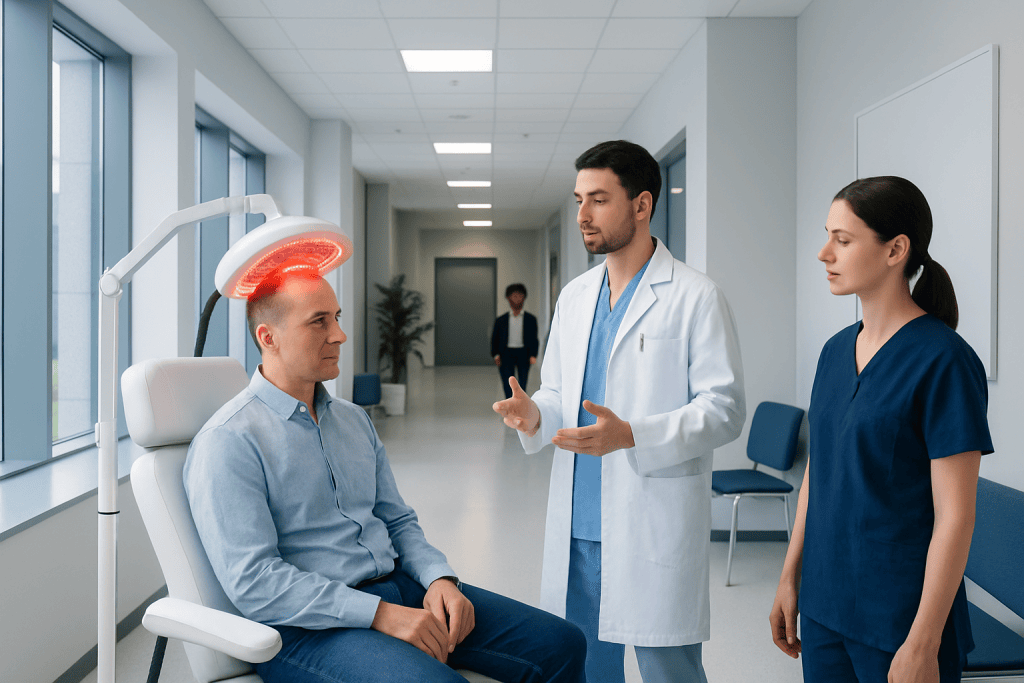
Laser hair therapy uses low-level light to stimulate hair follicles without surgery. It is most often used for male and female pattern hair loss rather than sudden or scarring hair loss.
Key Takeaways
- Laser hair therapy uses low-level light to stimulate hair follicles without surgery.
- It is most often used for male and female pattern hair loss rather than sudden or scarring hair loss.
- Results are gradual and usually require regular, ongoing sessions over several months.
- A medical evaluation is important because not all hair loss types respond to laser treatment.
- Laser hair therapy may work best when combined with other evidence-based treatments.
Laser hair therapy is a non-invasive treatment that uses low-level light to support hair growth in selected types of hair loss. It may be helpful for some people with pattern hair thinning, especially when used as part of a broader treatment plan guided by a doctor.
Overview: What laser hair therapy is
Laser hair therapy is a non-surgical approach used to support hair growth in people with certain kinds of hair loss. It is often called low-level laser therapy, low-level light therapy, red light therapy, or photobiomodulation. The treatment delivers light at specific wavelengths to the scalp through devices such as caps, helmets, combs, or clinic-based systems.
Unlike surgical methods, laser hair therapy does not move hair follicles from one part of the scalp to another. Instead, its goal is to improve the environment around existing follicles so that weak or miniaturized hairs may grow thicker or stay in the growth phase for longer. This makes it a supportive treatment rather than a guaranteed cure.
Many people consider laser therapy because it is painless, does not require downtime, and can be used at home or in a medical setting. It is also commonly included in broader non-surgical hair restoration plans for patients who want to delay progression, improve density, or maintain results from other treatments.
How laser hair therapy works
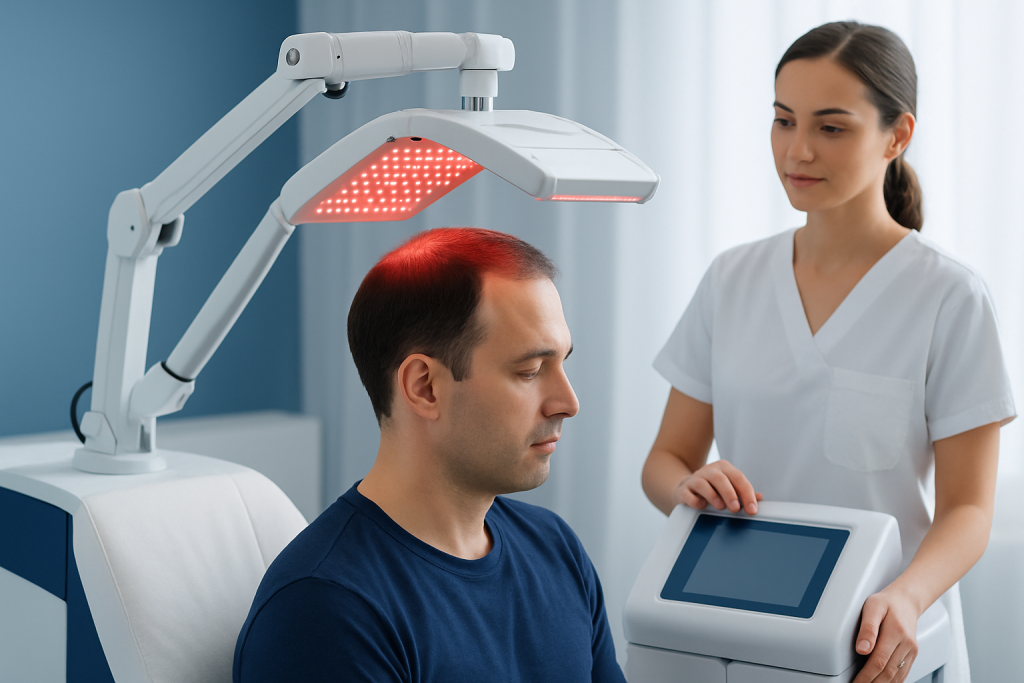
Hair grows in cycles, with follicles moving through growth, transition, and resting phases. In pattern hair loss, follicles gradually shrink over time, producing finer and shorter hairs. Laser hair therapy is thought to work by delivering low-intensity light energy to the scalp, where it may influence cellular activity inside the hair follicle.
Researchers believe this light may help increase energy production in follicle cells, improve local blood flow, and reduce inflammation signals in some cases. These effects may encourage follicles in the resting phase to re-enter the growth phase and may help prolong active growth. However, the exact biological mechanisms are still being studied, and response varies from person to person.
The treatment is very different from high-powered medical lasers used for cutting, resurfacing, or hair removal. Low-level laser devices are designed to expose the scalp to gentle light without burning the skin. Because the process is gradual, meaningful changes usually take time and depend on consistent use.
Who may benefit most

Laser hair therapy is generally considered most suitable for people with early to moderate androgenetic alopecia, also known as male or female pattern hair loss. These individuals usually still have living follicles that are thinning rather than areas where follicles are permanently destroyed. In this setting, low-level light may help improve hair caliber and overall density.
It may also be considered for some people experiencing diffuse thinning, especially when a doctor confirms that the follicles remain capable of producing hair. In some cases, laser therapy is used after other treatments to support scalp health or help maintain gains. Patients exploring options short of surgery may discuss both laser hair therapy and hair regeneration approaches with a specialist.
Laser therapy may be less helpful when hair loss is advanced and shiny bare scalp indicates significant follicle loss. It is also not the first choice for every cause of shedding. For example, patchy autoimmune hair loss such as alopecia areata needs a different medical assessment and may require other treatments.
When it may not be the right option
Not all hair loss responds to light-based therapy. Hair shedding can be related to iron deficiency, thyroid disease, recent illness, major stress, hormonal shifts, nutritional problems, or medications. In these situations, the main priority is identifying and treating the underlying cause rather than relying on laser devices alone.
Laser therapy is also unlikely to reverse scarring alopecia, where inflammation damages follicles permanently. People with scalp disorders that cause redness, scaling, or irritation may need treatment for the skin condition first. For example, unmanaged seborrheic dermatitis or extensive psoriasis can affect scalp comfort and overall hair health.
Some people may be disappointed if they expect dramatic regrowth in completely bald areas. Laser hair therapy tends to provide modest, gradual improvement rather than a sudden transformation. A dermatologist or hair restoration specialist can help set realistic expectations and suggest alternatives if follicle loss is too advanced.
Diagnosis before starting treatment
Before beginning laser hair therapy, a proper medical evaluation is important. Hair loss is a symptom with many possible causes, and treatment works best when the diagnosis is clear. A doctor will usually ask about the pattern and timing of hair loss, family history, recent stressors, medications, hair care practices, and any symptoms such as itching, burning, or scaling.
The scalp may be examined closely, sometimes with dermoscopy or trichoscopy, to assess follicle openings, hair shaft thickness, miniaturization, and signs of inflammation. Some people also need blood tests to check for common contributors such as anemia, thyroid imbalance, vitamin or mineral deficiencies, or hormonal issues. This step helps avoid delays in treating reversible causes.
For people with more advanced hair loss, the consultation may also include a discussion of other options. These may range from medical treatment and supportive therapies to procedural solutions such as FUE hair transplant when follicle loss is substantial. Choosing the right path depends on the hair loss type, the degree of thinning, age, preferences, and long-term goals.
Treatment sessions, results, and safety
Laser hair therapy is commonly performed several times a week, with each session lasting a short period depending on the device. Some systems are used in a clinic under supervision, while others are approved for home use. Doctors often recommend following a regular schedule for several months before judging whether it is helping, because hair growth is naturally slow.
Results usually appear gradually. People may first notice less shedding, then improved hair texture or slightly fuller coverage over time. The best outcomes are often seen in those who start treatment earlier in the course of pattern hair loss. Ongoing maintenance is usually needed, since stopping treatment may allow the underlying hair loss process to continue.
Laser hair therapy is generally well tolerated. Side effects are usually mild, if they occur at all, and may include temporary scalp sensitivity, dryness, or irritation. It should be used according to medical advice and manufacturer instructions, especially in people with scalp disease, photosensitivity, or those using medications that increase light sensitivity.
- It is non-invasive and does not require recovery time.
- It is usually painless during treatment.
- Consistency matters more than occasional use.
- Results vary and are not guaranteed.
Other treatments that may be combined with laser therapy
Doctors often recommend a combination approach because hair loss can have several contributing factors. Depending on the diagnosis, treatment may include topical medications, oral medications, nutritional correction, scalp care, or management of hormonal and medical conditions. Laser therapy may fit into this plan as a supportive measure rather than a stand-alone solution.
When thinning is significant or medical therapy is no longer enough, procedural options may be discussed. Hair transplantation can restore hair in selected patients by moving healthy follicles to thinning areas. In the right setting, options such as DHI hair transplant may be considered after specialist evaluation, especially if there are stable donor areas and realistic expectations.
Some people also use camouflage strategies such as hairstyle changes, hair fibers, or scalp micropigmentation to improve appearance while medical treatment is ongoing. The best plan is individualized. Age, sex, extent of hair loss, scalp condition, family history, and personal goals all influence which combination is most appropriate.
Self-care, prevention, and when to seek medical advice
Although not all hair loss can be prevented, good scalp and hair care can support overall treatment results. Gentle washing, avoiding harsh traction hairstyles, limiting frequent heat or chemical damage, eating a balanced diet, and managing stress may all help protect hair quality. People should also avoid self-treating unexplained shedding for long periods without a diagnosis.
Medical advice is especially important if hair loss is sudden, patchy, associated with pain or scalp inflammation, or accompanied by fatigue, weight changes, menstrual changes, or other new symptoms. These features may point to a condition that needs targeted treatment rather than cosmetic management alone. Early assessment often offers more options and a better chance of preserving existing hair.
If a specialist confirms pattern hair loss, laser therapy may be one useful part of a personalized plan. Near the end of the treatment journey, some patients also seek care at centers with dermatology and hair restoration expertise; Acibadem International’s multidisciplinary specialists in JCI-accredited hospitals diagnose and treat hair loss for international patients. Whatever the setting, treatment decisions should be made with a qualified doctor and with realistic expectations about gradual improvement.
Frequently asked questions
Does laser hair therapy really work for hair loss?
Laser hair therapy may help some people, especially those with male or female pattern hair loss. It usually offers gradual, modest improvement in hair thickness or density rather than dramatic regrowth. Results vary, so a medical evaluation is important before starting.
How long does it take to see results from laser hair therapy?
Most people need several months of regular use before they can judge whether the treatment is helping. Hair grows slowly, so early changes may first appear as reduced shedding or slightly fuller texture. Ongoing maintenance is often needed to preserve results.
Is laser hair therapy safe?
When used correctly, laser hair therapy is generally considered safe and well tolerated. It does not use the kind of high heat associated with hair removal lasers or surgical lasers. People with scalp disease, light sensitivity, or certain medications should still ask a doctor before use.
Can laser hair therapy regrow hair on completely bald areas?
It is less likely to work well in areas where follicles are no longer active or have been permanently lost. Laser therapy is usually more helpful for thinning hair than for long-standing shiny bald scalp. A specialist can determine whether follicles are still present and likely to respond.
Can men and women both use laser hair therapy?
Yes, both men and women may use laser hair therapy if their type of hair loss is appropriate for it. It is most often used for androgenetic alopecia, which affects both sexes. The best treatment plan may still differ depending on age, hormones, medical history, and the pattern of thinning.
Can laser hair therapy be combined with other hair loss treatments?
Yes, it is often combined with other evidence-based treatments as part of a broader plan. A doctor may recommend medications, scalp treatment, nutritional correction, or procedural options depending on the cause of hair loss. Combination treatment is common because hair loss is often multifactorial.
References
- American Academy of Dermatology
- National Institutes of Health
- British Association of Dermatologists
- Mayo Clinic
- U.S. Food and Drug Administration
This article is for general information only and is not a substitute for professional medical advice. Please consult a qualified doctor about your individual situation.
Laser Hair Therapy in Turkey — costs, top hospitals & a free quote
JCI-accredited · board-certified surgeons · reply within 24h
Add us as a Preferred Source to see more of our trusted health content across Google Search, AI Overviews and Discover.

Hair Transplant
Modern FUE and DHI hair restoration with natural, lasting results.
Related Treatments
Related Conditions
More from the Health Library



Related Specialists

Prof. Dr. Sedef Şahin
Dermatology
Prof. Dr. Özlem Dicle
Dermatology
Prof. Dr. Emel Öztürk Durmaz
Dermatology
Assoc. Prof. Dr. Yasemin Koyuncu
Dermatology