Immunotherapy
Immunotherapy is a cancer treatment that helps the immune system recognize and attack cancer cells. It may be used alone or with chemotherapy, targeted therapy, surgery or radiotherapy.
Quick answer
Immunotherapy is a group of cancer treatments that help the immune system recognise and attack cancer cells. It includes checkpoint inhibitors, monoclonal antibodies, cellular therapies and cancer vaccines, usually given as intravenous infusions in repeating cycles. It may be used alone or combined with chemotherapy, surgery or radiotherapy, and suitability depends on cancer type, stage and biomarker testing.
What Is Immunotherapy?
Immunotherapy is a group of cancer treatments that help your immune system recognise, target and destroy cancer cells. Rather than attacking rapidly dividing cells directly, as chemotherapy does, immunotherapy works on the immune pathways that decide whether your immune cells can see the cancer and how strongly they respond to it. It is used across a growing range of cancers, sometimes on its own, often alongside chemotherapy, targeted therapy, radiotherapy or surgery, and its suitability depends heavily on the individual features of your disease.
To understand why this approach exists, it helps to understand the problem it solves. Your immune system is built to recognise what does not belong. It identifies infections, abnormal cells and other threats, then organises a response against them. Cancer, however, can be difficult for the immune system to detect. Some tumours hide by sending signals that switch off immune activity. Others change over time, or build a protective environment around themselves that keeps immune cells out. Immunotherapy is designed to overcome these barriers, so that immune cells can find cancer cells and act against them more effectively.
Immunotherapy is not one medication or one simple protocol. It is a family of treatments, each with specific uses, benefits, limitations and side effects. Some patients receive a single immunotherapy medicine. Others receive it combined with chemotherapy for metastatic disease, before surgery to shrink a tumour, after surgery to reduce the risk of recurrence, or as maintenance treatment after an initial response. The right sequence depends on the cancer type, its stage, its biomarkers and your overall health, which is why the same diagnosis can lead to quite different immunotherapy plans in two different patients.
If you are weighing up cancer treatment options, this complexity matters. Immunotherapy can be very effective for some patients. Others need a different strategy entirely, or a combination approach in which immunotherapy plays only one part. A careful diagnosis, precise staging and molecular and immune biomarker testing come before any honest recommendation, and this page explains what that process involves.
How does immunotherapy work?
Immunotherapy works by changing the conversation between cancer cells and immune cells. The most widely used approach removes the “brakes” that tumours exploit. Cancer cells can activate checkpoint pathways, such as PD-1, PD-L1 or CTLA-4, that normally prevent the immune system from attacking healthy tissue. By hijacking these checkpoints, a tumour can persuade immune cells to stand down. Immune checkpoint inhibitors block those signals, allowing T-cells to recognise the tumour and respond to it more forcefully.
Other mechanisms take different routes to the same goal. Some treatments attach antibodies to specific targets on cancer cells, flagging them for destruction or delivering a payload directly. Some stimulate general immune activity with cytokines or immune-modulating medicines. Cellular therapies go further still: in selected blood cancers, a patient’s own immune cells can be collected, modified in a specialised laboratory to recognise the cancer, and returned to the body. What unites all of these approaches is that the therapeutic effect comes from your immune system, not only from the drug itself.
What are immunotherapy drugs?
What are immunotherapy drugs, in practical terms? They are medicines that act on the immune system rather than directly on the tumour, and they fall into several distinct classes. Immune checkpoint inhibitors are the most widely used in solid tumours. Monoclonal antibodies bind to defined targets on cancer cells. Antibody-drug conjugates carry a treatment payload to the tumour. Bispecific antibodies physically link immune cells to cancer cells. Cytokine-based treatments and immune modulators adjust the strength of the immune response, and therapeutic cancer vaccines aim to teach the immune system to recognise tumour features. Most are given by intravenous infusion; some are injections. Which class is relevant to you depends entirely on your cancer type, its biology and your treatment history.
Is this the same as allergy immunotherapy?
No. The word immunotherapy also describes allergen immunotherapy, the gradual desensitisation used for allergic conditions, but that is a different field with different medicines, goals and specialists. This page covers immunotherapy as a cancer treatment. If you have been offered “immunotherapy” and are unsure which kind is meant, the context of the referral will make it clear: cancer immunotherapy is planned and delivered by oncology teams as part of oncology and cancer treatment programmes.
Types of Immunotherapy
Immunotherapy is best understood as a toolkit rather than a single tool. Knowing the main categories helps you follow your own treatment discussion, because oncologists choose between them based on evidence for your specific cancer.
Immune checkpoint inhibitors are the backbone of modern immunotherapy in many solid tumours. They target checkpoint pathways such as PD-1, PD-L1 or CTLA-4, which cancer cells may use to weaken immune attack. Blocking these signals can restore the immune system’s ability to recognise and respond to the tumour. Checkpoint inhibitors are given as intravenous infusions on a repeating schedule, and their role differs by cancer type: standard first-line treatment in some settings, biomarker-dependent in others, and a later option elsewhere.
Monoclonal antibodies, antibody-drug conjugates and bispecific antibodies work by binding to specific molecular targets. A monoclonal antibody may mark cancer cells for immune destruction or block a growth signal. An antibody-drug conjugate uses the antibody as a delivery vehicle, bringing a potent agent directly to cells that carry the target. Bispecific antibodies grip an immune cell with one arm and a cancer cell with the other, forcing an encounter the tumour would otherwise avoid.
Cellular therapies are the most intensive form of immunotherapy. In selected leukaemias, lymphomas and multiple myeloma, a patient’s immune cells can be collected from the blood, engineered in a laboratory to recognise the cancer, expanded, and infused back after conditioning treatment. These therapies require specialised coordination and close monitoring, because their side effects differ from those of standard infusions and can develop quickly.
Cancer vaccines, cytokines and immune modulators round out the toolkit. Therapeutic vaccines aim to stimulate immune recognition of tumour features. Cytokine-based treatments amplify immune signalling. Immune-modulating medicines adjust the immune environment in ways that support an anti-cancer response. Each has defined roles in specific diseases rather than universal application.
Who May Need Immunotherapy?
You may be considered for immunotherapy when your cancer type has evidence of benefit from immune-based treatment, when biomarker testing suggests your tumour is likely to respond, or when the cancer has progressed after other therapies. In certain advanced cancers, immunotherapy is now part of first-line treatment, used at the start of systemic therapy rather than only after chemotherapy has failed. Common situations that lead to an immunotherapy evaluation include a new diagnosis of advanced or metastatic cancer, recurrence after previous surgery or radiotherapy, a tumour that cannot be removed surgically, or a cancer with specific immune or genetic features. Many patients also seek a second opinion specifically to learn whether immunotherapy could be added to, or replace, a treatment already proposed.
The symptoms that first bring a person to diagnosis vary enormously by cancer type: a persistent cough or breathlessness in lung cancer, a changing skin lesion in melanoma, bleeding, fatigue, pain, swelling, appetite changes or abnormal blood results in other cancers. It is worth being clear about one point: immunotherapy is never chosen on the basis of symptoms alone. It is chosen after the cancer has been accurately diagnosed, staged and characterised at the molecular level.
That characterisation usually begins with imaging and a biopsy. Imaging may include CT, MRI, PET-CT or ultrasound depending on the suspected cancer. A biopsy allows pathologists to examine the tumour tissue and, where needed, perform immunohistochemistry, molecular testing or next-generation sequencing. The biomarkers that matter for immunotherapy include PD-L1 expression, microsatellite instability, mismatch repair deficiency, tumour mutational burden and specific genetic changes. These tests tell the oncology team whether your cancer is the kind that immune-based treatment is likely to reach.
Your general health is assessed with equal care. Because immunotherapy activates immune pathways, the team reviews autoimmune diseases, organ transplantation history, active infections, lung or liver disease, current medications, including corticosteroids and immune suppressants, and all previous cancer treatments. Patients with certain immune conditions may still be treated, but they need additional caution, closer monitoring or, in some cases, a different approach. None of this is a formality; it is what separates a safe, evidence-based recommendation from a generic one.
What stage of cancer is immunotherapy used for?
Immunotherapy is used across several stages, not only in advanced disease. In some earlier-stage cancers it is given before surgery, neoadjuvant therapy, to reduce tumour burden and let doctors observe how the cancer responds. It can be given after surgery, adjuvant therapy, to lower the risk of recurrence in patients with a meaningful chance of microscopic disease remaining. In metastatic disease it may be first-line treatment, a combination partner for chemotherapy, or an option after other therapies. The stage at which immunotherapy makes sense depends on the specific cancer and its biomarkers, which is why two patients with the same stage can receive different recommendations.
Which Cancers Can Immunotherapy Treat?
Immunotherapy for cancer is used across a growing list of tumour types, although its role differs from one disease to another, standard in some settings, biomarker-dependent in others, and a later-line option elsewhere. Immune checkpoint inhibitors are commonly used in selected patients with melanoma, non-small cell lung cancer, kidney cancer, bladder cancer, head and neck cancers, certain gastrointestinal cancers, liver cancer, cervical cancer and some breast cancers, among others.
In some colorectal and other solid tumours, immunotherapy becomes especially relevant when testing shows mismatch repair deficiency or high microsatellite instability. These features mean the tumour carries many abnormal proteins, which makes it more visible to the immune system, and more likely to respond when the immune brakes are released. This is a good example of why biomarker testing can change a treatment plan completely: the same diagnosis with different molecular features may call for a different therapy.
In blood cancers, the immunotherapy toolkit looks different. Monoclonal antibodies, antibody-drug conjugates, bispecific antibodies, immune-modulating medicines and cellular therapies are used in selected leukaemias, lymphomas and multiple myeloma, with the choice driven by disease subtype, prior treatments, genetic features and the patient’s fitness for therapy.
In advanced cancer, immunotherapy may shrink tumours, slow progression or produce durable disease control in a subset of patients. Some people experience responses that last longer than was typical with older treatment approaches. But the honest counterpart must be stated just as plainly: not every patient responds, some cancers never respond, and some develop resistance after an initial benefit. This is why treatment planning combines published evidence, biomarker results and experienced clinical judgement rather than relying on the reputation of any single drug.
What Immunotherapy Can and Cannot Do
Patients researching immunotherapy meet strong claims from every direction. The questions below are among the most searched, and they deserve direct answers.
Is there a cure for cancer?
There is no single cure for cancer, because cancer is not a single disease. It is hundreds of distinct diseases with different biology, and no one treatment, including immunotherapy, works for all of them. What is true is that treatment given with curative intent exists for many cancers, particularly when disease is found early, and that immunotherapy has changed what is achievable in several cancers where options were once limited. Any clinic or website offering a universal cure for cancer is overstating what medicine can honestly promise, and that overstatement is a warning sign in itself.
Can immunotherapy cure stage 4 cancer?
Immunotherapy cannot be promised as a cure for stage 4 cancer, and a responsible oncologist will not phrase it that way. What can be said honestly is this: in some advanced cancers, a subset of patients experiences deep and durable responses, occasionally continuing long after treatment has stopped. Whether such a response amounts to lasting freedom from the disease is something oncologists assess cautiously over years of follow-up, not something declared at the start of treatment. For most patients with stage 4 disease, the realistic goals are shrinking tumours, controlling symptoms, slowing progression and extending meaningful time with good function. Those are worthwhile goals, and they are the ones your treatment plan should be built around.
What is life expectancy with immunotherapy?
There is no single life expectancy figure for immunotherapy, and any source quoting one number for all patients is oversimplifying. Outlook depends on the cancer type, its stage, its biomarkers, your general health, previous treatments and, critically, how your particular cancer responds once treatment begins. Responses range from none at all to long-lasting control, and the difference often cannot be predicted with certainty in advance. What your oncologist can give you is a realistic picture for your specific situation, based on your pathology, imaging and test results. That individual conversation is more useful than any general statistic, and it should be revisited as response assessments come in.
Is immunotherapy stronger than chemotherapy?
Neither treatment is universally stronger; they work in fundamentally different ways. Chemotherapy attacks rapidly dividing cells directly and acts as long as the drug is present. Immunotherapy recruits your immune system, which can take longer to show an effect but may keep working after treatment ends. For some cancers with the right biomarkers, immunotherapy outperforms chemotherapy. For others, chemotherapy remains more effective, and in many settings the two are deliberately combined because they reinforce each other. The question worth asking is not which treatment is stronger in the abstract, but which is better supported by evidence for your cancer, your stage and your biomarker profile.
How Immunotherapy Is Given: From Preparation to Follow-Up
Immunotherapy begins with a detailed assessment, not an infusion. The oncology team reviews the diagnosis, pathology report, imaging studies, previous treatments and overall medical condition before deciding whether immune-based treatment is appropriate. From there, a typical pathway follows these steps:
- Diagnostic review and staging. Existing biopsy results, scan images, surgical notes and laboratory results are examined. Repeat imaging or blood tests may be needed to establish the current extent of disease and organ function.
- Biomarker testing. Tumour tissue is tested for PD-L1 expression, microsatellite instability, mismatch repair status, tumour mutational burden or specific genetic changes, depending on the cancer. Some patients need a new biopsy if earlier tissue is insufficient for molecular analysis or if the cancer has changed after previous treatment.
- Multidisciplinary discussion. Complex cases are reviewed in a tumour board, where medical oncologists, radiation oncologists, surgeons, radiologists, pathologists and nuclear medicine physicians consider the evidence together and align the plan with international protocols.
- Treatment planning. The team decides whether immunotherapy will be given alone or combined with chemotherapy, targeted therapy, radiotherapy or surgery, and defines the schedule and monitoring plan.
- Treatment delivery. Infusions are given in cycles, with clinical review and blood tests along the way.
- Response assessment. Imaging after several cycles shows whether the cancer is shrinking, stable or progressing, and the plan is continued, adjusted or changed accordingly.
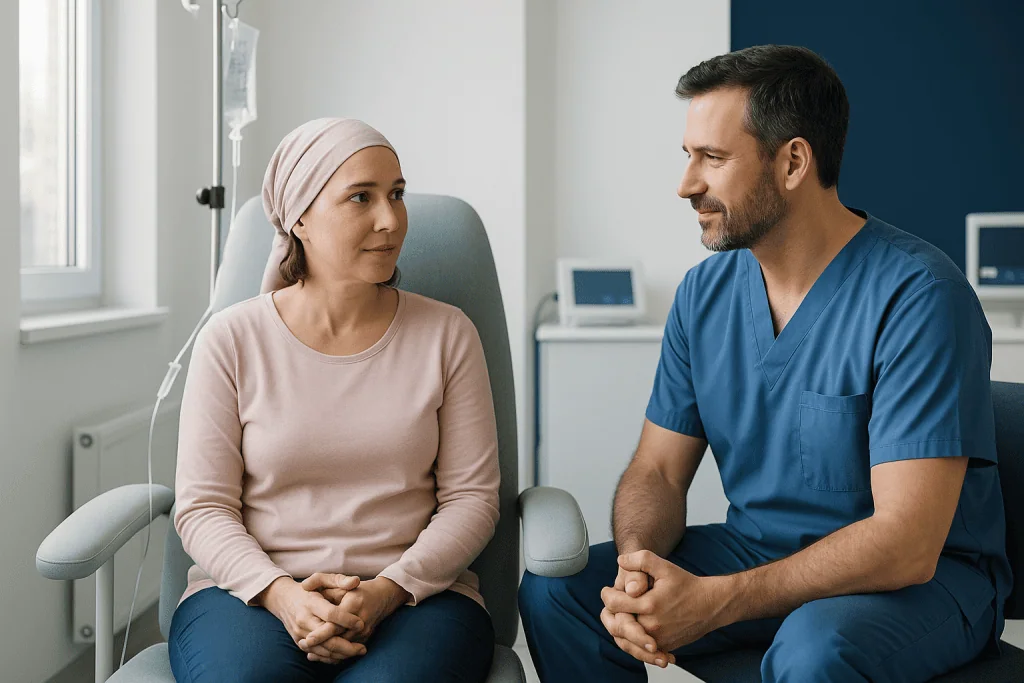
Most immune checkpoint inhibitors are given as an intravenous infusion in an outpatient oncology unit. You sit in an infusion chair while the medication runs through a vein, usually over a short period, followed by a period of monitoring. Nurses track vital signs and watch for infusion reactions, which are uncommon but possible. Treatment schedules vary by medicine and cancer type: some infusions are given every two, three, four or six weeks. Your oncologist will explain the specific schedule, the expected number of cycles and how response will be measured. Many patients return home the same day after routine infusions.
Other immunotherapies follow different logistics. Some monoclonal antibodies are given intravenously or by injection. Cellular therapies involve a longer process, collecting immune cells from the blood, laboratory preparation, conditioning treatment and infusion back into the patient, and require hospitalisation or close observation, because their side effects differ from those of standard infusions.
Technology supports precision at each stage. Advanced imaging defines disease stage and measures response. Digital pathology and immunohistochemistry characterise the tumour tissue. Molecular diagnostic platforms identify the genetic and immune biomarkers that steer treatment selection. Modern infusion units support safe administration and monitoring, and structured oncology records keep care coordinated between specialists, particularly when immunotherapy is combined with chemotherapy, radiotherapy or surgery.
One pattern deserves special mention because it confuses patients: occasionally, scans can appear worse before improving, because immune cells flooding into a tumour can make it look larger on imaging. This phenomenon, called pseudoprogression, is not common and must be interpreted carefully by experienced oncologists and radiologists. It is one of several reasons why response decisions rest on symptoms, scan patterns, laboratory findings and overall clinical status together, never on a single image in isolation.
Life during treatment varies. Because immunotherapy may continue for months or longer depending on the indication and response, recovery is not a single event. Many patients maintain daily activities, work or travel between cycles; others need to slow down because of fatigue or immune-related symptoms. The care team explains which symptoms should be reported and how follow-up is coordinated between cycles, including with any other physicians involved in the patient’s care.
Immunotherapy Side Effects
Immunotherapy side effects differ from chemotherapy side effects, because the mechanism is different: the treatment stimulates immune activity rather than killing dividing cells. Many patients tolerate treatment well, with fatigue, mild rash, itching, joint discomfort, diarrhoea or changes in appetite as the most frequent complaints. Classic chemotherapy effects such as hair loss or severe nausea are often absent when immunotherapy is given on its own, though they return to the picture when the two are combined.
The distinctive risk of immunotherapy is inflammation in healthy organs. Because the treatment releases immune brakes, the immune system can sometimes turn against normal tissue. These immune-related adverse effects may involve the skin, bowel, liver, lungs, thyroid, adrenal glands, kidneys, nervous system or other organs. Some are mild and settle with simple measures; others need treatment to be paused and the inflammation itself to be managed, sometimes with corticosteroids or other immune-modulating medicines prescribed by the treating team.
Timing matters here. Immune-related side effects are managed most effectively when they are recognised early, which is why oncology teams teach patients what to watch for before the first infusion. Features that oncologists treat as warning signs include persistent diarrhoea, new shortness of breath, severe fatigue, yellowing of the skin or eyes, new headaches or vision changes, chest pain, confusion, decreased urination and severe rash. These symptoms need immune-specific evaluation rather than self-treatment, because they can mimic ordinary conditions, colitis, pneumonia, thyroid disease, hepatitis, while requiring a completely different management approach. Any medication changes in response to side effects belong to the treating doctor, who knows the treatment history and the pattern being watched for.
What is the downside of immunotherapy?
The main downsides of immunotherapy are unpredictability of response, immune-related side effects and treatment duration. Not every patient responds, even with favourable biomarkers, and some cancers develop resistance after an initial benefit. Immune-related inflammation can affect almost any organ and occasionally persists after treatment ends, particularly when hormone-producing glands are involved. Treatment courses can stretch over many months, which carries practical weight for anyone organising work, family life and regular appointments around a long course of care. Finally, immunotherapy is not suitable for everyone: patients with certain autoimmune diseases, organ transplants or a need for strong immune suppression require careful individual risk assessment. Weighing these downsides against the potential for durable disease control is precisely what the pre-treatment evaluation is for.
Why Acting Early Matters
Timing can influence cancer outcomes. When immunotherapy is appropriate, starting at the right point in the disease course may improve the chance of controlling the cancer, avoiding complications and preserving later treatment options. Delay allows tumours to grow, spread to new organs or cause symptoms that reduce a patient’s ability to tolerate therapy at all.
Acting early does not mean rushing into treatment without adequate testing, in immunotherapy, careful preparation is part of good timing. A short, focused diagnostic workup can identify biomarkers that change the plan completely. A patient expecting chemotherapy alone may prove eligible for immunotherapy-based treatment; another may learn that surgery, targeted therapy or radiotherapy should come first. The days spent on proper testing are rarely wasted days.
Delay also erodes performance status: the medical measure of how well a patient can carry out daily activities. Many cancer treatments, including immunotherapy combinations, are safer and more effective while patients remain physically strong enough to tolerate them. Untreated cancer can bring weight loss, pain, breathing problems, organ dysfunction or blood abnormalities that complicate every subsequent decision.
Early coordination has a practical side as well. Gathering pathology reports, imaging files and treatment summaries, arranging biomarker testing and scheduling multidisciplinary review all take time, and a well-organised diagnostic review early in the process clarifies whether treatment is urgent, which tests should be completed first, and how the different parts of the plan fit together.
Potential Benefits of Immunotherapy
The potential advantages of immunotherapy depend on cancer type, stage, biomarkers and the overall treatment strategy. The table below summarises what each benefit means in practice, with the caveat, repeated deliberately, that responses vary between patients.
| Benefit | What It Means for You |
|---|---|
| Immune-based cancer control | Immunotherapy helps the immune system recognise and attack cancer cells, which may lead to tumour shrinkage or disease stabilisation in selected patients. |
| Durable responses in some cancers | Some patients who respond experience longer-lasting control than was typical with certain older treatment approaches, although responses vary and cannot be assumed. |
| Combination flexibility | Immunotherapy can often be combined with chemotherapy, targeted therapy, radiotherapy or surgery when the evidence supports a combined approach. |
| Different side effect profile | Many patients avoid some classic chemotherapy effects, such as hair loss or severe nausea, though immune-related inflammation can occur and must be monitored. |
| Personalised selection through biomarkers | Testing helps identify patients more likely to benefit and prevents unnecessary treatment when another option is more appropriate. |
Recovery and Follow-Up Timeline
Progress with immunotherapy is measured in treatment cycles, symptom monitoring and response assessments rather than by a single procedure date. The pattern below reflects a typical infusion-based course; cellular therapies and intensive combinations follow their own timelines.
| Time Period | What Patients Can Expect |
|---|---|
| Day 1 | Most patients receive the infusion in an outpatient setting. The care team monitors for immediate reactions and reviews which symptoms should be reported after leaving. |
| First Week | Fatigue, mild skin changes, itching, joint discomfort or appetite changes may occur. Many patients continue normal activities, depending on their condition and any combination treatments. |
| First Month | Scheduled cycles and laboratory monitoring continue. The team watches for immune-related side effects affecting the bowel, liver, lungs, hormones or other organs. |
| First Few Months | Imaging is typically performed after several cycles to evaluate whether the cancer is shrinking, stable or progressing. Treatment may continue, change or be combined with other modalities. |
| Longer Term | Follow-up focuses on ongoing disease control, late immune-related effects, quality of life and coordination with any other physicians involved in the patient’s ongoing care. |
Factors That Influence Outcomes
Immunotherapy outcomes are shaped by several variables, and the most important is cancer biology. Some tumours are naturally more responsive to immune-based treatment, particularly when they carry features the immune system can recognise, high microsatellite instability, mismatch repair deficiency, high tumour mutational burden or meaningful PD-L1 expression. Other cancers respond poorly unless immunotherapy is paired with another treatment that changes the tumour environment.
Stage matters in a different way. In earlier-stage disease, immunotherapy may be used to reduce recurrence risk or to improve the result of surgery. In advanced disease, the goals shift towards shrinking tumours, controlling symptoms and extending meaningful time with good function. The organs involved, the volume of disease and the pace of progression all influence how quickly a treatment needs to work, and whether a combination is preferable to immunotherapy alone.
Your general health plays a central role. Patients with good organ function, stable nutrition and stronger performance status tolerate treatment better and manage side effects more easily. Existing autoimmune disease, chronic infections, prior organ transplantation or dependence on high-dose immune-suppressing medication affects both safety and treatment selection, which is why these details are reviewed so carefully before the first cycle.
Treatment history also shapes response. A tumour already exposed to several therapies behaves differently from a newly diagnosed cancer: prior radiotherapy, surgery, chemotherapy or targeted therapy changes the tumour environment, the body’s organ reserve and the symptom picture. In some settings immunotherapy works best when used early in the sequence; in others it is deliberately held for a later line. Getting that sequencing right is one of the clearest arguments for experienced oncological judgement.
Finally, coordination improves outcomes. Immunotherapy decisions draw on medical oncology, radiology, pathology, surgery and radiation oncology, plus organ-specific specialists, pulmonologists, gastroenterologists, endocrinologists, when immune-related effects touch their territory. When these disciplines interpret response patterns and side effects together, adjustments happen at the right time rather than after a problem has grown.
How Acibadem Organises Immunotherapy Care
For patients facing a cancer diagnosis, the medical decision is only part of the journey. They also need their diagnosis reviewed thoroughly, recommendations grounded in current evidence and clear communication at every step. Acibadem delivers immunotherapy within a structured oncology environment built around those needs.
Multidisciplinary evaluation sits at the centre of this approach. Cases can be reviewed by tumour boards where medical oncologists, surgical oncologists, radiation oncologists, radiologists, nuclear medicine specialists and pathologists discuss diagnosis and treatment options together. This matters particularly for immunotherapy, where decisions turn on stage, biomarkers, imaging interpretation, previous treatments and the possibility of combining therapies, questions no single specialist answers alone.
Diagnostic capability underpins every plan. Immunotherapy planning may require high-quality imaging, pathology review, immunohistochemical staining and molecular analysis to confirm the cancer subtype, define disease extent and identify the biomarkers that steer treatment. When patients arrive with records from previous evaluations, Acibadem physicians review the existing material first and recommend additional tests only when they are clinically necessary, not as a default.
Treatment plans are personalised rather than templated. A patient with early-stage disease being considered for surgery has different needs from one with metastatic cancer and prior chemotherapy; a patient with autoimmune disease needs a different risk assessment from one without. Acibadem physicians weigh cancer biology, general health, treatment goals and personal preferences together. Infusion services are organised for safe administration, observation and patient education, with attention to the specific side effects of immune-based medicines, and modern radiotherapy and surgical capability allows immunotherapy to be integrated with local treatments when the evidence supports it. Coordination between hospital departments, appointments, medical record review and communication across specialties, is organised so that care remains continuous when treatment extends over multiple cycles and involves several disciplines.
Experience carries particular weight in this field, because immunotherapy produces patterns that differ from traditional chemotherapy. Tumours may respond gradually. Side effects may resemble common conditions, colitis, pneumonia, thyroid disease, hepatitis, while requiring immune-specific management. Oncologists who use these therapies regularly are better prepared to distinguish expected symptoms from warning signs, to interpret ambiguous scans and to adjust treatment at the right moment.
Moving Forward With an Informed Immunotherapy Plan
Immunotherapy has changed the treatment landscape for many cancers, but it is not a universal solution. Its value depends on the right patient, the right timing and the right combination of care. For some people it offers meaningful disease control on a manageable schedule; for others a different approach is safer or more effective. The step that matters most is a careful evaluation by an oncology team experienced in reading cancer biology, biomarkers and treatment history together.
Wherever a patient is evaluated, the same documents make the assessment faster and more accurate: pathology reports, biopsy slides or blocks where available, imaging reports and scan files, previous treatment summaries, surgery records, radiotherapy details, laboratory results, current medication lists and information about autoimmune or chronic conditions. Complete records let an oncology team judge whether immunotherapy is appropriate, whether biomarker testing is still missing, and which additional investigations, if any, are genuinely needed before a recommendation can be made.
A structured second opinion has particular value in this field. It is worth the effort when a patient has been told options are limited, when biomarker testing has never been completed, when a combination treatment is on the table, or when there is genuine uncertainty about whether immunotherapy belongs in the plan at all. Sometimes a second review confirms the existing plan, which is itself useful; sometimes it surfaces a missing test or an alternative sequence. Either way, the aim is the same: a clear, evidence-based recommendation that reflects both the science of the disease and the individual circumstances of the person facing it.
Preparation
- Before immunotherapy, the oncology team reviews the cancer type, stage, biomarkers, previous treatments and overall health. Blood tests and imaging may be required to confirm suitability and establish a baseline. Patients should share all medications, allergies and autoimmune or organ-related conditions before treatment.
Aftercare
- After each session, patients are monitored for infusion reactions and advised to report fever, rash, diarrhea, breathing problems or unusual fatigue promptly. Follow-up visits, blood tests and imaging help assess response and detect immune-related side effects early. Daily activities can often continue, but rest, hydration and medication guidance should be followed.
Frequently Asked Questions
What affects the cost of immunotherapy the most?
The main factors are the type of immunotherapy drug, the cancer diagnosis and stage, biomarker testing, infusion schedule, imaging, laboratory monitoring, hospital services, and whether other treatments are added. Side effect management and follow-up planning can also influence the final quote.
How can I get a personalised quote for immunotherapy in Turkey?
You can request a free consultation by sharing your medical reports, pathology results, imaging, previous treatment history, and current medication list. An oncology team can review your case and prepare a personalised estimate based on the recommended treatment pathway.
Is immunotherapy suitable for every cancer patient?
No. Immunotherapy is suitable only for selected patients and cancer types. A specialist will consider the tumor biology, biomarker results, previous treatments, performance status, organ function, and potential risks before recommending it.
What is usually included in an international patient immunotherapy package?
A package may include oncology consultation, treatment planning, nursing care, infusion services, interpreter support, appointment coordination, and review of medical documents. Medication, advanced biomarker tests, imaging, hospital admission, and side effect treatment may be listed separately.
Can immunotherapy be combined with other cancer treatments?
Yes, it may be used alone or with chemotherapy, targeted therapy, surgery, or radiotherapy when clinically appropriate. The combination is chosen by the oncology team based on evidence, cancer characteristics, and the patient’s overall condition.
Is the information here medical or financial advice?
No. This is general educational information and does not replace professional medical or financial advice. A personalised consultation is needed to confirm suitability, expected pathway, and an individual cost estimate.
Medically reviewed by the Acıbadem International Medical Board September 8, 2026
See our medical review board →
Update history
- PublishedJune 8, 2026
- Medical review approvedSeptember 8, 2026
- Last content updateSeptember 8, 2026
References3
- Immunotherapy to Treat Cancer cancer.gov
- Cancer Immunotherapy medlineplus.gov
- Immunotherapy my.clevelandclinic.org
Trusted care for international patients
From the Acibadem Blog

Immunotherapy Infusion Day: Blood Work, the Infusion and the Monitoring Afterward
On an immunotherapy infusion day, most people have blood drawn first, then wait while the team reviews results and the pharmacy prepares the drug.…

Immunotherapy Cost: What the Price Covers, What Moves It and the UK, US and Türkiye Ranges
Immunotherapy cost has no single figure because the bill is driven by which drug class is used, how many treatment cycles you receive, whether…

Signs Immunotherapy Is Working: What It Means, What to Expect and When to See a Specialist
Immunotherapy rarely announces itself with a feeling. The clearest signs it is working come from imaging that shows tumors shrinking or holding steady, tumor-marker…

How Immunotherapy Works: Step by Step, in Plain Language
Immunotherapy works by helping your own immune system recognize and attack cancer cells, rather than poisoning the cells directly the way chemotherapy does. Some…

Immunotherapy vs Chemotherapy: The Difference, When Each Is Used and How to Decide
Chemotherapy uses drugs that kill fast-dividing cells directly, which is why it also affects hair, gut lining and blood counts. Immunotherapy instead helps the…

Immunotherapy Side Effects: What to Expect, How Long They Last and How They Are Managed
Immunotherapy side effects happen because the treatment releases the immune system's natural brakes, so healthy tissue can be attacked alongside cancer. Most effects are…