Complex Joint Reconstruction
Complex joint reconstruction restores function in severely damaged hips, knees, shoulders, or other joints using advanced orthopedic repair, replacement, or revision techniques tailored to each patient.
Quick answer
Complex joint reconstruction is advanced orthopaedic surgery that repairs, rebuilds or replaces a severely damaged joint, most often a hip, knee or shoulder, when standard treatment is not enough. It covers primary replacement in difficult anatomy, revision of failed implants, correction of deformity and reconstruction of lost bone. The aim is a stable, well-aligned joint, less pain and safer daily movement, supported by structured rehabilitation.
What Is Complex Joint Reconstruction?
Complex joint reconstruction is an advanced orthopaedic approach used to repair, rebuild, replace or revise a severely damaged joint. It is considered when the problem goes beyond what a standard operation can address: bone loss, deformity, a failed previous implant, scarring from earlier surgery, or anatomy altered by trauma, infection, tumour treatment or developmental conditions. It is most often performed on the hip and knee, but the shoulder, elbow and ankle can also require it.
It helps to be clear about what the term covers. Complex joint reconstruction is not a single technique. It is a category of treatment that may include primary joint replacement in difficult anatomy, revision of a joint replacement that has loosened or failed, correction of deformity, reconstruction of lost bone, ligament balancing, management of instability, or restoration of function after fracture, infection, tumour-related surgery or inflammatory joint disease. Each of these problems demands its own plan, and many patients present with more than one at the same time.
The reason people search for this treatment is rarely abstract. Severe joint damage changes how you move through daily life. A hip that no longer carries weight comfortably, a knee that feels unstable after a previous operation, or a shoulder that cannot lift the arm affects far more than walking, stairs, work, sleep or exercise. It touches independence, confidence, travel plans and family life. Many patients arrive at this decision having already tried medication, injections, physiotherapy or surgery. Some have been told their anatomy is difficult, that bone loss is present, that an implant has loosened, or that a standard replacement will not be enough. Asking whether another operation is truly necessary, how long recovery takes, and whether you can safely travel for treatment is entirely reasonable, and this page answers those questions as directly as the evidence allows.
The central surgical aim is a joint that is stable, well aligned and able to move through a functional range. Pain relief is usually an important objective, but the broader goal is safer movement and better daily function. For one patient that means walking without severe pain. For another it means using the arm overhead again, sitting comfortably, climbing stairs, returning to work or reducing dependence on walking aids. Defining what a good result looks like for you, before surgery, is part of the process.
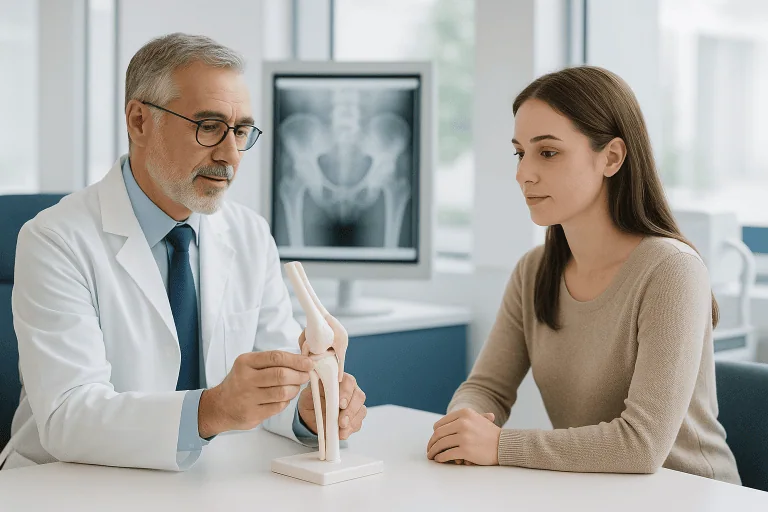
Complex reconstruction differs from routine orthopaedic surgery because the margin for error is narrower. The surgeon must understand not only the joint itself but your full musculoskeletal alignment, bone stock, soft tissue condition, medical history, prior operations, infection risk and functional goals. In an experienced Orthopedics & Joint Center, the plan for a demanding case is typically discussed across specialties, radiology, anaesthesia, infectious diseases, rehabilitation medicine, internal medicine, rather than decided by one person looking at one X-ray.
Is joint reconstruction the same as joint replacement?
No, joint replacement is one tool within joint reconstruction, not a synonym for it. In a standard replacement, the damaged joint surfaces are removed and substituted with artificial components; the bone around them is reasonably healthy and the soft tissues are largely intact. Reconstruction is the wider discipline that includes replacement but also covers what to do when the situation is harder: rebuilding bone defects with grafts or metal augments, removing and revising failed implants, correcting long-standing deformity, restoring stability when ligaments are damaged or missing, and staging treatment when infection is involved. Some reconstructive procedures do not replace the whole joint at allsurface reconstruction and ligament procedures such as ACL reconstruction restore parts of a joint rather than exchanging it. When a case is labelled “complex”, it usually means one or more of these additional challenges exists: poor bone quality, bone loss, scarring from previous surgery, deformity, fracture, instability, leg length difference, previous infection, implant loosening or unusual anatomy. Because of these factors, the surgeon may need specialised implants, bone grafting techniques, metal augments, longer stems, custom planning or advanced fixation methods that a routine replacement never requires.
Who May Need Complex Joint Reconstruction?
Patients who need this level of reconstruction usually have damage that simpler methods cannot adequately treat. The problem may develop gradually over years, as in advanced arthritis, or appear after trauma, infection, implant failure or a complication of a previous procedure. Many people have already scaled back their lives because the joint no longer feels reliable, shorter walks, avoided stairs, abandoned sports, disturbed sleep.
Typical symptoms include persistent pain, stiffness, swelling, grinding, locking, weakness, visible deformity, reduced range of motion, difficulty bearing weight, limping, repeated falls, or inability to perform routine movements. The pattern varies by joint. In the shoulder, patients often describe pain while sleeping, weakness when lifting the arm, or loss of overhead function. In the hip or knee, the common complaints are difficulty walking distances, rising from a chair, climbing stairs, standing for long periods, or getting in and out of a car.
Reconstruction may also be considered when a previous implant stops functioning properly. Signs of a failing implant can include increasing pain after a period of improvement, a sense that the joint is loose or shifting, new deformity, clicking, recurrent dislocation, swelling, warmth or declining function. Some implant problems develop slowly over years; others appear suddenly after a fall or a fracture around the implant. Not every symptom near an implant means failure, which is exactly why careful assessment matters more here than anywhere else in orthopaedics.
It is also worth saying plainly: not every patient with severe symptoms needs surgery, and not every patient who needs surgery needs it immediately. Some people do better, at least for a period, with non-surgical strategies, weight management, structured rehabilitation, activity modification, bracing or injections. The decision to proceed rests on the severity of symptoms, the structural problem shown on imaging, your overall health, and the realistic likelihood that reconstruction will improve function. Surgery is generally considered when non-surgical care no longer provides acceptable relief, when the joint is mechanically failing, or when delay risks progressive bone loss, deformity or loss of mobility.
How is the need for reconstruction diagnosed?
Diagnosis starts with a detailed consultation and physical examination, not with a scan. The orthopaedic specialist evaluates alignment, gait, joint stability, range of motion, muscle strength, nerve function and the condition of the skin and soft tissues around the joint. Previous operation notes and implant records, where they exist, are reviewed, knowing the exact make and size of an existing implant can materially change the revision plan.
Imaging then defines the anatomy. Plain X-rays, ideally taken standing, show joint space narrowing, deformity, limb alignment, implant position, fractures, loosening and bone loss. Computed tomography (CT) helps assess three-dimensional bone defects and rotational alignment, and is particularly valuable in revision cases, hip dysplasia and fracture deformity. Magnetic resonance imaging (MRI) or ultrasound evaluates soft tissues in selected cases, particularly around the shoulder, or in patients whose implants permit it. Laboratory tests may check for inflammation, infection, anaemia, metabolic bone problems or medical conditions that could affect surgery.
For revision joint replacement, ruling infection in or out is the single most important diagnostic step. This may involve blood tests, aspiration of fluid from the joint, fluid analysis, culture studies and sometimes more advanced diagnostic methods. The distinction is not academic: an infected implant is treated on a fundamentally different pathway from a loose but sterile one, sometimes in two stages rather than one operation. Identifying infection before surgery, rather than discovering it during or after, is critical to a durable result.
Conditions Complex Joint Reconstruction Can Address
Reconstruction of this kind is recommended across a range of orthopaedic conditions. The specific procedure depends on the joint involved, the extent of damage, your age and activity level, previous treatments and overall health.
- Advanced osteoarthritis: Severe cartilage loss causes pain, stiffness, deformity and reduced mobility. When conservative care is no longer effective, reconstruction can restore joint mechanics: this is the most common route into adult reconstruction surgery.
- Inflammatory arthritis: Rheumatoid arthritis and other inflammatory joint diseases damage cartilage, bone, ligaments and tendons, sometimes in several joints at once, which affects both the surgical plan and its sequencing.
- Post-traumatic arthritis: A previous fracture, dislocation, ligament injury or joint surface injury can lead to progressive arthritis and deformity over years. Reconstruction after trauma often has to deal with retained hardware, scarring and altered bone shape as well as the arthritis itself.
- Failed or painful joint replacement: Implants can loosen, wear, become unstable or infected, fracture around the implant, or fail because of bone loss or malposition. Revision reconstruction addresses the underlying cause, not just the symptom.
- Complex hip disorders: Developmental dysplasia, avascular necrosis, previous hip surgery, fracture nonunion or severe deformity may require advanced techniques well beyond a standard hip replacement.
- Complex knee deformity: Severe bowing, knock-knee alignment, ligament deficiency, bone loss or multiple prior surgeries call for customised planning and specialised implants.
- Shoulder arthritis and rotator cuff-related damage: Severe arthritis, cuff tear arthropathy, fracture sequelae or failed prior shoulder surgery may require anatomic or reverse shoulder reconstruction, depending on tendon function.
- Fractures involving joints: Some complex fractures, especially in older adults, or in joints with pre-existing arthritis, are better treated with reconstruction than with repair alone.
- Bone loss or deformity after infection or tumour treatment: In selected patients, reconstruction restores stability and function after removal of diseased bone or after infection has been controlled.
- Instability and recurrent dislocation: When a joint repeatedly dislocates or feels unreliable despite prior treatment, reconstruction may be needed to correct the mechanical cause rather than manage the consequences.
The common thread across all of these is mechanical failure that will not resolve on its own. When imaging and symptoms together show advanced structural breakdown, reconstruction is often the most realistic path to meaningful improvement, but the right operation is defined by the specific problem, not by the label.
How Complex Joint Reconstruction Is Performed
Complex joint reconstruction begins well before the operating room, and the quality of that preparation shapes the result. In broad terms, the pathway follows a consistent sequence:
- 1. Record review: a comprehensive review of your medical history, prior imaging, previous operation reports, implant records where available, medication list, allergies and current symptoms. For international patients, this often starts remotely so the team can determine what additional tests are needed on arrival.
- 2. Medical optimisation: evaluation by cardiology, internal medicine, endocrinology, pulmonology, haematology or infectious diseases as your health requires. Diabetes, anaemia, heart disease, kidney disease, obesity, smoking, poor nutrition and active infection all affect healing, and each is addressed before a date is set. Any medication changes are planned and directed by the treating physicians as part of this stage.
- 3. Imaging and surgical planning: standing X-rays for alignment and limb length, specialised views for implant fixation and bone loss, CT for three-dimensional bone anatomy, and MRI or ultrasound where soft tissue quality matters. Digital planning tools estimate implant size, component position, bone reconstruction needs and likely intraoperative challenges.
- 4. Anaesthesia planning: depending on the joint, the procedure and your health, surgery is performed under general anaesthesia, regional anaesthesia or a combination. Pain control planning begins before the operation and may include nerve blocks, local anaesthetic techniques and multimodal medication strategies designed to reduce reliance on opioids where appropriate.
- 5. The operation itself: tailored to the joint and the problem, as described below.
- 6. Early recovery and rehabilitation: monitored recovery, structured pain management, clot prevention, wound care and early mobilisation, followed by staged physiotherapy.
Hip: primary and revision reconstruction
In a complex hip reconstruction, the surgeon removes damaged bone and cartilage, corrects deformity, places acetabular and femoral components, manages bone loss with grafts or metal support structures, and restores leg length and stability as precisely as the anatomy allows. Hips altered by dysplasia, avascular necrosis or previous surgery often need non-standard component positions or sizes planned in advance. In revision hip surgery, the old components must first be removed without sacrificing healthy bone, often the most delicate part of the operation, before bone defects are reconstructed and new components fixed using specialised techniques. Restoring soft tissue tension around the hip is central to reducing dislocation risk afterwards.
Knee: deformity correction and revision
In a complex knee reconstruction, the surgeon corrects alignment, balances the ligaments, resurfaces damaged bone and places components designed to restore both stability and motion. Severe deformity, previous fractures, ligament loss or bone defects may require stems that anchor deeper in the bone, metal augments that fill defects, constrained implants that substitute for missing ligaments, or formal bone reconstruction. In revision knee surgery, the first task is establishing why the previous implant failed, loosening, wear, infection, malposition, instability or bone loss, because the rebuild must address that cause. A revision that repeats the original mistake tends to repeat the original failure.
What is the newest type of knee replacement surgery?
The most recent developments in knee replacement are robotic-assisted systems, computer navigation and patient-specific planning based on CT or MRI of your own anatomy, alongside implant designs intended to reproduce more natural knee movement. These tools give the surgeon additional information and control over component position and ligament balance during the operation. Two honest caveats belong next to that answer. First, “newest” is not automatically “best”: the evidence base for any technique matters more than its launch date, and technology choice should follow the clinical problem, not marketing. Second, in complex and revision cases, the decisive factors remain the surgeon’s judgement, the accuracy of the diagnosis and the quality of the plan; technology supports these things but does not replace them. A capable team selects navigation, robotics or conventional instrumentation case by case.
Shoulder: anatomic and reverse reconstruction
Shoulder reconstruction depends heavily on the rotator cuff, bone quality, the shape of the glenoid (socket) and any prior procedures. Some patients are suited to an anatomic shoulder replacement, which reproduces the normal ball-and-socket arrangement. Others, typically when tendon function is severely compromised, need a reverse shoulder reconstruction, which changes the joint’s geometry so that the deltoid muscle can power the arm instead of the damaged cuff. Bone defects, instability, old fractures or failed implants may require additional reconstructive steps, and the rehabilitation pathway differs between the two designs.
How long does the operation take, and what happens afterwards?
The duration depends on the joint, the complexity of the reconstruction, the number of prior operations, the presence of bone loss, and whether infection treatment or hardware removal is involved. Some procedures take a few hours; demanding revisions take longer. You are monitored closely in a recovery area afterwards, and some patients need a higher level of monitoring depending on age, medical condition or the extent of surgery. Hospital stay varies with the same factors. Many patients begin standing, walking or moving the joint with a physiotherapist within the first day or two, depending on the operation and the surgeon’s protocol, early mobilisation reduces complications and rebuilds confidence. Pain is managed with a structured plan, and blood clot prevention, wound care, breathing exercises, nutrition and safe mobility training all form part of the first days.
Rehabilitation is not an optional extra; it is half the treatment. For hip and knee reconstruction, therapy focuses on walking, range of motion, muscle activation, stair training, balance and a graded return to activities. For shoulder reconstruction, the early phase usually involves protection in a sling, followed by staged movement and then strengthening. Your precautions are specific to the reconstruction performed: a complex revision with bone grafting carries more restrictions, for longer, than a straightforward primary replacement, and the weight-bearing instructions you receive reflect exactly what was rebuilt.
Recovery After Complex Joint Reconstruction
Recovery varies widely, but most patients move through recognisable stages of healing, mobility training, strengthening and return to daily activities. Treat the timeline below as a general map, not a schedule: your own milestones depend on the joint, the complexity of the reconstruction and your health.
| Time Period | What Patients Can Expect |
|---|---|
| Day 1 | Close monitoring, pain control, wound care, blood clot prevention, and beginning safe movement. Some patients start standing or walking with assistance, depending on the procedure. |
| First Week | Hospital discharge planning, physiotherapy instruction, gradual mobility improvement, swelling control, medication management, and education on precautions specific to the reconstructed joint. |
| First Month | Increasing independence with walking or arm use, continued rehabilitation, wound healing checks, and adjustment of activity level. Fatigue and swelling may still occur. |
| Three Months | Many patients experience meaningful functional improvement, although strength, endurance and range of motion continue to develop. Restrictions depend on the complexity of the reconstruction. |
| Longer Term | Ongoing strengthening, return to appropriate activities, periodic follow-up, and implant monitoring. Recovery after complex reconstruction may take several months and, in some cases, longer. |
What is the hardest joint surgery to recover from?
Among reconstructive procedures, revision surgery is generally harder to recover from than primary surgery, and knee procedures typically demand the most active rehabilitation effort from the patient. Knee replacement and knee revision require you to work through early stiffness deliberately, range of motion must be earned in the first weeks, which many patients find the most challenging phase of any joint operation. Complex revisions involving bone grafting or constrained implants add protected weight-bearing and longer restrictions on top of that. Shoulder reconstruction is demanding in a different way: the early period is about disciplined protection rather than effort, and strength returns slowly over months. Hip reconstruction is often described as the more forgiving recovery, but a complex hip revision with bone loss can be as demanding as any procedure in orthopaedics. In short, difficulty tracks the complexity of what was rebuilt more than the name of the joint.
When is it safe to travel or fly after reconstruction?
The timing of travel after reconstruction of this kind is decided individually by the treating team, based on the procedure performed, wound healing, your mobility and your clot risk. Long flights soon after major joint surgery raise the question of blood clot prevention, so discharge planning for patients returning to another country typically covers travel timing, movement and hydration during the journey, and the clot prevention measures the team has prescribed. Discharge documents usually include medical reports, imaging, implant information and physiotherapy recommendations so that a local physiotherapist and doctor at home can continue care, and remote communication with the surgical team can support follow-up after you leave.
Why Acting Early Matters
It is understandable to postpone surgery, especially when the procedure sounds complex or travel is involved. But delaying evaluation can make treatment harder. Severe joint disease is usually progressive: as cartilage disappears and bone changes, deformity worsens, muscles weaken, ligaments stretch or contract, and altered walking patterns place strain on the spine, the opposite hip, the opposite knee, or the foot and ankle. Problems that start in one joint rarely stay in one joint.
In a failed joint replacement, delay can allow bone loss to increase. A loose implant moves against bone and enlarges defects with every step. Polyethylene wear or metal debris can trigger inflammatory tissue reactions in some patients. Recurrent dislocation damages soft tissues each time it happens. If infection is present, delayed treatment makes reconstruction more complicated and can affect general health well beyond the joint.
Loss of mobility carries broader risks too: weight gain, reduced cardiovascular fitness, poorer balance, higher fall risk, muscle loss, sleep disruption and reduced independence. Pain medication used over long periods has its own side effects, and repeated injections are not appropriate for every joint or every patient indefinitely.
Early assessment does not mean early surgery. It means understanding the problem before it becomes more complex. A timely evaluation lets the orthopaedic team identify reversible risk factors, plan the safest approach, and judge honestly whether continued non-surgical care remains reasonable. When reconstruction is needed, earlier planning can help preserve bone, improve preparation and avoid urgent decision-making under pressure: the least favourable conditions for complex surgery.
Potential Benefits of Complex Joint Reconstruction
The potential benefits depend on the joint, the underlying condition and the complexity of the case, but the overall goal is consistent: safer, more comfortable function. No benefit is promised in advance; each is an aim the plan is built around.
| Benefit | What It Means for You |
|---|---|
| Improved pain control | Reconstruction can reduce pain caused by bone-on-bone arthritis, unstable implants, deformity or mechanical failure, although recovery discomfort is expected in the early period. |
| Better joint stability | A carefully planned reconstruction can address looseness, deformity, ligament imbalance or recurrent dislocation so the joint feels more reliable during daily movement. |
| Restored alignment and mechanics | Correcting abnormal joint position may improve walking, standing, limb function or arm movement, and may reduce compensatory strain on other areas. |
| Greater independence | Many patients aim to return to activities such as walking, stairs, self-care, travel, work and social life with less dependence on others or on assistive devices. |
| Management of failed prior surgery | Revision reconstruction can address loosening, wear, malposition, instability, fracture or selected infection-related problems when a previous implant is no longer functioning well. |
| Individualised surgical planning | The procedure is tailored to your anatomy, bone quality, prior operations, medical risk and functional goals rather than following a one-size-fits-all approach. |
What Influences a Good Result?
Outcomes after this surgery depend on factors you can see clearly before the operation, so it is worth going through them honestly. The first is the reason surgery is needed. A patient with advanced arthritis and good bone quality faces a different recovery from a patient requiring revision for infection, severe bone loss or multiple previous operations. The joint itself matters too: hip, knee, shoulder and ankle reconstructions each carry different mechanical demands and rehabilitation requirements.
Bone quality is fundamental. Osteoporosis, previous fractures, bone defects or long-standing implant loosening may require additional fixation or reconstruction, and the amount of healthy bone available limits what any surgeon can build on. Soft tissue quality matters equally. Ligaments, muscles, tendons and the joint capsule determine how the reconstructed joint moves and feels. In the shoulder, rotator cuff integrity dictates which type of reconstruction is appropriate. In the knee, ligament balance is central to stability. In the hip, soft tissue tension and component position together reduce dislocation risk.
Previous operations add complexity: scar tissue, retained hardware, altered anatomy and missing operative records all make planning more demanding. When prior implants are present, knowing their type and size helps considerably. If you are preparing for a specialist review, it is worth gathering previous surgery reports, implant cards, imaging studies and laboratory records in advance: they make any surgeon’s planning more accurate, wherever you are treated.
Your general health strongly influences healing. Diabetes, smoking, vascular disease, obesity, immune suppression, kidney disease, anaemia, malnutrition and chronic infections increase complication risk. Optimising these conditions before surgery, under the direction of the treating physicians, is a major part of responsible care, and patients who engage actively with preparation enter surgery with a safer profile.
Infection prevention and detection sit at the centre of revision work. Some infections require staged treatment rather than a single operation: the infected implant is removed, the infection treated, and reconstruction performed later. This is frustrating for patients hoping for a quick solution, but treating infection properly is essential for a durable reconstruction, and a team that recommends staging is usually protecting your long-term result.
Rehabilitation commitment shapes the second half of the outcome. Surgery rebuilds the structure; muscles, balance, endurance and movement patterns must then be retrained. Patients who follow weight-bearing instructions, attend therapy, protect the joint during early healing and increase activity gradually give themselves the best chance of functional improvement. Overdoing activity too early can be as harmful as doing too little.
Finally, realistic expectations matter. Complex reconstruction can substantially improve pain and function for many patients, but it does not create a normal biological joint. High-impact sport or heavy labour may not be advisable after certain reconstructions. Some stiffness, numbness around the incision, weather-related aching or activity limits may persist. A good result is best defined together with the surgeon: safer movement, reduced pain, stable mechanics and a level of function that matches your health and anatomy.
What is the most successful joint replacement surgery?
Hip and knee replacement are the most established and most thoroughly studied joint replacements, and hip replacement in particular is often described in orthopaedic literature as one of the most reliable operations in modern surgery for relieving arthritis pain and restoring mobility. But “most successful” depends on what you measure, pain relief, implant longevity, speed of recovery or return to activity, and, more importantly, on the starting point of the individual patient. A well-planned primary hip replacement in healthy bone is a different proposition from a complex revision, whatever the joint. For complex reconstruction specifically, the honest answer is that success is determined less by which joint is treated than by the accuracy of the diagnosis, the exclusion of infection, the quality of the plan and the fit between the operation and your anatomy. Choose the right operation for the right problem, and any of these joints can do well.
Complex Joint Reconstruction at Acibadem
Patients considering this kind of surgery usually want two things at once: sophisticated orthopaedic decision-making and a care experience that is clear, organised and respectful of the added difficulty of travelling for treatment. At Acibadem, complex joint cases are managed within a hospital network experienced in caring for patients from many countries, with systems built for both sides of that requirement.
Care for demanding cases is multidisciplinary when it needs to be. A patient with a failed joint replacement may require input from radiology, infectious diseases, anaesthesia, rehabilitation medicine, internal medicine or cardiology. A patient with inflammatory arthritis needs coordination with rheumatology. A patient with cancer-related bone reconstruction may need tumour board evaluation involving orthopaedic oncology. Decisions rest on the full clinical picture, not on the joint alone.
Acibadem’s orthopaedic teams work from international, evidence-based treatment protocols while tailoring each plan to the individual. Evaluation may include advanced imaging, laboratory testing, infection workup, digital surgical planning and formal assessment of medical risk. Depending on the case, surgery may be supported by detailed cross-sectional imaging, digital templating, intraoperative imaging, navigation or robotic-assisted planning tools, specialised revision instruments and modern implant systems designed for bone loss or instability. The technology is chosen to fit the clinical problem: the important question is never whether a device is used, but whether the selected method helps the surgeon place components accurately, restore alignment, manage defects and reduce avoidable risk.
Experience matters particularly in revision and complex surgery because intraoperative findings can differ from preoperative expectations. Surgeons must be prepared to adjust the plan if bone loss is greater than expected, an implant proves difficult to remove, tissue quality is poor or infection is suspected during the operation. Access to a range of implant options, blood management strategies, imaging, laboratory support and intensive care resources contributes to safer care in exactly these situations.
For patients travelling from abroad, Acibadem International provides support before arrival, during the hospital stay and after discharge, including medical record review, appointment coordination, interpretation in more than 20 languages, admission guidance, travel-related organisation and communication with the care teams. Clear communication carries particular weight in complex orthopaedics: understanding why a specific reconstruction is recommended, what alternatives exist, which risks are relevant, how long a stay is likely, when flying is appropriate and what rehabilitation will be needed at home makes you a more prepared patient, and prepared patients follow precautions, recognise their own progress accurately and participate more effectively in recovery.
Making a Well-Informed Decision
If severe joint pain, instability, deformity or a failed previous replacement is limiting your life, the most valuable next step is understanding, not urgency. You may not need surgery immediately. You may need further tests before any decision is possible. Or you may learn that complex joint reconstruction offers a realistic path towards better comfort and function. In every case, the foundation is an accurate diagnosis and a plan that reflects your anatomy, your medical condition and your goals, reached with a specialist who explains the reasoning, not just the recommendation.
Whoever you consult, and wherever you consult them, complete records make the assessment better: recent imaging, medical reports, prior surgery notes, implant information, laboratory results and a clear account of your symptoms and what treatments have already been tried. If you are weighing up treatment abroad, it also helps to have a structured way of judging institutions: a surgical team’s experience with revision cases, the hospital’s infection management pathway, the availability of intensive care and blood management resources, and the quality of rehabilitation support are worth asking about at any hospital, in any country, before committing to major surgery.
Living with a severely damaged joint is exhausting, and it is more exhausting still when previous treatment has not delivered. With careful planning, experienced surgical judgement, coordinated hospital care and committed rehabilitation, many patients move from a joint that dictates their life to one that supports it. That is what this surgery exists to do, and understanding it clearly, as you now do, is the first genuine step.
Preparation
- Before surgery, patients usually have orthopedic examination, X-rays or advanced imaging, blood tests, and anesthesia assessment. Doctors review medications, allergies, previous implants, and medical conditions. Blood thinners may need adjustment, and fasting is required before anesthesia.
Aftercare
- After surgery, pain control, wound care, blood clot prevention, and early mobilization are closely managed. Physical therapy is essential to restore strength, range of motion, and safe walking or joint use. Follow-up visits monitor healing, implant position, and rehabilitation progress.
Frequently Asked Questions
What affects the cost of complex joint reconstruction?
The main factors are the joint involved, severity of damage, whether previous surgery has been performed, implant type, bone loss, need for grafts or custom components, hospital stay, rehabilitation, and travel support. A specialist review is needed to estimate the scope of treatment.
How can I get a personalised quote from Acibadem?
You can request a free consultation by sharing your medical history, imaging reports, previous operation notes if available, and current symptoms. The international patient team can then coordinate review by an orthopedic specialist and provide a personalised treatment plan and quote.
Are implants and hospital stay usually included in a package?
International packages may include consultation, diagnostics, surgery, implant-related items, hospital stay, nursing care, translation, and local coordination. In complex reconstruction, inclusions should always be confirmed because implant choice, revision materials, or rehabilitation needs can change the final scope.
Why can revision joint reconstruction cost more than primary surgery?
Revision cases may involve removal of old implants, management of bone loss, infection assessment, specialised implants, longer operative planning, and more intensive postoperative care. These factors can make the procedure more complex than a primary replacement.
Will I need physiotherapy after complex joint reconstruction?
Most patients require a rehabilitation plan after surgery to support mobility, strength, and safe recovery. The type and duration of physiotherapy depend on the joint treated, surgical technique, and the specialist’s recommendations.
Is this information medical or financial advice?
No. This is general educational information only. Diagnosis, treatment suitability, package inclusions, and costs should be confirmed through a specialist consultation and a personalised quote.
Medically reviewed by the Acıbadem International Medical Board August 31, 2026
See our medical review board →
Update history
- PublishedJune 8, 2026
- Medical review approvedAugust 31, 2026
- Last content updateAugust 31, 2026
Trusted care for international patients
From the Acibadem Blog

How Recovery Differs After Complex Joint Reconstruction: Slower Milestones, Explained
Recovery after complex joint reconstruction, such as revision replacement, repair of a fracture around a joint or rebuilding lost bone and ligament, is usually…