Contact Dermatitis Treatment
Contact dermatitis treatment focuses on identifying the irritant or allergen causing skin inflammation and relieving itching, redness, swelling, and rash with individualized dermatology care.
Quick answer
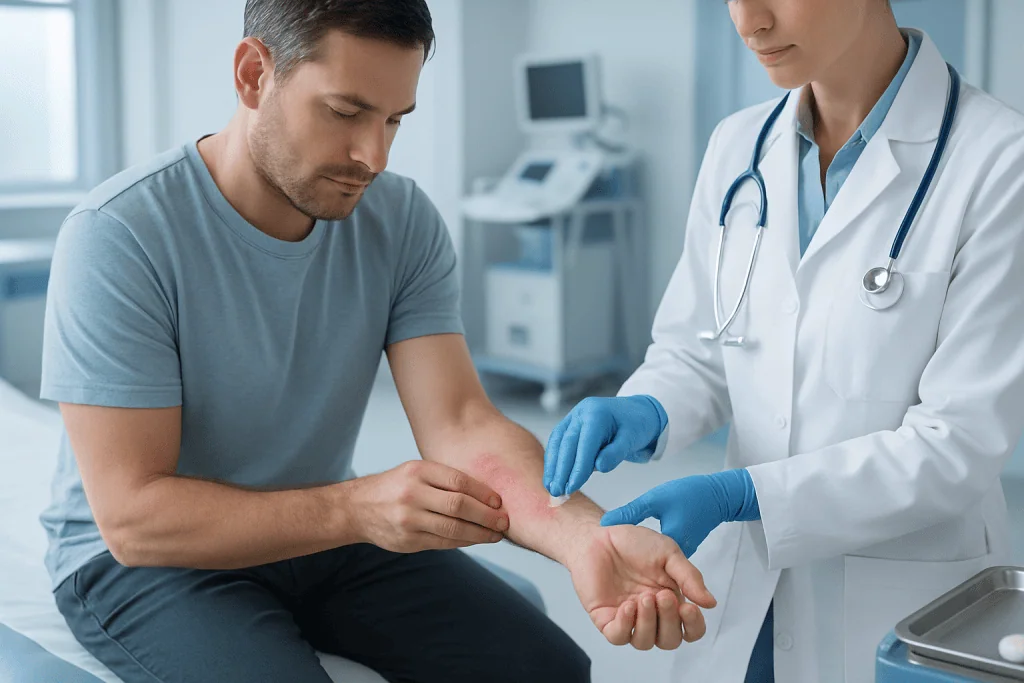
Contact dermatitis is skin inflammation triggered by contact with an irritant or allergen, and treatment focuses on identifying and avoiding the cause while calming the rash and itching. At Acibadem in Turkey, dermatologists evaluate the skin and possible triggers, then tailor care with measures such as skin-protective strategies, topical treatments, and follow-up when needed.
What Is Contact Dermatitis?
Contact dermatitis is inflammation of the skin caused by something it has touched, either an irritant that physically damages the skin barrier, or an allergen that provokes a delayed immune reaction. It produces an itchy, inflamed, sometimes blistered or cracked rash that appears where the substance made contact. Treatment has two aims: calming the inflammation safely, and identifying the trigger so the rash does not keep coming back.
The condition can feel deceptively simple at first. A red patch after using a new cosmetic. Itchy hands after cleaning. Swelling around the eyelids. A rash beneath a watch, a ring or a medical adhesive. For some people, the inflammation fades within days and never returns. For others, it comes back again and again, spreads, cracks, burns, disturbs sleep or becomes difficult to hide. People usually seek specialist care when the pattern is confusing, when creams they have already tried have not worked, or when the condition interferes with work, travel, parenting, sport or self-confidence.
The central difficulty is that although your skin is clearly reacting to something it has touched, the trigger is not always obvious. A fragrance, a preservative, a hair dye ingredient, a metal, a rubber accelerator, a medication applied to the skin, a plant, a workplace chemical, a glove material, or even a product marketed as natural, may be responsible. Effective care is therefore not only about calming the rash. It is about understanding why the inflammation is happening, protecting the skin barrier, controlling symptoms safely, and helping you prevent the next episode. Eczema and dermatitis are often used interchangeably; contact dermatitis is one specific type, defined by an external trigger rather than an internal tendency alone.
Why would I suddenly get dermatitis?
Sudden dermatitis usually means one of two things has happened: either your skin barrier has finally been worn down by cumulative exposure, or your immune system has become sensitised to a substance you may have used without any trouble for years. Sensitisation can develop at any age, after months or decades of uneventful use. This is why the sentence dermatologists hear most often, “but I have used this product for ten years”, does not rule that product out. Other common explanations include a reformulated product with a new preservative, a change of job or duties, increased hand washing and sanitiser use, colder or drier weather that stresses the barrier, and new hobbies or protective equipment. A careful exposure history can usually reconstruct what changed, even when nothing seems to have changed at all.
Is contact dermatitis contagious?
No. Contact dermatitis cannot be passed from person to person. It is not caused by a bacterium, virus or fungus but by your own skin’s response to an external substance, so touching someone else’s rash will not give you the condition. Even the fluid inside blisters does not spread the rash. In plant dermatitis, for example, it is the plant oil left on the skin, clothing, tools or a pet’s fur that can trigger new patches, which creates the false impression that the rash itself is spreading. If two people in the same household develop a similar rash, the usual explanation is that both reacted independently to the same product or exposure, not that one caught it from the other.
The Two Main Types: Irritant and Allergic Contact Dermatitis
Dermatologists divide contact dermatitis into two main categories. The distinction matters because prevention is different for each, yet the two forms can look almost identical on the skin, and they frequently occur together in the same patient.
Irritant contact dermatitis
Irritant contact dermatitis is the more common form. It occurs when the skin barrier is directly damaged by a substance or by repeated physical stress, no allergy is involved, and no prior sensitisation is required. Typical culprits include soaps, detergents, solvents, acids, alkalis, disinfectants, saliva, urine, friction and frequent water exposure. It can happen to anyone if the exposure is strong enough or repeated often enough, which is why it dominates in occupations built around wet work and chemicals. Dose and repetition matter: a single hand wash harms nobody, but thirty hand washes a day, every day, gradually strip the skin of its protective lipids until inflammation breaks through.
Allergic contact dermatitis
Allergic contact dermatitis occurs when the immune system has become sensitised to a specific substance and mounts a delayed reaction each time the skin encounters it again, typically appearing one to three days after exposure rather than immediately. Common allergen groups include nickel and other metals, fragrances, preservatives, hair dye ingredients, rubber chemicals, adhesives, topical medications, certain plants, resins, textile dyes and ingredients found in cosmetics or sunscreens. In allergic dermatitis, contact with even a trace of the allergen can reignite the reaction once sensitisation has occurred, which is why some patients flare from exposures that seem trivially small.
The two forms also reinforce each other. A barrier damaged by irritants lets allergens penetrate more easily, and skin that is already inflamed is more readily sensitised. This is one reason chronic hand dermatitis so often turns out to have both an irritant component and an allergic one, and why treating only half of the problem produces only half a result.
What Does a Contact Dermatitis Rash Look Like?
A contact dermatitis rash usually appears as itchy, inflamed skin confined to the area that touched the trigger, often with dryness, scaling, swelling, small blisters, oozing or crusting in the acute phase, and thickening, cracking or leathery texture when the condition has become chronic. The appearance varies by skin tone. On lighter skin, redness is usually obvious. On darker skin, inflammation may look purple, grey-brown or simply darker than the surrounding skin, sometimes with only subtle swelling and a changed surface texture. Sharply outlined borders are a useful clue that something external is responsible.
Where the rash sits often tells its own story. Eyelid dermatitis may be related to cosmetics, nail products, airborne allergens or substances transferred from the hands. Hand dermatitis may reflect frequent washing, sanitisers, detergents, gloves, metals, foods or occupational chemicals. A rash under jewellery suggests metal sensitivity. A sharply outlined patch may match an adhesive, a topical medicine or a dressing, while linear streaks on exposed limbs point towards a plant. Dermatologists read this distribution like a map before any test is ordered.
What are three signs of contact dermatitis?
The three most characteristic signs are itching, visible inflammation, and a pattern that matches the contact. Itching is usually the dominant symptom, often with burning or stinging. Inflammation may show as redness or darkening, swelling, small blisters, fluid leakage, dryness or scaling depending on the stage. The third sign, a shape or location that corresponds to something the skin touched, is what separates contact dermatitis from rashes that arise from within. Tenderness, cracking, thickened skin and lighter or darker discolouration after the inflammation settles are also common, particularly in longstanding cases.
Is every allergic reaction rash contact dermatitis?
No. An allergic reaction rash can take several other forms, and telling them apart changes the treatment. Hives are raised, itchy wheals that shift location within hours, unlike the fixed patches of contact dermatitis. Drug eruptions tend to be widespread and symmetrical. Allergic skin eruptions linked to an atopic constitution behave differently again: atopic dermatitis favours skin folds and follows an internal tendency rather than a single external trigger, and people with an atopic background: those who also have allergic rhinitis or allergic asthmaoften have a more vulnerable skin barrier that reacts more strongly to irritants. Facial scaling and flaking around the eyebrows and nose may instead be seborrheic dermatitis. Contact dermatitis can also resemble fungal infections, psoriasis, scabies and autoimmune skin disease, which is why an accurate diagnosis is worth establishing before treatment continues.
Who May Need Medical Treatment
You may need medical treatment for contact dermatitis if you have a rash that is itchy, swollen, cracked, blistered, painful, or that repeatedly returns after contact with certain products or environments. Many people manage early symptoms with over-the-counter creams, antihistamines or a change of soap, and this can be enough for mild cases. Professional evaluation becomes important when the rash is persistent, spreading, affecting the face or genitals, interfering with sleep, or accompanied by open sores, oozing, crusting or other signs of infection.
Certain groups benefit particularly from specialist assessment. Healthcare workers, hairdressers, cleaners, mechanics, food handlers, construction workers, musicians, athletes, laboratory personnel, people who wear gloves for long periods and anyone who washes or sanitises their hands frequently all carry higher exposure. Children may develop dermatitis from wipes, topical products, clothing dyes, metals, plants or repeated irritant exposure, and their thinner skin needs gentler treatment choices. Adults with a history of atopic dermatitis often react more strongly to irritants and flare more readily.
A second opinion is also a reasonable step when topical steroid courses have been repeated but the rash keeps returning. In these situations the missing element is often not a stronger cream but trigger identification, correct product substitution or management of an ongoing occupational exposure. A dermatologist can distinguish between an active flare that needs medication and a long-term prevention problem that needs barrier repair and an avoidance plan, two problems that look the same on the surface but are solved differently.
Common Triggers and Situations Dermatologists Treat
Contact dermatitis treatment covers a broad range of inflammatory skin reactions caused by external substances. On the irritant side, the recurring themes are wet work, cleaning agents, solvents, disinfectants and friction. On the allergic side, the recurring themes are metals, fragrances, preservatives, hair dye chemistry, rubber accelerators, adhesives, topical medicines, plants, resins and textile dyes. Even very small exposures can trigger inflammation once a person is sensitised, and many allergens appear under multiple chemical names across cosmetics, medications, industrial materials, clothing and household items.
The clinical patterns dermatologists treat most often include hand dermatitis, eyelid and facial dermatitis, occupational contact dermatitis, reactions to cosmetics or personal care products, jewellery-related dermatitis, glove-related dermatitis, shoe dermatitis, plant dermatitis and reactions to topical medicines or wound dressings. In some patients, contact dermatitis overlaps with atopic dermatitis, seborrheic dermatitis, psoriasis, rosacea or chronic urticaria, which makes expert diagnosis especially valuable, treating the wrong condition well is still treating the wrong condition.
Treatment is also indicated when dermatitis affects visible or functionally important areas. Inflamed eyelids become swollen and uncomfortable. Cracked hands limit professional tasks and raise infection risk. Dermatitis on the feet can make walking painful. Facial dermatitis carries a real emotional and social weight. Patients whose flares recur before important work commitments, travel, performances or medical procedures may need a proactive plan to stabilise the skin rather than a reactive one that always starts too late.
How Contact Dermatitis Is Diagnosed
Diagnosis begins with a detailed consultation rather than a machine. Your dermatologist examines the skin, documents the distribution and character of the rash, and asks targeted questions: when it began, where it appears, what touches the area, whether it improves at weekends or on holiday, and whether anyone else at home or work is affected. Photographs from earlier flares are genuinely useful, especially when the rash changes over time or comes and goes between appointments.
Preparation is simple but pays off. If possible, bring or photograph the products that touch the affected area, soaps, shampoos, moisturisers, sunscreens, cosmetics, perfumes, hair dyes, nail products, gloves, workplace materials, topical medicines and cleaning agents. Ingredient lists help even when the labels are in another language. Tell your physician about any steroid creams, antibiotic ointments, herbal products or home remedies you have used on the rash, because some can alter its appearance or complicate the diagnosis.
During the examination, the dermatologist weighs the evidence for irritant damage, an allergic pattern, infection, fungal disease, psoriasis or eczema. If infection is suspected, a culture may be taken. If a fungal infection is possible, a skin scraping may be examined. In unusual or treatment-resistant cases, a small skin biopsy may be considered to clarify the picture. Dermoscopic examination and digital photography support monitoring over time. These decisions are individualised and explained before anything is done: the aim is to answer a specific clinical question, not to run every available test.
What is patch testing and how does it work?
Patch testing is the standard investigation for suspected allergic contact dermatitis. Small amounts of common allergens and selected substances are applied to the skin, usually on the back, under adhesive chambers. The patches stay in place for a set period, and the skin is examined at scheduled readings over several days to detect delayed reactions. You will typically be asked to keep the area dry and avoid heavy sweating until the readings are complete, which is worth factoring into your week. Patch testing is different from a skin-prick allergy test: it is designed to detect delayed skin allergies to substances that touch the skin, not immediate reactions, and it is not designed to provoke dangerous responses. The real value of the test lies in interpretation: a positive reaction only matters if the allergen is genuinely relevant to your actual exposures, which is why results are always read alongside your history and product list rather than in isolation.
How to Treat Contact Dermatitis
Treating contact dermatitis rests on two pillars: removing or reducing the trigger, and calming the inflammation while the skin barrier repairs. Medication alone rarely solves the problem if the exposure continues. In practice, a treatment plan follows a recognisable sequence:
- Confirm the diagnosis and rule out conditions that mimic contact dermatitis.
- Identify the likely trigger from the history, distribution and, where indicated, patch testing.
- Remove or reduce the exposuresubstituting products, changing routines or adjusting protective equipment.
- Calm the inflammation with prescribed treatment matched to the site and severity.
- Repair the barrier with frequent moisturiser use and gentle cleansing.
- Prevent recurrence through avoidance guidance, protection strategies and follow-up.
Topical corticosteroids may be prescribed for short periods to control acute inflammation. The strength, location, duration and frequency have to be chosen carefully: facial, eyelid, genital and other thin-skinned areas need very different strategies from the thick skin of the palms and soles. Non-steroidal anti-inflammatory creams may be used in sensitive areas or for longer-term control in selected cases. Moisturisers and barrier creams are not an optional extra: they reduce water loss, support repair and make the skin more resilient against future irritation, which is why dermatologists treat them as core therapy rather than cosmetics.
For weeping, blistering or intensely inflamed dermatitis, wet dressings or compresses can bring short-term relief. Severe, widespread allergic contact dermatitis may require oral anti-inflammatory medication under medical supervision. Oral antihistamines may help some patients sleep when itching is intense, although they do not treat the underlying delayed allergic reaction itself. If scratching or skin breakdown has allowed bacterial infection to take hold, antibiotics may be needed. Where irritant exposure is ongoing, practical measures matter as much as prescriptions: appropriate glove selection, cotton glove liners, reduced wet work, fragrance-free products and workplace modifications can all be part of the plan.
How do you get rid of contact dermatitis?
You get rid of contact dermatitis by removing the trigger, treating the inflammation and repairing the skin barrier, in that order of importance. If the responsible irritant or allergen stays in daily use, even strong medication provides only temporary relief; when the trigger is removed and the barrier restored, many patients improve substantially. The most reliable route is matching the treatment to the type of dermatitis, the body site and the severity, which is exactly what a dermatologic evaluation is designed to do.
How to get rid of contact dermatitis fast?
The honest answer is that the fastest realistic route is also the simplest: stop contact with the suspected trigger, follow the treatment your doctor prescribes correctly from the first day, and resist the urge to layer additional products on irritated skin. Each new cream, remedy or disinfectant added in a hurry can introduce a fresh irritant or allergen and slow everything down. Inflamed skin needs a period of calm to repair; anything promising overnight results is asking the skin to do something it cannot do. What speeds recovery in practice is consistency, gentle cleansing, frequent moisturising and early, correct treatment of the flare rather than a scramble once it has escalated.
How Long Does Contact Dermatitis Last?
How long contact dermatitis lasts depends on the type, the severity, the body site and, above all, whether the exposure continues. Mild irritant episodes often settle within days to a couple of weeks once contact stops and the barrier is supported. Allergic reactions evolve over days and usually need weeks to resolve fully after the allergen is removed. Chronic hand dermatitis, occupational dermatitis and long-standing allergic contact dermatitis may take several weeks or longer to stabilise, especially if the exposure carries on in the background. Colour changes left behind after the inflammation, lighter or darker patches, fade more slowly than the rash itself, and more slowly still on darker skin tones.
Can contact dermatitis go away by itself?
Yes: a mild episode often settles on its own once contact with the trigger ends, which is why a rash from a new watch strap or a one-off cleaning job may never need a doctor. The picture changes when the rash keeps returning, spreads, sits on the face, eyelids, hands or genitals, or has been treated repeatedly without lasting improvement. Recurrent flares suggest an unidentified trigger still in daily use, and each untreated cycle leaves the skin drier, thicker and more reactive, making the underlying cause progressively harder to read.
| Time Period | What Patients Can Expect |
|---|---|
| Day 1 | The dermatologist evaluates the rash, reviews exposures, begins symptom control, and may recommend product avoidance or diagnostic testing. |
| First Week | Itching and inflammation often begin to improve once treatment starts and suspected triggers are removed, although severe flares may take longer. |
| First Month | The skin barrier gradually repairs with consistent moisturisation, protection and correct medication use. Patch testing results, if performed, may guide long-term changes. |
| Longer Term | The focus shifts to prevention: avoiding relevant allergens, reducing irritant exposure, using protective measures, and treating early flares before they progress. |
Why Acting Early Matters
Early care can prevent a short-lived rash from becoming a chronic skin problem. When the barrier is injured repeatedly, the skin becomes drier, more reactive and easier to inflame: a downward spiral in which each flare makes the next one more likely. Scratching produces fissures and open areas that invite bacterial infection. Chronic inflammation leads to thickened skin, persistent scaling, pain and pigment changes that take time to fade even after the rash itself is controlled.
Delay also makes the trigger harder to find. Patients understandably add more products in an attempt to soothe the skin, extra creams, ointments, disinfectants, herbal preparations, topical antibiotics, and each addition can introduce a new irritant or allergen. A rash that began with one clear trigger can become tangled in secondary sensitivity, over-treatment and infection, and unpicking that history later takes far more work than addressing it early.
Occupational contact dermatitis deserves particular attention. When hand dermatitis affects healthcare workers, hairdressers, cleaners, food handlers, mechanics or laboratory staff, continuing exposure prolongs the inflammation and can threaten the ability to work at all. Early diagnosis allows protective measures to be put in place before the condition becomes disabling. The same logic applies to facial and eyelid dermatitis, which tends to worsen quietly while the patient keeps using the same cosmetic, fragrance, nail product or hair product without realising it is involved. A rash that is rapidly worsening, blistering, widespread, close to the eyes, or accompanied by fever, increasing warmth, pus, honey-coloured crusting or spreading tenderness has usually moved beyond straightforward dermatitis: these features point towards secondary infection or a more severe reaction, and they change both the urgency and the breadth of the diagnostic approach a clinician will take.
Benefits of Contact Dermatitis Treatment
A well-planned treatment approach relieves symptoms while helping you understand and prevent future flares.
| Benefit | What It Means for You |
|---|---|
| Reduced itching and inflammation | Appropriate medication and skin care calm swelling, burning and itching so daily activities and sleep become easier. |
| Identification of triggers | Careful history-taking, and patch testing when indicated, can reveal allergens or irritants that were not obvious from the rash alone. |
| Protection of the skin barrier | Barrier repair strategies reduce dryness, cracking and sensitivity, making the skin more resilient over time. |
| Lower risk of recurrence | Personalised avoidance guidance helps you choose safer products and reduce exposure at home, at work and during travel. |
| More precise medication use | A dermatologist selects the right treatment strength and duration for the affected area, reducing the risks of under-treatment or overuse. |
What Influences a Good Result
The single most important factor is accurate identification and reduction of the trigger. If the responsible irritant or allergen remains in daily use, even the best medication buys only temporary relief. When the trigger is removed and the barrier repaired, improvement is usually meaningful and sustained. Everything else in the treatment plan supports this central move.
The type of dermatitis matters. Irritant contact dermatitis often improves when exposure is reduced and protective routines are followed consistently. Allergic contact dermatitis requires avoidance of the specific allergen, which may hide under different chemical names across many products. Some allergens are easy to avoid: a nickel-containing piece of jewellery can simply come off. Others, such as fragrances, preservatives, rubber chemicals or adhesives, require careful product selection and genuine education about where they appear.
Severity, duration and location all shape the timeline. A new rash may settle quickly, while chronic dermatitis with fissures, thickening or repeated flares takes longer. Hands are constantly exposed to water, friction, soaps, gloves and work materials, so hand dermatitis needs a more detailed plan than most. Eyelid and facial skin are delicate and demand gentler treatment choices. Feet bring their own complications, sweating, shoe materials, friction and the possibility of coexisting fungal infection, all of which must be considered before the plan is final.
Your own habits make a major difference. Frequent moisturiser use, gentle cleansing, avoiding fragranced products, wearing appropriate protective gloves, removing rings during wet work and following medication instructions all improve the odds of a good result. Overuse of topical corticosteroids, use of the wrong strength on sensitive areas, or repeated application of irritating home remedies can delay recovery. A simple, consistent routine reliably beats a complicated one.
Underlying conditions also play a role. People with atopic dermatitis, dry skin, rosacea, psoriasis or immune-related conditions may need additional management alongside the contact dermatitis itself. Occupational exposure sometimes calls for collaboration with workplace health professionals, or practical adjustments to gloves, hand hygiene routines and protective equipment. Continuity is the final piece: a written plan and clear follow-up recommendations help maintain progress between appointments and make it easier for any physician involved in your care to build on what has already been established.
Contact Dermatitis Care at Acibadem
Dermatology care for contact dermatitis at Acibadem is built around careful evaluation rather than reflexive prescribing. Dermatologists assess not only the visible inflammation but the whole context around it, daily exposures, occupation, cosmetic and skin care habits, medical history and treatment goals, because in this condition the context usually holds the answer. When a rash is complex or resembles another disease, physicians can coordinate with other specialties as the case requires: allergy and immunology, infectious diseases, paediatrics, occupational medicine, ophthalmology for eyelid involvement, or rheumatology when autoimmune disease sits in the differential diagnosis.
Diagnostic support is chosen to answer the clinical question, not to lengthen the investigation. Depending on the case, this may include structured patch testing, dermoscopic assessment, microbiologic testing for infection, evaluation for fungal disease, or biopsy when another diagnosis must be excluded. Evidence-based dermatology protocols guide treatment selection, with the plan adapted to skin type, age, affected area, severity and personal circumstances. Electronic records and coordinated communication make it easier to review previous reports, product lists and treatment histories in one place, practical detail that matters in a condition where product names, ingredient lists and prior prescriptions all need careful review.
Many patients come for a second opinion after repeated flares or lingering uncertainty about whether the problem is allergy, eczema, infection, psoriasis or something else entirely. A fresh dermatologic evaluation can separate active inflammation from its triggers, its complications and any overlapping skin conditions. The hospital-based setting also matters for the minority of presentations that are widespread, infected, painful or occurring alongside other medical conditions, where dermatology decisions benefit from being integrated with the patient’s overall health. The aim throughout is straightforward: a diagnosis that makes sense, a treatment plan that is realistic, and guidance clear enough to continue with a local healthcare provider afterwards.
Living With and Preventing Contact Dermatitis
Contact dermatitis is common, but persistent or recurrent dermatitis should not be dismissed as a minor irritation. The right diagnosis changes the course of the condition: identify the trigger, calm the inflammation, repair the barrier, and the cycle of repeated flares loses its momentum. Prevention afterwards is mostly a matter of habit rather than heroics: a simplified, fragrance-free routine; moisturiser applied regularly and not just during flares; sensible glove use with cotton liners for wet or chemical work; rings off before washing up; and learning the names, including the alternative names, of any allergen a patch test has confirmed.
It also helps to treat early flares early. A small patch caught in its first days responds to far less treatment than the same patch three weeks later, and keeping a simple record of new products, new duties and flare dates turns the next consultation from guesswork into pattern-reading. The condition rewards patience and consistency: skin that has been protected, moisturised and kept away from its triggers becomes steadily less reactive, and what once felt like an unpredictable enemy becomes, for most people, a manageable and largely avoidable one.
Preparation
- Before your visit, note when the rash started, where it appears, and any products, metals, plants, chemicals, or workplace exposures that may trigger it. Bring a list of medications, creams, cosmetics, and previous allergy or skin test results. Avoid applying new topical products before the appointment unless prescribed.
Aftercare
- Follow the dermatologist’s plan, which may include avoiding identified triggers, using prescribed topical medicines, and protecting the skin barrier with gentle moisturizers. Do not scratch or apply unapproved creams, as this can worsen irritation or infection risk. Seek medical advice if symptoms spread, blister, become painful, or do not improve as expected.
Frequently Asked Questions
What affects the cost of contact dermatitis treatment?
The final cost depends on the dermatology consultation, whether patch testing is needed, the severity of the rash, prescribed medicines, follow-up visits and any international patient services such as translation or care coordination.
How can I get a personalised quote?
A personalised quote can usually be prepared after sharing medical history, photos if appropriate, previous test results and details of current symptoms. A free consultation can help clarify the likely diagnostic and treatment pathway.
Is patch testing always required?
No. Patch testing is usually considered when allergic contact dermatitis is suspected, symptoms recur or the trigger is unclear. A dermatologist decides whether testing is suitable after reviewing your history and skin findings.
Can treatment be arranged as part of an international patient package?
In many cases, appointment planning, dermatologist assessment, interpreter support and care coordination can be organised together. What is included should be confirmed before travel because medicines, tests and follow-up may vary by case.
Is the cheapest option always the best choice?
Not necessarily. Important factors include accurate diagnosis, specialist experience, quality standards, clear follow-up plans and safe prescribing. This information is general and is not medical or financial advice.
Medically reviewed by the Acıbadem International Medical Board September 13, 2026
See our medical review board →
Update history
- PublishedJune 8, 2026
- Medical review approvedSeptember 13, 2026
- Last content updateSeptember 12, 2026
References3
- Contact Dermatitis medlineplus.gov
- Contact dermatitis nhs.uk
- Contact Dermatitis my.clevelandclinic.org
Trusted care for international patients
From the Acibadem Blog

What to Bring to a Contact Dermatitis Appointment: Products, Exposures and a Rash Timeline
For a contact dermatitis appointment, bring the actual products that touch the affected skin (or clear photos of their ingredient labels), a dated timeline…
How Long Does Contact Dermatitis Take to Clear Once the Trigger Is Removed?
Once the trigger is fully removed, contact dermatitis usually clears within two to four weeks, according to Mayo Clinic, and many milder cases settle…