Acne Treatment
Acne care focuses on reducing inflammation, unclogging pores, controlling excess oil, and preventing scars through dermatologist-led medical treatment and skin care planning.
Quick answer
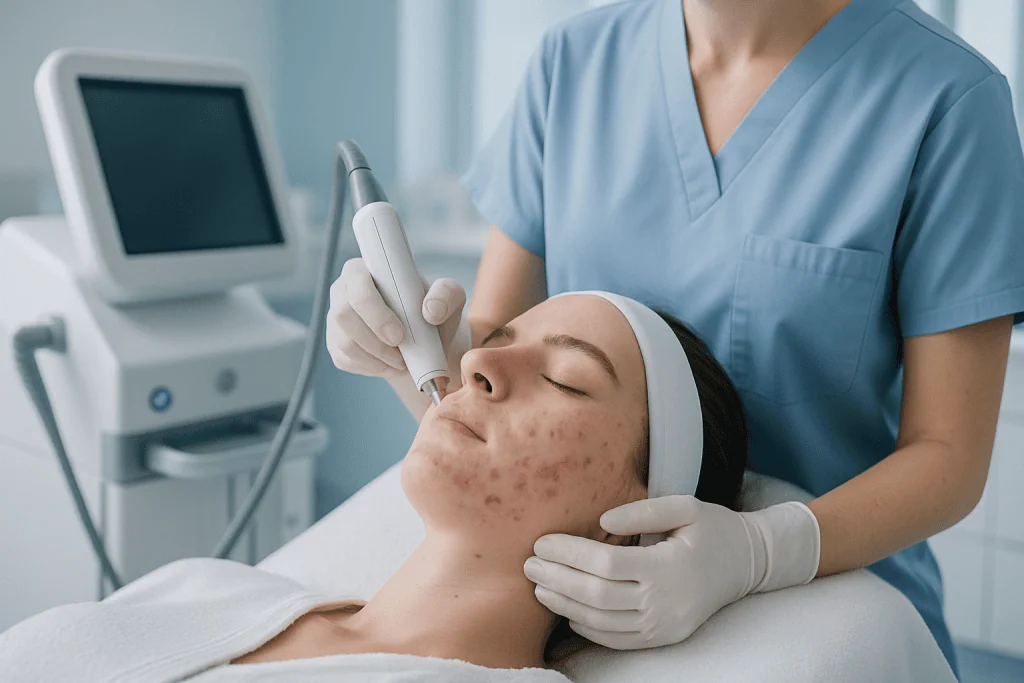
Acne treatment is a medically guided programme that controls the blocked pores, excess oil, bacteria and inflammation behind acne. Depending on severity, a dermatologist may combine topical medications, oral medications, hormonal therapy or in-clinic procedures such as peels, cyst injections and light-based treatment. Visible improvement usually takes several weeks, and maintenance therapy often continues afterwards to reduce relapse and lower the risk of scarring.
Acne Treatment: What It Is and How It Works
Acne treatment is a medically guided programme that controls the processes behind acne, blocked pores, excess oil, bacterial overgrowth and inflammation, and reduces the risk of future breakouts, scarring and pigmentation change. It ranges from prescription creams to oral medication, hormonal therapy and in-clinic procedures, and the right combination depends on the type and severity of your acne. It is intended for anyone whose skin is persistently inflamed, painful, worsening or leaving marks, whether you are a teenager or an adult who assumed this stage was long behind you.
Acne is often described as a common skin condition, but for many people it is anything but simple. It can affect how you feel in photographs, at work, in relationships and in everyday conversations. It can be painful, unpredictable and emotionally exhausting. Practical questions add another layer: will treatment suit your skin type, how long will it take, and can scars be prevented or improved? This page sets out what acne treatment actually involves, so you can weigh the options with realistic expectations.
Effective acne treatment looks beyond the surface. The medical goals are to reduce inflammation, unclog pores, regulate excess oil production, control the bacteria involved in acne and protect the skin from long-term scarring or discolouration. The right approach depends on the type of acne, its severity, your age, hormonal profile, medical history, skin tone, previous treatments and your tolerance for medications or procedures. At Acibadem, acne is evaluated and treated by dermatology specialists using evidence-based pathways and individualised planning, so that you follow a structured plan that adjusts as your skin responds, rather than cycling through products without a clear diagnosis.
Acne treatment is not the same as cosmetic skin care. The appearance of your skin matters, but the medical priority is to control inflammation safely, prevent new lesions, protect the skin barrier and limit long-term damage. A good plan is also realistic: most acne treatments need several weeks to show visible change, and maintenance therapy is often needed after improvement to reduce recurrence. Any approach promising overnight results is not describing how skin biology works.
What causes acne?
Acne develops when hair follicles and their attached oil glands become blocked by excess sebum and dead skin cells. Bacteria that naturally live on the skin can multiply inside this blocked, oily environment, and the immune system responds with inflammation, redness, swelling, tenderness and pus-filled lesions. In some people the inflammation runs deeper and produces nodules or cysts, which carry the highest risk of leaving permanent marks if they are not treated promptly. Hormonal activity, genetics, certain medications, occlusive cosmetics and repeated friction can all push these processes along, which is why two people with identical skincare routines can have completely different skin.
What are the 5 main causes of acne?
Dermatologists usually describe five main drivers, which act together rather than alone:
- Excess sebum productionoften driven by androgen hormone activity, this gives blocked pores their raw material.
- Abnormal shedding of skin cellsdead cells accumulate inside the follicle instead of clearing away, plugging the pore and forming comedones: blackheads and whiteheads.
- Bacterial overgrowthchiefly Cutibacterium acnes, a bacterium that thrives in the oily, low-oxygen environment of a blocked follicle.
- Inflammationthe immune response that turns a quietly clogged pore into a red, swollen, painful lesion.
- Hormonal influencewhich explains flares during puberty, before menstruation, in polycystic ovary syndrome and with certain medications or supplements.
Contributing factors, genetics, stress, comedogenic cosmetics, friction from helmets or straps, and some drugs, do not cause acne on their own, but they can worsen it or keep it going. Because several mechanisms are usually active at once, acne treatment normally combines approaches rather than relying on a single product.
 Dr. Şule ErenMDBoard Commentary
Acne treatment should be tailored to disease severity, inflammatory activity, scarring risk and individual patient factors rather than relying on a single therapy. Acıbadem-affiliated dermatologists have contributed to clinical research in acne, including a randomized study comparing oral antibiotic regimens in which both azithromycin and doxycycline produced significant improvement in inflammatory facial lesions. Acıbadem researchers have also investigated the underlying inflammatory and epidermal mechanisms of acne and systemic treatment safety. These findings support a structured, dermatologist-led approach that combines topical therapy, systemic treatment when indicated, and early scar prevention
Who May Need Dermatologist-Led Acne Care
Many people develop occasional pimples that improve with gentle skin care and over-the-counter products. Dermatologist-led treatment becomes important when acne is persistent, painful, worsening, leaving marks or affecting your quality of life. It also matters when acne appears suddenly in adulthood, occurs alongside menstrual irregularity or excess facial hair, or has not responded to previous treatments. These patterns can signal deeper inflammation or a hormonal contributor that shop-bought products cannot address.
People often search for a “pimples dermatologist” once spots stop behaving like ordinary breakouts, and that instinct is sound. A dermatologist does more than prescribe stronger creams. They confirm that what you have is actually acne, grade its severity, assess your scarring risk and build a plan that accounts for your skin tone, medical history and any previous treatments that disappointed you.
Typical signs include blackheads, whiteheads, red bumps, pus-filled spots, tender nodules, deep cysts, oily skin, enlarged pores, post-acne dark marks and scars. Acne most often affects the face, but it can also involve the chest, shoulders, back, neck and jawline. Some patients have mostly clogged pores; others have inflamed lesions or deep cystic acne. Many have a combination, and each element may need its own strategy within a single plan.
How is acne diagnosed?
Acne is diagnosed through a dermatological examination, no scan or invasive test is usually needed. The dermatologist evaluates the type of lesions, their distribution, severity, scarring and pigmentation changes, and looks for conditions that can mimic acne, such as rosacea, folliculitis, perioral dermatitis, medication-related eruptions or hormonal skin changes. Getting this distinction right matters, because some treatments that help acne can aggravate its mimics.
A detailed history is just as important as the examination. Expect questions about when your acne started, previous treatments, menstrual patterns, pregnancy plans, medications, supplements, cosmetic products, possible diet triggers, shaving practices, sun exposure and family history. In selected cases, additional testing is recommended: patients with signs of hormonal imbalance may need blood tests or evaluation by endocrinology or gynaecology, and unusual or treatment-resistant lesions may require culture testing or reassessment of the diagnosis. When scars are already present, the dermatologist classifies them, ice-pick, rolling, boxcar, hypertrophic or keloid, because each type responds to different techniques.
Conditions and Indications Acne Treatment Addresses
Acne treatment covers a broad range of concerns, from early clogged pores to severe inflammatory disease. The plan is adapted to the medical indication and to your priorities.
- Comedonal acne: blackheads and whiteheads caused by blocked pores, often treated with topical retinoids, keratolytic agents and careful skincare planning.
- Inflammatory acne: red, swollen or pus-filled lesions that may need topical anti-inflammatory treatments, antibacterial agents, oral medications or combination therapy.
- Nodular or cystic acne: deep, painful lesions with a higher risk of scarring, usually requiring more intensive medical treatment and close follow-up.
- Hormonal-pattern acne: lesions concentrated along the jawline, chin or lower face, sometimes linked to menstrual flares, polycystic ovary syndrome or other hormonal factors.
- Adult acne: persistent or new-onset acne in adulthood, which often behaves differently from teenage acne and may need a tailored medication and skincare approach.
- Acne on the back, chest and shoulders: truncal acne is difficult to manage with routine products and may need prescription therapy because the skin is thicker and the treatment areas larger.
- Post-acne marks: red or brown discolouration after inflammation, especially common in darker skin tones, addressed with sun protection, prescription creams and selected procedures.
- Acne scars: depressed, raised or thickened scars, treated after active acne is controlled, with procedures chosen according to scar type and skin characteristics.
- Treatment-resistant acne: acne that has not improved with over-the-counter products or previous prescriptions and needs reassessment of the diagnosis, adherence, triggers and treatment intensity.
How Acne Treatment Is Performed
Acne treatment follows a stepwise logic rather than being a single event. A typical pathway looks like this:
- Step 1: Assessment: examination, history, photographs and any indicated tests establish the type and severity of your acne.
- Step 2: First-line therapy: usually a topical regimen, sometimes combined with an oral medication for moderate or severe disease.
- Step 3: Review: after a defined period, your response and any side effects are checked and the plan is adjusted.
- Step 4: Escalation or maintenance: treatment intensifies if control is insufficient, or shifts to lighter maintenance therapy once the skin is stable.
- Step 5: Repair: once active acne is controlled, residual marks and scars can be addressed with targeted procedures.
Initial consultation and skin assessment
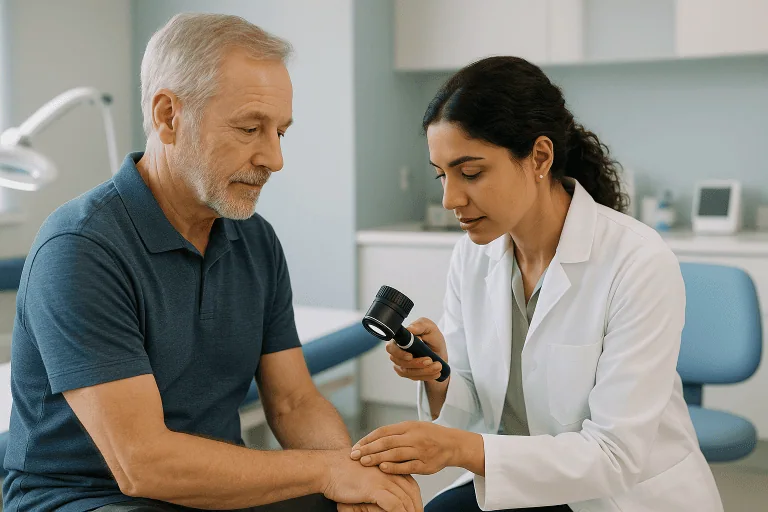
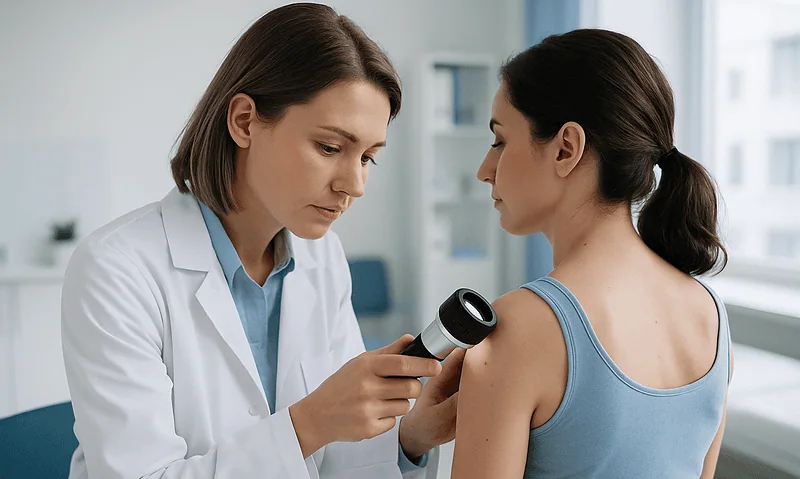
Care begins with a careful dermatology consultation. Your dermatologist examines the skin under clinical lighting and may use magnification or digital imaging to document acne severity, texture, pigmentation and scarring. This baseline is genuinely useful: improvement is gradual, and comparing photographs over time shows change more reliably than memory does.
The consultation also identifies factors that shape which treatments are safe for you. These include pregnancy or plans for pregnancy, breastfeeding, liver disease, inflammatory bowel disease, mood disorders, migraine history, blood clot risk, medication allergies, photosensitivity, recent cosmetic procedures and the use of supplements or performance-enhancing substances. Bring a list of everything you have already tried, the names and doses of creams, tablets or procedures, because previous responses steer the next decision.
Preparation before treatment
Preparation depends on the chosen treatment. For topical regimens, your dermatologist explains how to apply each medication, how often, what irritation to expect at first and how to support the skin barrier with non-comedogenic moisturisers and sunscreen. Many acne medications increase skin sensitivity, so correct use matters as much as the prescription itself.
If oral medications are being considered, your physician may request blood tests, pregnancy testing where relevant, or coordination with another specialist. Isotretinoin, for example, requires careful patient selection, counselling, laboratory monitoring and strict pregnancy-prevention measures for anyone who can become pregnant. Hormonal therapy requires attention to individual medical risk factors and, where needed, joint planning with gynaecology or endocrinology.
Before procedural treatments, chemical peels, light-based therapy, comedone extraction or scar procedures, your dermatologist may advise pausing certain active skincare ingredients for a short period, avoiding tanning and following a prescribed pre-treatment regimen. The aim is to reduce irritation and minimise the risk of pigmentation changes, which matters most in skin types prone to post-inflammatory hyperpigmentation.
Medical treatment options
Topical therapy is usually the foundation of acne treatment. It may include prescription retinoids to prevent clogged pores, benzoyl peroxide to reduce acne-related bacteria and inflammation, topical antibiotics used carefully to limit resistance, azelaic acid for acne and pigmentation, salicylic acid or other keratolytic agents, and barrier-supporting moisturisers. Choices are matched to your acne type, skin sensitivity and skin tone: a regimen that suits oily, resilient skin can overwhelm a dry or sensitive one.
Oral medications come into play for moderate to severe acne, widespread body acne, deep inflammatory lesions or acne that has not responded to topical treatment. Oral antibiotics can reduce inflammation over a defined course and are usually combined with topical agents to support longer-term control. Hormonal treatments may help selected women whose acne is linked to androgen activity. Isotretinoin may be considered for severe nodular acne, scarring acne or disease that has resisted other therapies; it is a highly regulated medication that requires structured monitoring throughout the course.
Procedural treatments support medical therapy in selected patients. Comedone extraction can safely clear persistent blocked pores. Corticosteroid injections reduce pain and swelling in large cystic lesions and may lower the chance of a prominent scar forming. Chemical peels help comedonal acne, mild inflammatory acne and post-acne discolouration when chosen carefully. Light-based and laser treatments may reduce inflammation, oil-gland activity or pigmentation in suitable cases. Scar-focused procedures, microneedling, fractional laser resurfacing, subcision, fillers or surgical techniques, are generally reserved until active acne is under control.
What treatment is best for acne?
The best acne treatments are the ones matched to your specific acne type: there is no universal winner. For mild comedonal acne, a topical retinoid with sensible skincare often does the job. For inflammatory acne, a retinoid combined with benzoyl peroxide is a common starting point. Moderate disease may add an oral antibiotic or, for suitable women, hormonal therapy. Severe, nodular or scarring acne usually calls for isotretinoin under specialist supervision. Asking which single product is “best” misses the point: the question is which combination fits your lesions, your skin tone, your medical history and your tolerance for side effects.
What is the most effective treatment for acne?
For severe nodular or cystic acne, isotretinoin is widely regarded by dermatologists as the most effective single medication, because it acts on oil production, follicle blockage, bacteria and inflammation at once. It is not the right choice for everyone: it requires monitoring, has meaningful side effects and demands strict pregnancy prevention. For milder acne, a well-constructed topical regimen used consistently is often just as decisive. Effectiveness depends less on the strength of the drug than on the accuracy of the diagnosis and how consistently the plan is followed.
Acne OTC treatments: what they can and cannot do
Acne OTC treatments, over-the-counter products you can buy without a prescription, have a genuine place in mild acne. Benzoyl peroxide washes and gels, salicylic acid cleansers and, in some countries, low-strength adapalene can improve occasional breakouts and mild congestion when used consistently for several weeks. Their limits are equally real: they rarely control deep, painful or cystic lesions, they cannot address hormonal drivers, and layering several harsh products at once often irritates the skin without adding benefit. If over-the-counter care has not helped after a fair trial, escalating to more of the same is usually less productive than a proper diagnosis.
What helps clear up acne quickly?
Honestly: nothing clears established acne overnight, and treatments claiming to are worth your scepticism. The fastest genuine intervention is a corticosteroid injection into a single large, painful cyst, which can calm it within days and is sometimes used before an important event. Beyond that, speed comes from doing the unglamorous things well, starting an appropriate regimen, not squeezing lesions, avoiding new harsh products mid-flare and protecting the skin from sun. Squeezing in particular trades a spot today for a mark or scar that lasts far longer.
How to get rid of acne naturally
Natural management means supporting the skin rather than replacing medical treatment. Wash gently twice daily with a mild cleanser, choose non-comedogenic moisturisers and cosmetics, remove make-up before sleep, shower after heavy sweating, change pillowcases regularly and keep hands off active lesions. Daily sun protection helps prevent dark marks from deepening. Evidence on diet is mixed: some people notice flares with particular foods, and it is reasonable to observe your own patterns, but no eating plan reliably clears acne on its own. These habits genuinely help mild acne and support every medical regimen: they are simply not enough, by themselves, for inflamed, cystic or scarring disease.
How to get rid of cystic acne
Cystic acne almost always needs medical treatment, because the inflammation sits too deep for creams and washes to reach effectively. Dermatologists typically use oral medication, antibiotics, hormonal therapy for suitable women, or isotretinoin for severe or resistant disease, alongside a supporting topical regimen. Individual painful cysts can be settled with corticosteroid injections. The urgency is real: cysts are the lesions most likely to scar, so every month of uncontrolled cystic acne raises the chance of permanent textural change. Squeezing or lancing cysts at home pushes inflammation deeper and makes scarring more likely, not less.
How to get rid of back acne
Back acne responds to the same principles as facial acne, adjusted for thicker skin and a much larger, harder-to-reach area. Medicated washes containing benzoyl peroxide or salicylic acid are a practical first step, applied in the shower and left on briefly before rinsing. Persistent or inflamed truncal acne usually needs prescription therapy, and widespread disease often justifies oral treatment because applying creams across the entire back is impractical. Breathable clothing, showering after exercise and avoiding tight straps or backpacks that rub reduce the friction that keeps truncal acne going.
Technology used in acne diagnosis and treatment
Technology in acne care improves accuracy, tracks progress and delivers treatment more precisely: it does not replace clinical judgement. High-quality clinical imaging documents lesion counts, redness, pigmentation and scar patterns over time. Dermoscopic evaluation helps distinguish acne from look-alike conditions. Laboratory testing, when indicated, identifies hormonal or medication-related contributors and supports safe monitoring during certain oral treatments. For procedures, dermatology clinics use medical-grade light and laser platforms, controlled chemical peel systems, microneedling devices, radiofrequency-based systems and precision instruments for extraction and scar revision. The choice depends on the medical indication, your skin type, scar pattern, pigmentation risk, downtime tolerance and the stage of acne control.
How long does acne treatment take?
Acne treatment is measured in weeks and months, not days. Some inflamed lesions calm within a short period, but meaningful improvement usually becomes clear only after consistent treatment over several weeks. Oral medications typically run for a defined course, while topical maintenance therapy often continues longer to prevent relapse. Scar treatments are planned separately and may involve multiple sessions spaced over time. Appointment length varies too: a first consultation takes longer because of the history, examination, photographs and planning, while procedure visits range from brief sessions to longer appointments for scar work. Discuss timing in advance if you have important commitments coming up, some procedures leave visible redness, peeling or sun sensitivity that you will want to plan around.
Recovery and follow-up
Recovery depends on the treatment. Prescription creams commonly cause dryness, flaking or mild irritation at first; these effects usually settle and can be managed by adjusting application frequency, using moisturisers and avoiding harsh cleansers. Oral medications require monitoring for side effects and, in some cases, laboratory changes. Procedural treatments can cause temporary redness, peeling, swelling, crusting or sensitivity, depending on their depth and type.
Follow-up is not an optional extra: it is where acne treatment succeeds or fails. Dermatologists adjust therapy according to your response, tolerance, side effects and changing goals. A plan that is too aggressive irritates the skin and undermines adherence; one that is too mild fails to control inflammation. The best plans are active, monitored and flexible.
How to Get Rid of Acne Scars
Acne scars are treated in a deliberate sequence: active acne is controlled first, then the scars themselves are addressed, because treating scars while new inflamed lesions keep forming undoes the work. The dermatologist first classifies your scars, ice-pick, rolling, boxcar, hypertrophic or keloid, since each type responds to different techniques. Depressed scars may be improved with microneedling, subcision, fractional laser resurfacing, chemical peels or fillers; raised and keloid scars may need injections or surgical approaches. Most scar work involves several sessions spaced over time, and results build gradually rather than appearing after one visit. Post-acne discolouration, flat red or brown marks, is not true scarring and often fades with sun protection, prescription creams and selected procedures. You can read more about the techniques, sequencing and planning involved on our dedicated acne scarring treatment page.
Why Acting Early Matters
Acne can look minor at first, but persistent inflammation leads to lasting changes in the skin. Early treatment reduces the number of new lesions, shortens the duration of inflammation and helps protect against permanent scarring. This matters most for nodular or cystic acne, acne that leaves dark marks, and acne in families with a history of scarring.
Delay also makes treatment more complex. When acne becomes chronic, patients often accumulate a mixture of active lesions, dark marks, redness, uneven texture and scars, and each problem needs a different strategy. Active acne must usually be controlled before advanced scar procedures can be considered, so starting earlier shortens the period of uncontrolled disease and may reduce the need for intensive scar correction later.
There is an emotional dimension too. Acne contributes to self-consciousness, social withdrawal, anxiety and frustration, particularly when you feel you have tried everything. Seeking care early is not a cosmetic overreaction. It is a reasonable medical step when the skin is inflamed, painful, changing or affecting daily life.
Benefits of Acne Treatment
The benefits of dermatologist-led acne treatment are both medical and personal, especially when treatment begins before scarring becomes established.
| Benefit | What It Means for You |
|---|---|
| Reduced inflammation | Fewer red, swollen, painful lesions and a lower risk of deep cysts that can damage the skin. |
| Clearer pores | Improvement in blackheads, whiteheads and congestion through treatments that regulate cell turnover. |
| Better oil control | Medical strategies can reduce excessive oiliness and shrink the environment that supports breakouts. |
| Lower risk of scars | Prompt control of inflammatory acne may reduce permanent textural change and the need for later scar procedures. |
| Improved skin tone | Post-acne redness or brown marks may fade more effectively with sun protection, prescription care and selected procedures. |
| Personalised maintenance | A long-term plan reduces recurrence rather than only treating breakouts after they appear. |
Recovery Timeline After Acne Treatment
Recovery varies with the treatment plan, but most patients can expect a gradual process with adjustments along the way.
| Time Period | What Patients Can Expect |
|---|---|
| Day 1 | You receive a diagnosis, a personalised treatment plan and instructions on medication use, skin care, sun protection and follow-up. If a procedure is performed, temporary redness or sensitivity may occur. |
| First Week | Topical treatments may cause dryness, mild peeling or irritation as the skin adapts. Inflamed lesions may begin to calm, but new breakouts can still appear. |
| First Month | Early improvement may become visible with consistent use. Your dermatologist may adjust treatment if irritation, side effects or insufficient response occurs. |
| Three to Six Months | Many patients see more substantial improvement during this period. Oral medication courses or procedural sessions are reassessed, continued or transitioned into maintenance therapy. |
| Longer Term | Maintenance care focuses on preventing recurrence, protecting the skin barrier, managing pigmentation and planning scar treatment once acne is stable. |
Factors That Influence Outcomes
Severity is one of the most important factors. Mild comedonal acne often responds well to topical treatment, while deep cystic or scarring acne needs more intensive therapy and closer monitoring. The longer inflammation has been present, the more likely there are residual marks or scars that require additional treatment of their own.
Skin type and skin tone shape the plan too. Some patients are prone to irritation, dryness or pigmentation change. Darker skin tones are more likely to develop post-inflammatory hyperpigmentation; lighter tones may show persistent redness after inflammation. A careful plan reduces these risks through the choice of medications, procedure settings, treatment intervals and sun protection strategy.
Hormonal factors strongly affect results. Acne that flares before menstruation, clusters along the jawline or occurs with irregular periods may need evaluation beyond the skin. In these cases, treatment tends to work better when dermatology coordinates with gynaecology or endocrinology to address the underlying contributors rather than only their visible effects.
Consistency matters more than most patients expect. Acne medications often fail not because they are ineffective, but because they are used too aggressively at first, cause irritation and are abandoned early. Clear instructions make the difference: how much to apply, when, what to avoid and which side effects should prompt medical advice. Patients who follow a realistic plan and attend follow-up visits are more likely to achieve stable improvement.
Previous treatment history counts as well. Overuse of topical steroids, repeated antibiotic courses without maintenance therapy, harsh exfoliation, squeezing comedones or unregulated cosmetic procedures can complicate acne and damage the skin barrier. A dermatologist can reset the strategy and rebuild a safer routine from that starting point.
Finally, expectations should match biology. Acne does not disappear overnight, and early flares can occur with some regimens as clogged pores begin to clear. Scars and pigmentation take additional time. A good result is not only fewer lesions: it is calmer skin, fewer relapses, less discomfort, more confidence and a clear plan for what comes next.
Acne Care at Acibadem
Patients seeking dermatologist-led acne treatment usually want more than a prescription: an accurate diagnosis, careful medical judgement, modern dermatological options and clear communication. Acibadem’s dermatology services sit within a broader hospital environment, which matters when treatment includes oral medications requiring laboratory monitoring, procedures performed under controlled conditions, or coordination with endocrinology, gynaecology, psychiatry or nutrition when your history indicates a need.
The approach is individualised rather than one-size-fits-all. For a teenager with inflammatory acne, the plan may focus on early control and scar prevention. For an adult woman with jawline acne and menstrual flares, evaluation may extend to hormonal factors. For a patient whose main concern is scarring, active acne is stabilised first and a staged scar plan designed afterwards. Diagnostic imaging documents progress, laboratory services support safe medication use, and dermatological procedure rooms allow peels, light-based therapies, cyst injections and scar procedures to be performed with attention to skin type and aftercare.
Acne care also involves sensitive conversations, about appearance, mood, medication worries, pregnancy planning and prior disappointments. A patient-centred dermatology visit makes room for these, explains the advantages and limitations of each option plainly, and lands on a plan that is both medically sound and practical for your life.
When Specialist Evaluation Makes Sense
Specialist evaluation is reasonable when acne is painful, persistent, leaving marks or affecting your confidence. Early dermatologist-led care reduces inflammation, helps prevent avoidable scarring and replaces repeated trial and error with a structured, monitored plan. Even if you have already tried multiple products or prescriptions, reassessment often identifies a more effective direction: a different combination, an overlooked hormonal contributor, or a diagnosis that was never quite acne in the first place. A dermatologist can determine whether your skin needs topical treatment, oral medication, procedural care, hormonal evaluation or a staged approach to scars, and, just as importantly, what it does not need.
Preparation
- A dermatologist evaluates acne type, severity, triggers, medications, and previous treatments. Patients may be asked to stop harsh exfoliants or irritating skin products before assessment. Pregnancy status, allergies, and current medicines should be shared because they can affect treatment choice.
Aftercare
- Use prescribed topical or oral medications exactly as directed and avoid picking or squeezing lesions. Daily non-comedogenic sunscreen and gentle cleansing help protect the skin and reduce irritation. Follow-up visits allow the dermatologist to adjust treatment and monitor side effects or scarring risk.
Frequently Asked Questions
What affects the cost of acne treatment?
The final cost depends on acne severity, the treatment plan, prescription needs, laboratory monitoring, procedure sessions, follow-up visits, and whether international patient support such as interpretation or transfers is requested.
How can I get a personalised quote for acne care at Acibadem?
You can request a free consultation by sharing photos, medical history, previous treatments, current medications, and your treatment goals. A dermatologist-led plan can then be reviewed and a personalised quote can be prepared.
Are acne medicines included in the treatment package?
This depends on the package and the treatment plan. Some services may include consultation and planning, while prescriptions, laboratory tests, or procedure sessions may be listed separately.
Why might acne treatment require follow-up visits?
Acne often needs adjustment over time because skin response, irritation, oil control, and flare patterns can change. Follow-up helps the dermatologist refine treatment and reduce the risk of scars or relapse.
Is this information medical or financial advice?
No. This is general educational information only. A dermatologist consultation is needed to decide suitability and provide an individual cost estimate.
Medically reviewed by the Acıbadem International Medical Board August 30, 2026
See our medical review board →
Update history
- PublishedJune 8, 2026
- Medical review approvedAugust 30, 2026
- Board commentary addedAugust 26, 2026
- Last content updateSeptember 8, 2026
Trusted care for international patients
From the Acibadem Blog

Which Acne Treatment Comes First? Choosing Between Topical, Oral and Procedural Options
For most people, acne treatment starts with topical options such as a retinoid, benzoyl peroxide or azelaic acid, used for at least six to…
Acne Care During Pregnancy and Breastfeeding: How Dermatologists Adjust the Plan Safely
Acne treatment during pregnancy is usually adjusted rather than abandoned. Dermatologists typically pause oral isotretinoin, topical retinoids, tetracycline antibiotics and hormonal or antiandrogen medicines,…