Atopic Dermatitis Treatment
Atopic dermatitis is a chronic inflammatory skin condition causing itching, dryness and recurrent eczema flares. Treatment focuses on restoring the skin barrier, controlling inflammation and reducing triggers.

Quick answer
Atopic dermatitis treatment is a layered plan that calms skin inflammation, repairs the weakened skin barrier and reduces flare frequency. It usually combines daily moisturising and gentle cleansing with prescription anti-inflammatory creams, and adds phototherapy or systemic medicines such as biologics for moderate to severe disease. Because the condition is chronic and relapsing, treatment also includes trigger management and a clear plan for handling flares.
Eczema Treatment for Atopic Dermatitis: What It Is and Who It Helps
Atopic dermatitis is a chronic, relapsing inflammatory skin disease that causes intense itching, dryness and recurring inflamed patches. Eczema treatment for atopic dermatitis is a structured medical plan: it calms active inflammation, repairs the weakened skin barrier and reduces how often flares return. It is for anyone, infant, child or adult, whose skin repeatedly itches, cracks or flares despite careful everyday skin care.
Because atopic dermatitis is long-term and unpredictable, treatment is rarely a single prescription. It is a layered approach that combines daily barrier care, anti-inflammatory medication during flares, trigger management, infection prevention and, for moderate to severe disease, phototherapy or systemic therapy. This page explains what that plan looks like in practice, who needs it, how it is delivered step by step, and what genuinely influences the result. It also explains the limits: what treatment can achieve, what it cannot, and why a plan that separates daily maintenance from flare management tends to work better than repeated short bursts of rescue treatment.
What is atopic dermatitis?
Atopic dermatitis is the most common chronic inflammatory skin disease, driven by a combination of a weakened skin barrier and an overactive immune response. The barrier defect lets moisture escape and allows irritants, allergens and microbes to enter; the immune system responds with inflammation, which produces itch; scratching then damages the barrier further. This itch-scratch cycle is why atopic dermatitis behaves so differently from simple dry skin, and why effective treatment has to address barrier, inflammation and scratching behaviour together rather than any one of them alone.
What is eczema?
Eczema is an umbrella term for a group of inflammatory skin conditions, collectively called dermatitis, that make the skin itchy, red or darkened, dry and easily irritated. Atopic dermatitis is the most common member of the group, but it is not the only one. Contact dermatitis is triggered by direct exposure to an irritant or allergen, while seborrheic dermatitis tends to affect oily areas such as the scalp, eyebrows and central face. Telling these apart matters, because their treatments and triggers differ.
Is atopic dermatitis the same as eczema?
In everyday conversation, yes, when most people say “eczema” they mean atopic dermatitis. Strictly speaking, atopic dermatitis is one specific type of eczema, defined by its chronic relapsing course, its typical distribution on the body and its frequent association with other allergic conditions such as asthma, hay fever and food allergy. Doctors use the more precise term because a treatment plan built for atopic dermatitis is not automatically right for other forms of dermatitis that can look similar on the surface.
Living With Atopic Dermatitis: Why the Right Treatment Matters
Atopic dermatitis affects far more than the skin. Persistent itching, visible patches, cracked or painful areas, interrupted sleep and repeated flares influence daily comfort, confidence, work, school and family life. For many patients, the hardest part is unpredictability: the skin may improve for weeks or months, then suddenly flare after stress, weather changes, infections, allergens, irritants, or no obvious trigger at all.
Patients arrive with different concerns. Some feel they have tried “everything” and still cannot control the itching. Parents may be anxious about using steroid creams on a child. Adults may be frustrated by eczema on the face, hands or other visible areas. Others worry about long-term medication use, recurrent infections, scarring, skin discolouration or simply the emotional weight of a chronic condition that never fully announces when it will return.
Atopic dermatitis is not simply dry skin. It is a chronic inflammatory disease involving a weakened barrier, immune overactivity and a self-perpetuating itch-scratch cycle. Treatment matters because uncontrolled inflammation makes the skin more fragile, more reactive and more vulnerable to infection. Effective care aims to calm active flares, repair and protect the barrier, reduce triggers, prevent relapse and improve quality of life over time, not just to clear whatever patch is visible today.
For patients whose diagnosis is uncertain, whose symptoms are severe, or whose standard treatments are not working, a structured review by an experienced dermatology team can reduce years of trial and error. A well-built plan tells you exactly what to do during stable periods and what to change during flares, which is often the difference between a condition that runs your life and one you manage.
What Eczema Treatment for Atopic Dermatitis Involves
Eczema treatment for atopic dermatitis is a personalised medical plan designed to control inflammation, restore the skin barrier and reduce flare frequency. Because the condition is chronic and relapsing, treatment is usually not a single intervention. It layers daily skin care, prescription anti-inflammatory medicines, trigger management, infection prevention, allergy assessment where appropriate and, in moderate to severe cases, systemic therapy or phototherapy.
The foundation is skin barrier repair. In atopic dermatitis, the outer layer of the skin loses moisture too easily and lets irritants, allergens and microbes through too readily. Regular use of appropriate moisturisers, gentle cleansing and avoidance of harsh products are not “basic” measures; they are central medical strategies that make every other treatment work better. A flare treated without barrier care tends to return sooner.
Anti-inflammatory treatment controls the lesions and the itch. Depending on age, affected areas, severity and medical history, this may include topical corticosteroids, topical calcineurin inhibitors, topical phosphodiesterase inhibitors, newer topical anti-inflammatory medicines, wet-wrap therapy or medicated dressings. The principle is always the same: the right medication, in the right strength, for the right duration, on the right body area. Much of what patients experience as “treatment failure” is actually a mismatch on one of those four points.
For extensive, persistent or difficult-to-control disease, dermatologists may consider phototherapy or systemic treatment. Options include biologic medicines that target specific inflammatory pathways, oral small-molecule therapies and other immune-modulating medicines. Selecting between them requires careful assessment, an honest discussion of benefits and risks, laboratory evaluation where needed and ongoing follow-up. These are not first-line options, and they are not right for every patient.
A good plan also includes education. You need clear instructions on how much medication to apply, when to step therapy up or down, how to recognise infection, what to do during a flare and how to prevent recurrence. For families, this education does something equally important: it replaces fear of the medicines with a realistic understanding of how to use them safely.
Who May Need Treatment, and How Atopic Dermatitis Is Diagnosed
Anyone with persistent itching, recurrent eczema or inflamed dry skin may need evaluation for atopic dermatitis. The condition can begin in infancy, childhood, adolescence or adulthood. Many patients have a personal or family history of asthma, allergic rhinitis or food allergy, although none of these is required for the diagnosis.
The pattern varies by age. In babies, the condition commonly affects the cheeks, scalp and the outer surfaces of the arms and legs. In children, it typically settles into the folds of the elbows and knees, the wrists, ankles or neck. Adults may have chronic hand eczema, facial or eyelid involvement, neck involvement, widespread dry inflamed patches or skin thickened by years of scratching. The eczema rash also looks different across skin tones: it may appear red or pink on lighter skin, and brown, purple, grey or ashen on darker skin, where post-inflammatory colour changes often last longer and cause more distress.
Common symptoms and signs include:
- Intense itching, often worse at night
- Dry, sensitive or easily irritated skin
- Red, brown, grey, purple or darker patches depending on skin tone
- Rough, scaly, cracked or oozing areas
- Thickened, leathery skin from repeated scratching
- Small bumps, crusting or signs of secondary infection
- Sleep disturbance caused by itching
- Flares after exposure to irritants, allergens, stress, sweating or climate changes
Diagnosis is usually clinical. A dermatologist assesses the appearance and distribution of the lesions, the symptom history, the chronic or recurrent course, the family history and whether another skin condition could be mimicking or aggravating the picture. Detailed questions about skin care products, occupational exposures and previous treatments are part of this, often the most revealing part.
Additional testing helps in selected cases. Patch testing can identify allergic contact dermatitis, which may coexist with or resemble atopic dermatitis. Skin prick testing or blood tests for allergen-specific antibodies may be considered when the history suggests immediate-type allergy, but results must be interpreted carefully: a positive test does not always mean a clinically relevant trigger. If infection is suspected, a swab or culture may be taken. In unusual cases, a skin biopsy or further laboratory work may be needed to exclude psoriasis, cutaneous lymphoma, scabies, immune disorders or other inflammatory skin diseases.
What causes atopic dermatitis?
Atopic dermatitis is caused by an interaction between genetics and environment: inherited weaknesses in the skin barrier, often involving proteins such as filaggrin, combine with an immune system primed toward allergic-type inflammation. The same answer applies when people ask what causes eczema in its most common form. Environmental factors then shape when and how the disease appears: dry climates, hard water, irritating products, dust mites, sweating, infections and psychological stress can all provoke or worsen flares. No single cause explains every case, which is why identifying an individual patient’s pattern of triggers is part of treatment rather than a one-off exercise.
Conditions and Indications Addressed by Atopic Dermatitis Care
Treatment covers the full spectrum of severity, from mild localised disease to severe chronic inflammation, and it also manages the complications and overlapping conditions that make eczema harder to control.
Care may be appropriate for:
- Mild atopic dermatitis: limited areas of dry, itchy or inflamed skin that flare intermittently and respond to topical treatment.
- Moderate atopic dermatitis: more frequent flares, wider body involvement, sleep disruption or repeated need for anti-inflammatory treatment.
- Severe atopic dermatitis: extensive disease, intense itching, significant quality-of-life impact, recurrent infections or inadequate response to standard topical care.
- Infant and childhood eczema: paediatric cases requiring safe medication choices, parent education and careful follow-up.
- Adult-onset or persistent adult eczema: cases that may need investigation for contact allergy, occupational triggers or an alternative diagnosis.
- Hand eczema: disease affecting work, hygiene, caregiving or daily tasks, often aggravated by frequent washing, gloves, chemicals or wet work.
- Facial, eyelid or neck eczema: sensitive-area disease requiring carefully selected therapies to limit irritation and medication side effects.
- Infected eczema: disease complicated by bacterial, viral or fungal infection, with crusting, pain or rapidly worsening lesions.
- Eczema associated with allergic disease: cases linked with asthma, allergic rhinitis, food allergy or environmental sensitivities.
- Treatment-resistant eczema: persistent symptoms despite moisturisers and topical medicines, where advanced therapy or diagnostic reassessment may be needed.
The objective is never only to clear the visible patches. It is to interrupt the inflammatory cycle that drives itch, scratching, barrier damage and new flares. For most patients, success looks like fewer flare days, less night-time itching, better sleep, lower reliance on rescue medication and genuine confidence in self-management.
How Atopic Dermatitis Treatment Is Performed Step by Step
Care begins with a structured evaluation. The dermatologist reviews when the condition started, how it behaves, what has helped or worsened it and which treatments have already been tried. This history matters because eczema can be aggravated by skin care products, fragrances, preservatives, occupational exposures, sweating, wool, dust mites, climate, stress, infections and, in some cases, allergens. Understanding why previous treatment failed is often more useful than starting from scratch: the reason may be inadequate potency, underuse, irritation from the product itself, an incorrect diagnosis, undetected infection or contact allergy rather than truly resistant disease.
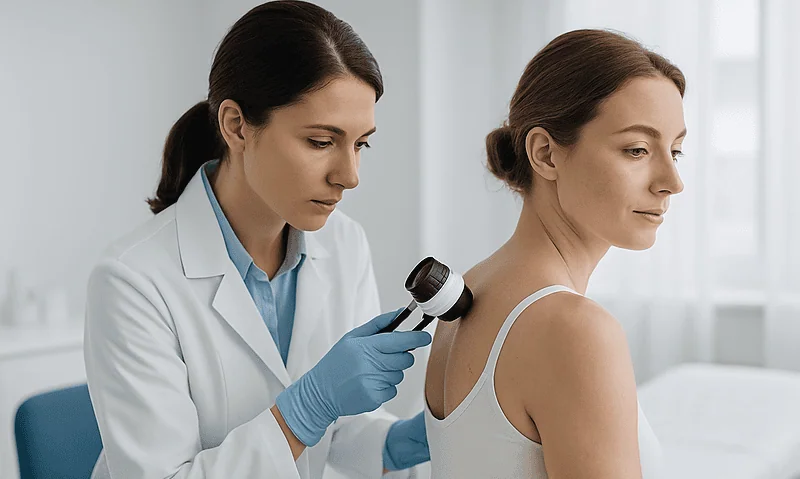
A full skin examination establishes severity, body distribution, signs of infection, skin thickening, pigmentation changes and involvement of sensitive areas. The doctor may use standardised severity scores, symptom questionnaires and quality-of-life measures to document the baseline: these become the yardstick for judging whether treatment is actually working, particularly if advanced therapy is being considered. Supporting technology is used where it adds value: dermoscopic examination to evaluate inflammatory patterns and exclude other conditions, digital medical photography to track changes over time, patch testing to identify delayed contact allergy to fragrances, preservatives, metals, rubber compounds or ingredients in topical medicines, and laboratory tests before systemic therapy or when infection or another diagnosis needs to be ruled out.
Preparation before treatment
Useful preparation means gathering previous prescriptions, photographs of flares, allergy test results, biopsy reports if available and a list of current skin care products, including the exact product names and medication strengths. A clear treatment timeline lets the team see the whole history at once instead of reconstructing it from memory. Before any new plan starts, the dermatologist explains how to cleanse, moisturise and apply each medicine. This practical instruction is essential: many patients under-apply topical treatments because they fear side effects, while others overuse strong medicines on delicate areas. A safe plan defines where, when and for how long each treatment is used.
How do you treat atopic dermatitis day to day?
Day-to-day treatment rests on consistent barrier care plus prompt, correctly dosed anti-inflammatory treatment during flares. Most plans begin with fragrance-free, non-irritating cleansers and generous moisturiser use, especially after bathing. The type of moisturiser varies: ointments suit very dry or cracked skin, while creams or lotions may be preferred for comfort, climate or body area. The best product is the one you can use consistently without burning or irritation.
During active flares, topical anti-inflammatory medication is usually prescribed. Topical corticosteroids remain central and can work very well when used correctly; the strength depends on age, body location and severity. Low-potency preparations may be used on the face or skin folds, while stronger medicines may be used briefly on thicker plaques on the trunk or limbs. Non-steroid topical medicines may be recommended for delicate areas, for long-term maintenance or for patients who need steroid-sparing options. For severe itching or widespread inflammation, wet-wrap therapy can improve hydration and medication absorption during short supervised periods, antiseptic measures may help patients with recurrent bacterial colonisation, and if crusting, oozing or pain suggests infection, antimicrobial treatment may be added after clinical assessment.
A written action plan turns all of this into something usable at home. A typical plan sets out four levels:
- Maintenance: daily moisturising and gentle cleansing, continued even when the skin looks clear.
- Early flare: the prescribed flare medicine is applied to affected areas exactly as directed, at the first sign of itch or redness.
- Established flare: the plan specifies which stronger option applies to which body area, and for how long, before stepping back down.
- Review: the plan states what should prompt a return to the doctor, for example, a flare that is not settling as expected, or signs of infection.
Phototherapy and advanced medical treatment
Phototherapy may be considered for moderate to severe atopic dermatitis that does not respond adequately to topical therapy. It involves controlled exposure to specific wavelengths of ultraviolet light in a medical setting, delivered over repeated sessions. It can reduce inflammation and itching in selected patients, but it is not appropriate for everyone; the dermatologist weighs skin type, age, medication history and previous sun sensitivity before recommending it.
Systemic therapies are considered when eczema is severe, persistent, widespread or significantly affecting sleep and daily life despite optimised topical treatment. These may include biologic medicines that target specific immune signals involved in atopic inflammation, oral targeted therapies or other immune-modulating treatments. Before starting, the medical team reviews health history, vaccination status, infection risk, pregnancy plans, other medications and any laboratory testing that is required. Advanced treatment is then monitored closely: follow-up visits assess itching, sleep, skin clearance, side effects and laboratory results where relevant, and the plan changes over time as the disease improves, relapses or responds differently across seasons and environments.
How do you get rid of atopic dermatitis?
Honestly: you control it rather than eliminate it. No current treatment permanently removes the underlying tendency, so any product promising to make atopic dermatitis vanish for good deserves scepticism. What treatment can do is substantial, clear the skin, stop the itch, hold the disease in long remission and, in many children, bridge the years until the condition settles on its own, as it often does with age. The realistic goal is skin that is comfortable and clear most of the time, with flares that are shorter, milder and less frequent, and a plan you trust when they come.
Typical duration and recovery process
There is no single fixed duration. Mild flares may begin improving within days of appropriate topical therapy, while chronic or severe disease may need several weeks to months of structured care. Barrier repair is ongoing: even when the skin looks clear, maintenance routines reduce relapse. Recovery means reduced inflammation, healed cracks and erosions, restored comfort and fewer new flares, and, just as importantly, knowing how to act early when symptoms return. Many patients find the written action plan is what finally makes the condition manageable after years of reacting to flares as emergencies.
Daily Skin Care: Habits That Support Recovery
No medicine performs well on a neglected barrier. The habits below are the everyday half of the plan, and they answer the questions patients ask most often.
What is the best skin care routine for eczema?
The best skin care routine for eczema is short, gentle and relentlessly consistent: a mild fragrance-free cleanser, lukewarm water, patting rather than rubbing the skin dry, and a generous layer of moisturiser applied within a few minutes of washing, while the skin is still slightly damp. Moisturiser is repeated at least once more during the day, and more often on hands or in dry climates. Products matter less than people expect: a plain, well-tolerated emollient used twice daily outperforms an expensive one used occasionally. What the routine leaves out matters as much as what it includes: fragranced products, harsh soaps, rough exfoliation and very hot water all undermine the barrier the routine is trying to rebuild.
Does showering help eczema?
Yes, when it is done the right way. A short, lukewarm shower hydrates the skin, removes irritants, allergens, sweat and crusts, and prepares the skin to absorb moisturiser. The benefit is lost if the water is hot, the shower is long or the skin is left to air-dry without moisturiser: water evaporating from unprotected skin actually increases dryness. The rule dermatologists teach is simple: bathe briefly, in comfortable warm water, with a gentle cleanser, then moisturise straight away.
What heals eczema quickly?
Nothing heals eczema overnight, and the fastest genuine route is the least glamorous one: the prescribed anti-inflammatory medicine, applied in an adequate amount to all affected skin for the full recommended duration, on top of consistent moisturising. Flares treated early and properly settle far faster than flares treated hesitantly with too little medicine for too few days. Home remedies and “miracle” creams marketed for rapid healing tend to cost time, and during that time, scratching keeps damaging the barrier.
How do you prevent eczema flare-ups?
Prevention rests on three habits: daily moisturising even when the skin looks clear, avoiding your personal triggers once they have been properly identified, and treating the first signs of a flare early rather than waiting to see whether it worsens. Practical trigger management often includes choosing cotton over wool next to the skin, rinsing off sweat after exercise, managing indoor humidity in very dry seasons, using gloves appropriately for wet work and keeping fingernails short to limit scratch damage during sleep. For some patients, a maintenance schedule of anti-inflammatory treatment on frequently flaring areas, agreed with the dermatologist, reduces how often those areas relapse.
Why Acting Early Matters and the Risks of Delay
Early treatment interrupts the itch-scratch cycle before inflammation becomes harder to control. Scratching damages the barrier, which lets in more irritants and microbes, which drives more inflammation, more itch and further injury. Over time, repeated scratching produces thickened, leathery skin, persistent discolouration and areas that heal slowly.
Delay also raises the risk of secondary infection. Cracked or open patches can become infected with bacteria, causing oozing, crusting, swelling, warmth or pain. Some patients with atopic dermatitis are also vulnerable to viral complications, including eczema herpeticum: a widespread herpes infection of eczema-damaged skin that doctors treat as urgent. These complications are far less common in well-controlled disease, which is one of the strongest arguments for consistent treatment rather than crisis-only treatment.
Untreated or undertreated eczema erodes sleep, concentration, school performance, work productivity and emotional well-being. In children, persistent itching feeds irritability and family stress. In adults, visible lesions or hand involvement interfere with professional responsibilities, social life and everyday tasks. Early, structured care reduces this burden and may prevent escalation to more intensive therapy later.
Specialist review is particularly valuable when eczema involves the eyelids, face, hands, genitals or large areas of the body; when it recurs despite treatment; when infection keeps returning; or when repeated courses of oral steroids are being used without any long-term control strategy. In each of these situations, the underlying problem is often a diagnosis or a plan that needs rebuilding, not simply a stronger cream.
Benefits of Atopic Dermatitis Treatment
What treatment delivers depends on severity, adherence, triggers and the therapy chosen, but effective care generally aims at the following.
| Benefit | What It Means for You |
|---|---|
| Reduced itching | Less scratching, improved comfort and fewer night-time awakenings. |
| Improved skin barrier | Skin retains moisture better and reacts less to everyday irritants. |
| Better flare control | Active patches heal more predictably with a clear step-up and step-down plan. |
| Lower infection risk | Healing cracks and controlling inflammation reduce the openings where microbes enter. |
| Safer medication use | Personalised guidance helps avoid both under-treatment and unnecessary overuse. |
| Improved daily life | Better sleep, less discomfort and more confidence at work, school and socially. |
Recovery Timeline After Starting Treatment
Every course is different, but the following timeline reflects what many patients experience after beginning a structured plan.
| Time Period | What Patients Can Expect |
|---|---|
| Day 1 | The dermatologist confirms the diagnosis, assesses severity, reviews triggers and starts a personalised skin care and medication plan. |
| First week | Itching and redness may begin to ease if treatment is used correctly; cracked or oozing areas need close monitoring. |
| First month | Many patients see clearer skin, better sleep and fewer new lesions, though chronic thickened areas take longer to soften and heal. |
| Several months | The plan shifts toward maintenance; moderate to severe cases are assessed for response and, where needed, for phototherapy or systemic treatment. |
| Longer term | Ongoing barrier care, trigger control and early flare treatment reduce recurrence and support sustained control. |
What Influences Outcomes and a Good Result
Outcomes depend on disease severity, age, barrier function, immune activity, environment, infections, stress, climate and, above everything else, adherence to the plan. A good result is not necessarily permanent disappearance of eczema. For most patients, it means fewer flares, shorter flares, less itching, healthier skin and a clear strategy for the moments when symptoms return.
Accurate diagnosis is the single most important factor. Allergic contact dermatitis, psoriasis, seborrheic dermatitis, scabies, fungal infection, drug reactions and some rare skin diseases can all resemble atopic dermatitis. If the underlying diagnosis is wrong or incomplete, treatment fails no matter how carefully it is followed. This is why persistent or unusual cases benefit from specialist evaluation and, where appropriate, patch testing, cultures, biopsy or laboratory assessment before any escalation of therapy.
Technique matters almost as much. Topical medicines must be applied in adequate amounts for the correct duration. Stronger treatment may be needed briefly for thick inflamed plaques, while delicate areas need gentler options. Stopping too early lets inflammation return; prolonged unsupervised use of potent steroids raises the risk of thinning skin, stretch marks and other side effects. A written plan is how patients hold both risks in balance without guessing.
Consistency with moisturisers and gentle cleansing is the third pillar. Barrier repair is not a flare-only activity: regular emollient use reduces dryness, supports healing and makes the skin less reactive between flares. Patients who travel frequently often need specific advice for different climates, hotel toiletries, water hardness, sweating and sun exposure, because a routine that works at home can quietly fall apart abroad.
Trigger identification improves control, but it must be evidence-based. Not every positive allergy test represents a real eczema trigger, and overly restrictive diets can cause harm, especially in children. Food allergy evaluation is reasonable when there is a convincing history of immediate reactions or severe eczema that does not respond as expected, but broad food avoidance without medical guidance is usually discouraged. In practice, contact allergens, occupational irritants and ingredients in everyday skin care products turn out to be more relevant than most patients expect.
For moderate to severe disease, access to advanced therapy and careful monitoring shape the outcome. Biologic or targeted oral therapies can bring meaningful improvement for selected patients, but the choice depends on medical history, age, other conditions, infection risk and personal preference. Ongoing follow-up is what keeps these treatments both effective and safe: dosing is adjusted, side effects are watched for, and the question of whether the medicine is still the right one is asked at every review rather than assumed.
Finally, emotional health and sleep belong inside the treatment conversation, not outside it. Chronic itch feeds anxiety, low mood and fatigue, which in turn worsen scratching and weaken adherence. Good dermatologic care recognises this cycle and pairs medical treatment with practical strategies for sleep, stress and daily routines, because eczema treatment that ignores the person rarely controls the skin.
Atopic Dermatitis Care at Acibadem
Patients with long-standing atopic dermatitis usually need more than a prescription. They need diagnostic clarity, a considered second opinion, access to the full range of treatment options and a plan they can follow with confidence between visits. Acibadem provides dermatology care within multi-speciality hospitals, a structure that matters most when eczema overlaps with allergy, infection, immune or paediatric concerns and more than one specialty needs to assess the same patient.
The approach is individual. Physicians who manage both common and complex dermatologic conditions consider each patient’s age, skin type, disease pattern, previous treatments, allergies, lifestyle, climate exposure, occupation and goals. Diagnostic pathways support this: depending on the case, evaluation may include detailed clinical examination, dermoscopic assessment, digital documentation, patch testing, allergy-related work-up, microbiological testing, laboratory monitoring or biopsy: the tools that separate atopic dermatitis from its look-alikes and expose whatever has been blocking improvement.
Treatment planning follows evidence-based protocols while staying practical for the individual. A plan may combine barrier repair, flare medication, maintenance therapy, infection management, phototherapy where appropriate and assessment for biologic or targeted systemic therapy in moderate to severe cases, always with concrete guidance on using each medicine correctly and reducing irritant exposure. The resulting plan is documented clearly, so that follow-up, whether with the same team or with another physician later, continues from a shared record rather than from memory.
A measured opinion is part of the offer. Atopic dermatitis treatment is evolving quickly, but not every patient needs the newest or strongest therapy. A careful consultation may conclude that the current regimen simply needs optimising, that a trigger is being missed, that a different diagnosis deserves consideration, or that advanced treatment genuinely is the right step. That honesty prevents unnecessary escalation as often as it enables it.
Living Well With Atopic Dermatitis
Atopic dermatitis is persistent, but it is rarely unmanageable once the diagnosis is right and the plan fits the person. The combination that works is unglamorous and reliable: daily barrier care, correctly used anti-inflammatory treatment, honest trigger assessment and follow-up that adjusts the plan as the disease changes. Patients who understand their own pattern, what their skin does, when, and why, consistently do better than those handed a cream and left to improvise. The condition may not disappear, but with structured care its grip on sleep, work, school and confidence loosens, and often stays loose.
Preparation
- Before assessment, patients should note flare patterns, suspected triggers, allergies, current skin products and previous treatments. Bring medical records and photos of active rashes if symptoms vary. Avoid applying new medicated creams immediately before the visit unless prescribed.
Aftercare
- Follow the dermatologist’s plan for moisturizers, topical medicines and trigger avoidance. Keep nails short, avoid harsh soaps and maintain regular skin hydration. Return for follow-up if itching, infection signs or frequent flares continue.
Frequently Asked Questions
What affects the cost of atopic dermatitis treatment?
The main factors are disease severity, whether care is limited to topical treatment or requires advanced medicines, the need for allergy or infection testing, follow-up frequency and the chosen hospital or specialist. Travel, translation and pharmacy arrangements can also affect the final cost for international patients.
How can I get a personalised quote?
A personalised quote is usually prepared after a dermatologist reviews your medical history, photographs if appropriate, previous treatments and current symptoms. You can request a free consultation so the care team can suggest a suitable plan and explain what is included.
Does an atopic dermatitis package include medicines?
Package inclusions vary. Some plans may include consultation, skin assessment, treatment planning and interpreter support, while medicines, laboratory tests or follow-up visits may be listed separately. The quote should clarify all included and excluded items.
Will I need follow-up after starting treatment?
Follow-up is often important because atopic dermatitis is chronic and treatment may need adjustment as flares improve or triggers change. The follow-up schedule depends on severity, treatment type and how well your skin responds.
Are advanced treatments always needed?
No. Many patients improve with consistent barrier care, trigger management and appropriate topical therapy. Advanced systemic or injectable treatments are usually considered when symptoms are persistent, widespread or significantly affecting quality of life, and suitability must be decided by a specialist.
Medically reviewed by the Acıbadem International Medical Board August 30, 2026
See our medical review board →
Update history
- PublishedJune 8, 2026
- Medical review approvedAugust 30, 2026
- Last content updateSeptember 8, 2026
References2
- Atopic eczema nhs.uk
- Eczema medlineplus.gov
Trusted care for international patients
From the Acibadem Blog

When Atopic Dermatitis Looks Infected: Weeping, Crusting and Fever That Need a Doctor Soon
Infected atopic dermatitis is eczema that has been invaded by bacteria, most often Staphylococcus aureus, or less commonly by the herpes simplex virus. Suspect…
Why Photos of Your Flares Help: Preparing for an Atopic Dermatitis Visit When Skin Looks Calm
Atopic dermatitis tends to settle between flares, so the skin a clinician examines on appointment day often does not reflect your worst weeks. Dated,…