Folliculitis Treatment
Folliculitis is inflammation or infection of hair follicles, causing small red or pus-filled bumps. Treatment focuses on identifying the cause and relieving infection, irritation, and recurrence.
Quick answer
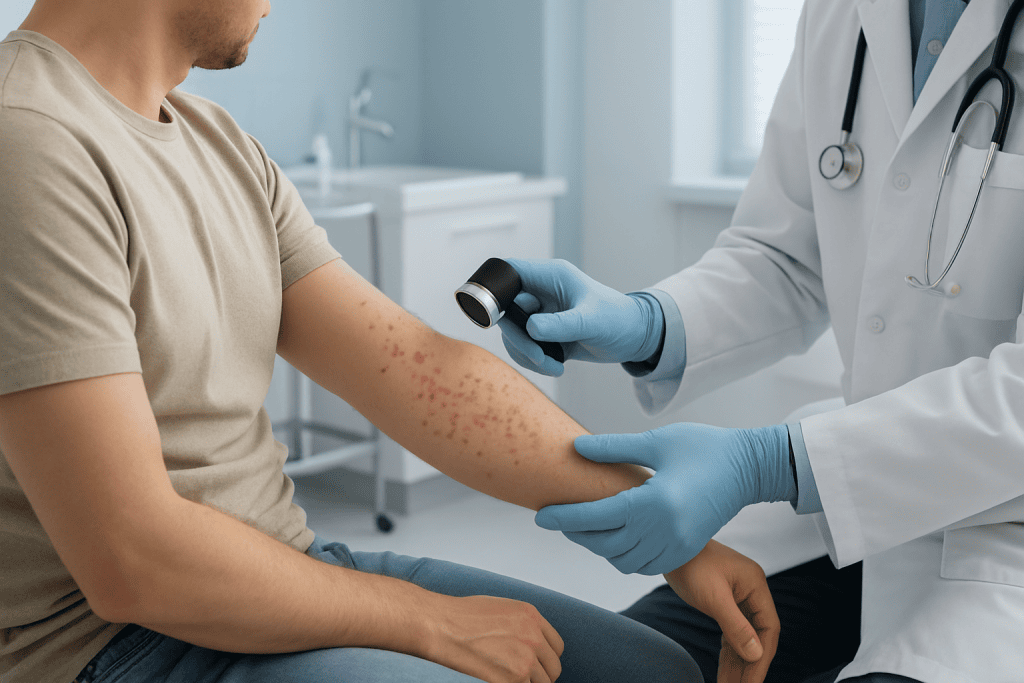
Folliculitis is inflammation of the hair follicles, usually appearing as small red or pus-filled bumps centred on a hair. Causes include bacteria, yeast, ingrown hairs, friction and contaminated water. Treatment depends on the cause: antiseptic washes, topical or oral antibiotics, antifungal medication, changes to shaving technique, or drainage of a deeper boil. Mild cases often settle within days; recurrent or deep forms need a dermatologist-led diagnosis.
What Is Folliculitis?
Folliculitis is inflammation of the hair follicles: the tiny channels in the skin from which each hair grows. It appears as clusters of small red or white-headed bumps, often tender or itchy, and typically centred on a hair. It affects people of every age and skin type, and it can develop anywhere hair grows: the scalp, beard area, chest, back, buttocks, thighs, groin and legs.
You will sometimes see the word spelled foliculitis, but the correct medical term is folliculitis, from the Latin word for the follicle itself. Whatever the spelling, the condition is the same: something has irritated, blocked or infected the follicle, and the skin around it has responded with inflammation. The classic clue is small bumps with hair visible at the centre, which is one of the ways doctors separate folliculitis from ordinary acne.
Folliculitis can seem minor at first. For many people it settles within days. For others it returns again and again, spreads across a wider area, or deepens into painful boils. It can also imitate, and be imitated by, other skin conditions. A red, pus-filled bump may be bacterial folliculitis, but it may also be yeast folliculitis, acne, rosacea, keratosis pilaris, hidradenitis suppurativa, an allergic reaction, or a deeper abscess. The distinction matters, because the treatment that works for one cause can be useless or counterproductive for another. That is why effective folliculitis treatment begins with identifying the underlying cause rather than simply suppressing what the bumps look like.
What triggers folliculitis?
Folliculitis is triggered by anything that damages, blocks or infects a hair follicle. The most common triggers fall into a few practical groups. Mechanical irritation comes from shaving, waxing, plucking, tight clothing, backpack straps, prolonged sitting, or friction during sport. Occlusion comes from heavy oils, greasy cosmetics, thick sunscreens, wetsuits, non-breathable fabrics and adhesive dressings that trap sweat against the skin. Microbial triggers include bacteria that normally live harmlessly on the skin but invade a damaged follicle, yeast that overgrows in warm, humid conditions, and organisms picked up from inadequately maintained hot tubs or pools. Finally, some medications, corticosteroids, certain targeted cancer therapies and immunosuppressive drugs, can change how follicles behave and produce folliculitis-like eruptions as a side effect.
Often two or three triggers combine. A close shave nicks the follicle openings; sweat and occlusive clothing keep the area warm and damp; skin bacteria take advantage. Understanding your own combination of triggers is a large part of preventing the next flare.
Why am I all of a sudden getting folliculitis?
Sudden-onset folliculitis usually means something in your routine or environment has changed, even if the change seems trivial. Common examples include a new razor or shaving technique, a new gym routine with more sweating and friction, a recent hot tub or pool visit, a change in climate to somewhere hotter and more humid, new skincare or haircare products with heavier oils, tighter clothing, weight gain that increases skin-on-skin friction, or a recent course of antibiotics that has shifted the balance of microbes on your skin. Less obvious contributors include newly diagnosed or poorly controlled diabetes, immune system changes, and new medications. If the flare is genuinely out of nowhere and keeps recurring, that pattern itself is diagnostically useful, and it is worth reconstructing the two to four weeks before the first bumps appeared.
Is folliculitis contagious?
Most folliculitis is not contagious in the everyday sense, but some forms can spread under specific conditions. Folliculitis caused by ingrown hairs, friction, occlusion or medication cannot be passed to anyone. Bacterial forms involve organisms that many people already carry on their skin; direct transmission is uncommon, but sharing razors, towels or unwashed sports equipment can transfer bacteria from inflamed skin, particularly when certain resistant strains are involved. Hot tub folliculitis is not caught from another person but from the water itself, so several people using the same poorly maintained tub can develop it at the same time. Sensible hygiene, your own razor, your own towel, washed kit, removes most of the practical risk to household members.
Types of Folliculitis
Folliculitis is a family of conditions rather than a single disease. The forms below share one feature, inflammation involving the hair follicle, but differ in cause, depth, appearance and treatment. Superficial forms affect the upper part of the follicle; deeper forms involve the surrounding skin and can leave marks or scars.
Bacterial folliculitis
Bacterial folliculitis is one of the most common forms and is usually caused by bacteria that live harmlessly on healthy skin until a follicle is irritated or damaged. It typically appears after shaving, scratching, friction or minor skin injury as tender, red bumps that develop white or yellow heads. Most episodes are superficial and respond well to treatment, but some involve antibiotic-resistant strains, particularly when infections keep recurring or have not improved with standard therapy. In those situations, a swab and culture matter, because choosing the antibiotic blindly can mean choosing the wrong one. A related pattern, gram-negative folliculitis, can develop in people who have taken long antibiotic courses for acne, when the usual skin bacteria are suppressed and other organisms take their place.
Hot tub folliculitis
Hot tub folliculitis develops after exposure to warm water containing certain bacteria that thrive when disinfectant levels are inadequate, typically hot tubs, whirlpools and occasionally heated pools. It appears within hours to a few days of exposure as itchy or tender bumps, often concentrated on skin that was covered by swimwear, where wet fabric held contaminated water against the follicles. Many cases settle on their own within days as the follicles clear the bacteria. Persistent, extensive or unusually deep cases, and cases in people with weakened immunity, are the ones that need medical treatment rather than patience.
Malassezia (yeast) folliculitis
Malassezia folliculitis, sometimes called fungal or yeast folliculitis, is caused by overgrowth of a yeast that normally lives on everyone’s skin. It produces remarkably uniform, intensely itchy small bumps on the chest, back, shoulders, neck, hairline and upper arms, areas rich in the oil glands the yeast feeds on. It is one of the great mimics of acne, and it is routinely misdiagnosed as such. The distinction is critical: antibiotics do not help yeast folliculitis and can make it worse by removing the bacteria that normally keep yeast in check. Heat, humidity, sweating, occlusive clothing and heavy oils all encourage recurrence, which is why treatment plans for this form nearly always include prevention measures alongside antifungal medication.
Pseudofolliculitis barbae (razor bumps)
Pseudofolliculitis barbae, razor bumps, is inflammation caused by the hair itself rather than by infection. After a close shave, curved hairs grow back into the skin or curl within the follicle, and the body reacts to the hair as a foreign object. It is most common in the beard and neck area and in people with tightly curled hair, though it also occurs in the underarms, groin and legs after waxing or close shaving. Because the mechanism is mechanical, repeated antibiotic courses alone rarely solve it; the shaving pattern has to change. Left unmanaged, pseudofolliculitis can cause persistent bumps, pigmentation changes and thickened or keloid-like scarring, particularly in darker skin tones.
Boils, furuncles and carbuncles
A boil, or furuncle, is a deeper infection of a hair follicle in which pus collects under pressure, producing a painful, swollen nodule. Boils may need drainage as well as, or instead of, medication, because antibiotics penetrate a walled-off pocket of pus poorly. A carbuncle is a cluster of connected boils draining through several openings; it signals more extensive tissue involvement and warrants careful evaluation. Recurrent boils are a pattern in their own right and may prompt tests for diabetes, immune function or bacterial carriage in the nose, all of which can drive repeated episodes.
Scalp folliculitis
Folliculitis of the scalp deserves separate attention because the stakes include the hair itself. It can cause itchy pustules along the hairline or across the crown, crusting, tenderness and temporary shedding. Most scalp folliculitis is superficial and does not threaten the follicles. However, a small group of chronic inflammatory scalp conditions attack the follicle deeply enough to destroy it, leading to permanent, scarring hair loss if the process is not recognised and controlled in time. This is why persistent scalp pustules justify a specialist examination, often with magnified scalp imaging and sometimes a biopsy, rather than months of medicated shampoos alone. Scalp folliculitis is also relevant to anyone who has had or is considering a procedure such as an FUE hair transplant or DHI hair transplant: small pustules around healing grafts are a recognised early phenomenon that a hair transplant team will want to assess and distinguish from true infection. Where scarring hair loss has already occurred and the inflammation is fully controlled, camouflage or restoration options, from scalp micropigmentation to surgical approaches, can be discussed as a separate, later step.
Medication-associated folliculitis
Some folliculitis-like eruptions are driven by medication rather than by microbes or mechanics. Corticosteroids, certain targeted cancer therapies and immunosuppressive drugs can all alter follicle behaviour or skin immunity and produce follicular eruptions. Management here requires coordination between the dermatologist and the prescribing physician, so that the skin is treated without disrupting therapy the patient genuinely needs. No one should change or stop a prescribed medication over a skin eruption without that conversation happening first between the doctors involved.
Symptoms: How Folliculitis Differs From Acne
Typical symptoms of folliculitis include red or skin-coloured bumps clustered around hair follicles, white-headed or pus-filled spots, itching, burning, tenderness, crusting and localised swelling. Many patients describe the eruption as acne-like, and the confusion is understandable, but the distribution and triggers usually differ. Folliculitis centres on individual hairs, often in areas acne spares, such as the buttocks, thighs and legs, and it characteristically worsens after shaving, sweating, friction, prolonged sitting, tight clothing or time in humid environments. Acne, by contrast, involves comedones, blackheads and whiteheads, which folliculitis does not produce.
Depth changes the picture. Superficial folliculitis produces small, relatively uniform bumps. Deeper involvement produces painful nodules, boils, and, when several merge, a carbuncle. Fever, chills, spreading redness or red streaks extending from a lesion indicate that infection has moved beyond the follicle into surrounding tissue, which is a different clinical situation from simple folliculitis and is assessed accordingly.
Aftermath matters too, particularly in darker skin tones. Even once the active inflammation settles, post-inflammatory darkening or redness can linger for weeks or months, and repeatedly traumatised follicles can leave thickened bumps or permanent marks. This is one of the strongest arguments for treating recurrent folliculitis properly rather than picking, squeezing or shaving over it and hoping.
Who Needs Folliculitis Treatment
Not every case needs a doctor. A handful of superficial bumps after one bad shave or one hot tub session will often clear on their own with basic skin care. Medical folliculitis treatment becomes worthwhile when the pattern changes: bumps that do not improve within a few days, flares that keep recurring, lesions that become painful, swollen or pus-filled, spreading involvement, deep boils, or marks and thickened skin left behind after each episode.
Certain circumstances lower the threshold for seeking care. People with diabetes, weakened immunity, implanted medical devices or a history of repeated antibiotic courses have more to lose from an untreated or mistreated skin infection. Lesions on the face, scalp or groin, or near surgical wounds, deserve earlier attention. So does folliculitis that has already been treated several times with only temporary improvement: a cycle of clearing and relapsing usually means the underlying trigger has never been addressed. Treating pseudofolliculitis with repeated antibiotics does not solve the mechanical problem of ingrown hairs; treating yeast folliculitis as bacterial acne delays improvement and can worsen it. A precise diagnosis breaks that cycle.
Diagnosis: Finding the Cause Before Treating It
Diagnosis begins with a detailed history and skin examination. A dermatologist will ask where the lesions occur, how long they last, whether they itch or hurt, what seems to trigger them, what has already been tried, and whether anyone in the household has similar symptoms. Expect questions about shaving habits, gym and spa exposure, swimming, recent travel, occupational equipment and protective clothing, antibiotic use, diabetes, immune status, allergies and current medications. None of these questions is filler; each one points towards or away from a specific form of folliculitis.
In many cases the examination alone is enough for a confident working diagnosis, and treatment starts the same day. When the condition is persistent, recurrent, severe or atypical, targeted tests earn their place. A swab or culture from a pustule identifies the bacteria involved and, through susceptibility testing, which antibiotics will actually work, which is essential when resistance is a possibility. Microscopy and fungal testing detect yeast or fungus and can end months of misdirected acne treatment in a single result. In selected chronic cases, a small skin biopsy distinguishes folliculitis from other inflammatory or autoimmune skin disorders and, on the scalp, shows whether follicles are at risk of permanent damage. If boils keep recurring, blood tests may be added to look for diabetes, immune problems or other contributing factors.
Two practical points help the consultation. First, bring photographs of previous flares, folliculitis fluctuates, and the skin on the day of the appointment may not show the story. Second, bring a list of prior prescriptions and their effect. Knowing what has already failed is almost as useful as knowing what the lesions look like.
Folliculitis Treatment: What It Involves
Folliculitis treatment is not one cream or one pill. It is a cause-matched plan that clears the current episode and reduces the chance of the next one. Depending on the diagnosis, it may combine hygiene changes, antiseptic washes, warm compresses, topical or oral antibiotics, antifungal therapy, anti-inflammatory treatment, drainage of an abscess, a medication review with the prescribing doctor, changes to hair-removal technique, and longer-term prevention strategies.
How to treat folliculitis: the general approach
Treatment follows a consistent sequence, whatever the cause turns out to be:
- Assess severity. Scattered superficial bumps, recurrent flares interfering with daily life, and deep painful boils with spreading redness are three different levels of problem requiring three different levels of response.
- Clarify the cause. Examination, often with magnification, plus culture, microscopy or biopsy where the picture is unclear or the history is one of relapse.
- Prepare the skin. Patients are usually asked to pause shaving the affected area, set aside heavy or occlusive products, and stop squeezing lesions. If a culture is planned, the physician will usually time the sample before any new antibiotic is introduced, unless the situation is urgent.
- Treat the cause. Antiseptics and antibiotics for bacterial disease; antifungals for yeast; technique changes and anti-inflammatory treatment for ingrown hairs; drainage for a walled-off abscess.
- Prevent recurrence. Trigger management is written into the plan from the start, not bolted on after the third relapse.
For superficial bacterial disease, the plan usually centres on reducing the bacterial load: antiseptic cleansers, topical antibiotic medication, and skin-care measures that cut friction and contamination. Oral antibiotics are reserved for lesions that are widespread, deep, painful, recurrent or accompanied by surrounding redness, and when resistance is a concern, culture-directed choice avoids both ineffective treatment and unnecessary antibiotic exposure. For yeast folliculitis, treatment may involve antifungal cleansers, creams, shampoos or oral antifungal medication, together with practical measures: showering after heavy exercise, changing out of sweaty kit promptly, limiting heavy oils, choosing breathable fabrics. For ingrown-hair folliculitis, the doctor addresses both the inflammation and the hair behaviour, pausing close shaving, switching to an electric trimmer, shaving with the grain rather than against it, not stretching the skin during shaving, and using topical anti-inflammatory or keratolytic medication to calm bumps and free trapped hairs. In recurrent pseudofolliculitis, medically supervised long-term hair-reduction strategies can be discussed as part of the overall plan.
How do I get rid of my folliculitis?
You get rid of folliculitis by matching the treatment to the cause and removing the trigger, not by attacking the bumps harder. In practice, the fastest route for most people is: stop traumatising the area (no shaving over it, no squeezing), keep it clean and dry, avoid occlusive products, and use the treatment appropriate to the diagnosis. Mild superficial cases often begin improving within days of this alone. What does not work is cycling through leftover creams and old antibiotics, because each wrong treatment costs weeks and can shift the skin’s microbial balance in the wrong direction. If your folliculitis has survived two or three self-treatment attempts, the missing ingredient is almost always the diagnosis, not a stronger product.
How do you cure folliculitis?
There is no single universal fix, and “cure” is the wrong frame for a condition with this many causes, but most episodes clear completely with correctly targeted treatment. The honest picture is this: a one-off bacterial or hot tub episode, properly treated, usually ends and does not return. Forms driven by an ongoing trigger, tightly curled hair and daily shaving, a humid climate, an essential medication, diabetes, can be controlled very effectively, but control depends on managing the trigger as well as the flare. Patients who understand this distinction tend to do better, because they follow the prevention part of the plan rather than treating each flare as an isolated bad-luck event.
When a boil needs drainage
Medication alone may not resolve a boil, because pus trapped under pressure in a walled-off pocket is poorly reached by antibiotics. Incision and drainage is a short outpatient procedure: the area is cleaned, local anaesthetic is used, the collection is opened and drained under sterile conditions, a sample may be sent for culture, and a small dressing is applied with instructions for wound care. Whether antibiotics are added afterwards depends on the size and location of the abscess, any surrounding redness, immune status, recurrence history and systemic symptoms. Squeezing a boil at home is the one reliably bad option: it pushes infected material deeper and outward rather than out.
The tools behind the diagnosis
The technology in folliculitis care exists to make the diagnosis precise rather than to make the treatment dramatic. Dermatologic magnification lets the clinician evaluate follicle-centred inflammation, ingrown hairs, scaling, pigmentation and early scarring. Microbiology laboratories identify bacteria and test antimicrobial susceptibility. Microscopy and fungal testing separate yeast eruptions from acne look-alikes. Digital clinical photography tracks response over time, particularly useful when lesions fluctuate or when follow-up happens across several visits. On the scalp, magnified imaging assesses follicular openings, inflammation and early scarring change. Rarely, imaging is needed when a deep soft-tissue infection is suspected. A consultation and diagnostic sampling can usually be completed in one visit; cultures take longer, and treatment is adjusted once results arrive.
Recovery Timeline After Folliculitis Treatment
Recovery depends on the diagnosis, the depth of inflammation and the treatment used, but most patients follow a recognisable pattern once appropriate care begins.
| Time Period | What Patients Can Expect |
|---|---|
| Day 1 | Examination, samples if needed, and initial treatment. Instructions usually include pausing shaving in the area, avoiding squeezing, friction and irritating products. |
| First week | Itching, tenderness and new bump formation often begin to ease in superficial cases. If cultures were taken, therapy is adjusted once results are back. |
| First month | Most uncomplicated cases show clear improvement with consistent treatment and prevention measures. Deeper, fungal, recurrent or ingrown-hair-related forms often need ongoing therapy and review. |
| Longer term | Focus shifts to preventing recurrence, managing shaving and friction triggers, monitoring pigmentation or scarring, and deciding whether maintenance treatment or hair-reduction strategies are appropriate. |
Two caveats keep expectations realistic. First, improvement is not the same as resolution: the underlying inflammation or microbial imbalance often outlasts the visible bumps, which is why plans have an intended duration. Second, residual discolouration fades on its own timetable, often weeks to months, and is a cosmetic aftermath, not a sign the treatment failed.
Why Acting Early Matters
Folliculitis is easier to control before inflammation spreads deeper or becomes habitual. A few superficial bumps respond to simple, targeted care. When lesions are scratched, squeezed, shaved over or treated repeatedly with the wrong medication, the skin barrier becomes more irritated and more vulnerable, and superficial folliculitis gets the chance to become something worse: a boil or abscess that needs drainage, or cellulitis, expanding redness, warmth, swelling and tenderness in the surrounding skin.
Recurrent inflammation also has a cosmetic cost that compounds over time. Post-inflammatory darkening can persist for months, particularly in darker skin. Repeated ingrown-hair inflammation can leave thickened bumps or keloid-like scarring. On the scalp, chronic follicular inflammation can destroy follicles and contribute to permanent, scarring hair loss if the specific condition responsible is not identified early enough to control it.
Early, accurate diagnosis also protects you from the quieter harm of mistreatment. Repeated antibiotic courses without confirmation of the cause contribute to resistance and can actively worsen yeast-related folliculitis. Equally, delaying antibiotics or drainage when a bacterial abscess is forming prolongs pain and increases complications. The goal is not to over-treat every small bump: it is to treat the right condition, at the right time, at the right level of intervention.
Will folliculitis ever go away?
Yes, most folliculitis goes away, and much of it goes away for good, but the answer depends on which form you have. Single-trigger episodes, such as hot tub folliculitis or a post-shave bacterial flare, typically resolve fully once treated and do not return unless the exposure is repeated. Trigger-driven forms behave differently: pseudofolliculitis will keep returning as long as the shaving pattern that causes it continues, and yeast folliculitis tends to recur in heat and humidity unless prevention is maintained. Chronic inflammatory scalp forms need sustained management to stay quiet. So the realistic framing is that the current episode will very likely clear, and whether it stays cleared depends on whether the cause was identified and addressed rather than just the bumps.
Benefits of Folliculitis Treatment
The benefits depend on the cause and severity, but a well-planned approach improves both the current episode and the skin’s long-term stability.
| Benefit | What It Means for You |
|---|---|
| Relief of itching, burning and tenderness | Targeted treatment calms inflammation and reduces the discomfort that interferes with sleep, shaving, exercise, clothing choices and daily routines. |
| Control of active infection | When bacteria, yeast, fungus or another organism is involved, appropriate medication treats the source rather than only masking the symptoms. |
| Reduced risk of boils and abscesses | Early and accurate care makes it less likely that superficial folliculitis progresses into deeper, more painful lesions that may need drainage. |
| Fewer recurrent flares | Identifying triggers, shaving technique, friction, sweating, occlusive products, medication-related factors, turns treatment into a prevention plan. |
| Protection against scarring and pigmentation changes | Controlling inflammation and avoiding repeated trauma reduces the likelihood of long-lasting marks, thickened skin and follicle damage. |
| More confident long-term skin management | A clear diagnosis tells you what to do during flares, what to avoid, and when a flare is behaving unusually enough to warrant reassessment. |
Factors That Influence Outcomes
A good result depends on accurate diagnosis, appropriate medication, consistent skin care and honest attention to the factors that triggered the condition. Patients improve when treatment is matched to the true cause rather than to the appearance alone.
Type of folliculitis. This is the single most important factor. Bacterial, yeast, ingrown-hair, medication-related and chronic scalp forms each demand a different strategy, and a treatment effective for one can be ineffective or counterproductive for another. Culture, microscopy and biopsy are not needed for every patient, but they become valuable precisely when the condition is recurrent, resistant or atypical.
Depth and severity. Superficial folliculitis responds more quickly than deep boils, abscesses or chronic inflammatory forms. If pus is trapped, drainage is part of healing, not an optional extra. And if follicular inflammation has already caused scarring, treatment can still control activity and prevent progression, but existing scar tissue and permanently lost hair may not fully reverse, which is a limit worth stating plainly.
Skin type and healing pattern. Some patients are more prone to post-inflammatory hyperpigmentation, persistent redness or keloid-like thickening. Early control, sun protection where appropriate, and keeping hands off healing lesions all reduce the risk of long-lasting discolouration. In beard-area pseudofolliculitis, hair curl pattern, shaving frequency and grooming requirements, including workplace rules about being clean-shaven, strongly influence how easily recurrence can be prevented.
General health. Diabetes, immune suppression, obesity, eczema, nasal carriage of certain bacteria, repeated antibiotic use and close-contact environments all raise the likelihood of recurrence. Athletes, healthcare workers, military personnel, frequent travellers and people who use shared equipment or communal water facilities often need prevention measures tailored to their specific routines rather than generic advice.
Adherence. Folliculitis frequently looks better before the underlying process is fully controlled. Abandoning the plan at the first sign of improvement, returning immediately to close shaving, wearing tight clothing over healing skin, or resuming heavy occlusive products invites relapse. A good care team distinguishes clearly between instructions that are temporary and habits worth changing for good.
Follow-up. If a first-line plan does not work as expected, that is information, not failure. It may mean the diagnosis needs refining, a culture is needed, or a different trigger is operating. Timely reassessment lets the physician adjust course and spares you further rounds of trial and error.
Preventing Folliculitis From Coming Back
Prevention is unglamorous and effective. Once you know your form of folliculitis, most of the preventive work happens in daily habits rather than in prescriptions:
- Hair removal: shave less closely and less often where possible, shave with the grain, use a clean sharp blade or an electric trimmer, and never dry-shave inflamed skin.
- Sweat and friction: shower after heavy exercise, change out of damp kit promptly, and choose breathable fabrics over tight synthetic layers on flare-prone areas.
- Products: keep heavy oils, greasy cosmetics and occlusive layers away from areas that have flared before, especially the chest, back and hairline in yeast-prone skin.
- Shared environments: use your own razor and towel, wipe down shared gym equipment, and be selective about hot tubs whose maintenance you cannot vouch for.
- Hands off: squeezing and picking convert superficial bumps into deeper problems and marks; it is the cheapest prevention advice and the most frequently ignored.
For people whose folliculitis is entangled with broader scalp and hair concerns, recurrent scalp flares alongside thinning, or inflammation around previous procedures, prevention sits within a wider plan. Options in that space range from medical management to non-surgical hair restoration approaches, always with the inflammation controlled first.
Folliculitis Care at Acibadem
Folliculitis looks simple; resistant infections, fungal mimics, scalp involvement, recurrent abscesses, medication-related eruptions and scarring risk are not. At Acibadem, care is planned around the individual diagnosis, medical history and follow-up needs rather than around a standard prescription, and the emphasis falls on identifying the specific form of folliculitis before committing to a treatment course.
The diagnostic pathway is deliberately unhurried about assumptions. Rather than treating every follicular eruption as bacterial acne, physicians assess location, lesion type, timing, triggers, previous treatments and risk factors, supported where needed by dermatologic magnification, microbiology cultures with susceptibility testing, fungal evaluation, pathology review when biopsy is indicated, and digital documentation for follow-up. When the picture involves recurrent infection, diabetes, immune suppression, medication effects or complex wound care, dermatologists work alongside infectious disease specialists, surgeons, endocrinologists or other physicians as the case requires.
Continuity is built into the plan. When care continues with another physician afterwards, the diagnosis, test results, medications used and next steps are documented clearly, so that treatment can be carried forward without starting from zero: a detail that matters most in recurrent or chronic forms, where the history of what has already been tried is half the diagnosis.
A Realistic Way to Think About Folliculitis
Folliculitis is common, but persistent or recurrent folliculitis should not be dismissed as a cosmetic inconvenience. It affects comfort, confidence, sleep, grooming, exercise and daily life, and in some patients it leads to deeper infection, lasting marks or scarring, outcomes that early, accurate care makes far less likely. The pattern worth remembering is simple: bumps that clear and stay cleared were probably treated correctly; bumps that keep coming back are telling you the cause has not yet been found. The most effective care starts with understanding why the follicles are inflamed, treats that cause specifically, and builds prevention into the plan from day one, so that the current episode ends, and the next one has far less reason to begin.
Preparation
- A dermatologist reviews symptoms, medical history, shaving habits, skin products, and any previous infections. Patients should avoid applying creams, oils, or antibiotics before the visit unless prescribed. In recurrent or severe cases, a swab or laboratory test may be requested to identify bacteria or fungi.
Aftercare
- Use prescribed topical or oral medication exactly as directed and complete the full course if antibiotics or antifungals are given. Keep the area clean and dry, avoid squeezing bumps, and reduce shaving, friction, or tight clothing until healed. Seek follow-up care if lesions spread, become painful, or keep returning.
Frequently Asked Questions
What affects the cost of folliculitis treatment?
Cost depends on the cause, severity, affected area, need for laboratory testing, medicines prescribed, follow-up requirements, and whether any minor procedure is needed. Hospital setting, dermatologist experience, and international patient services can also influence the final quote.
How can I get a personalised quote?
You can request a free consultation and share clear photos, symptom history, previous test results, medicines used, allergies, and any recurrence pattern. A specialist review helps determine which tests or treatments may be needed before a personalised estimate is prepared.
Is folliculitis treatment usually a fixed package?
It may be offered as a package when the expected care is straightforward, but recurrent or uncertain cases may require itemised testing, prescription medicines, or follow-up. The final plan is confirmed after medical assessment.
Will I need laboratory tests?
Not every patient needs tests. A dermatologist may recommend a swab, culture, or other examination if the folliculitis is recurrent, severe, unusual, or not responding to previous treatment.
Can treatment be planned before I travel to Turkey?
Initial planning may be possible after remote review of your symptoms, photos, and medical history. The diagnosis and treatment plan are confirmed after an in-person specialist examination, and the international patient team can help coordinate appointments and language support.
Medically reviewed by the Acıbadem International Medical Board September 1, 2026
See our medical review board →
Update history
- PublishedJune 8, 2026
- Medical review approvedSeptember 1, 2026
- Last content updateSeptember 8, 2026
References1
- Folliculitis my.clevelandclinic.org
Trusted care for international patients
From the Acibadem Blog

Which Folliculitis Type Is It? Why Bacterial, Fungal and Razor Causes Are Treated Differently
Folliculitis is inflammation of hair follicles, and the main types are bacterial (usually staphylococcal, or Pseudomonas after hot tubs), fungal (a yeast called Malassezia),…

What Folliculitis Looks Like, and Does It Go Away on Its Own?
Folliculitis usually looks like clusters of small red, pink, or skin-colored bumps, each centered on a hair, sometimes with a white or yellow pus-filled…
Why Does Folliculitis Keep Coming Back? How Dermatologists Investigate Recurrent Bumps
Folliculitis usually keeps coming back for an identifiable reason: bacteria such as Staphylococcus aureus carried on the skin or in the nose, repeated shaving…
Folliculitis vs Acne: How Dermatologists Tell Them Apart and Why the Treatments Differ
Folliculitis and acne both produce red bumps and pustules, but they are different conditions. Acne involves clogged pores with blackheads or whiteheads, oil, and…