

Gamma Knife
Gamma Knife is a precise form of stereotactic radiosurgery that treats certain brain tumors and other brain conditions without an incision by delivering highly focused radiation beams.
Quick answer
Gamma Knife is a precise form of stereotactic radiosurgery that treats certain brain tumors and other brain conditions without an incision by delivering highly focused radiation beams.
When a Brain Condition Requires Treatment, Precision Matters
Hearing that you may need treatment for a brain tumor or another condition inside the skull can feel overwhelming. Many patients immediately think about open brain surgery, long hospital stays, visible scars, or the possibility of losing important neurological function. Those concerns are understandable. The brain controls movement, speech, memory, vision, balance, and many other essential functions, so any treatment decision can feel especially weighty.
Gamma Knife offers a different path for selected patients. It is a highly precise form of radiation treatment designed for conditions in the brain and nearby structures. Despite the name, it is not a knife and does not involve a surgical incision. Instead, it delivers many carefully focused beams of radiation to a defined target, while minimizing exposure to the surrounding healthy tissue as much as possible.
For some patients, Gamma Knife may be recommended instead of open surgery. For others, it may be used after surgery, alongside systemic cancer treatment, or as part of a broader care plan for benign or functional neurological disorders. The decision depends on the type of condition, its size and location, your symptoms, your overall health, and your treatment goals.
What often matters most to patients is simple: Will this treatment control the problem, protect my quality of life, and allow me to recover with as little disruption as possible? Gamma Knife is used because in appropriate cases it can do exactly that. It is a well-established treatment approach in modern neuro-oncology and neurosurgical care, offering a non-invasive option for lesions that may be difficult to reach surgically or that require exceptional accuracy.
What Gamma Knife Is
Gamma Knife is a form of stereotactic radiosurgery, often shortened to SRS. Radiosurgery does not mean traditional surgery. It means treating a precisely defined area with a high dose of radiation in one session or, in some cases, a small number of sessions. The aim is to damage the DNA of the target cells so they stop growing, shrink over time, or become inactive, while limiting radiation to nearby normal brain tissue.
The treatment uses multiple beams of radiation that converge on a single target point or shape. Each individual beam carries a relatively modest dose as it passes through healthy tissue, but where the beams meet, the dose is strong enough to treat the lesion. This is what gives Gamma Knife its precision. It is used only for conditions in the brain, head, and certain adjacent structures because its design is specifically tailored for intracranial treatment.
Gamma Knife is commonly used for brain metastases, selected benign brain tumors, some vascular abnormalities, and certain functional disorders such as trigeminal neuralgia. It does not remove the lesion in the same way a surgeon physically removes tissue. Instead, the biological effect develops over time. Some tumors stop growing, some gradually shrink, and some symptoms improve slowly rather than immediately.
For patients and families, this distinction is important. Gamma Knife is not “instant removal.” It is a highly targeted treatment strategy intended to control disease, preserve neurological function where possible, and reduce the risks associated with more invasive procedures in carefully selected situations.
Who May Need Gamma Knife
Gamma Knife may be considered when imaging shows a condition in the brain or nearby structures that can be treated effectively with focused radiation. In oncology, this most often includes patients with brain metastases, meaning cancer that has spread to the brain from another part of the body, or with selected primary brain tumors. It may also be used for non-cancerous conditions, depending on the diagnosis.
Some patients have symptoms that lead to evaluation, while others learn about a brain lesion during imaging performed for another reason. Symptoms vary widely depending on the size and location of the condition. They may include headaches, seizures, weakness, numbness, changes in speech, changes in vision, balance problems, facial pain, hearing changes, or difficulties with concentration and memory. In some cases, there are no symptoms at all, especially when a lesion is small.
Diagnosis typically begins with a neurological evaluation and detailed imaging, most often magnetic resonance imaging and sometimes computed tomography. For cancer patients, doctors also review the primary cancer type, prior treatments, current disease status elsewhere in the body, and overall performance status. If a patient has had surgery, pathology results help guide whether Gamma Knife is appropriate for residual disease or the surgical cavity.
Gamma Knife is often discussed in situations such as these:
- A patient has one or more small brain metastases that require focused treatment.
- A tumor is located in a part of the brain where open surgery may carry higher risk.
- A benign tumor is growing and causing symptoms, but its location makes non-invasive treatment attractive.
- A lesion remains after surgery and needs additional local control.
- A previously treated tumor has recurred and another treatment strategy is needed.
- A patient is not an ideal candidate for open surgery because of age, other health conditions, or personal treatment priorities.
Not every brain lesion can or should be treated with Gamma Knife. Larger tumors, lesions causing major pressure on the brain, or conditions requiring immediate decompression may be better treated with surgery, other forms of radiation, or a combined approach. This is why careful evaluation by a multidisciplinary team is so important. In many centers, the decision is made jointly by radiation oncologists, neurosurgeons, neuroradiologists, medical oncologists, and other specialists as needed.
Conditions and Indications Gamma Knife Can Address
In oncology practice, Gamma Knife is best known for treating brain metastases. These are among the most common reasons patients are referred for stereotactic radiosurgery. Because the treatment is highly focused, it can often address metastatic lesions while helping spare healthy brain tissue compared with broader-field radiation approaches. For some patients, this supports local control with less effect on cognitive function than may occur with more extensive radiation exposure.
Gamma Knife is also used for selected primary brain tumors and related intracranial tumors, particularly when the lesion is relatively small, well-defined, or located near delicate structures. Examples may include certain meningiomas, vestibular schwannomas, pituitary adenomas, and some recurrent or residual tumors after surgery. Suitability depends on imaging characteristics, tumor behavior, prior treatments, and the relationship of the lesion to sensitive structures such as the optic nerves or brainstem.
Beyond tumors, Gamma Knife may be used for some vascular abnormalities, such as arteriovenous malformations, and certain functional neurological disorders, most notably trigeminal neuralgia in selected patients. Although these are not cancer diagnoses, they are part of the established range of conditions treated with this technology.
Whether a lesion is benign or malignant, the central question is the same: can focused radiosurgery deliver meaningful treatment to the target while respecting the tolerance of the nearby brain tissue? If the answer is yes, Gamma Knife may be a strong option. If not, the team may recommend microsurgery, conventional radiation therapy, fractionated stereotactic radiotherapy, systemic treatment, observation, or a combination of these.
How Gamma Knife Is Performed
Gamma Knife treatment is carefully planned and highly individualized. Although the details vary between patients and conditions, the process usually includes evaluation, treatment planning, treatment delivery, and follow-up.
Before the Procedure
The process begins with a specialist consultation. Your doctors review your symptoms, medical history, current medications, prior cancer treatments if relevant, and your imaging studies. If more information is needed, additional imaging may be arranged. In many cases, contrast-enhanced brain MRI plays a central role because it provides the detailed anatomical information needed to define the target accurately.
You will also receive instructions about eating, drinking, and medications before the procedure. Some patients continue most medications as usual, while others may need adjustments, especially if they take blood thinners, insulin, or medications for seizures. If anxiety is a concern, this can be discussed in advance so the team can help you prepare.
Immobilization and Imaging on Treatment Day
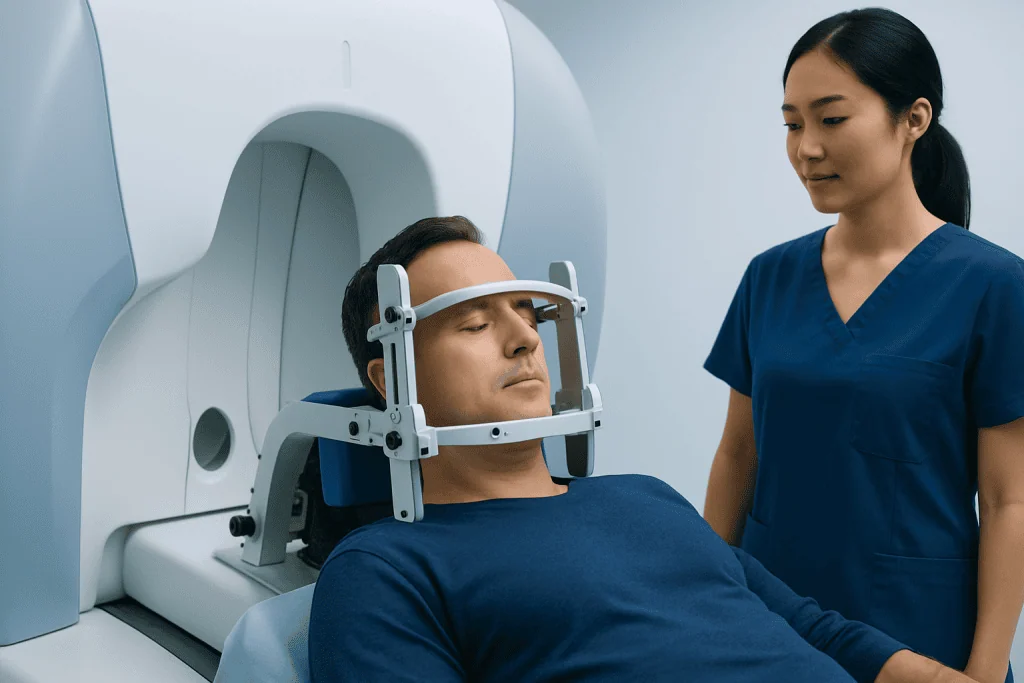
One of the keys to Gamma Knife is precision. To achieve that precision, the head must be immobilized so the treatment can be delivered exactly as planned. Depending on the clinical setup and the treatment protocol, this may involve a rigid head frame or a custom-fitted mask-based system. Your team will explain which approach is appropriate for you and what to expect.
After immobilization is in place, imaging is performed so the treatment team can locate the target in three dimensions. This may include MRI, CT, and sometimes angiographic imaging, depending on the condition being treated. These images are uploaded into specialized planning software. The target lesion and nearby critical structures are then outlined with great care.
Treatment Planning
This stage is highly technical and central to the quality of treatment. The radiation oncologist, neurosurgeon, and medical physicist work together to create a treatment plan. They determine the shape of the target, the dose needed, and the way radiation beams will be arranged to deliver effective treatment while reducing dose to healthy tissue as much as possible.
The planning system allows the team to model how radiation will fall within the brain. This is especially important when a lesion lies near sensitive areas involved in vision, hearing, balance, speech, or movement. In some cases, a single lesion can be treated in one session. In others, the team may recommend a staged or fractionated approach if that is better suited to the lesion’s size or location.
During the Procedure
Once the treatment plan is approved, you are positioned on the treatment couch. The treatment itself is painless. You do not feel the radiation beams. The machine delivers the planned dose to the target with submillimetric accuracy through many converging beams. The treatment team monitors you throughout the session.
How long the procedure takes depends on the number of targets, their size, the complexity of the plan, and the dose being delivered. Some treatments are relatively brief, while others take several hours from start to finish when imaging, planning, and treatment are all included. Most patients are treated as outpatients and go home the same day.
Technology Used and Why It Matters
Gamma Knife relies on several categories of technology working together. High-resolution imaging defines the target. Stereotactic localization provides a coordinate system that makes extreme precision possible. Sophisticated planning software helps the clinical team shape the radiation dose around the lesion. Quality assurance systems verify that treatment is delivered as intended. Together, these tools support accurate treatment of lesions that may be only a few millimeters in size or located close to critical neurological structures.
For patients, the practical benefit of this technology is not the machinery itself. It is the ability to treat selected brain conditions without an incision, often without general anesthesia, and with a focused approach designed to preserve nearby normal tissue as much as possible.
After Treatment and Early Recovery
After the procedure, you are observed for a period of time. If a head frame was used, it is removed. Some patients experience mild headache, scalp tenderness, fatigue, or nausea for a short time. These symptoms are usually temporary. If swelling around the treated area is a concern, the doctor may prescribe steroids or other medications.
Most patients return home the same day. Depending on how you feel, you may be able to resume light activities within a day or two. Follow-up imaging is scheduled because the effects of radiosurgery are assessed over time. The first scan after treatment does not always tell the whole story. Some lesions swell temporarily before stabilizing or shrinking, so the team interprets imaging in the context of symptoms, timing, and the expected response pattern for your condition.
Why Acting Early Matters
With brain tumors and other intracranial lesions, timing can influence both treatment choices and outcomes. A smaller, well-defined lesion may be easier to treat with focused radiosurgery than a larger lesion causing mass effect or widespread symptoms. Early treatment can also help lower the risk of further neurological decline, seizures, or pressure-related complications.
In oncology, delaying treatment may allow metastases to grow or new lesions to appear. As lesions enlarge, they may become less suitable for single-session radiosurgery and more likely to require surgery, broader-field radiation, or multiple treatment modalities. Tumors close to sensitive structures can also become harder to manage if they continue to expand.
That does not mean every lesion needs immediate intervention. In some situations, careful observation is appropriate. The important point is that a specialist should determine whether waiting is safe. Prompt evaluation creates options. It allows the team to compare Gamma Knife with surgery, fractionated radiation therapy, or medical treatment before the condition becomes more difficult to manage.
Potential Benefits of Gamma Knife Treatment
For appropriately selected patients, Gamma Knife can offer several meaningful advantages:
| Benefit | What It Means for You |
|---|---|
| Non-invasive treatment | No surgical incision into the brain, which may reduce many of the burdens associated with open surgery. |
| High precision | Radiation is concentrated on the target while helping limit exposure to nearby healthy brain tissue. |
| Outpatient care for many patients | Most people do not need a long hospital stay and can return home the same day. |
| Useful for difficult-to-reach lesions | Some tumors or abnormalities located near delicate structures can be treated without physically entering the brain. |
| Often shorter recovery than open surgery | Many patients resume normal daily activities relatively quickly, depending on their condition and overall health. |
| Can fit into a broader cancer plan | Gamma Knife may be combined with surgery, systemic therapy, or other radiation strategies as part of coordinated care. |
Typical Recovery Timeline
Recovery varies by diagnosis, the area treated, your symptoms before treatment, and whether Gamma Knife is part of a larger treatment plan. The timeline below offers a general guide:
| Time Period | What Patients Can Expect |
|---|---|
| Day 1 | Observation after treatment, then discharge in many cases. Mild headache, fatigue, or scalp discomfort may occur temporarily. |
| First Week | Most patients return to light routine activities. Some continue to feel tired or may take prescribed medication for swelling or symptom control. |
| First Month | Symptoms may begin to stabilize, but imaging changes are often gradual. Follow-up appointments help assess recovery and any treatment-related effects. |
| Longer Term | Serial MRI scans are used to evaluate response over time. Depending on the condition, the lesion may stop growing, shrink gradually, or require additional treatment planning. |
What Influences Outcomes and a Good Result
Patients often ask how successful Gamma Knife is. The honest answer is that success depends on what is being treated and what success means in that situation. For one patient, success may mean local control of a brain metastasis. For another, it may mean preserving hearing, reducing facial pain, or avoiding open surgery. In many cases, Gamma Knife is effective at controlling appropriately selected lesions, but outcomes vary with diagnosis and individual circumstances.
Several factors influence results:
- The type of lesion: Benign tumors, metastatic tumors, vascular abnormalities, and functional disorders behave differently and respond on different timelines.
- Size and number of targets: Smaller and well-defined lesions are often better suited to radiosurgery than larger lesions causing significant pressure effects.
- Location: Lesions near the optic apparatus, brainstem, cranial nerves, or motor pathways require especially careful planning.
- Previous treatments: Prior surgery, prior radiation, and current systemic cancer therapies all affect planning and expected response.
- Overall health and neurological status: A patient’s baseline condition influences recovery, tolerance of treatment, and broader treatment strategy.
- Expert treatment planning and follow-up: Good outcomes depend not only on the procedure itself, but also on careful patient selection, imaging review, dose planning, and long-term monitoring.
It is also important to understand that some side effects can appear later rather than immediately. Swelling, radiation-related changes on imaging, or delayed effects on nearby structures may need treatment or observation. This is one reason follow-up with an experienced team matters. The goal is not simply to deliver radiation. It is to integrate radiosurgery into a thoughtful, evidence-based plan before, during, and after treatment.
Why International Patients Consider Acibadem for Gamma Knife
For international patients, choosing where to receive brain tumor treatment or radiosurgery involves more than the procedure itself. It also involves confidence in the diagnostic process, the quality of decision-making, communication in a language you understand, and support through travel and follow-up. These practical considerations become especially important when the diagnosis is serious and time-sensitive.
At Acibadem, Gamma Knife treatment is approached as part of a broader neuroscience and oncology pathway rather than as an isolated procedure. Patients benefit from evaluation by experienced physicians in relevant specialties, which may include radiation oncology, neurosurgery, neuroradiology, medical oncology, neurology, and endocrinology or ENT specialists when indicated by the condition. Complex cases can be reviewed in multidisciplinary boards so that surgery, radiosurgery, conventional radiation therapy, and systemic treatment are considered together rather than separately.
This kind of coordinated review is particularly valuable for patients with brain metastases, recurrent tumors, or lesions near critical structures. It supports a treatment recommendation based on the full clinical picture: imaging findings, pathology, symptoms, prior treatments, and the patient’s priorities. For someone seeking care from abroad, that level of structured decision-making can make the process clearer and more reassuring.
Acibadem hospitals are JCI-accredited, reflecting established standards in patient safety, quality systems, and clinical processes. In practice, patients often experience this through organized diagnostic pathways, careful treatment planning, and close attention to coordination across specialties. Modern imaging and radiation planning technologies support the precision required for intracranial radiosurgery, while dedicated teams help guide patients through each step of care.
International patient services are another important part of the experience. Patients traveling from the US, Europe, the Middle East, Africa, or elsewhere may need help with scheduling, medical document review, interpreter support, travel planning, and coordination between departments. Acibadem International provides support in multiple languages, which can help reduce administrative stress at a time when patients and families are already managing a great deal.
Just as important, treatment plans are personalized. Not every patient referred for Gamma Knife is best served by Gamma Knife. Some may be advised to have surgery first. Others may benefit from fractionated radiation, systemic therapy, surveillance, or combined treatment. A careful center will say so when another option is more appropriate. For many patients, that balanced approach is one of the most important reasons to seek evaluation at an experienced center.
Taking the Next Step
If you or a loved one has been told that a brain tumor, brain metastasis, or another intracranial condition may require treatment, it is reasonable to want clear answers before making a decision. Gamma Knife can be a highly effective option for selected patients, offering precise, non-invasive treatment that may control disease while limiting disruption to daily life. The key is determining whether it is the right option for your diagnosis, anatomy, symptoms, and overall treatment plan.
A detailed specialist review can help clarify that. For some patients, the most helpful next step is a consultation. For others, it is a second opinion on imaging and pathology to confirm whether radiosurgery, surgery, or another approach makes the most sense. Either way, a careful evaluation can turn uncertainty into a more confident plan.
This information is general in nature and is not a substitute for professional medical advice, diagnosis, or treatment.
Our Specialists Explain
 Gamma Knife Treatment for Brain Tumors
Preparation
- Before Gamma Knife, patients usually have imaging such as MRI to map the treatment area accurately. A head frame or mask may be used for precision, and your doctor will review medicines, medical history, and fasting instructions if sedation is planned.
Aftercare
- Most patients go home the same day and can return to light activities within a day or two. Mild headache, nausea, or temporary scalp discomfort can occur, and follow-up imaging is needed to monitor the treatment response over time.
Doctors Performing This Treatment

Prof. Dr. Akin Sabanci
Neurosurgery
Prof. Dr. Ali Kurtsoy
Neurosurgery
Prof. Dr. Altay Bedük
Neurosurgery
Prof. Dr. Aytekin Akyüz
Neurology
Prof. Dr. Ayşe Sağduyu Kocaman
Neurology
Prof. Dr. Deniz Konya (m)
Neurosurgery
Prof. Dr. Dilaver Kaya
Neurology
Prof. Dr. Elif Ilgaz Aydınlar
Neurology
Prof. Dr. Erkin Sönmez
Neurosurgery
Prof. Dr. Gökhan Bozkurt
Neurosurgery
Prof. Dr. Hakan Murat Göksel
Neurosurgery
Prof. Dr. Hakan Seçkin
Neurosurgery
Prof. Dr. Halit Çavuşoğlu
Neurosurgery
Prof. Dr. Hatem Hakan Selçuk
Interventional Neuroradiology
Prof. Dr. Hüseyin Hayrı Kertmen
Neurosurgery
Prof. Dr. Kamil Kadir Topalkara
Neurology
Prof. Dr. Kayihan Uluç
Neurology
Prof. Dr. Kağan Tun
Neurosurgery
Prof. Dr. Kenan Koç
Neurosurgery
Prof. Dr. Koray Özduman
Neurosurgery
Prof. Dr. Mehmet Zafer Berkman
Neurosurgery
Prof. Dr. Melih Bozkurt
Neurosurgery
Prof. Dr. Memet Özek
Neurosurgery
Prof. Dr. Müfit Kalelioğlu
NeurosurgeryMedical Units
Available at These Hospitals












Guides for This Treatment
Diseases This Treats
Technologies Used
Frequently Asked Questions
What is Gamma Knife and how does it work for brain conditions?
Gamma Knife is a non-surgical form of radiosurgery used to treat certain brain tumors, vascular malformations, and some functional disorders. It delivers many precise beams of radiation to a defined target in the brain while limiting exposure to nearby healthy tissue. Despite the name, there is no knife or incision. Treatment is usually planned with high-resolution imaging, and Acibadem specialists create a personalized approach based on the size, type, and location of the condition.
Which conditions can be treated with Gamma Knife?
Gamma Knife is commonly used for brain metastases, meningiomas, acoustic neuromas, pituitary adenomas, arteriovenous malformations, and selected cases of trigeminal neuralgia. It may be recommended as a primary treatment or after surgery, depending on the diagnosis. Not every brain condition is suitable for radiosurgery, especially if the lesion is very large or causing urgent pressure symptoms. At Acibadem, neurosurgery, radiation oncology, and neuroradiology teams assess each case to decide the best option.
Is Gamma Knife a surgery, and will I need general anesthesia?
Gamma Knife is not open surgery. There are no incisions, no scalp shaving in most cases, and general anesthesia is usually not needed for adults. Most patients are awake during the procedure and may receive local anesthesia, mild sedation, or supportive medication to help them stay comfortable. Children or selected adults may need different anesthesia planning. Your care team at Acibadem explains each step in advance and tailors the plan to your medical needs and comfort.
How long does Gamma Knife treatment take, and do I need to stay in hospital?
Gamma Knife is often completed in a single day, although the exact schedule depends on imaging, treatment planning, and the complexity of the target. Some sessions are short, while others take longer if there are multiple lesions or detailed planning requirements. Many patients go home the same day after a period of observation. In certain situations, an overnight stay may be advised. Acibadem specialists provide a personalized timeline before treatment begins.
Is Gamma Knife painful, and what should I expect during the procedure?
Most patients tolerate Gamma Knife well. The treatment itself is painless because radiation cannot be felt. You may notice some pressure or mild discomfort during frame placement if a head frame is used, although local anesthesia helps reduce this. Some centers may use a mask-based setup for selected cases. During treatment, you lie still while the machine delivers radiation. The Acibadem team monitors you closely and explains what to expect before, during, and after the session.
What are the possible side effects and risks of Gamma Knife?
Side effects vary depending on the area treated, the size of the lesion, and previous treatments. Common short-term effects can include headache, fatigue, nausea, or temporary swelling around the treated area. Some patients may need medication such as steroids to manage swelling. Less common risks depend on the condition being treated and the nearby brain structures. Your doctors at Acibadem review potential benefits and risks in detail and provide a personalized follow-up plan.
How soon will I see results after Gamma Knife treatment?
Gamma Knife does not usually produce instant results. The treated lesion often changes gradually over weeks to months, and the timing depends on the diagnosis. For example, some tumors may stop growing and slowly shrink, while vascular malformations can take much longer to respond. Symptom relief may happen earlier in some conditions, but not always. Follow-up MRI scans are important to track progress. Acibadem specialists schedule imaging and consultations based on your individual treatment goal.
Can Gamma Knife treat multiple brain metastases or recurrent brain tumors?
Yes, Gamma Knife may be used for multiple brain metastases and for some recurrent tumors, depending on factors such as the number of lesions, their total volume, prior radiation, and your overall health. It is often chosen because of its precision and its ability to target specific areas while sparing more healthy brain tissue. However, some patients may need surgery, whole-brain radiotherapy, or systemic treatment instead. Acibadem specialists evaluate all options in a multidisciplinary setting.
How do I know if I am a good candidate for Gamma Knife in Turkey?
Suitability depends on the diagnosis, lesion size, exact location, symptoms, previous treatments, and general medical condition. Patients usually need MRI and sometimes additional imaging or pathology reports for evaluation. International patients can often begin with a remote review of their medical records and scans before traveling. At Acibadem, specialists provide a personalized assessment and treatment recommendation, helping you understand whether Gamma Knife is appropriate or whether another approach may be safer and more effective.
Why do international patients choose Acibadem Hospitals in Turkey for Gamma Knife?
International patients often look for experienced multidisciplinary teams, advanced imaging, modern treatment technology, and coordinated care in one center. Acibadem brings together specialists in neurosurgery, radiation oncology, neuroradiology, and oncology to plan treatment carefully and follow patients after therapy. Support for international visitors may include help with medical documentation, travel planning, and language assistance. Before treatment, Acibadem specialists review your records in detail and create a personalized plan based on your diagnosis and needs.