Hair Plugs for Men: Are They Still Used Today?

Hair plugs are an older transplant method that used larger grafts containing many hairs. Most specialists no longer use traditional hair plugs because modern methods produce more natural-looking results.
Key Takeaways
- Hair plugs are an older transplant method that used larger grafts containing many hairs.
- Most specialists no longer use traditional hair plugs because modern methods produce more natural-looking results.
- Current options such as FUE and DHI place smaller follicular units with greater precision.
- Men with old plug transplants may benefit from repair procedures, camouflage strategies, or non-surgical treatments.
- An expert evaluation is important to identify the cause of hair loss before choosing treatment.
Hair plugs were an older type of hair restoration that often created a patchy, doll-like appearance. Today, they are mostly replaced by modern hair transplant techniques that use much smaller grafts and aim for a more natural result.
Overview: What Are Hair Plugs?
Hair plugs are an older form of hair transplantation once used to treat male pattern baldness. In this technique, the surgeon removed relatively large round grafts of hair-bearing scalp from the back or sides of the head and placed them into bald areas. Because each graft often contained many hairs, the result could look uneven or tufted rather than soft and natural.
The term “hair plugs” is still widely used in everyday conversation, but it does not accurately describe most modern procedures. Today, hair restoration typically uses naturally occurring follicular units, which are very small groupings of one to four hairs. These smaller grafts allow a more refined hairline and better blending with existing hair.
For men exploring treatment options, it helps to understand that hair plugs are largely considered outdated. Modern hair restoration procedures focus on careful planning, natural angles, and even distribution. This shift has made a major difference in how transplanted hair looks after healing and growth.
Are Hair Plugs Still Used Today?
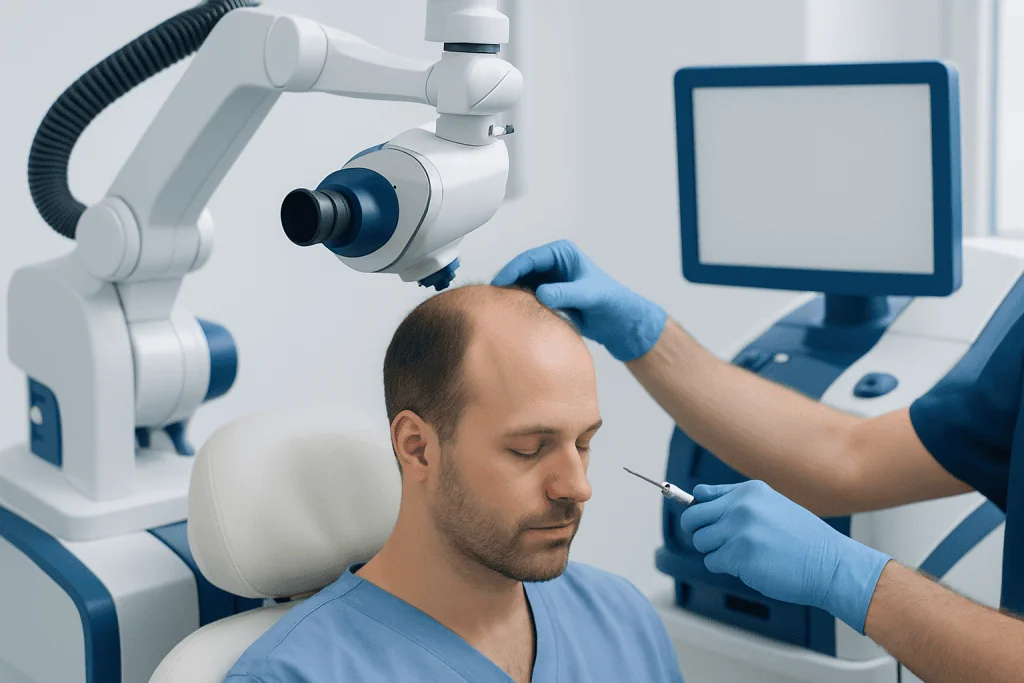
Traditional hair plugs are rarely used today. Most experienced hair transplant specialists prefer newer methods because they offer more natural cosmetic outcomes, less visible scarring, and more flexibility in designing the front hairline and overall density.
Older plug techniques could work in the sense that transplanted hair often survived, but appearance was the main limitation. The larger grafts sometimes produced a “doll’s hair” look, especially at the hairline, where fine detail matters most. This is why the method has largely been replaced rather than refined.
Modern techniques include FUE hair transplant and DHI hair transplant, both of which use much smaller grafts. These approaches let the surgeon place follicles one by one or in small units, which can mimic the way hair naturally grows. In some cases, men who had old plug procedures in the past seek hair transplant repair to soften the hairline or improve density and symmetry.
How Hair Plugs Differ From Modern Hair Transplants

The biggest difference is graft size. Traditional hair plugs used larger circular grafts, while modern methods transplant follicular units. These tiny units are better suited to creating a natural transition at the front of the scalp and a more even appearance across thinning areas.
Another important difference is the way donor hair is harvested. In older procedures, the donor area was often removed with larger punches, which could leave noticeable scarring. Newer techniques, especially FUE, remove individual follicular units with much smaller instruments. This generally allows a more refined recovery and can make the donor area less obvious, depending on hair length and healing.
Planning has also improved. Modern hair restoration takes into account age, pattern of hair loss, future progression, donor supply, hair texture, and facial proportions. Specialists may also discuss non-surgical options such as non-surgical hair restoration if surgery is not the best first step. The aim is not simply to move hair, but to create a result that remains balanced over time.
Who May Be a Candidate for Hair Restoration?
Not every man with hair loss is automatically a candidate for transplant surgery. The first step is finding the cause of the problem. Many men have androgenetic alopecia, also called male pattern baldness, but other causes are possible, including stress-related shedding, medication effects, nutritional issues, scalp inflammation, and autoimmune conditions such as alopecia areata.
Good candidates usually have stable hair loss and enough healthy donor hair on the back or sides of the scalp. The quality of the donor area, the degree of baldness, hair color contrast, curl pattern, and scalp laxity can all affect what is achievable. Younger men may also need careful long-term planning because hair loss can continue over time.
A healthy scalp matters as well. Conditions such as seborrheic dermatitis or psoriasis may need treatment before a procedure. During consultation, the specialist reviews medical history, examines the scalp, and discusses realistic goals so the treatment plan matches the person’s needs and expected maintenance.
Benefits, Limits, and Possible Risks
The main benefit of modern hair transplantation is that the transplanted hair usually continues to grow because it comes from donor areas that are less affected by male pattern baldness. For many men, this can improve hairline shape, fill in thinning areas, and support confidence in appearance.
At the same time, results have limits. Surgery does not stop future hair loss in non-transplanted areas, and donor hair is limited. This means careful distribution is essential. A man with advanced baldness may not achieve the density he remembers from youth, but he may still gain a meaningful cosmetic improvement.
As with any procedure, there are possible risks. These can include swelling, temporary shedding, infection, numbness, scarring, poor growth, or an unnatural pattern if planning is inadequate. Some men are also prone to thick scars such as keloid formation, which should be discussed in advance. Choosing an experienced specialist and having realistic expectations can help reduce disappointment and improve overall satisfaction.
Diagnosis and Treatment Planning
Evaluation begins with a scalp and hair assessment rather than choosing a procedure right away. The doctor usually looks at the pattern of loss, family history, donor density, scalp health, and whether the hair loss is still actively progressing. In some cases, blood tests or dermatology review may be recommended if the cause is unclear.
Photographs and mapping of the hairline can help with planning. The specialist may estimate how many grafts are needed and explain what can realistically be achieved in one or more sessions. Men who previously had hair plugs may need a more customized approach, especially if there is scarring, an irregular hairline, or mismatched density.
Treatment planning may include a combination of options rather than surgery alone. Depending on the person’s pattern of loss and goals, doctors may discuss medical treatments, supportive therapies, and appearance-based options such as scalp micropigmentation. In complex or revision cases, a multidisciplinary team can be helpful. Acibadem International’s multidisciplinary specialists and JCI-accredited hospitals diagnose and treat hair loss and hair transplant concerns for international patients.
Treatment Options for Men With Old Hair Plugs or Current Hair Loss
Men who still have visible hair plugs from procedures done years ago may have several options. One approach is repair surgery, which can redistribute older grafts, soften a harsh hairline, or add finer grafts around the plugs to improve blending. In some cases, selected plug grafts may be reduced or removed if they are especially noticeable.
For men considering first-time treatment today, modern transplant techniques are usually preferred over older plug methods. FUE and DHI are common options because they rely on smaller follicular units and precise placement. The best approach depends on donor supply, hair characteristics, styling preferences, and the extent of hair loss.
Non-surgical treatment can also play an important role. Medical therapy may help slow further loss, while low-level light approaches such as laser hair therapy may be discussed in selected cases. Some men benefit from combining surgery with medical management so transplanted and non-transplanted hair are supported together over time.
Self-Care and When to See a Doctor
Any man noticing ongoing thinning, a receding hairline, or sudden patchy hair loss should consider a professional assessment. Early evaluation can help identify whether the cause is typical male pattern baldness or a different issue that needs specific treatment. A doctor can also advise whether surgery, medical therapy, or watchful follow-up is most appropriate.
It is especially important to seek care if hair loss is rapid, associated with itching or scaling, or accompanied by redness, pain, scarring, or eyebrow and beard loss. These features may suggest an inflammatory or autoimmune scalp problem rather than routine genetic balding. Treatment is often most effective when the underlying cause is addressed promptly.
At home, gentle scalp care is sensible. Men should avoid harsh chemical treatments, tight hairstyles, or repeated trauma to the scalp. Good nutrition, stress management, and adherence to any prescribed treatment can support overall hair and scalp health, although they do not replace a medical diagnosis when hair loss is significant or persistent.
Frequently asked questions
Are hair plugs the same as a modern hair transplant?
Not exactly. The term hair plugs usually refers to older procedures that transplanted larger groups of hairs. Modern hair transplants use much smaller follicular units, which usually create a more natural look.
Why did old hair plugs look unnatural?
Older techniques often placed large round grafts into the hairline and bald scalp. Because these grafts contained many hairs in one cluster, the result could look patchy, tufted, or doll-like rather than soft and gradual.
Can old hair plugs be fixed?
Yes, in many cases they can be improved. Repair may involve adding finer grafts around the old plugs, redistributing existing grafts, or using camouflage techniques to create a more natural appearance.
Is a hair transplant permanent?
Transplanted hairs are often long-lasting because they usually come from areas less affected by male pattern baldness. However, non-transplanted hair can continue to thin over time, so some men may need ongoing medical treatment or future procedures.
Who should avoid rushing into hair transplant surgery?
Men with uncertain diagnoses, active scalp inflammation, very limited donor hair, or rapidly changing hair loss patterns should be assessed carefully before surgery. A specialist can help decide whether medical treatment or monitoring should come first.
What is the best alternative to hair plugs today?
There is no single best option for everyone, but modern follicular-unit techniques such as FUE or DHI are commonly used instead of traditional plugs. The right choice depends on the pattern of hair loss, donor hair quality, and personal goals.
References
- American Academy of Dermatology
- International Society of Hair Restoration Surgery
- National Health Service
- Mayo Clinic
- British Association of Dermatologists
This article is for general information only and is not a substitute for professional medical advice. Please consult a qualified doctor about your individual situation.
Hair transplant in Turkey — costs, graft counts & a free assessment
JCI-accredited · board-certified surgeons · reply within 24h
Add us as a Preferred Source to see more of our trusted health content across Google Search, AI Overviews and Discover.

Related Treatments
Related Conditions
More from the Health Library



Related Specialists

Prof. Dr. Sedef Şahin
Dermatology
Prof. Dr. Özlem Dicle
Dermatology
Prof. Dr. Emel Öztürk Durmaz
Dermatology
Assoc. Prof. Dr. Yasemin Koyuncu
Dermatology